Beef Short Ribs with Italian Sunday Gravy
Italian Sunday Gravy is the kind of dish that turns an ordinary pot of tomatoes into something extraordinarily rich. Beef short ribs, sweet Italian sausage, and homemade beef-pork-veal meatballs slowly simmer in San Marzano tomatoes with garlic, Chianti, basil, a bay leaf, and Parmigiano-Reggiano rind until the sauce becomes deeply concentrated and infused with the flavor of every piece of meat.
What makes Sunday gravy different from a quick marinara is time. During the long four-hour simmer, the short ribs release collagen and beef flavor, sausage contributes pork, fennel, and spices, and the meatballs absorb the tomato sauce while giving some of their own richness back to the pot. Chianti provides acidity and complexity, while the Parmesan rind quietly melts its savory, nutty character into the sauce.
The result is more than pasta sauce. It is a complete family-style meal: pasta coated in intensely flavorful red gravy, tender meatballs, juicy sausage, fall-apart short ribs, freshly grated cheese, and crusty Italian bread for catching every last drop.
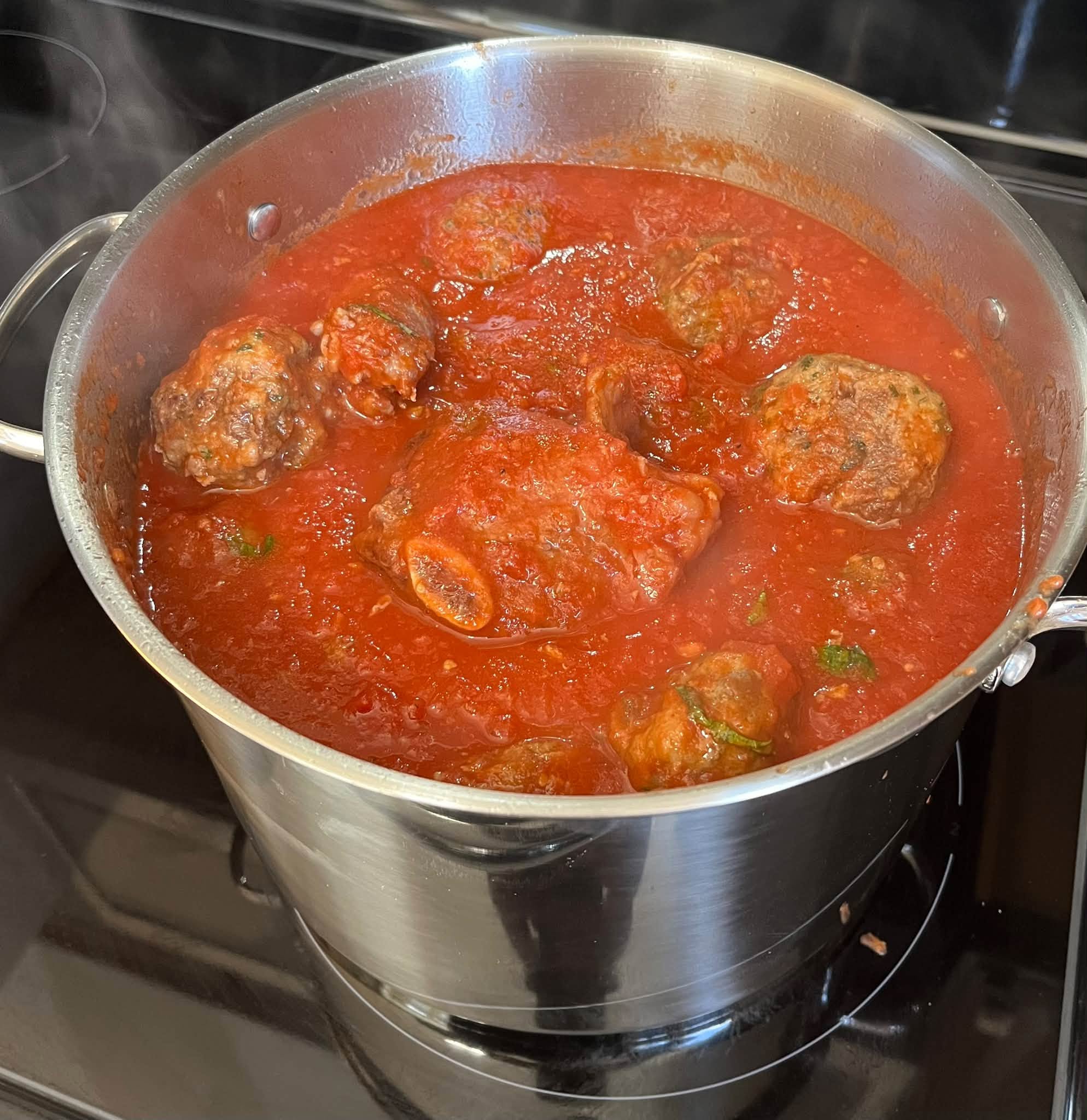
Why People Will Love Beef Short Ribs with Italian Sunday Gravy Recipe
Three different meats create tremendous depth of flavor.
Beef short ribs slowly become exceptionally tender.
The bones and connective tissue from the ribs naturally enrich the sauce.
Sweet Italian sausage contributes pork richness, herbs, and fennel flavor.
Homemade meatballs absorb the sauce while remaining juicy inside.
The combination of beef, pork, and veal gives the meatballs a balanced texture.
San Marzano tomatoes provide sweetness, acidity, and rich tomato character.
Chianti adds complexity without turning the sauce into a wine-heavy dish.
Deglazing captures all of the flavorful browned bits from the bottom of the pot.
Parmigiano-Reggiano rind contributes deep umami during the long simmer.
Fresh basil keeps the tomato sauce aromatic.
Garlic gives the gravy a classic Italian-American foundation.
Slow cooking transforms simple ingredients into a deeply layered sauce.
The entire house fills with an incredible aroma while it simmers.
The recipe is ideal for relaxed Sunday family dinners.
The meats can be served separately, turning one pot into several courses.
The gravy coats pasta beautifully.
Leftover sauce is often even better the following day.
Extra gravy freezes very well.
Crusty Italian bread makes sure none of the sauce goes to waste.
The dish feels celebratory without needing complicated presentation.
It is a recipe built around patience rather than difficult technique.
Key Ingredients
Beef Short Ribs:
Short ribs contribute much more than meat. Their bones, fat, and connective tissue slowly enrich the tomato sauce, creating a fuller body and deeper beef flavor. After several hours, the meat should become soft enough to pull away easily from the bone.
Sweet Italian Sausage:
Italian sausage adds pork richness, fennel, herbs, and seasoning. Browning the links before simmering creates extra caramelized flavor that becomes part of the gravy.
Beef, Pork & Veal Meatballs:
Using three meats gives the meatballs a particularly good balance. Beef contributes bold flavor, pork provides richness and moisture, and veal creates tenderness.
San Marzano Tomatoes:
High-quality whole peeled tomatoes are essential because tomato is the foundation of the entire pot. During the long simmer, their acidity mellows and their natural sweetness becomes more pronounced.
Chianti:
Dry Chianti deglazes the pot and contributes acidity, fruitiness, and complexity. It also helps lift the caramelized meat juices from the bottom of the pan into the sauce.
Parmigiano-Reggiano Rind:
A Parmesan rind may seem like a small ingredient, but hours of simmering release salty, nutty, savory flavor that gives the gravy remarkable depth.
Fresh Basil:
Basil adds a fresh aromatic note that complements the sweetness of the tomatoes.
Garlic:
Garlic forms the classic aromatic backbone of the gravy and becomes mellow and sweet during slow cooking.
Expert Tips
Use bone-in short ribs for maximum flavor.
Pat all meat dry before browning so it develops better color.
Brown the short ribs in batches if necessary.
Do not crowd the pot while browning.
Allow a deep brown crust to form before turning the meat.
Brown sausage links whole rather than cutting them first so they remain juicy.
Do not completely cook the meatballs during browning.
Their centers will finish cooking slowly in the sauce.
Mix meatballs gently to avoid a dense texture.
Add only enough breadcrumbs to hold the mixture together.
A small amount of milk makes the meatballs more tender.
Use freshly grated Parmigiano-Reggiano rather than pre-grated cheese.
Deglaze thoroughly with Chianti and scrape up every browned bit.
Let the wine reduce slightly before adding tomatoes.
Crush whole tomatoes by hand for a rustic sauce texture.
Maintain a very gentle simmer throughout the four-hour cooking time.
Do not aggressively boil the gravy.
Stir carefully around the bottom every 20–30 minutes to prevent scorching.
Use a heavy-bottomed pot or Dutch oven for more even heat.
Add a splash of water if the gravy reduces too quickly.
Keep the Parmigiano rind submerged whenever possible.
Add the meatballs later than the short ribs so they do not become excessively firm.
Taste for salt only near the end.
Sausage, Parmesan rind, and meatballs already contribute considerable seasoning.
Skim only excessive surface fat; a little fat is part of the flavor.
Make the gravy a day ahead when possible—the flavor becomes even more integrated overnight.
Beef Short Ribs with Italian Sunday Gravy
Ingredients
For the Homemade Meatballs
½ pound (225 g) ground beef
½ pound (225 g) ground pork
½ pound (225 g) ground veal
1 large egg
½ cup Italian-style breadcrumbs
½ cup finely grated Parmigiano-Reggiano
3 cloves garlic, finely minced
¼ cup fresh parsley, finely chopped
2 tablespoons fresh basil, finely chopped
½ teaspoon kosher salt
¼ teaspoon freshly ground black pepper
2–3 tablespoons milk, as needed
Olive oil, for browning
For the Sunday Gravy
2 pounds beef short ribs, preferably bone-in
1 pound sweet Italian sausage links
2 tablespoons extra-virgin olive oil
4–5 cloves garlic, thinly sliced or minced
1 generous cup dry Chianti
3 cans (28 ounces each) whole peeled San Marzano tomatoes
1 bay leaf
1 large handful fresh basil leaves
1 large piece Parmigiano-Reggiano rind, about 3–4 inches
½ teaspoon freshly ground black pepper
Salt, to taste
½–1 cup water, if needed during simmering
For Serving
Rigatoni, paccheri, spaghetti, ziti, or another favorite pasta
Freshly grated Parmigiano-Reggiano
Fresh basil
Crusty Italian bread
Instructions
Prepare the Meatballs
Place the ground beef, pork, and veal in a large mixing bowl.
Add the egg, breadcrumbs, Parmigiano-Reggiano, garlic, parsley, basil, salt, and black pepper.
Add 2 tablespoons of milk and gently mix everything together with your hands.
If the mixture seems dry, add another tablespoon of milk.
Avoid overworking the meat, which can make the meatballs dense.
Shape into medium meatballs, approximately 1½–2 inches wide.
Brown the Meatballs
Heat a thin layer of olive oil in a large skillet over medium-high heat.
Working in batches, brown the meatballs on several sides.
They do not need to cook completely at this stage because they will finish cooking in the gravy.
Transfer them to a plate and set aside.
Brown the Short Ribs
Pat the short ribs dry and season lightly with salt and black pepper.
Heat 2 tablespoons olive oil in a very large heavy-bottomed pot or Dutch oven.
Brown the short ribs over medium-high heat until deeply colored on several sides.
Transfer them to a plate.
Brown the Sausage
Add the sweet Italian sausage links to the same pot.
Brown them on all sides without cooking them completely through.
Remove and place them with the short ribs.
Add the Garlic
Reduce the heat to medium.
Add the garlic to the flavorful oil remaining in the pot.
Cook for approximately 30–60 seconds, just until fragrant.
Do not allow the garlic to burn.
Deglaze with Chianti
Pour in the generous cup of Chianti.
Use a wooden spoon to scrape all the browned meat bits from the bottom of the pot.
Let the wine simmer for about 3–5 minutes, allowing it to reduce slightly.
Those browned bits are an important part of the flavor of the finished gravy.
Add the San Marzano Tomatoes
Crush the San Marzano tomatoes by hand as you add them to the pot, along with their juices.
Stir well.
Add the bay leaf, fresh basil, black pepper, and Parmigiano-Reggiano rind.
Bring the sauce to a gentle simmer.
Return the Short Ribs and Sausage
Place the browned short ribs and sausage into the tomato sauce.
Make sure most of the meat is submerged.
Reduce the heat to very low.
Partially cover the pot and simmer gently for approximately 1½–2 hours.
Stir occasionally, especially along the bottom of the pot.
Add the Meatballs
Carefully add the browned meatballs to the gravy.
Continue simmering everything together for another 2 hours, keeping the heat very low.
The entire gravy should cook for approximately 4 hours total.
Add a small amount of water if the sauce becomes too thick before the meat is tender.
Check the Meat
The short ribs should become extremely tender and begin pulling away from the bone.
The sausage should be fully cooked, and the meatballs should remain tender while absorbing the tomato gravy.
Ground-meat meatballs and pork sausage should reach at least 160°F / 71°C internally.
Finish the Gravy
Remove the bay leaf and Parmigiano rind.
Taste the gravy.
Adjust with salt and black pepper only at the end because the sausage, cheese rind, and meatballs already contribute seasoning.
If there is excessive fat on the surface, carefully skim some away while leaving enough to preserve the richness of the sauce.
Cook the Pasta
Bring a large pot of generously salted water to a boil.
Cook your chosen pasta until about 1–2 minutes shy of al dente.
Reserve some pasta water before draining.
Finish the Pasta in the Gravy
Transfer several cups of Sunday gravy to a large skillet.
Add the drained pasta and a splash of reserved pasta water.
Toss over medium-low heat until the pasta finishes cooking and becomes thoroughly coated with the sauce.
Serve
Serve the pasta first with plenty of rich tomato gravy and freshly grated Parmigiano-Reggiano.
Place the short ribs, sweet Italian sausage, and meatballs on a large serving platter or serve pieces alongside each plate.
Finish with fresh basil.
And, as the original description says, make sure there is plenty of crusty Italian bread for soaking up every bit of gravy.
What the Finished Sunday Gravy Should Be Like
The sauce should be deep red, thick, glossy, and intensely savory, much like the pot shown in the photo.
After four hours, the San Marzano tomatoes should lose their raw acidity and become sweeter and more concentrated.
The short ribs should be almost falling from the bone.
The sausage should contribute fennel, pork, and spice to the tomatoes, while the meatballs absorb the sauce without becoming dry.
The Parmigiano rind slowly releases salty, nutty umami into the pot, while Chianti gives the gravy acidity and depth.
This is not a quick marinara. It should taste like a sauce that has spent an entire Sunday slowly developing—beefy, porky, garlicky, tomato-rich, wine-infused, and deeply comforting.
Important Notes When Making Beef Short Ribs with Italian Sunday Gravy
Sunday gravy should cook at a slow simmer, not a rolling boil.
Four hours is about flavor development as much as meat tenderness.
Short ribs may become tender sooner or later depending on size.
Use tenderness rather than time alone to judge doneness.
Ground meat in the meatballs should reach at least 160°F / 71°C.
Pork sausage should also reach at least 160°F / 71°C.
Bone-in short ribs contain substantial fat.
You can skim some surface fat during or after cooking if desired.
Refrigerating the gravy overnight makes fat removal especially easy because it solidifies on top.
The Parmigiano rind should be removed before serving.
The bay leaf should also be discarded.
Wine reduction does not guarantee that every trace of alcohol disappears.
The sauce will thicken substantially during the long simmer.
Add small amounts of water only when necessary.
Avoid adding large amounts of sugar to the sauce; long cooking naturally mellows the tomatoes.
Pasta should be cooked separately and finished with only the amount of gravy needed for serving.
Do not put all cooked pasta into the entire pot of gravy if you expect leftovers.
Reserve extra gravy and meat separately for easier reheating.
Crusty bread and pasta significantly increase the calories of the complete meal.
Refrigerate leftovers promptly after dinner.
How to Enjoy Beef Short Ribs with Italian Sunday Gravy After Cooking
Let the finished Sunday gravy rest for about 15–20 minutes before serving. This allows the sauce to settle slightly and makes it easier to remove excess surface fat if desired.
Traditionally, you can serve the meal in stages.
Start with the pasta. Cook rigatoni, paccheri, ziti, spaghetti, or your favorite pasta until just shy of al dente.
Finish the pasta in several ladles of Sunday gravy with a little reserved pasta water. Toss until the noodles become glossy and thoroughly coated.
Serve the pasta in warm bowls with plenty of finely grated Parmigiano-Reggiano and fresh basil.
Next, bring the meats to the table on a large platter.
Serve meatballs, pieces of sweet Italian sausage, and tender short ribs with additional gravy spooned over the top.
Provide plenty of crusty Italian bread. Tear the bread by hand and use it to soak up the tomato sauce left on the plate.
A simple green salad with a sharp vinaigrette is an excellent side because the acidity balances the richness of the meat.
Roasted broccoli rabe, sautéed escarole, or other slightly bitter greens also pair beautifully.
If serving wine, a glass of Chianti naturally complements the tomato, beef, sausage, and Parmesan flavors.
For leftovers, reheat the gravy slowly over low heat. Add a small splash of water if it has thickened too much overnight.
Nutrition Information
Approximate nutrition is based on 10 hearty servings of Sunday gravy and meats, using the short ribs, sausage, meatballs, tomatoes, olive oil, wine, and Parmesan rind listed in the recipe. Pasta, bread, extra grated cheese, and wine served at the table are not included.
Calories: 610 kcal | Total Fat: 39 g | Saturated Fat: 14 g | Monounsaturated Fat: 16 g | Polyunsaturated Fat: 4 g | Cholesterol: 125–145 mg | Sodium: 900–1,250 mg depending on the sausage, cheese, breadcrumbs, tomatoes, and added salt | Total Carbohydrates: 19–22 g | Dietary Fiber: 3–4 g | Sugars: 9–11 g | Protein: 39–43 g
Additional estimate:
Potassium: 950–1,150 mg | Calcium: 180–240 mg | Iron: 4.5–6 mg | Magnesium: 55–75 mg | Vitamin A: 900–1,300 IU | Vitamin C: 20–30 mg | Vitamin B12: 2.5–4 mcg | Zinc: 6–8 mg | Phosphorus: 380–500 mg
If served with a generous portion of pasta, grated cheese, and Italian bread, the complete meal can be considerably higher in calories and carbohydrates.
Smart Frequently Asked Questions:
Why is it called Sunday Gravy instead of Sunday Sauce?
In many Italian-American families, especially in parts of the northeastern United States, long-cooked tomato sauce containing meat is traditionally called “gravy.” Other families simply call it sauce. Both names are widely used.
What makes Sunday Gravy different from marinara?
Marinara is generally a relatively quick tomato sauce. Sunday gravy cooks for hours with several meats, allowing beef, pork, wine, cheese rind, and tomatoes to develop into a much richer sauce.
Why use short ribs, sausage, and meatballs together?
Each meat contributes something different: short ribs provide beef and collagen, sausage adds seasoned pork and fennel, and meatballs give tender, savory bites while absorbing the sauce.
What pasta works best with Sunday Gravy?
Rigatoni, ziti, paccheri, or another substantial tubular pasta is excellent because it holds the thick sauce. Spaghetti and other long pasta are also traditional favorites.
What should I serve with Sunday Gravy?
Crusty Italian bread is nearly essential. A simple salad, broccoli rabe, sautéed greens, roasted vegetables, and grated Parmigiano-Reggiano also pair beautifully.
Why should I brown the meat before simmering it?
Browning creates caramelized flavors through the Maillard reaction. Those browned bits are then dissolved by the Chianti and become part of the finished gravy.
Why is my Sunday Gravy too oily?
Short ribs and sausage both release fat during the long simmer. Skim excessive fat from the surface, or chill the gravy overnight and remove the solidified fat before reheating.
Why did my meatballs become tough?
They may have been overmixed, packed too tightly, or simmered too aggressively. Handle the mixture gently and maintain only a slow simmer.
What should I do if the sauce becomes too thick during the four-hour simmer?
Add a small amount of hot water, about ¼ cup at a time, and stir gently. The gravy should remain thick and rich but still be loose enough to coat pasta.
Can I make Sunday Gravy ahead of time?
Yes—and it is actually one of the best dishes to prepare a day ahead. After resting overnight, the tomato, wine, meat, garlic, basil, and Parmesan flavors become even more integrated, and excess fat is easier to remove before reheating.