Salsa de Rajas
Salsa de Rajas is a deeply layered Mexican-style salsa that combines charred chiles güeros, roasted serranos, tomatillos, Roma tomatoes, dried pasilla and guajillo chiles, marinated red onion, lime, soy sauce, garlic, and Mexican oregano. Unlike a completely blended salsa, this version keeps strips of roasted chile and onion intact, giving it a substantial, almost relish-like texture.
The flavor develops in several directions at once. Roasted tomatillos and tomatoes provide acidity and sweetness, dried chiles contribute earthy and fruity depth, serranos bring fresh heat, and the güero chile strips remain the dominant textural element. Lime-marinated red onion provides brightness while soy sauce contributes an unusual but effective layer of salty umami.
After the smooth roasted salsa base is folded into the chile strips and onions, the result is complex, smoky, tangy, savory, slightly sweet, and pleasantly spicy. It works equally well as a table salsa, taco topping, grilled-meat condiment, or accompaniment to beans, eggs, and quesadillas.
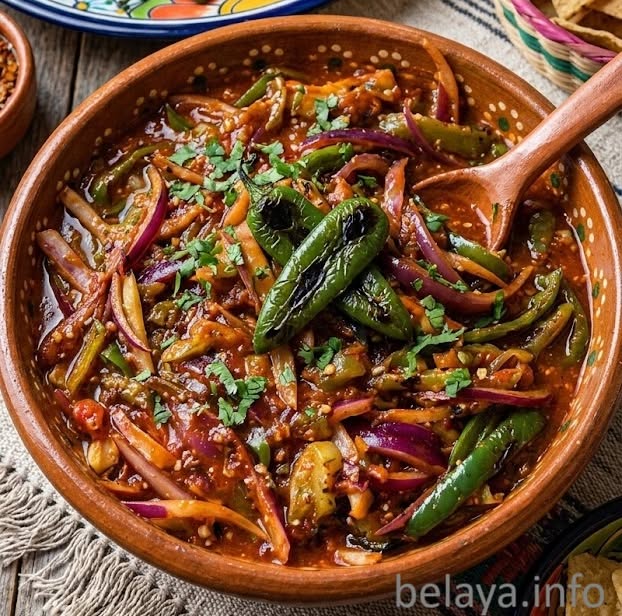
Why People Will Love Salsa de Rajas Recipe
Charred chiles güeros provide a tender, substantial texture rather than disappearing into a purée.
Roasting develops a deep smoky flavor.
Tomatillos bring bright, naturally tart character.
Roma tomatoes give the salsa sweetness and body.
Serrano peppers provide fresh, clean chile heat.
Guajillo chile adds mild fruitiness and earthy depth.
Pasilla contributes darker, richer dried-chile notes.
Red onion retains a little crunch even after marinating.
Lime juice gives the salsa a fresh acidic backbone.
Soy sauce adds unexpected but delicious umami.
Roasted garlic becomes mellow and slightly sweet.
Mexican oregano contributes an earthy herbal aroma.
The salsa combines smooth sauce with visible rajas for interesting texture.
It can be adjusted from moderately spicy to quite hot.
It pairs exceptionally well with tacos and grilled meats.
It works as both a condiment and a substantial topping.
Resting improves the balance of the flavors.
It can be prepared ahead for entertaining.
It tastes excellent at room temperature rather than only refrigerator-cold.
Key Ingredients
Chiles Güeros:
These pale yellow-green peppers are the defining ingredient of the rajas portion. Charring softens them and gives them smoky flavor while their sliced form keeps the salsa substantial and textured.
Tomatillos:
Tomatillos contribute tartness, juiciness, and a slightly citrusy flavor. Roasting reduces their raw sharpness and brings out a more rounded sweetness.
Roma Tomatoes:
Roma tomatoes add red color, body, and gentle sweetness, balancing the brighter acidity of the tomatillos.
Serrano Chiles:
Serranos bring a sharper, greener heat than the dried chiles. Finely mincing them after roasting distributes their flavor throughout the rajas mixture.
Pasilla Chile:
Pasilla has a deep, earthy, mildly fruity character that gives the blended salsa base additional complexity.
Guajillo Chile:
Guajillo is generally mild to moderate in heat and adds bright dried-fruit notes and chile aroma.
Red Onion:
Marinating thinly sliced red onion in lime and soy softens its raw bite while preserving a little crunch.
Soy Sauce:
Soy sauce provides salt and umami. It is unconventional compared with many salsa recipes, but it deepens the roasted chile and tomato flavors very effectively.
Fresh Lime Juice:
Lime supplies the acidity that keeps the salsa bright despite the roasted vegetables and dried chiles.
Expert Tips
Slice the red onion as evenly and thinly as possible so it marinates consistently.
Give the onion at least 20–30 minutes in the lime and soy mixture.
Char the chiles güeros until the skins are thoroughly blistered.
Steam the roasted güeros immediately to make peeling much easier.
Do not rinse peeled roasted peppers under water; this can wash away flavorful juices.
Drain excess liquid from the peeled peppers before slicing.
Roast tomatoes and tomatillos until they are soft and visibly blistered.
Remove individual vegetables from the comal as soon as each is ready.
Toast dried chiles only briefly; they burn much faster than fresh vegetables.
If a dried chile smells acrid or turns black, discard it rather than blending it.
Reserve the chile soaking liquid but add it gradually.
Mince the roasted serranos rather than blending them if you want the characteristic textured finish.
Blend the dried-chile base first before adding tomatoes and tomatillos.
Let the finished salsa rest before making the final salt adjustment.
Serve closer to room temperature for a fuller roasted-chile aroma.
Salsa de Rajas
Ingredients
For the Salsa de Rajas
185 g red onion, thinly julienned, about 1 medium onion
85 g fresh lime juice, about 6 tablespoons
65 g soy sauce, about ¼ cup
400 g chiles güeros, about 8–10 whole peppers
385 g tomatillos, husks removed and rinsed, about 8 medium
300 g Roma tomatoes, about 4 medium
60 g serrano chiles, about 3–4 peppers
32 g garlic, about 6 whole cloves, left in their skins for roasting
10 g dried pasilla chile, stemmed and seeded, about 1 chile
7 g dried guajillo chile, stemmed and seeded, about 1 chile
3 g chicken bouillon powder, about ½ teaspoon
2 g Diamond Crystal kosher salt, about ¾ teaspoon, or to taste
0.8 g Mexican oregano, about ½ teaspoon
155 g boiling water, about ⅔ cup, for soaking the dried chiles
Instructions
Marinate the Red Onion
Place the julienned red onion in a medium mixing bowl.
Pour in the fresh lime juice and soy sauce, then toss thoroughly so all of the onion is coated.
Set aside and allow the onion to marinate while you prepare the remaining ingredients. This will soften its sharpness and give it a bright, savory flavor.
Char the Chiles Güeros
Place the whole chiles güeros directly over an open flame, on a hot comal, or beneath a broiler.
Turn them frequently until the skins are well blistered and blackened and the peppers have softened.
Transfer the hot peppers to a covered bowl or sealed container and let them steam for about 10 minutes.
Once cool enough to handle, peel away the loose skins, remove the stems and seeds, and cut the peppers into thin strips.
Add the chile strips to the bowl with the marinated red onion and toss gently.
Roast the Tomatoes, Tomatillos, Serranos, and Garlic
Heat a comal or heavy skillet over medium-high heat.
Add the Roma tomatoes, tomatillos, serrano chiles, and unpeeled garlic cloves.
Roast, turning occasionally, until the vegetables are softened and develop dark, blistered spots.
Allow approximately:
15–20 minutes for the tomatoes and tomatillos
12–15 minutes for the serranos and garlic
Remove each ingredient as soon as it is properly roasted rather than waiting for everything to finish at the same time.
Allow the garlic to cool slightly, then remove and discard the papery skins.
Toast and Soak the Dried Chiles
Place the stemmed and seeded pasilla and guajillo chiles on the hot comal.
Toast them briefly for about 30–60 seconds per side, just until fragrant and slightly pliable.
Do not allow them to burn, as scorched dried chiles can make the salsa bitter.
Transfer the toasted chiles to a heatproof bowl and pour the boiling water over them.
Let them soak for about 20 minutes, or until soft.
Reserve the soaking liquid.
Prepare the Serranos
Remove the stems from the roasted serrano chiles.
Finely mince the serranos and stir them into the marinated onion and chile güero mixture.
For a milder salsa, remove some of the seeds and pale inner membranes before mincing.
Blend the Salsa Base
Transfer the softened pasilla and guajillo chiles to a blender.
Add the roasted garlic and a small amount of the reserved chile-soaking water.
Blend until smooth.
Add the roasted tomatoes and tomatillos.
Blend again on low speed until the mixture forms a smooth but substantial salsa. Add a little additional soaking liquid only if necessary to help it blend.
Combine the Salsa and Rajas
Pour the blended tomato-chile salsa over the marinated onions, serranos, and chile güero strips.
Stir gently until the rajas are evenly coated with the salsa.
Season
Add the chicken bouillon powder, Mexican oregano, and kosher salt.
Mix thoroughly, then taste and adjust the salt, lime, or seasoning as needed.
Allow the salsa to rest for about 20–30 minutes before serving so the roasted chile, tomato, onion, lime, and soy flavors can come together.
Serve and Store
Serve the Salsa de Rajas at room temperature for the fullest flavor.
Store leftovers in a tightly sealed container in the refrigerator.
For the best texture and flavor, stir well before serving after refrigeration.
Important Notes When Making Salsa de Rajas
Chiles güeros can vary in heat depending on variety and maturity.
Serranos can also vary significantly in heat from pepper to pepper.
Most capsaicin is concentrated in the pale inner membranes.
Remove more membranes if you want a milder salsa.
Wear gloves if handling large amounts of hot peppers.
Dried chiles become bitter if over-toasted.
Garlic should roast in its skin so the cloves soften without burning.
Tomatillos should be husked and thoroughly rinsed before roasting.
Soy sauce, chicken bouillon, and added salt all contribute sodium.
Taste carefully before adding additional salt.
Diamond Crystal kosher salt is less dense by volume than many other salts.
Do not substitute table salt teaspoon-for-teaspoon without reducing the quantity.
The salsa becomes more integrated after resting for at least 20–30 minutes.
Refrigeration will mute some aroma, so let refrigerated salsa stand briefly before serving.
This recipe is intended as a refrigerated fresh salsa, not as a shelf-stable canned product.
Store leftovers tightly covered in the refrigerator.
How to Enjoy Salsa de Rajas After Cooking
After combining the blended salsa with the marinated onions and chile strips, let it rest for about 20–30 minutes. This gives the lime, soy, roasted chiles, tomato, garlic, and oregano time to meld.
Serve it at room temperature rather than ice-cold whenever possible. The roasted and dried-chile aromas are more noticeable when the salsa is not heavily chilled.
For tacos, spoon the salsa generously over carne asada, carnitas, grilled chicken, al pastor, or barbacoa. The strips of güero chile add both flavor and texture.
It is also excellent over grilled steak, pork chops, sausages, or roasted chicken.
For breakfast, serve it with scrambled eggs, fried eggs, breakfast tacos, or huevos rancheros.
Spoon it over quesadillas, tostadas, or burritos, especially those filled with beans and cheese.
For a simple appetizer, serve it alongside warm tortilla chips, although its thicker rajas texture makes it particularly good for spooning rather than dipping.
It also pairs beautifully with pinto beans, black beans, Mexican rice, grilled corn, or roasted potatoes.
Before serving leftovers, stir the salsa thoroughly because liquid may settle at the bottom.
Nutrition Information
Approximate nutrition per 2-tablespoon serving, assuming a final yield of about 6 cups / 48 servings:
Calories: 12 kcal | Total Fat: 0.2 g | Saturated Fat: 0 g | Monounsaturated Fat: 0 g | Polyunsaturated Fat: 0.1 g | Cholesterol: 0 mg | Sodium: 105–135 mg depending on the soy sauce, chicken bouillon, and added salt | Total Carbohydrates: 2.6 g | Dietary Fiber: 0.6 g | Sugars: 1.3 g | Protein: 0.4 g
Additional estimate:
Potassium: 85–120 mg | Calcium: 8–14 mg | Iron: 0.3–0.6 mg | Vitamin A: 180–300 IU | Vitamin C: 8–15 mg | Folate: 8–15 mcg
Frequently Asked Questions:
What does Salsa de Rajas taste like?
It is smoky, tangy, savory, moderately spicy, and slightly sweet, with noticeable umami from soy sauce and deeper earthy flavors from the dried chiles.
Is Salsa de Rajas very spicy?
It can range from moderate to fairly hot. The serranos contribute most of the sharper heat, while güero peppers can vary considerably.
What is the difference between Salsa de Rajas and a regular blended salsa?
Salsa de Rajas keeps strips of roasted chiles and onion intact, so it has considerably more texture and works almost like a salsa-relish hybrid.
What foods pair best with Salsa de Rajas?
Tacos, grilled beef, carnitas, chicken, quesadillas, eggs, beans, tostadas, roasted potatoes, and tortilla chips all work particularly well.
Why is soy sauce used in this salsa?
Soy sauce provides saltiness and concentrated umami that reinforces the roasted tomato, chile, and garlic flavors. It should be noticeable as savory depth rather than as a dominant soy flavor.
Why should the onions marinate before the rest of the salsa is added?
Lime and soy soften the raw onion’s sharpness while seasoning it all the way through. The onion still retains enough texture to provide contrast.
Why should the dried chiles be toasted before soaking?
Brief toasting wakes up their aromatic oils and produces a deeper chile flavor. The key is to toast lightly because burnt dried chile becomes bitter very quickly.
Can I make the salsa less spicy?
Yes. Remove the serrano seeds and pale membranes, reduce the number of serranos, and use milder chiles güeros.
Why do I blend the pasilla and guajillo before adding the tomatoes and tomatillos?
The dried chiles and garlic need more intensive blending to become smooth. Adding the roasted tomatoes afterward allows you to control the final texture more precisely.
Can Salsa de Rajas be made ahead?
Yes. It is particularly good after several hours of resting in the refrigerator. Bring it closer to room temperature and stir thoroughly before serving for the best flavor and texture.