Slow-Simmered Ground Beef Ragu with Pasta
Slow-Simmered Ground Beef Ragu with Pasta is a rich, comforting Italian-style meal built around deeply browned beef, aromatic vegetables, tomatoes, herbs, and Parmigiano-Reggiano.
The slow simmer is what gives this sauce its character. Onion, carrot, celery, garlic, tomato paste, and beef gradually melt together into a thick, savory ragu, while optional red wine adds another layer of depth and complexity.
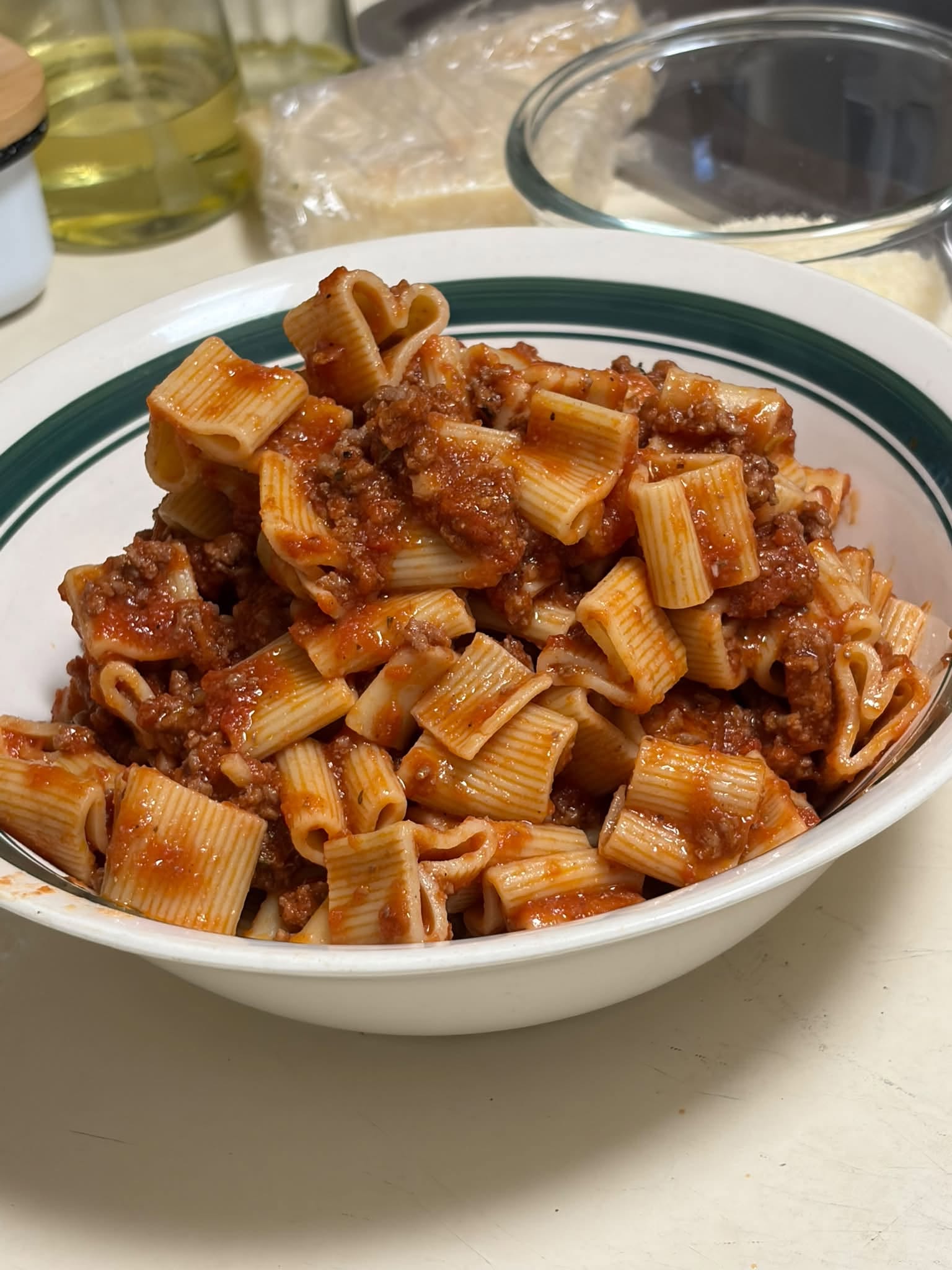
Finished by tossing the pasta directly in the sauce with a splash of starchy pasta water, the dish becomes glossy, cohesive, and beautifully coated rather than simply having sauce spooned over the top.
Why People Will Love Slow-Simmered Ground Beef Ragu with Pasta Recipe
It has deep, slow-cooked flavor from simple everyday ingredients.
Browning the beef creates a savory, caramelized foundation.
Onion, carrot, and celery add natural sweetness and complexity.
Tomato paste intensifies the richness of the tomato sauce.
Red wine adds depth without making the dish taste strongly of alcohol.
Slow simmering allows all of the flavors to blend together naturally.
A Parmesan rind gives the sauce subtle salty, nutty richness.
Ridged pasta captures the meat sauce in every curve and hollow.
Pasta water helps create a glossy sauce that clings beautifully to the noodles.
Parmigiano-Reggiano adds a savory, nutty finish.
Crushed red pepper can provide gentle warmth without making the dish overly spicy.
The recipe can be simmered longer when you have time for an even richer result.
It is satisfying enough for a family dinner but elegant enough for guests.
Leftover ragu often tastes even better the following day.
Key Ingredients
Ground Beef:
Ground beef creates the hearty foundation of the ragu. Browning it thoroughly develops deeper flavor than simply cooking it until no longer pink.
Onion, Carrot, and Celery:
This classic aromatic combination slowly softens into the sauce, adding sweetness, savory depth, and complexity.
Garlic:
Fresh garlic brings warmth and aroma and complements both the tomatoes and beef.
Tomato Paste:
Cooking tomato paste before adding the liquid intensifies its sweetness and gives the ragu a richer, darker flavor.
Crushed Tomatoes:
Crushed tomatoes create the main body of the sauce while providing enough texture to support the ground beef.
Dry Red Wine:
Red wine is optional, but it adds acidity, fruitiness, and complexity while also helping release flavorful browned bits from the bottom of the pot.
Beef Broth:
A small amount of broth loosens the sauce and reinforces its savory flavor.
Oregano, Basil, and Italian Seasoning:
These herbs add familiar Italian-style aroma and balance the richness of the meat.
Parmesan Rind:
A Parmesan rind slowly releases salty, nutty flavor into the sauce during simmering.
Short Ridged Pasta:
Rigatoni, mezzi rigatoni, paccheri, or other ridged shapes are especially good because they hold thick meat sauce very well.
Parmigiano-Reggiano:
Freshly grated Parmigiano-Reggiano adds savory richness and helps finish the pasta with a creamy, cohesive texture.
Expert Tips
Cut the onion, carrot, and celery very finely so they almost melt into the sauce.
Give the vegetables enough time to soften before adding the beef.
Brown the ground beef in batches if your pot is crowded.
Let the beef develop real brown color instead of constantly stirring it.
Drain only excessive grease; leaving a little behind adds flavor.
Cook the tomato paste until it darkens slightly before adding liquid.
Scrape up all browned bits when adding the wine or broth.
Let the wine reduce before adding the tomatoes.
Keep the ragu at a gentle simmer instead of a rapid boil.
Partially cover the pot so moisture can escape slowly without drying out the sauce.
Stir occasionally, especially during a longer simmer.
Add small amounts of broth or water if the sauce becomes too thick.
Use sugar only if the tomatoes taste noticeably acidic.
Cook the pasta just to al dente because it will continue cooking slightly when tossed with the ragu.
Always reserve pasta water before draining.
Add pasta water gradually rather than pouring in too much at once.
Finish the pasta directly in the sauce for the best texture and flavor.
Slow-Simmered Ground Beef Ragu with Pasta
Ingredients
For the Ground Beef Ragu
1½ pounds ground beef
2 tablespoons olive oil
1 medium yellow onion, finely diced
1 small carrot, finely diced
1 celery stalk, finely diced
4 garlic cloves, minced
2 tablespoons tomato paste
1 can (28 ounces) crushed tomatoes
½ cup dry red wine, optional
½ cup beef broth or water
1 teaspoon dried oregano
1 teaspoon dried basil
½ teaspoon Italian seasoning
½ teaspoon freshly ground black pepper
½ teaspoon crushed red pepper flakes, optional
1 teaspoon salt, or to taste
1 small Parmesan rind, optional
1 teaspoon sugar, optional, if the tomatoes are acidic
For the Pasta
1 pound short pasta, such as rigatoni, mezzi rigatoni, paccheri, heart-shaped pasta, or another ridged pasta
Salt, for the pasta water
½–1 cup reserved pasta cooking water
¾ cup freshly grated Parmigiano-Reggiano, plus more for serving
1 tablespoon butter or extra-virgin olive oil, optional
Fresh basil or parsley, optional for garnish
Instructions
Prepare the Aromatics:
Heat the olive oil in a large Dutch oven or heavy-bottomed pot over medium heat.
Add the diced onion, carrot, and celery. Cook for about 6–8 minutes, stirring occasionally, until the vegetables become soft and lightly golden.
Add the minced garlic and cook for another 30–60 seconds, just until fragrant.
Brown the Ground Beef:
Add the ground beef to the pot and increase the heat slightly.
Break the meat into small pieces with a wooden spoon and cook for about 7–10 minutes, until deeply browned and no longer pink.
If the beef releases a large amount of fat, carefully remove some while leaving a little behind for flavor.
Add the Tomato Paste:
Stir the tomato paste into the beef and vegetables.
Cook for about 2 minutes, stirring frequently, until the tomato paste becomes darker and begins coating the bottom of the pot. This step gives the ragu a deeper, richer flavor.
Deglaze the Pot:
If using red wine, pour it into the pot and scrape up any browned bits from the bottom.
Let the wine simmer for 2–3 minutes until it reduces slightly.
Build the Ragu:
Add the crushed tomatoes, beef broth, oregano, basil, Italian seasoning, black pepper, crushed red pepper, salt, and Parmesan rind if using.
Stir everything together and bring the sauce to a gentle simmer.
Slow-Simmer the Sauce:
Reduce the heat to low and partially cover the pot.
Let the ragu simmer gently for about 45–60 minutes, stirring occasionally. For an even deeper flavor, simmer it for up to 1½–2 hours, adding a splash of water or broth if the sauce becomes too thick.
Taste toward the end and adjust the salt, pepper, or sugar if needed.
Cook the Pasta:
Bring a large pot of generously salted water to a boil.
Add the pasta and cook until just al dente, following the package directions.
Before draining, reserve about 1 cup of the starchy pasta cooking water.
Combine the Pasta and Ragu:
Remove the Parmesan rind from the sauce.
Add the drained pasta directly to the pot of ragu and toss thoroughly over low heat.
Pour in about ¼ cup of reserved pasta water and continue tossing. Add more, a little at a time, until the sauce becomes glossy and clings to the ridges and hollows of the pasta.
Stir in the grated Parmigiano-Reggiano. Add butter or a drizzle of extra-virgin olive oil if you want an even silkier finish.
Serve:
Spoon the pasta into warm bowls and finish generously with freshly grated Parmigiano-Reggiano.
Add fresh basil, parsley, black pepper, or a small drizzle of olive oil if desired.
Serve immediately while the pasta is hot and the ragu is glossy and rich.
Helpful Tip
The final toss with starchy pasta water is important. Instead of simply pouring sauce over cooked pasta, finishing the noodles directly in the ragu helps the starch emulsify with the tomato sauce and beef fat, creating the glossy coating seen in the photo.
Important Notes When Making Slow-Simmered Ground Beef Ragu with Pasta
The ragu becomes richer the longer it simmers, but 45–60 minutes is enough for a flavorful weeknight version.
A 1½–2 hour simmer will produce deeper, more integrated flavor.
Red wine is optional and can be replaced with extra beef broth.
The alcohol in wine reduces during cooking, but a short simmer should not be assumed to remove every trace.
The Parmesan rind should be removed before serving.
Do not add too much salt early because Parmigiano-Reggiano also adds sodium.
Different brands of canned tomatoes vary in acidity.
The optional sugar should be added only after tasting.
Ridged or hollow pasta works best with thick meat sauce.
Pasta water is naturally salty, so taste before adding extra seasoning.
The sauce will thicken noticeably as it cools.
Leftover pasta will continue absorbing sauce in the refrigerator.
For meal prep, storing the ragu separately from the pasta preserves the best texture.
Reheat leftover ragu gently with a splash of water or broth.
How to Enjoy Slow-Simmered Ground Beef Ragu with Pasta After Cooking
Once the pasta has been tossed thoroughly with the ragu and starchy pasta water, let it sit over low heat for about a minute while gently stirring. This helps the sauce settle into the ridges and hollows of the pasta.
Serve the pasta immediately in warm bowls and finish each portion with plenty of freshly grated Parmigiano-Reggiano.
For extra freshness, add torn basil, chopped parsley, or freshly cracked black pepper. A small drizzle of good extra-virgin olive oil can also give the finished pasta a silky aroma and richer mouthfeel.
This ragu pairs beautifully with garlic bread, toasted sourdough, focaccia, roasted vegetables, Caesar salad, or a simple arugula salad dressed with lemon and olive oil.
For the best bite, make sure each forkful includes pasta, ground beef, tomato sauce, and Parmesan. The sauce should cling to the noodles rather than pooling heavily at the bottom of the bowl.
If serving for guests, bring extra Parmigiano-Reggiano and crushed red pepper to the table so everyone can adjust the richness and heat.
For leftovers, store the pasta and ragu separately if possible. Reheat the sauce slowly, adding a splash of beef broth or water, then toss with freshly warmed pasta.
Nutrition Information
Approximate nutrition per serving, based on about 6 servings:
Calories: 675 kcal | Total Fat: 28 g | Saturated Fat: 10 g | Monounsaturated Fat: 12 g | Polyunsaturated Fat: 2.5 g | Cholesterol: 85 mg | Sodium: 780–1,050 mg depending on beef broth, Parmigiano-Reggiano, added salt, and pasta water | Total Carbohydrates: 67 g | Dietary Fiber: 6 g | Sugars: 9 g | Protein: 38 g
Additional estimate:
Calcium: 250–340 mg | Potassium: 900–1,150 mg | Iron: 5–6.5 mg | Vitamin A: 2,000–3,000 IU | Vitamin C: 15–22 mg
Frequently Asked Questions:
1. What does Slow-Simmered Ground Beef Ragu taste like?
It tastes rich, savory, tomato-forward, slightly sweet, and deeply meaty, with aromatic herbs and a salty, nutty finish from Parmigiano-Reggiano.
2. What pasta shape works best with beef ragu?
Rigatoni, mezzi rigatoni, paccheri, shells, or other ridged and hollow pasta shapes work especially well because they trap the thick meat sauce.
3. Is ragu the same as ordinary meat sauce?
Ragu is generally a meat-centered sauce that is slowly cooked so the meat, vegetables, and tomato become deeply integrated. It often has a richer and thicker texture than a quick tomato meat sauce.
4. Does this ragu taste better the next day?
Yes. After resting overnight, the beef, tomatoes, herbs, and aromatics often taste more blended and developed.
5. What should I serve with Ground Beef Ragu Pasta?
Garlic bread, focaccia, Caesar salad, arugula salad, roasted broccoli, asparagus, or sautéed greens all pair beautifully with it.
1. Do I have to use red wine?
No. Replace it with beef broth or water. The sauce will still be flavorful, although wine adds extra acidity and complexity.
2. Why should I cook the tomato paste before adding the tomatoes?
Cooking tomato paste briefly caramelizes some of its natural sugars and removes its raw taste, creating a deeper and richer sauce.
3. Why is pasta water important?
The starch in pasta water helps the sauce and fat emulsify, creating a smoother, glossier coating that adheres better to the noodles.
4. What should I do if the ragu becomes too thick?
Add a small splash of beef broth, water, or reserved pasta water and stir until the sauce reaches your preferred consistency.
5. Can I make the ragu ahead of time?
Yes. The ragu can be prepared a day or two ahead and refrigerated. Reheat it gently, then cook fresh pasta and finish everything together with reserved pasta water and Parmesan.