Chicken au Poivre
Chicken au Poivre is a dish that embodies both simplicity and sophistication, transforming everyday ingredients into something undeniably luxurious.
Tender chicken thighs are seared to golden perfection, then enveloped in a velvety peppercorn cream sauce that is bold, aromatic, and deeply comforting. The cracked black pepper infuses the dish with warmth and subtle heat, while fresh herbs, shallots, and a splash of lemon create layers of brightness and refinement.
It’s a meal that feels indulgent yet grounded—perfect for a cozy evening at home or a special dinner meant to impress.
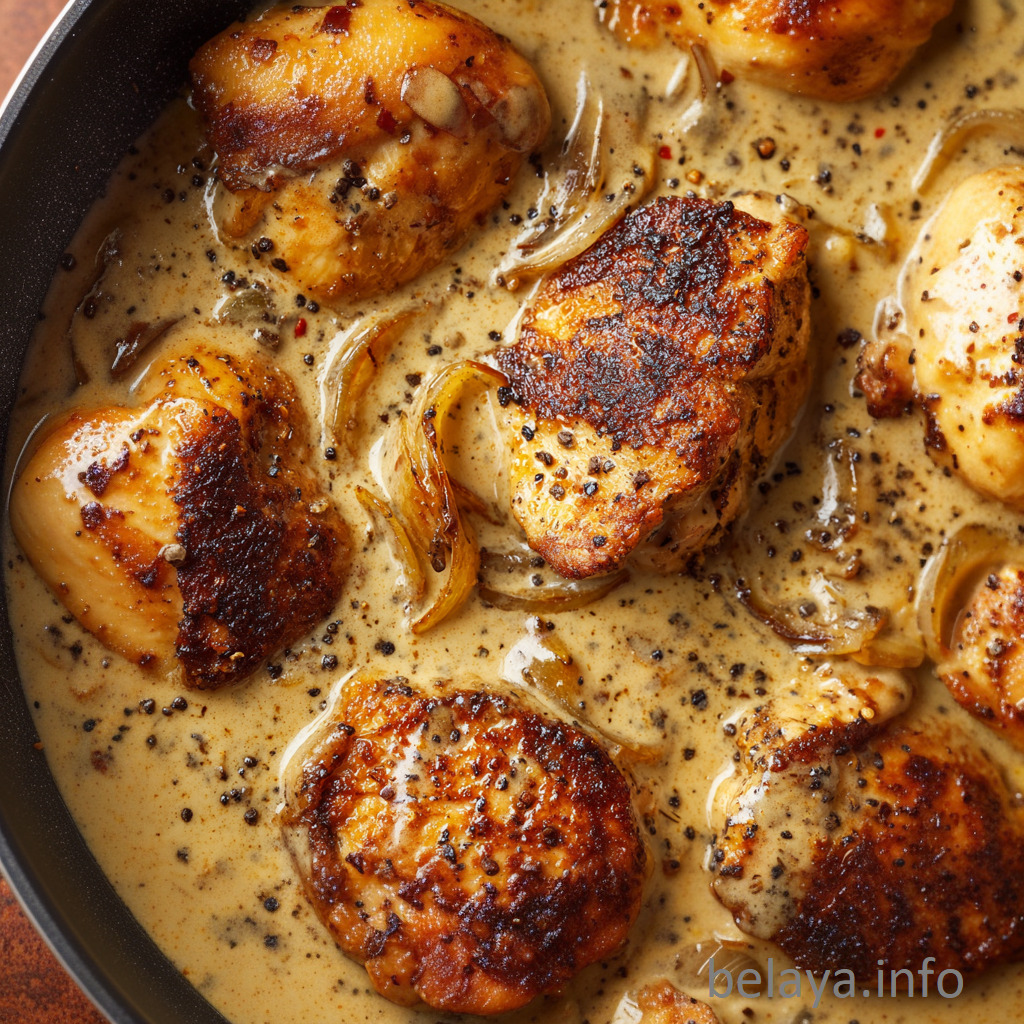
Why People Will Love This Chicken au Poivre Recipe:
It transforms simple chicken into a restaurant-worthy dish, delivering richness and elegance without unnecessary complexity.
The cracked black pepper adds soul and personality, bringing a warm, aromatic heat that elevates the entire dish without overpowering it.
The cream sauce is luxuriously smooth and deeply flavorful, enriched by shallots, butter, and thyme—creating a harmony that feels both comforting and refined.
Golden-seared chicken thighs stay incredibly tender and juicy, offering a satisfying contrast to the bold, velvety sauce.
Bright notes of lemon and fresh herbs cut through the richness, giving the dish balance and sophistication that keeps each bite lively.
It’s a versatile, show-stopping meal, impressive enough for guests yet easy enough to enjoy on a quiet evening at home.
The aroma alone is intoxicating, filling the kitchen with the warmth of toasted peppercorns, sautéed shallots, and buttery pan juices.
Key Ingredients:
Coarsely cracked black peppercorns bring bold character and depth, releasing aromatic oils that define the dish with warmth, spice, and unmistakable French elegance.
Boneless chicken thighs offer rich flavor and natural tenderness, becoming beautifully golden on the outside while staying juicy and delicate within.
Shallots and butter create a refined foundation for the sauce, adding subtle sweetness and silky richness that elevate every layer of flavor.
Heavy cream and chicken broth meld into a luxurious, velvety sauce that captures the browned bits from the pan, turning simple ingredients into something truly decadent.
Fresh thyme and parsley add herbal brightness, balancing the richness with earthiness and freshness.
A squeeze of lemon juice awakens the entire dish, cutting through the cream and pepper to bring clarity, vibrancy, and finesse to the final bite.
Expert Tips:
Crack the peppercorns intentionally, not finely. Coarse pieces release their aroma slowly as they simmer, giving the sauce depth without overwhelming the palate.
Dry the chicken thoroughly before searing. Moisture prevents browning; a dry surface ensures a crisp, golden crust that enriches the sauce with flavorful fond.
Sear in batches to avoid steaming. Overcrowding the skillet cools the pan, dulling the caramelization that gives the dish its signature flavor.
Let the shallots sweat gently in butter. Softening them without browning preserves their delicate sweetness, which harmonizes beautifully with the peppercorn heat.
Deglaze with intention. Scrape every browned bit from the skillet when adding broth—this is where the deepest, most savory notes live.
Simmer the chicken gently, never rapidly. A soft, rolling simmer keeps the meat tender and allows the cream to thicken naturally without splitting.
Add lemon at the end, not earlier. Heat dulls its brightness; swirling it in just before serving brings the sauce to life with freshness and balance.
Finish with herbs as a final flourish. Parsley added at the end preserves its color and freshness, lifting the richness of the dish.
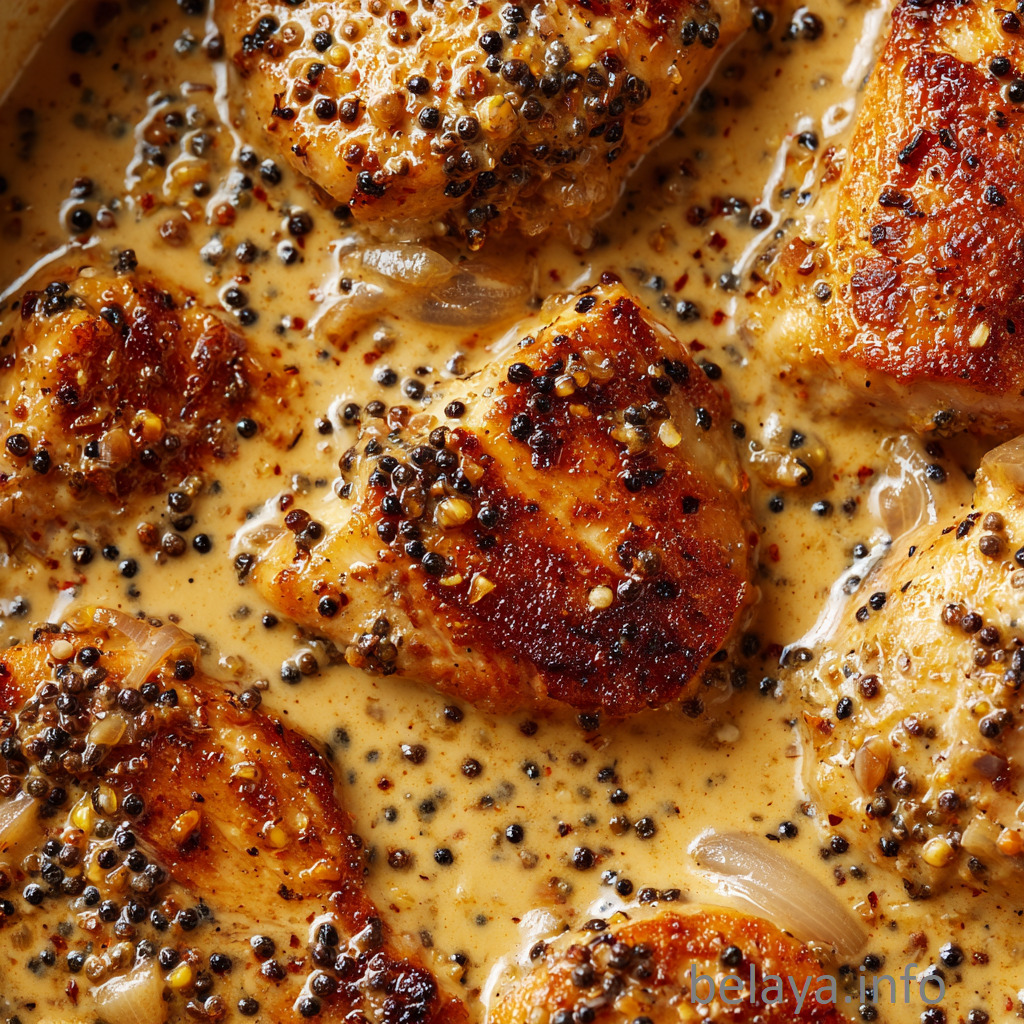
Chicken au Poivre
Ingredients
Whole black peppercorns – 1 tablespoon, coarsely cracked
Extra virgin olive oil – 2 tablespoons
Chicken thighs – 2 pounds boneless, skinless (about 6–8 thighs)
Unsalted butter – 2 tablespoons
Shallot – 2 tablespoons, finely minced
Chicken broth – 1 cup
Heavy cream – ¾ cup
Fresh thyme – 3 sprigs
Lemon juice – from ½ a lemon
Fresh parsley – 2 tablespoons, chopped
Kosher salt – to taste
Instructions
Crush the peppercorns:
Use a mortar and pestle to roughly crack the peppercorns.
Alternatively, place them in a sealed bag and crush with a mallet or the bottom of a saucepan.
Brown the chicken:
Heat the olive oil in a large skillet over medium heat.
Season the chicken thighs with salt.
Working in batches to avoid overcrowding, sear the chicken for about 5 minutes per side, until golden brown.
Transfer to a plate and set aside.
Build the sauce base:
Add the butter and minced shallot to the same skillet.
Sauté for 1–2 minutes until softened.
Stir in the chicken broth, heavy cream, thyme sprigs, and cracked peppercorns, scraping up any browned bits from the pan.
Simmer the chicken:
Return the browned chicken, along with any juices, to the skillet.
Nestle the pieces into the sauce and bring to a gentle simmer.
Cook for 6–8 minutes, basting occasionally, until the chicken is fully cooked through (165°F in the thickest part).
Finish the sauce:
Transfer the chicken to serving plates and discard the thyme sprigs.
Stir the lemon juice into the sauce and simmer for about 2 minutes, until slightly thickened.
Taste and adjust with salt as needed.
Serve:
Stir in the fresh parsley, spoon the sauce over the chicken, and serve immediately.
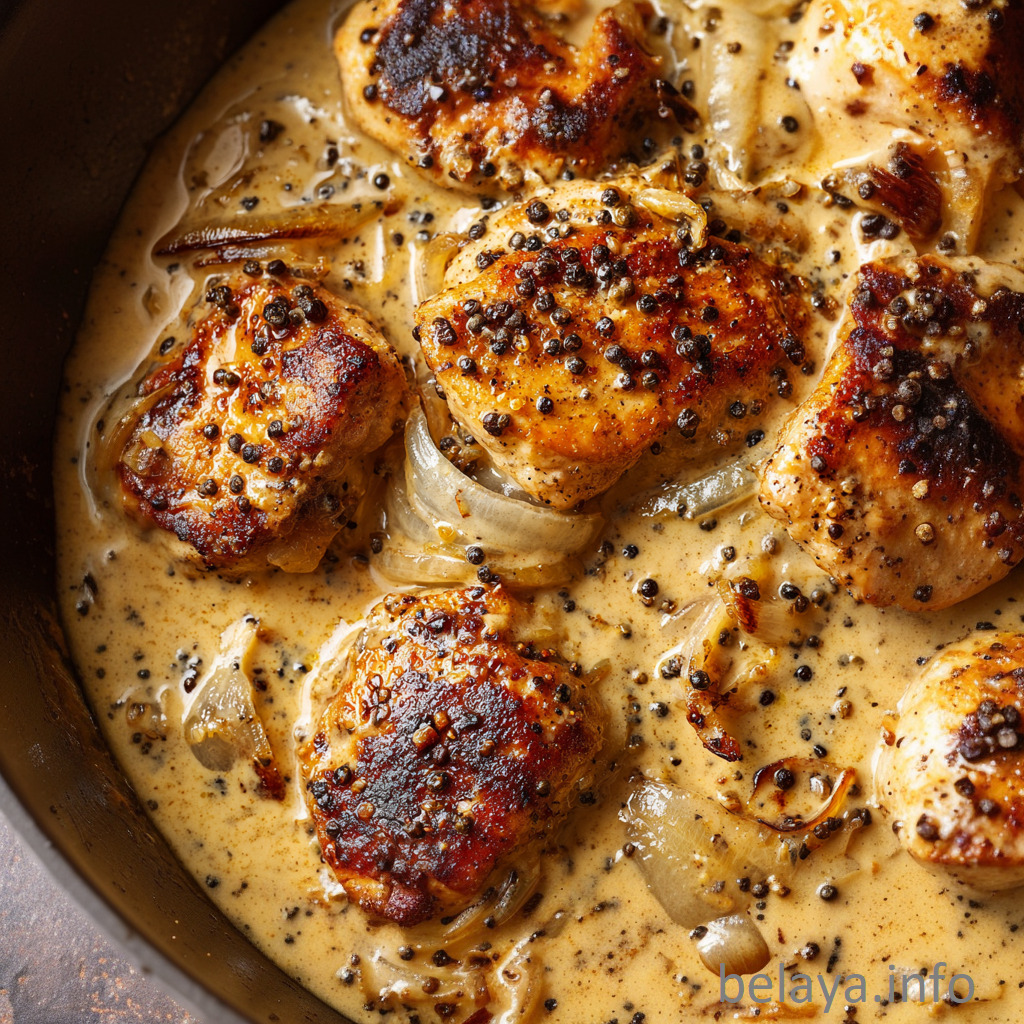
Important Notes When Making Chicken au Poivre:
Coarse cracking is key—finely ground pepper loses its complexity. The rustic shards of crushed peppercorns create the signature heat, aroma, and texture of the dish.
Chicken thighs behave differently from chicken breasts. Their higher fat content keeps them tender during searing and simmering, making them ideal for this rich, pepper-forward sauce.
Avoid overheating the cream. High heat can cause it to separate; keep the simmer gentle so the sauce stays smooth, silky, and cohesive.
Taste the sauce before adding salt. The broth, butter, and pepper already bring salinity and strength—season only at the end to avoid overpowering the delicate balance.
Let the chicken rest briefly after cooking. This allows the juices to redistribute, keeping the meat succulent when cut.
Remove the thyme sprigs before serving. Their job is to infuse subtle earthiness during the simmer; leaving them in too long can create bitterness.
Use fresh lemon juice, not bottled. The brightness and acidity of fresh lemon are essential for cutting through the cream and rounding out the peppercorn heat.
Serve immediately for best texture. As the sauce cools, it thickens; reheating can dull the pepper’s freshness and soften the dish’s delicate layers.
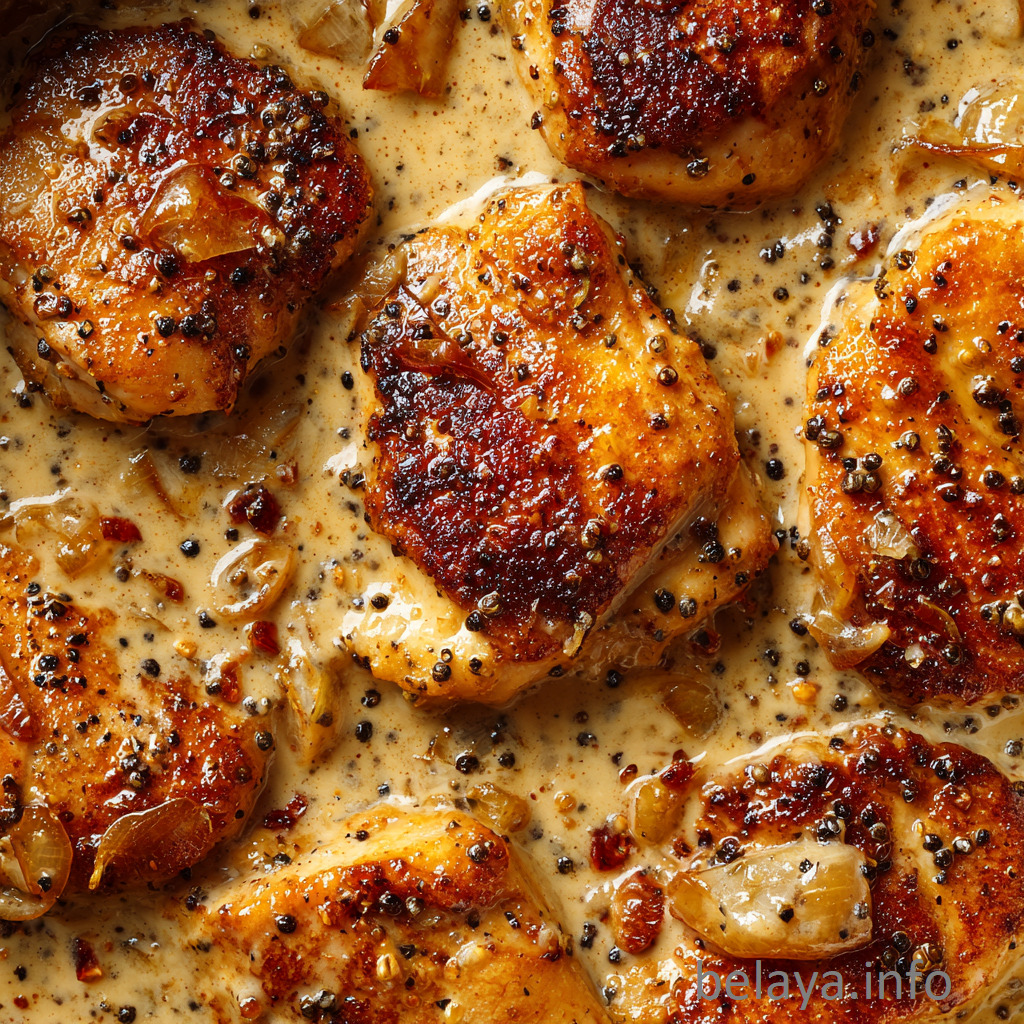
How to Enjoy Chicken au Poivre After Cooking
Let the dish settle before serving.
After removing the chicken from the pan, allow it to rest for a couple of minutes. This pause lets the juices redistribute, ensuring each bite is tender and richly flavored.
Warm your serving plates.
A warm plate helps maintain the velvety consistency of the peppercorn cream sauce, allowing you to savor its texture exactly as intended—smooth, glossy, and perfectly fluid.
Spoon with intention.
When plating, place each chicken thigh gently onto the plate and spoon the sauce generously over the top. Make sure each serving receives both the silky cream base and the aromatic cracked peppercorns.
Choose a thoughtful pairing.
This dish shines when balanced with something soft and subtle—creamy mashed potatoes, buttered noodles, steamed rice, or a simple crusty baguette to capture every drop of sauce.
Appreciate the aroma first.
Before taking the first bite, inhale the fragrance of toasted peppercorn, warm butter, fresh thyme, and lemon. The aroma prepares your senses for the richness that follows.
Eat slowly and savor the layers.
Notice how the heat of the peppercorn gently blooms, how the cream softens its edges, how the lemon brightens each bite, and how the herbs bring everything together in harmony.
Pair with a light accompaniment.
A crisp green salad or steamed green beans provides a refreshing contrast to the luxurious sauce, enhancing the dining experience without overwhelming the palate.
Enjoy with good company—or a quiet moment.
Chicken au Poivre is a dish that invites presence. Whether shared at the table with loved ones or enjoyed alone in peaceful comfort, it brings a sense of warmth and indulgence.
Nutritional Information:
For one serving of Chicken au Poivre (based on 6 servings):
Calories: 410 kcal | Total Fat: 29 g | Saturated Fat: 12 g | Monounsaturated Fat: 12 g | Polyunsaturated Fat: 2 g | Cholesterol: 165 mg | Sodium: 320–480 mg (depending on added salt and broth) | Total Carbohydrates: 5 g | Dietary Fiber: 0.6 g | Sugars: 1.2 g | Protein: 32 g
Frequently Asked Questions:
Can I use chicken breasts instead of thighs?
Yes, but chicken breasts cook faster and can dry out more easily. If substituting, reduce the simmering time and monitor closely to keep the meat tender.
How spicy is this dish with the cracked peppercorns?
The heat is warm and aromatic rather than sharp. Coarsely cracked pepper releases flavor slowly, giving the sauce depth without overwhelming the palate. You can reduce the peppercorns for a milder version.
Can I make the sauce thicker or thinner?
Absolutely.
- For a thicker sauce, simmer uncovered for a few extra minutes.
- For a thinner sauce, add a splash of broth or cream and whisk until smooth.
Is it necessary to brown the chicken in batches?
Yes. Overcrowding the pan causes steaming instead of searing. Browning in batches ensures deep caramelization, which is essential for the rich flavor of the final sauce.
Can Chicken au Poivre be made ahead or reheated?
You can make it ahead, but the sauce thickens as it cools. Reheat gently over low heat while stirring, and add a splash of cream or broth to restore its silky texture without breaking the sauce.
Do I need to crush the peppercorns myself, or can I use pre-ground pepper?
For authentic flavor, you must crush whole peppercorns yourself. Pre-ground pepper lacks the aromatic oils and texture that define Chicken au Poivre. Coarsely cracked pepper gives the dish its signature warmth and depth.
Why is my sauce separating or curdling?
Cream sauces break when cooked over high heat. Keep the sauce at a gentle simmer—not a boil—and add the lemon juice only at the end to maintain its smooth, velvety consistency.
How do I know when the chicken is fully cooked?
Use a thermometer for accuracy: the thickest part should reach 165°F (74°C). The thighs should feel firm yet tender, and the juices should run clear.
Can I make this recipe in stainless steel, cast iron, or non-stick?
Yes, but each behaves differently:
- Stainless steel creates the best fond (browned bits) for a richer sauce.
- Cast iron develops excellent sear but may reduce sauce volume faster.
- Non-stick works, but the flavor may be slightly less intense due to minimal browning.
What if my sauce tastes too peppery or strong?
Balance it by:
- Adding a splash of broth or cream to mellow the heat
- Stirring in a bit more lemon juice for brightness
- Reducing the crushed peppercorn amount slightly next time
The goal is aromatic heat—not overpowering spice.