Fried Meatballs in Tomato Sauce
Fried Meatballs in Tomato Sauce is a rich, comforting dish built around tender pork-and-veal meatballs, Parmesan, fresh herbs, garlic, slow-simmered tomato sauce, and a crunchy finish of toasted almonds or pistachios. The meatballs are first fried until deeply golden, then gently simmered in the sauce so they absorb its savory tomato flavor while remaining juicy inside.
What makes this recipe especially satisfying is the contrast between textures. Frying creates a flavorful browned crust around each meatball, while the final simmer softens the exterior slightly and allows the sauce to penetrate the meat. The toasted nuts added at serving provide an unexpected crisp contrast to the tender meatballs and silky tomato sauce.
The combination of pork and veal also gives the meatballs a balanced character: pork contributes richness and moisture, while veal provides a mild, delicate flavor. Served with bread, pasta, polenta, or vegetables, this is a hearty centerpiece with a rustic, homemade personality.
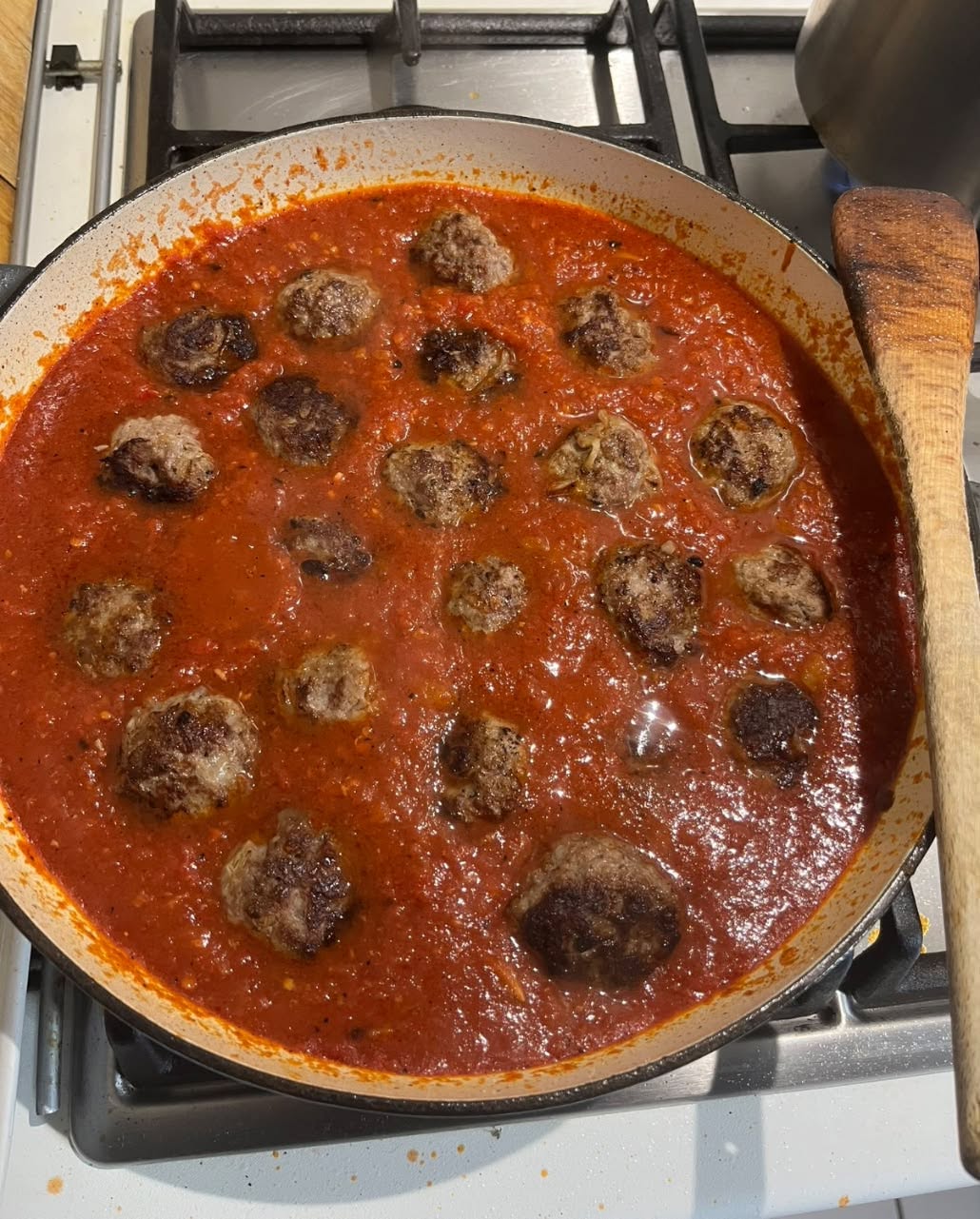
Why People Will Love Fried Meatballs in Tomato Sauce Recipe
The combination of pork and veal creates juicy, flavorful meatballs.
Frying develops a deeply browned exterior before the meatballs enter the sauce.
Parmesan or Pecorino adds savory, nutty depth directly to the meat mixture.
Breadcrumbs help keep the meatballs tender rather than dense.
Eggs provide structure so the meatballs hold together during frying.
Fresh parsley adds brightness to the rich meat.
Garlic gives the filling aromatic depth.
The tomato sauce absorbs some of the flavor released from the fried meatballs.
Simmering the meatballs in sauce keeps them moist.
Tomato paste creates a concentrated, intensely tomato-forward sauce.
Onion adds natural sweetness as it slowly softens.
The recipe uses relatively simple ingredients.
The meatballs can be prepared ahead of time.
They work equally well as a main course or as part of a larger Italian-style meal.
Toasted almonds give the dish an unusual, sophisticated finish.
Pistachios offer an alternative with a slightly sweeter, richer nut flavor.
The sauce is excellent for soaking up with crusty bread.
Leftovers often taste even better after the flavors rest together overnight.
The dish is comforting enough for family dinner but attractive enough for guests.
It can easily be paired with pasta, potatoes, polenta, or vegetables.
Key Ingredients
Ground Pork:
Pork contributes richness, fat, and moisture. It helps prevent the meatballs from becoming dry during frying and simmering.
Ground Veal:
Veal has a milder flavor and delicate texture that balances the richness of the pork. Together, the two meats produce tender but substantial meatballs.
Breadcrumbs:
Breadcrumbs absorb moisture from the eggs and meat juices, helping the meatballs stay tender while maintaining enough structure to hold their shape.
Grated Cheese:
Parmesan or Pecorino adds saltiness, nuttiness, and umami. It also becomes integrated into the meat rather than simply sitting on top of the finished dish.
Eggs:
Eggs bind the meat, breadcrumbs, cheese, and herbs together.
Fresh Parsley and Garlic:
These aromatics prevent the meat mixture from tasting one-dimensional and bring freshness to the rich meat.
Tomato Paste:
Tomato paste forms the concentrated base of the sauce. Cooking it briefly with the onion helps mellow its raw acidity and deepen its flavor.
Toasted Almonds or Pistachios:
The nuts are more than decoration. They introduce crunch, toasted aroma, and a contrasting texture that makes the finished plate more interesting.
Expert Tips
Keep the ground meat cold until you are ready to mix it.
Use a combination of pork and veal with enough fat to prevent dry meatballs.
Finely grate the cheese so it distributes evenly through the mixture.
Chop the garlic very finely so there are no harsh large pieces.
Mix the meat gently rather than kneading it aggressively.
Overmixing can make the meatballs firm and dense.
Add breadcrumbs gradually if the mixture feels unusually dry.
Let the mixture rest for 10–15 minutes before shaping so the breadcrumbs can absorb moisture.
Lightly wet or oil your hands before rolling the meatballs.
Make the meatballs similar in size so they cook evenly.
Chill shaped meatballs briefly if they feel too soft to fry.
Heat the frying oil before adding the meatballs.
Fry in batches rather than overcrowding the pan.
Turn the meatballs carefully so they brown evenly.
The goal of frying is to create color and crust; they can finish cooking in the sauce.
Drain excess surface oil before transferring them to the sauce.
Cook the onion slowly enough to develop sweetness without burning.
Cook the tomato paste briefly before adding water to remove its raw taste.
Keep the sauce at a gentle simmer rather than a hard boil.
Add water gradually so the sauce stays thick enough to coat the meatballs.
Toast the almonds or pistachios shortly before serving for the freshest aroma.
Add the nuts only at the end so they remain crisp.
Fried Meatballs in Tomato Sauce
Ingredients
For the Meatballs
1.1 pounds (500 g) mixed ground pork and veal
2 large eggs
½ cup breadcrumbs, approximately
⅓ cup finely grated cheese, such as Parmesan or Pecorino
Fresh parsley, finely chopped, to taste
Garlic, finely minced, to taste
Salt, to taste
Neutral cooking oil, as needed for frying
For the Tomato Sauce
1 medium onion, finely chopped
Extra-virgin olive oil, as needed
Tomato paste, to taste
Water, as needed to adjust the sauce consistency
Salt, to taste
For Garnish
Toasted almonds or toasted pistachios, roughly chopped
Instructions
Prepare the Meatball Mixture
Place the ground pork and veal in a large mixing bowl.
Add the eggs, breadcrumbs, grated cheese, chopped parsley, minced garlic, and salt.
Using clean hands, gently mix everything together until the ingredients are evenly distributed and the mixture holds together well.
Avoid overworking the meat, as this can make the finished meatballs dense.
Shape the Meatballs
Take small portions of the mixture and roll them between your palms to form evenly sized meatballs.
Continue until all of the mixture has been shaped.
Fry the Meatballs
Pour enough neutral cooking oil into a large skillet to create a generous shallow layer.
Heat the oil over medium to medium-high heat.
Working in batches, carefully add the meatballs without overcrowding the pan.
Fry, turning occasionally, until they are evenly browned and golden on all sides.
Transfer the browned meatballs to a paper towel-lined plate or wire rack to drain excess oil.
Prepare the Tomato Sauce
Heat a drizzle of extra-virgin olive oil in a saucepan over medium heat.
Add the finely chopped onion and cook until soft and lightly golden.
Stir in the tomato paste and cook briefly to deepen its flavor.
Add enough water to create a smooth, spoonable sauce.
Season with salt to taste.
Reduce the heat to low and simmer for about 30 minutes, stirring occasionally.
Add a little more water if the sauce becomes too thick.
Finish the Meatballs in the Sauce
Carefully add the fried meatballs to the simmering tomato sauce.
Gently stir or spoon the sauce over them so they are evenly coated.
Continue cooking over low heat for about 15 minutes, or until the meatballs are fully cooked and have absorbed some of the sauce.
For food safety, the pork-and-veal meatballs should reach at least 160°F / 71°C internally.
Garnish and Serve
Transfer the meatballs and sauce to a serving dish.
Sprinkle with toasted almonds or toasted pistachios for a crunchy, nutty finish.
Serve hot with crusty bread, pasta, polenta, or your favorite side dish.
Important Notes When Making Fried Meatballs in Tomato Sauce
Pork-and-veal meatballs should reach an internal temperature of at least 160°F / 71°C.
If the meatballs are very large, they may need more than 15 minutes in the sauce.
The amount of breadcrumbs may need slight adjustment depending on the meat and egg size.
Too many breadcrumbs can make the meatballs dry.
Too few can make the mixture difficult to shape.
Parmesan and Pecorino are naturally salty, so season the meat mixture carefully.
Tomato paste varies considerably in concentration and acidity.
Add water gradually rather than all at once.
Frying oil temperature strongly affects the final texture.
Oil that is too cool encourages excessive absorption.
Oil that is too hot can brown the exterior before the meatball develops proper structure.
Do not overcrowd the skillet.
The sauce will thicken as it simmers.
Add a splash of water if it becomes too concentrated.
Toasted nuts should be added immediately before serving if you want maximum crunch.
Nuts are a common allergen and can simply be omitted if necessary.
Refrigerate cooked meatballs and sauce promptly after serving.
How to Enjoy TFried Meatballs in Tomato Sauce After Cooking
Allow the meatballs to rest in the finished sauce for about 5 minutes after cooking. This gives the flavors time to settle and allows the sauce to cling more effectively.
Serve several meatballs per person with a generous spoonful of tomato sauce.
Finish each serving with roughly chopped toasted almonds or pistachios just before bringing it to the table.
Crusty Italian bread is one of the best accompaniments because it can absorb the rich tomato sauce.
For a more substantial meal, serve the meatballs over spaghetti, rigatoni, pappardelle, or another pasta with enough surface area to hold the sauce.
Creamy polenta is another excellent option because its mild corn flavor provides a soft contrast to the meatballs.
Mashed potatoes can also work well if you want a particularly comforting meal.
For balance, serve a simple green salad dressed with lemon juice or red wine vinegar alongside the meatballs.
Roasted broccoli, zucchini, green beans, or sautéed spinach can provide additional vegetables without competing with the sauce.
Leftovers can be reheated slowly in a covered saucepan over medium-low heat. Add a small splash of water if the tomato sauce has thickened too much overnight.
Nutrition Information
Approximate nutrition is based on 6 servings, using 500 g mixed pork and veal, 2 eggs, about ½ cup breadcrumbs, ⅓ cup Parmesan or Pecorino, a moderate amount of frying-oil absorption, tomato paste sauce, onion, and a small amount of toasted nuts for garnish.
Calories: 370 kcal | Total Fat: 24 g | Saturated Fat: 8 g | Monounsaturated Fat: 10 g | Polyunsaturated Fat: 3 g | Cholesterol: 120–135 mg | Sodium: 550–750 mg depending on the cheese, salt, and tomato paste | Total Carbohydrates: 12–15 g | Dietary Fiber: 1.5–2 g | Sugars: 3–4 g | Protein: 26–29 g
Additional estimate:
Potassium: 500–650 mg | Calcium: 130–170 mg | Iron: 2.5–3.5 mg | Magnesium: 35–50 mg | Vitamin A: 300–450 IU | Vitamin C: 6–10 mg | Vitamin B12: 1.5–2.5 mcg | Zinc: 3.5–5 mg | Phosphorus: 250–320 mg
The largest nutritional variables are the fat percentage of the ground meat, the amount of frying oil absorbed, how much grated cheese is used, and the quantity of nuts added at serving.
Frequently Asked Questions:
Why combine pork and veal instead of using only one meat?
Pork provides richness and moisture, while veal contributes a milder flavor and tender texture. Together they produce a balanced meatball that is both juicy and delicate.
Why fry the meatballs before putting them in the sauce?
Frying creates browned flavors and a flavorful crust that cannot develop as strongly if the meatballs are simply simmered from raw.
What kind of cheese works best in the meatballs?
Parmesan is milder and nutty, while Pecorino Romano is sharper and saltier. Either works well, and a mixture of the two is also excellent.
Why add toasted almonds or pistachios?
The nuts give the finished dish a crunchy texture and toasted aroma that contrasts with the tender meatballs and soft tomato sauce.
What should I serve with Fried Meatballs in Tomato Sauce?
Crusty bread, pasta, polenta, mashed potatoes, roasted vegetables, or a fresh green salad are all excellent choices.
Why are my meatballs tough?
The mixture was probably overworked, or too many breadcrumbs were added. Mix only until everything is combined and shape the meatballs gently.
Why are my meatballs falling apart while frying?
The mixture may be too wet or may not have enough binder. Let it rest after mixing, add a small amount of breadcrumbs if needed, and chill the shaped meatballs before frying.
Can I skip frying and cook the meatballs directly in the sauce?
Yes, but the texture and flavor will be different. Frying creates a browned crust and deeper flavor, while directly simmered meatballs will be softer.
How do I know when the meatballs are fully cooked?
Use an instant-read thermometer in the center of a meatball. Pork-and-veal meatballs should reach at least 160°F / 71°C.
Can I make this recipe ahead of time?
Yes. The meatballs and sauce can be prepared a day ahead and refrigerated together. Reheat gently over low heat, adding a little water if the sauce has become too thick.