Pizza Rustica Recipe (Italian Easter Pie)
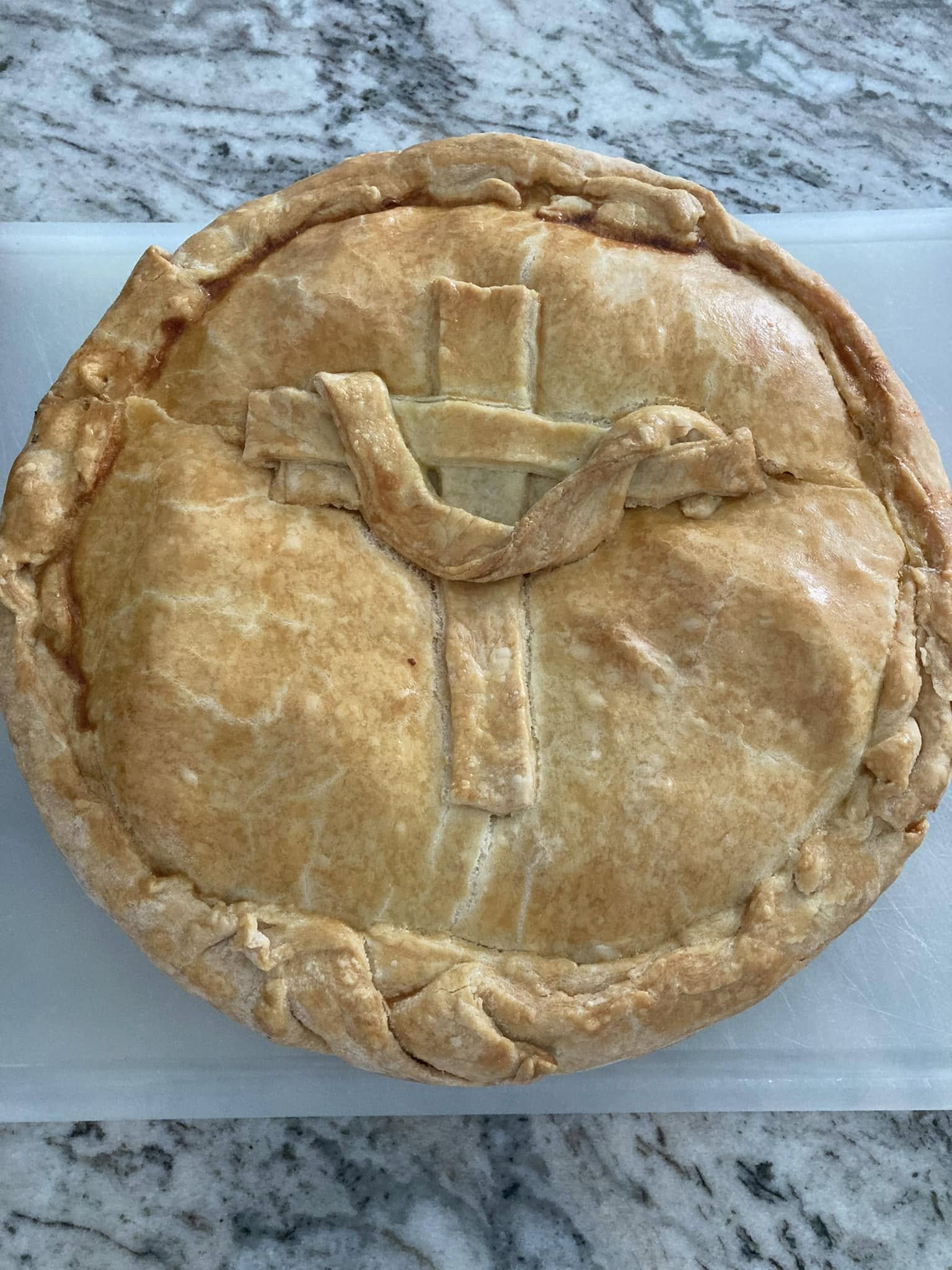
Pizza Rustica, also known as Italian Easter Pie, is a rich and deeply symbolic dish that represents abundance, celebration, and the end of Lenten fasting.
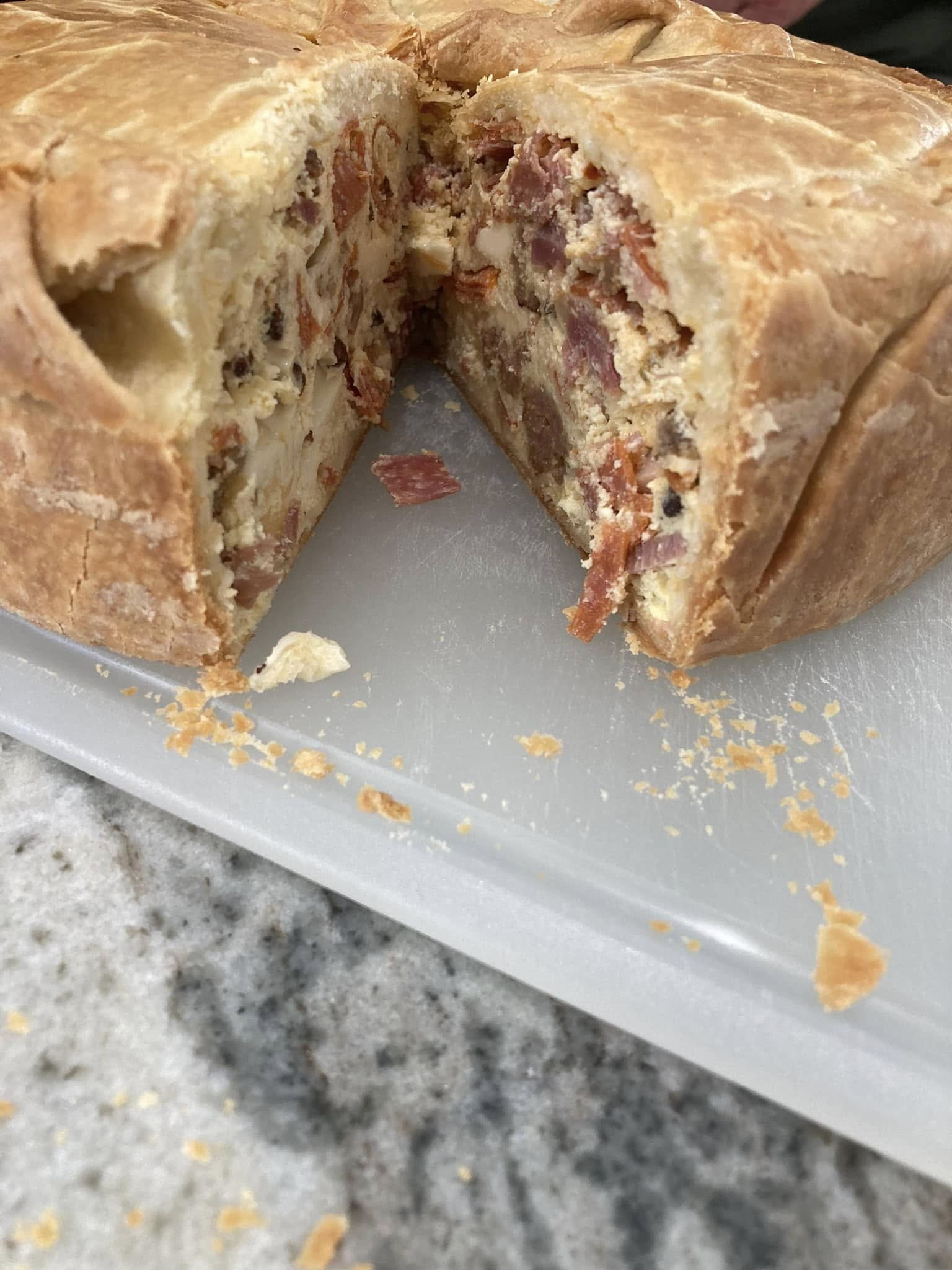
Packed with creamy ricotta, savory cured meats, cheeses, and often layered with eggs, it’s more than a pie—it’s a feast baked into a golden crust.
Each slice tells a story of tradition and indulgence, where humble ingredients come together to create something luxurious and satisfying. The contrast between the buttery, slightly crisp pastry and the rich, hearty filling makes every bite feel complete—comforting yet elevated. This is the kind of dish meant to be shared slowly, bringing family together around the table in true festive spirit.
Why People Will Love Pizza Rustica (Italian Easter Pie)
Deeply rich, layered flavor in every bite
The combination of creamy ricotta, melty mozzarella, sharp aged cheese, and savory cured meats creates a complex, multi-dimensional taste that feels indulgent and satisfying.
A perfect balance of textures
You get a buttery, slightly crisp crust on the outside, while the inside remains soft, creamy, and packed with hearty fillings—each bite delivers contrast and comfort.
A true celebration dish with cultural meaning
Traditionally made for Easter, this pie represents abundance after fasting. It carries emotional value and heritage, making it more than just food—it’s an experience.
Hearty and filling—almost a complete meal
With protein from eggs, cheese, and meats, plus a rich pastry base, one slice is substantial enough to satisfy hunger and keep you full.
Impressive yet homemade
Its tall, layered appearance looks like something from a specialty bakery, but it’s made from simple, honest ingredients—perfect for impressing guests.
Versatile for different occasions
While rooted in Easter tradition, it works just as well for brunch, family gatherings, holidays, or even as a make-ahead meal during the week.
Customizable to personal taste
You can adjust the meats, cheeses, or herbs based on preference—making it adaptable while still maintaining its traditional essence.
Even better as it rests
The flavors deepen and meld over time, meaning it often tastes even better a few hours—or even a day—after baking.
Perfect for sharing and gathering
This is a dish meant to be sliced and shared. Its size and richness make it ideal for bringing people together around the table.
A unique alternative to typical pies or casseroles
Unlike sweet pies or standard savory bakes, Pizza Rustica offers a distinct Italian flavor profile that feels special, memorable, and different.
Key Ingredients
Ricotta Cheese (3 cups)
The heart of the filling. Ricotta provides a creamy, slightly grainy texture that binds everything together while keeping the interior light rather than dense. Draining it properly is key to avoiding a watery pie.
Eggs (in both dough and filling)
Eggs play a dual role—adding richness to the crust and acting as a binder in the filling. They give structure, helping the pie set into clean, sliceable layers.
Fresh Mozzarella (2 cups)
Adds soft, milky richness and pockets of gentle melt throughout the pie. Unlike aged cheeses, mozzarella brings moisture and a subtle stretch that contrasts beautifully with the dense filling.
Pecorino or Parmigiano-Reggiano (1 cup)
These aged cheeses provide sharp, salty depth. They intensify the flavor profile and balance the mildness of ricotta, giving the pie its signature savory punch.
Cured Meats (Salami & Mortadella, 1/2 cup each)
The soul of the dish’s savory character. These meats bring bold seasoning, fat, and umami richness. Their diced form ensures every bite has a burst of flavor.
Fresh Parsley
A subtle but important contrast. It adds freshness and a hint of brightness that cuts through the richness of cheese and meat, preventing the dish from feeling too heavy.
Black Pepper
Not just seasoning—this adds warmth and gentle spice that enhances all the other flavors without overpowering them.
Hard-Boiled Eggs (optional)
A traditional addition that adds visual appeal and symbolic meaning. They also provide a firmer texture contrast within the creamy filling.
Shortcrust Pastry (Flour, Butter, Eggs, Wine)
The foundation of the pie. The butter creates a tender, flaky crust, while the wine adds subtle acidity and complexity, making the pastry both sturdy and flavorful.
Lemon Zest (in the dough)
A small but transformative detail. It adds a light, aromatic brightness that lifts the richness of the entire pie and prevents the crust from tasting heavy.
Expert Tips:
Drain the ricotta thoroughly for a firm, sliceable pie
Excess moisture is the biggest enemy of Pizza Rustica. Let ricotta sit in a colander (or cheesecloth) until it’s thick and spreadable—this prevents a soggy, loose filling.
Keep your dough cold at every stage
Cold butter and chilled dough create a tender, flaky crust. If the dough becomes soft while rolling, return it to the fridge briefly—this small step makes a big difference in texture.
Don’t overwork the pastry dough
Mix just until the dough comes together. Overworking develops too much gluten, resulting in a tough crust instead of a delicate, crumbly one.
Use wine gradually to control hydration
Add the chilled white wine slowly, just until the dough forms. Too much liquid makes the dough sticky and harder to roll; too little makes it crack.
Roll evenly for consistent baking
Aim for about ⅛-inch thickness. Uneven dough leads to some areas undercooked and others too thick or dry.
Line the pan carefully and reinforce weak spots
Press the dough gently into corners and up the sides. If you see thin spots or tears, patch them with scraps—this pie needs a sturdy base to hold the heavy filling.
Balance your filling for even distribution
Mix thoroughly so every slice contains cheese, meat, and herbs. Uneven mixing can lead to pockets that are too salty or too bland.
Avoid overfilling the crust
Fill generously but leave a small margin at the top. Overfilling can cause leakage or prevent the top crust from sealing properly.
Seal edges tightly to prevent leaks
Press and pinch the edges well, using a little water if needed. This keeps the filling enclosed and helps the pie hold its shape.
Vent the top crust for controlled baking
Cutting a small “X” allows steam to escape, preventing the crust from puffing unevenly or cracking.
Bake until deeply golden and fully set
Don’t rely on time alone—look for a rich golden crust and a firm center. The filling should feel set, not jiggly.
Let it cool completely before slicing
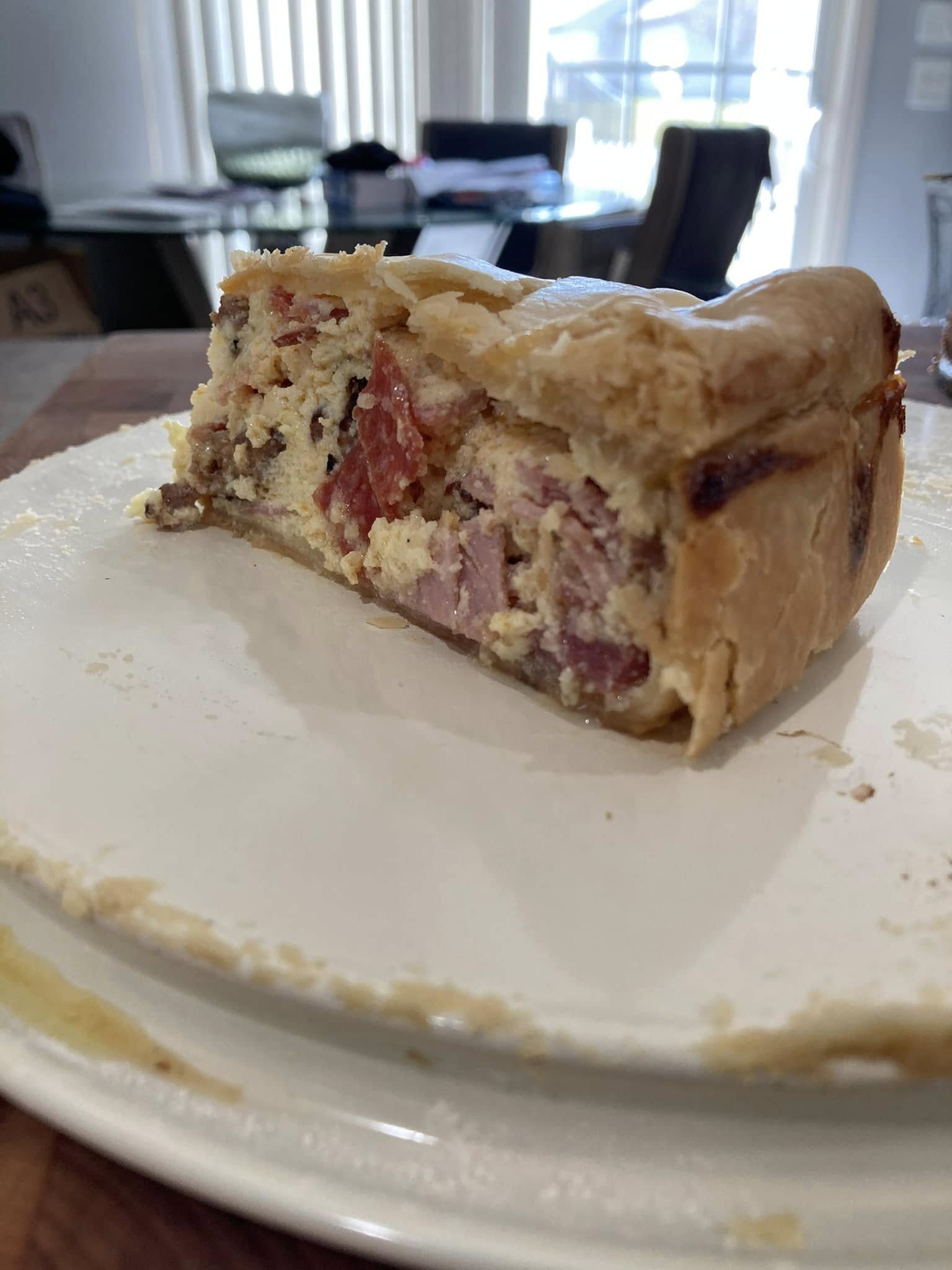
This is critical. Cutting too early will cause the filling to collapse. Cooling allows the structure to stabilize and flavors to deepen.
Use a springform pan for best results
It makes removal easy and preserves the pie’s tall, layered structure—important for both presentation and clean slicing.
Flavor improves with time
Pizza Rustica often tastes even better several hours later or the next day, as the flavors fully meld into a cohesive, rich profile.
Pizza Rustica (Italian Easter Pie)
Ingredients:
Shortcrust Pastry Ingredients:
2 ½ cups all-purpose flour (unbleached)
2 tablespoons sugar
¼ teaspoon kosher salt
6 oz (1½ sticks) unsalted butter, diced
2 eggs (1 whole, 1 separated; reserve the yolk for brushing)
Zest of 1 organic lemon
3 to 4 tablespoons chilled dry white wine
Filling Ingredients:
3 cups (24 oz) whole milk ricotta
3 large eggs
2 cups (8 oz) fresh mozzarella, cubed or torn
1 cup (4 oz) grated Pecorino or Parmigiano-Reggiano (or both)
½ cup (4 oz) diced salami
½ cup (4 oz) diced mortadella
½ cup chopped fresh parsley
1 teaspoon freshly ground black pepper
3 hard-boiled eggs, sliced (optional)
Instructions
Make the Dough:
Food Processor Method:
Add flour, sugar, and salt to a food processor.
Add the butter and pulse until the texture resembles coarse crumbs.
Add the whole egg, egg white, and lemon zest.
Slowly incorporate the chilled wine, a tablespoon at a time, pulsing until the dough just begins to come together. It should be moist but not sticky.
By Hand:
Combine the dry ingredients (flour, sugar, salt) in a mixing bowl.
Add the butter and work it into the flour with your fingers until crumbly. In a separate bowl, whisk the whole egg, egg white, and lemon zest.
Stir this into the flour mixture.
Gradually add cold wine until the dough forms. It should come together without being overly wet.
Turn the dough onto a floured surface. Shape into a ball, then divide into two portions — one slightly larger than the other.
Flatten both into disks, wrap them in plastic, and refrigerate for 1 hour.
Prepare the Filling:
If your ricotta is watery, drain it in a colander for about 15 minutes.
In a large bowl, mix the ricotta with the eggs until smooth.
Fold in the mozzarella, grated cheese, salami, mortadella, parsley, and black pepper.
Stir until evenly combined. Set aside.
Assemble the Torta:
Preheat oven to 375°F (190°C).
Roll the larger dough disk into a 14-inch round, about ⅛ inch thick. Carefully place it into a 9-inch springform pan, pressing it up the sides. Trim off any extra dough, and patch holes if needed using scraps.
Spoon the ricotta filling into the crust and spread evenly. Layer with slices of hard-boiled egg if using.
Roll out the second dough disk into a 12-inch circle. Lay it over the top of the filling. Trim excess and seal the edges by pinching them together. Use a little water to help the dough stick if necessary.
Beat the reserved egg yolk with 1 teaspoon of water and brush over the top crust. Cut a small “X” in the center to vent steam.
Place the pan on a baking sheet and bake for 50–60 minutes, or until the crust is golden and the center feels set. Let the torta cool for at least 1 hour before slicing and serving.
Important Notes When Making Pizza Rustica:
Moisture control determines success or failure
Ricotta must be well-drained. Excess water will create a loose, soggy filling that won’t hold its shape when sliced. Aim for a thick, spreadable consistency.
This is a dense, structured pie—not a light quiche
The filling should be rich and compact, not airy. Don’t expect it to jiggle like a custard—proper Pizza Rustica is firm and sliceable.
Crust thickness must support the heavy filling
Unlike delicate pies, this crust needs to be sturdy. Too thin, and it may tear or leak; too thick, and it becomes doughy. Balance is key.
Flavor balance is built into the ingredients
The saltiness from cured meats and aged cheeses is already strong—avoid adding extra salt unless you taste and adjust carefully.
Ingredient quality has a big impact
Because the recipe is simple, high-quality cheeses, fresh ricotta, and good cured meats make a noticeable difference in the final flavor.
Even layering ensures consistent slices
Spread the filling evenly and distribute meats and cheeses well. This prevents uneven bites where some slices are overloaded and others bland.
Eggs are the structural backbone of the filling
Don’t reduce them. They bind the mixture and allow the pie to set properly—without enough eggs, the filling may collapse.
Cooling time is not optional
The pie needs at least 1 hour (often more) to fully set. Cutting too soon will cause the layers to fall apart and lose definition.
It’s meant to be served at room temperature or slightly warm
Unlike many baked dishes, Pizza Rustica is traditionally enjoyed after resting. This enhances flavor and improves texture.
Top crust sealing prevents leaks and dryness
Properly sealing the edges keeps moisture inside and ensures the filling cooks evenly without drying out.
Watch for overbrowning during baking
If the crust darkens too quickly, loosely cover with foil. This allows the inside to cook through without burning the exterior.
Springform pan is highly recommended
The height and density of the pie make removal difficult in standard pans. A springform preserves shape and presentation.
This is a make-ahead friendly dish
In fact, it often tastes better the next day as flavors meld together—making it ideal for holidays and gatherings.
Portion size is richer than it looks
Small slices go a long way due to the density and richness—plan servings accordingly, especially for large gatherings.
How to Enjoy Pizza Rustica After Cooking:
Let it rest fully before serving (essential step)
After baking, allow the pie to cool for at least 1–2 hours. This resting time lets the filling set properly, ensuring clean slices and a firm, structured texture.
Serve at room temperature for best flavor
Unlike many baked dishes, Pizza Rustica shines when served at room temperature. The flavors of cheese, meats, and herbs become more balanced and pronounced.
Slice with a sharp, steady motion
Use a sharp knife and cut slowly to maintain the beautiful layers. Wipe the blade between cuts for clean, bakery-style presentation.
Start simple to appreciate the full profile
Try your first bite plain—this allows you to fully experience the richness of the ricotta, the saltiness of cured meats, and the buttery crust.
Pair with light, fresh sides to balance richness
Serve alongside a crisp green salad, lightly dressed vegetables, or fresh fruit. The freshness helps cut through the dense, savory filling.
Add a drizzle or condiment (optional)
A touch of olive oil, a squeeze of lemon, or even a mild chili oil can enhance flavor without overpowering the traditional taste.
Serve as part of a larger spread
This pie works beautifully on a holiday table or brunch spread. Pair it with bread, cheeses, olives, and simple sides for a complete Italian-style meal.
Enjoy with the right beverage pairing
It pairs well with coffee (for brunch), sparkling water, or a light white wine. The acidity helps balance the richness of the dish.
Reheat gently if preferred warm
If you prefer it warm, reheat slices in the oven at a low temperature. Avoid microwaving too long, as it can make the crust soft and the filling uneven.
Use leftovers creatively
Leftover slices can be enjoyed cold, reheated, or even packed for lunch. The flavors continue to develop, often tasting even better the next day.
Make it the centerpiece of gathering moments
Pizza Rustica is meant to be shared. Serve it in generous slices, letting it bring people together—just as tradition intended.
Store properly to maintain quality
Keep leftovers refrigerated and well-covered. Bring to room temperature or gently warm before serving again for the best texture and flavor.
Nutrition Information:
YIELD: 10 | SERVING SIZE: 1
Calories: 420–480 kcal | Total Fat: 28 g | Saturated Fat: 13 g | Monounsaturated Fat: 10 g | Polyunsaturated Fat: 2.5 g | Cholesterol: 160 mg | Sodium: 800–950 mg (depending on meats and cheese) | Total Carbohydrates: 22 g | Dietary Fiber: 1 g | Sugars: 2 g | Protein: 20 g
Frequently Asked Questions:
Can Pizza Rustica be made in advance?
Yes, Pizza Rustica is ideally suited for advance preparation.
The assembled pie can be refrigerated, unbaked, for up to 24 hours before baking.
Additionally, the fully baked torta can be stored in the refrigerator for 3–4 days and served either at room temperature or gently reheated, allowing flavors to deepen over time.
Can I freeze Pizza Rustica?
Pizza Rustica freezes well either before or after baking.
If freezing unbaked, ensure it is tightly wrapped in plastic and foil, and bake from frozen, adding approximately 10–15 minutes to the total baking time.
If freezing after baking, allow the pie to cool completely, wrap securely, and freeze for up to 2 months.
Thaw in the refrigerator overnight before reheating.
What are suitable substitutions for salami and mortadella?
In the event that salami or mortadella is unavailable, other cured meats such as prosciutto, pancetta, cooked ham, or even cooked Italian sausage can be used.
Flavor profiles may vary, but the structural and savory elements of the filling will remain intact.
Is it necessary to use both Pecorino and Parmigiano-Reggiano?
While using both cheeses contributes to a more complex flavor profile—combining Pecorino’s sharpness with Parmigiano-Reggiano’s nuttiness—it is acceptable to use either one based on availability or preference.
Grana Padano may also serve as a viable alternative.
How do I know when the Pizza Rustica is fully cooked?
The torta is fully baked when the crust is deeply golden and the filling has set firmly, typically after 50 to 60 minutes at 375°F (190°C).
Inserting a knife or skewer into the center should yield no wet or overly soft filling.
Allowing the pie to rest for at least 1 hour post-baking is critical for complete setting.
What if my dough is too dry or too wet when mixing?
If your dough feels too dry and crumbly, add a little more cold wine, one teaspoon at a time, just until it comes together.
If it’s too sticky, lightly dust with flour while kneading.
The goal is a soft, pliable dough that’s not overly wet.
How do I prevent the bottom crust from getting soggy?
Make sure to drain your ricotta well before mixing the filling.
Also, allow the torta to cool after baking—this helps the filling firm up and prevents excess moisture from softening the crust.
Can I roll out the dough in advance?
You can roll out the dough up to a few hours ahead.
Just layer it between sheets of parchment paper, cover with plastic wrap, and refrigerate until ready to assemble the pie.
Do I need a springform pan?
A springform pan is ideal for easy removal and presentation, but you can also use a deep 9-inch pie dish or cake pan.
Just be sure to grease it well and leave enough crust hanging over the edge to seal the top layer.
How do I know the filling is fully set without cutting into it?
The pie should feel firm in the center and puffed slightly when done. Gently shake the pan—if the center doesn’t jiggle and the top is golden brown, it’s ready.
Letting it rest after baking is essential to allow the filling to finish setting.