Pasta Fazool
Pasta Fazool is the Italian-American name for pasta e fagioli, a rustic dish centered on creamy beans, small pasta, tomatoes, garlic, olive oil, and aged Italian cheese. It sits somewhere between a hearty soup and a thick bean-and-pasta stew, with the final consistency depending on how much bean broth and pasta water you leave in the pot.
This version develops much of its character from dried cannellini beans, hand-crushed San Marzano tomatoes, generous black pepper, extra-virgin olive oil, and an optional Parmigiano-Reggiano rind. As the beans simmer, they release starch into the broth, creating natural creaminess without needing cream or flour.
Finishing the partially cooked pasta directly in the beans is especially important. The pasta absorbs the seasoned broth while releasing additional starch, bringing everything together into a comforting dish that is savory, garlicky, tomato-rich, peppery, creamy, and deeply satisfying.
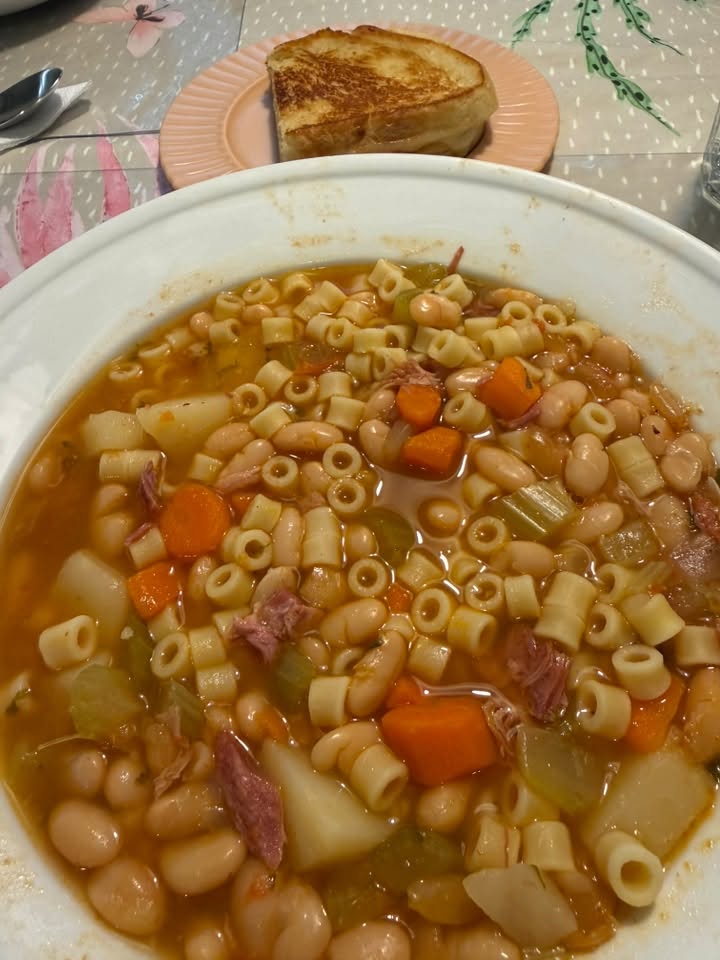
Why People Will Love Pasta Fazool Recipe
Dried cannellini beans develop a creamier texture than many canned beans.
The bean cooking liquid becomes part of the sauce, giving the dish natural body.
Extra-virgin olive oil adds richness without making the dish heavy.
Garlic provides a strong but simple aromatic foundation.
Onion contributes sweetness as it gently softens.
San Marzano tomatoes add acidity and natural sweetness without turning the dish into a tomato sauce.
Hand-crushed tomatoes create a rustic texture.
A Parmigiano rind slowly releases deep savory flavor into the broth.
Small pasta shapes capture beans and sauce in every spoonful.
Freshly ground black pepper gives the dish distinctive warmth.
Pecorino Romano adds sharp, salty flavor.
Parmigiano-Reggiano offers a nuttier, slightly milder alternative.
Fresh parsley provides a clean herbal finish.
The consistency can be adjusted from brothy to thick and creamy.
It uses inexpensive pantry ingredients.
It is filling enough to be served as a complete meal.
Leftovers become even richer as the flavors settle.
The recipe is easy to customize with different beans or small pasta shapes.
Key Ingredients
Cannellini or Navy Beans:
The beans are the foundation of Pasta Fazool. Cannellini beans become particularly creamy while still retaining their shape, whereas navy beans produce an equally comforting but slightly softer result.
Small Pasta:
Elbows work beautifully, but ditalini, small shells, tubetti, or small macaroni are also excellent. Small shapes distribute evenly through the beans rather than dominating them.
San Marzano Tomatoes:
Whole tomatoes crushed by hand provide rustic pieces of tomato and enough acidity to brighten the beans without creating a smooth marinara-style sauce.
Extra-Virgin Olive Oil:
A generous amount gives the dish richness and helps carry the flavors of garlic, onion, tomato, and black pepper.
Garlic:
Garlic is one of the dominant aromatic flavors. Cooking it gently prevents bitterness and allows its sweeter savory qualities to emerge.
Parmigiano-Reggiano Rind:
Optional but extremely useful, the rind slowly releases salty, nutty umami into the cooking liquid.
Pecorino Romano or Parmigiano-Reggiano:
Pecorino is saltier and sharper, while Parmigiano is nuttier and slightly sweeter. Using both gives a particularly balanced finish.
Fresh Parsley:
Parsley brightens a dish built primarily from rich beans, pasta, tomato, olive oil, and cheese.
Expert Tips
Sort dried beans carefully before soaking to remove stones or damaged beans.
Overnight soaking usually gives the most predictable cooking time.
Use fresh water for cooking after soaking.
Keep the garlic and onion over moderate heat and do not let them brown heavily.
Maintain a gentle simmer rather than a vigorous boil so the beans remain intact.
Begin checking the beans early because their age dramatically affects cooking time.
Very old beans may take substantially longer to soften.
For the most reliable bean tenderness, consider simmering the beans until mostly tender before
adding the tomatoes, because acidic ingredients can slow bean softening.
A Parmesan rind should simmer gently and be removed before serving.
Cook the pasta separately for only about half its normal cooking time.
Reserve plenty of pasta water before draining.
Finish the pasta in the bean mixture so it absorbs the broth.
Add pasta water gradually until you reach the consistency you prefer.
For extra creaminess, mash a small portion of the beans against the side of the pot.
Grind black pepper freshly for the strongest aroma.
Add grated cheese after the pasta is nearly finished so it melts into the broth.
Let the finished pot rest for 5–10 minutes before serving.
Pasta Fazool
Ingredients:
1 pound dried cannellini beans navy beans will work just as well
1/4 cup extra-virgin olive oil
4-6 plump garlic cloves chopped
1 medium yellow onion chopped
28-32 oz. can whole San Marzano tomatoes crushed by hand (or use chopped – do not use tomato sauce or puree)
leftover rind of Parmigiano-Reggiano OPTIONAL BUT DELICIOUS
1 TBS each Kosher salt and lots of freshly ground pepper add to taste (I use tons of pepper)
1/2 to 1 pound small dry pasta shape I use Barilla elbows
1/2 cup chopped fresh Italian parsley plus more for garnish
1 cup Pecorino Romano or Parmigiano Reggiano or a combination of the two, coarsely grated
Instructions:
Soak the beans:
Sort through the dried cannellini or navy beans, discarding any debris.
Place them in a large pot and cover with plenty of water.
Soak overnight. (Quick-soak method: bring to a boil, turn off heat, and soak for 1 hour—though this can cause the beans to split more easily.)
Drain and prep:
Drain and rinse the soaked beans thoroughly using a colander.
Set aside while you prepare the aromatics.
Sauté the aromatics:
In a large soup pot, heat the olive oil over medium heat.
Add the chopped garlic and onion.
Sauté gently for 1–2 minutes, just until translucent and fragrant—do not let them brown.
Cook the beans:
Add the drained beans to the pot.
Pour in enough water to cover them by about 2 inches.
Stir in the crushed San Marzano tomatoes, salt, and black pepper. (Optional: add a Parmigiano-Reggiano rind for deeper flavor if you have one.)
Simmer gently:
Bring everything to a boil, then reduce to a low simmer.
Cover and cook for about 1 hour and 20 minutes, or until the beans are tender and creamy but not mushy.
Start checking doneness around the 45-minute mark.
Cook the pasta separately:
Meanwhile, bring a second pot of salted water to a boil.
Cook the pasta for half the time listed on the package, then drain.
Reserve about 2 cups of pasta water.
Combine and finish:
Add the partially cooked pasta to the bean mixture.
Stir in lots of freshly ground black pepper (up to 1 tablespoon).
Simmer gently over low heat until the pasta is al dente, adding reserved pasta water as needed to reach your desired consistency—brothy or thick.
Serve and garnish:
Ladle into bowls and garnish with chopped parsley and a generous sprinkle of grated Pecorino Romano or Parmigiano Reggiano.
Serve hot with crusty bread or a side salad.
Important Notes When Making Pasta Fazool
Dried beans do not always cook in exactly the same amount of time.
Acid from tomatoes can slow the softening of beans, especially older beans.
If your beans remain firm, continue simmering rather than assuming they are finished based solely on time.
Do not allow the pot to dry out while the beans cook.
Add hot water when necessary to keep the beans properly submerged.
Pasta continues absorbing liquid even after the heat is turned off.
The dish may become much thicker after 15–20 minutes.
Reserved pasta water is useful for loosening both freshly cooked and reheated Pasta Fazool.
Pecorino Romano and Parmigiano-Reggiano both contribute significant sodium.
One tablespoon of salt is substantial, so seasoning should ultimately be adjusted by taste.
The Parmesan rind should be discarded before serving.
Whole canned tomatoes are preferable to smooth tomato purée for this rustic version.
Do not rinse the cooked pasta.
If storing leftovers, the pasta will continue absorbing broth overnight.
Reheated portions usually need additional water or stock.
How to Enjoy Pasta Fazool After Cooking
Let the finished Pasta Fazool stand for about 5–10 minutes before serving. The bean starch and pasta starch will continue thickening the broth slightly.
For a traditional rustic presentation, ladle it into deep bowls with enough liquid to surround the pasta and beans.
Finish each bowl generously with freshly grated Pecorino Romano, Parmigiano-Reggiano, or a combination of both.
Add chopped Italian parsley immediately before serving for freshness and color.
A drizzle of good extra-virgin olive oil over the top adds another layer of fruity richness.
If you enjoy the strong pepper character of this recipe, finish each serving with additional freshly ground black pepper.
Crushed red pepper flakes can also be offered for anyone who wants a little chile heat.
Serve with crusty Italian bread, focaccia, or garlic bread to soak up the thick bean broth.
A simple arugula, escarole, or mixed-green salad dressed with lemon or red wine vinegar provides a refreshing contrast.
The dish can also be served thicker the following day. Add only enough water or broth during reheating to bring it back to your preferred consistency.
Nutrition Information
Approximate nutrition per serving, assuming about 8 servings, 1 pound dried beans, approximately 12 ounces dry pasta, the full amount of olive oil, and 1 cup grated cheese:
Calories: 490 kcal | Total Fat: 14 g | Saturated Fat: 4 g | Monounsaturated Fat: 7 g | Polyunsaturated Fat: 1.8 g | Cholesterol: 10–15 mg | Sodium: 650–950 mg depending on the cheese and added salt | Total Carbohydrates: 70 g | Dietary Fiber: 12 g | Sugars: 8 g | Protein: 22 g
Additional estimate:
Potassium: 950–1,200 mg | Calcium: 220–300 mg | Iron: 5–7 mg | Magnesium: 100–135 mg | Vitamin A: 700–1,000 IU | Vitamin C: 12–20 mg | Folate: 200–270 mcg | Zinc: 2.5–3.5 mg
Note: Nutrition varies significantly because the recipe allows anywhere from ½ to 1 pound of pasta. Using the full pound of pasta will increase calories and carbohydrates per serving, while using only ½ pound will produce a more bean-forward dish with fewer carbohydrates.
5 Smart Frequently Asked Questions About This Recipe
What is Pasta Fazool?
Pasta Fazool is the Italian-American pronunciation of pasta e fagioli, meaning “pasta and beans.” Recipes vary from brothy soups to very thick bean-and-pasta dishes.
Is Pasta Fazool supposed to be a soup or a stew?
Either can be correct. Some families make it quite brothy, while others cook it until thick enough that the beans and pasta dominate the bowl.
Why use dried beans instead of canned beans?
Dried beans create their own flavorful, starchy cooking liquid, which gives the finished dish a creamier and more integrated texture.
What pasta is best for Pasta Fazool?
Elbows, ditalini, small shells, tubetti, or other small pasta shapes are ideal because they remain proportional to the beans.
What should I serve with Pasta Fazool?
Crusty bread, focaccia, garlic bread, a green salad, sautéed escarole, or roasted vegetables all work very well.
Why are my beans still hard after the suggested cooking time?
Bean age, soaking time, water mineral content, and acidic ingredients all influence cooking. Older beans can require much longer, and tomatoes may slow softening. Continue simmering until the beans are genuinely tender.
Why should I cook the pasta only halfway before adding it to the beans?
Finishing the pasta in the bean broth lets it absorb flavor while releasing starch that naturally thickens and binds the dish.
Why reserve so much pasta water?
The pasta will continue absorbing liquid after it is added to the beans. Starchy pasta water lets you loosen the dish without diluting its texture as much as plain water would.
How can I make Pasta Fazool creamier without adding cream?
Mash some cooked beans and stir them back into the pot. Their natural starch creates a creamy texture while keeping the dish dairy-light apart from the finishing cheese.
Can I make Pasta Fazool ahead of time?
Yes, but for the best texture, prepare the bean base ahead and cook the pasta closer to serving time. If storing the completed dish, expect the pasta to absorb broth and add extra water or stock when reheating.