Pappardelle with Butter, Peas, Shallots, and Parmigiano
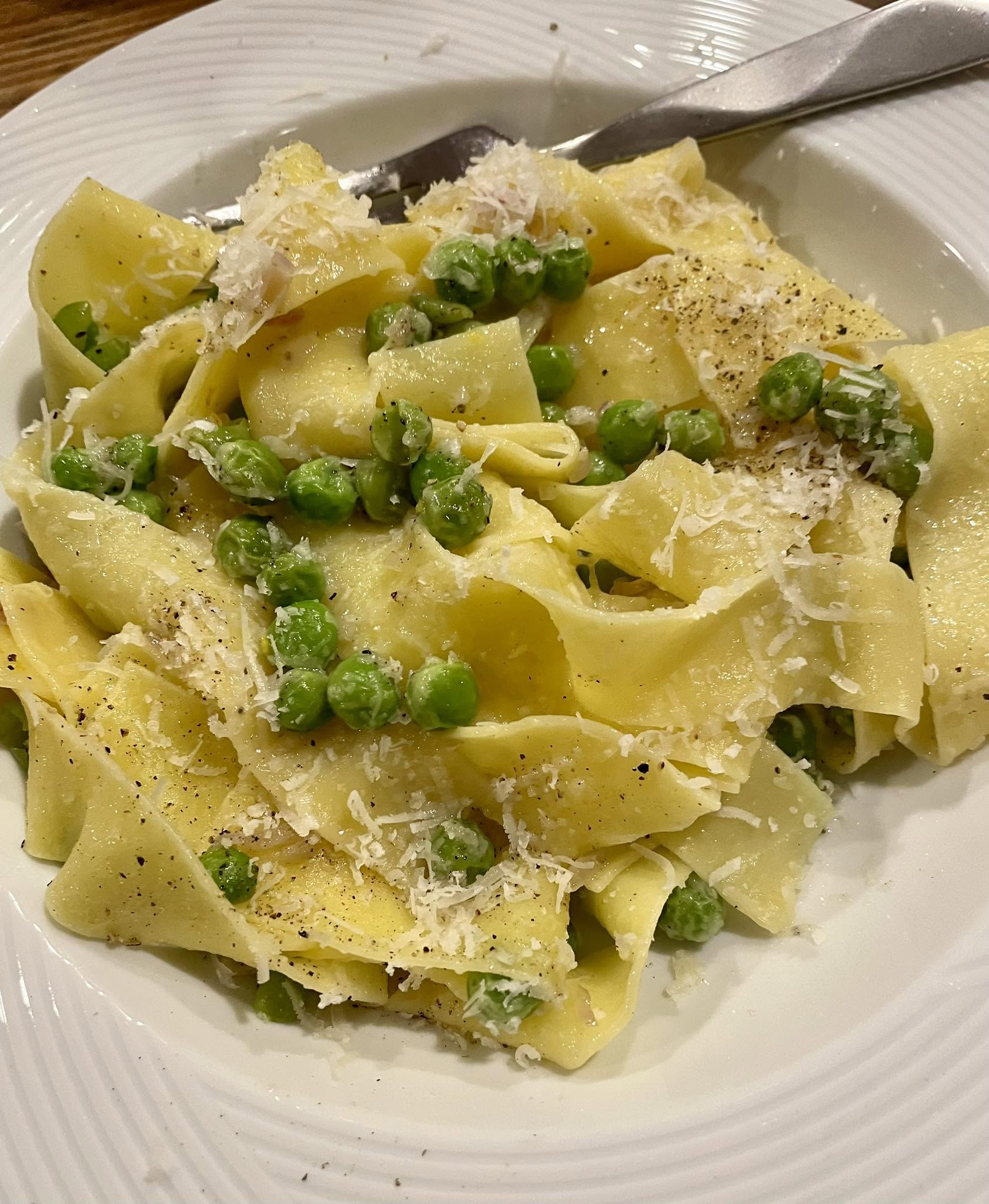
Pappardelle with Butter, Peas, Shallots, and Parmigiano is a simple yet elegant pasta dish built around sweetness, richness, and delicate balance. Wide ribbons of pappardelle are tossed with tender peas, softened shallots, melted butter, olive oil, pasta water, and freshly grated Parmigiano-Reggiano to create a light, silky sauce.
This recipe proves that pasta does not need a heavy sauce to feel luxurious. The butter adds warmth and richness, the shallots bring gentle sweetness, the peas add freshness and color, and the Parmigiano gives the dish a salty, nutty finish.
It is the kind of dish that feels fresh but comforting at the same time. It works beautifully for spring and summer meals, but it is also cozy enough for a simple weeknight dinner when you want something soft, elegant, and satisfying.
Why People Will Love Pappardelle with Butter, Peas, Shallots, and Parmigiano Recipe
It is simple but refined. The recipe uses a small number of ingredients, but each one brings important flavor and texture.
The sauce is light and silky. Butter, Parmigiano, and pasta water come together to create a glossy coating without needing heavy cream.
The peas add sweetness and freshness. Their bright green color and natural sweetness make the pasta feel lively and balanced.
The shallots create gentle depth. Slowly softened shallots add a delicate sweetness that blends beautifully with butter and cheese.
Pappardelle feels elegant. The wide pasta ribbons make the dish look special and hold the buttery sauce beautifully.
It is comforting without being too heavy. The dish is rich enough to feel satisfying, but still fresh and clean.
It is easy to customize. You can add lemon zest, fresh herbs, pancetta, prosciutto, grilled shrimp, or sautéed mushrooms.
It is quick enough for a weeknight meal. The recipe comes together fast, especially when using frozen baby peas.
Key Ingredients
Pappardelle Pasta:
Pappardelle is a wide ribbon pasta that gives this dish its elegant shape and soft texture. Its broad surface catches the butter, cheese, and peas beautifully.
Sweet Peas:
Fresh or frozen baby peas bring sweetness, color, and freshness. They balance the richness of the butter and Parmigiano.
Unsalted Butter:
Butter is the heart of the sauce. It melts into the pasta and gives the dish a warm, silky richness.
Extra-Virgin Olive Oil:
Olive oil helps cook the shallots gently and adds a light fruity depth that keeps the butter from feeling too heavy.
Shallots:
Shallots are softer and sweeter than regular onions. When cooked slowly, they become fragrant and delicate, adding depth without overpowering the pasta.
Parmigiano-Reggiano:
Freshly grated Parmigiano adds nutty, salty, savory flavor. It also helps thicken the sauce slightly when combined with pasta water.
Reserved Pasta Water:
Starchy pasta water is essential for creating a smooth sauce. It helps the butter and cheese cling to the pappardelle instead of becoming oily or dry.
Kosher Salt and Black Pepper:
Salt enhances the pasta, peas, and cheese, while black pepper adds warmth and contrast.
Lemon Zest:
Lemon zest is optional, but it gives the dish a bright, fresh finish that works especially well with peas.
Fresh Herbs:
Parsley or basil can add color and a clean herbal note right before serving.
Expert Tips
Cook the pasta al dente. Pappardelle should be tender but still have a slight bite so it does not become too soft when tossed.
Reserve pasta water before draining. The starchy water is what helps create a silky sauce.
Cook the shallots gently. Do not brown them too much. They should become soft, sweet, and fragrant.
Use freshly grated Parmigiano-Reggiano. Freshly grated cheese melts better and gives a smoother, more refined sauce.
Add pasta water gradually. Start with a small splash, toss, and add more only as needed.
Toss gently. Pappardelle is wide and delicate, especially if fresh, so fold it carefully to avoid tearing.
Do not overcook the peas. They should stay bright green and slightly sweet, not dull and mushy.
Serve immediately. This pasta is best when the butter and cheese sauce is warm, glossy, and freshly tossed.
Pappardelle with Butter, Peas, Shallots, and Parmigiano
Ingredients
1 pound fresh or dried pappardelle pasta
2 cups sweet peas, fresh or frozen baby peas
3 tablespoons unsalted butter
1 tablespoon extra-virgin olive oil
1/2 cup finely chopped shallots
1/2 cup freshly grated Parmigiano-Reggiano, plus more for serving
1/3 to 1/2 cup reserved pasta water, as needed
Kosher salt, to taste
Freshly cracked black pepper, to taste
Optional: 1 teaspoon lemon zest, for brightness
Optional: 1 tablespoon chopped parsley or basil, for garnish
Instructions
Bring a large pot of salted water to a boil.
Add the pappardelle and cook until al dente. If using fresh pasta, this may take only 2 to 3 minutes. If using dried pasta, cook according to the package directions.
Before draining, reserve about 1 cup of the pasta cooking water.
While the pasta cooks, heat the olive oil and 2 tablespoons of butter in a large skillet over medium heat.
Add the finely chopped shallots and cook gently for 3 to 5 minutes, stirring often, until softened and fragrant. Do not let them brown too much.
Add the peas to the skillet and season lightly with salt and black pepper.
Cook for 3 to 5 minutes, or until the peas are tender and bright green. If using frozen peas, cook just until warmed through.
Add the drained pappardelle directly into the skillet with the peas and shallots.
Add the remaining 1 tablespoon of butter and a splash of reserved pasta water.
Toss gently until the butter melts and lightly coats the pasta.
Sprinkle in the grated Parmigiano-Reggiano and toss again, adding more pasta water a little at a time until the pasta becomes glossy and lightly creamy.
Taste and adjust with more salt and black pepper if needed.
Serve immediately with extra Parmigiano-Reggiano grated over the top.
Add lemon zest or fresh herbs if you want a brighter finish.
Notes
The sauce should be light and silky, not heavy or thick.
Use freshly grated Parmigiano-Reggiano for the best texture and flavor.
Pappardelle is delicate, especially when fresh, so toss gently to avoid tearing the pasta.
Frozen baby peas work very well and keep their sweetness and color.
A little pasta water is important because it helps the butter and Parmesan cling to the wide ribbons of pasta.
Serving Ideas
Serve this pasta warm in shallow bowls with extra Parmesan and freshly cracked black pepper.
It pairs beautifully with a simple green salad, roasted chicken, grilled shrimp, garlic bread, or sautéed mushrooms.
For a richer version, add a little cream.
For a fresher version, finish with lemon zest and herbs.
For a more savory version, add crispy pancetta, prosciutto, or toasted breadcrumbs.
Important Notes When Making Pappardelle with Butter, Peas, Shallots, and Parmigiano
The sauce should not be heavy. This dish is meant to be lightly coated, not covered in a thick sauce.
Frozen baby peas work very well. They are naturally sweet and cook quickly.
Fresh pasta cooks much faster than dried pasta. Watch it closely so it does not overcook.
The cheese should be added off direct high heat. Too much heat can make the cheese clump instead of melting smoothly.
Salt carefully. Parmigiano is salty, so taste before adding too much extra salt.
Lemon zest should be used lightly. A small amount brightens the dish without turning it into a lemon pasta.
Leftovers may thicken. Add a splash of water, broth, or a little butter when reheating.
How to Enjoy Pappardelle with Butter, Peas, Shallots, and Parmigiano After Cooking
Serve the pappardelle immediately in warm shallow bowls. The pasta should look glossy, with peas scattered between the wide ribbons and fine Parmigiano melting lightly over the top.
Add extra freshly grated Parmigiano-Reggiano and a few cracks of black pepper just before serving. For a brighter finish, sprinkle a little lemon zest or fresh herbs over the pasta.
The best bite should include soft pappardelle, sweet peas, buttery sauce, delicate shallots, nutty cheese, and a touch of black pepper. The flavor should feel gentle, rich, and fresh all at once.
This dish pairs beautifully with a simple green salad, roasted chicken, grilled shrimp, sautéed mushrooms, garlic bread, or roasted asparagus. Because the pasta is buttery and cheesy, crisp or fresh sides help balance the meal.
For leftovers, store the pasta in an airtight container in the refrigerator. Reheat gently in a skillet with a splash of water or broth and a small piece of butter. Toss carefully until the sauce becomes glossy again.
Nutrition Information
Calories: 430–650 kcal | Total Fat: 17–30 g | Saturated Fat: 8–15 g | Monounsaturated Fat: 6–11 g | Polyunsaturated Fat: 1.5–3.5 g | Cholesterol: 25–55 mg | Sodium: 380–850 mg, depending on pasta water, Parmigiano-Reggiano, butter, and added salt | Total Carbohydrates: 56–82 g | Dietary Fiber: 5–9 g | Sugars: 4–8 g | Protein: 16–26 g
Frequently Asked Questions:
What is Pappardelle with Butter, Peas, Shallots, and Parmigiano?
It is a simple Italian-style pasta dish made with wide pappardelle noodles, sweet peas, softened shallots, butter, olive oil, pasta water, and Parmigiano-Reggiano.
Is this pasta creamy?
It is lightly creamy from butter, cheese, and pasta water, but it does not use heavy cream. The sauce should be silky and delicate.
Can I use frozen peas?
Yes. Frozen baby peas work very well because they are sweet, tender, and cook quickly.
What can I serve with this pasta?
It pairs well with green salad, roasted chicken, grilled shrimp, sautéed mushrooms, asparagus, or garlic bread.
Can I add meat to this recipe?
Yes. Crispy pancetta, prosciutto, bacon, grilled chicken, or shrimp can be added for a more savory and filling version.
Why do I need reserved pasta water?
Pasta water contains starch, which helps the butter and Parmigiano form a smooth sauce that clings to the pasta.
How do I keep the Parmesan from clumping?
Use freshly grated Parmigiano and add it with gentle heat, tossing with pasta water instead of cooking it over high heat.
How long should I cook the peas?
Cook them only until tender and bright green. Frozen peas usually need just a few minutes.
Can I use another pasta shape?
Yes. Tagliatelle, fettuccine, linguine, or farfalle can work, but pappardelle gives the dish a more elegant texture.
What should I do if the pasta looks dry?
Add a small splash of reserved pasta water and toss gently until the sauce becomes glossy and lightly creamy again.