French Onion Pasta
French Onion Pasta is a rich, cozy, deeply savory pasta dish inspired by the classic flavors of French onion soup. Sweet caramelized onions, garlic, beef stock, thyme, bay leaves, Worcestershire sauce, Dijon mustard, and a Parmesan rind come together to create a broth that feels warm, rustic, and full of depth.
The pasta cooks directly in the flavorful stock, absorbing the onion-rich broth as it softens. Every bite tastes comforting, slightly sweet from the onions, savory from the beef stock, and beautifully aromatic from the herbs.
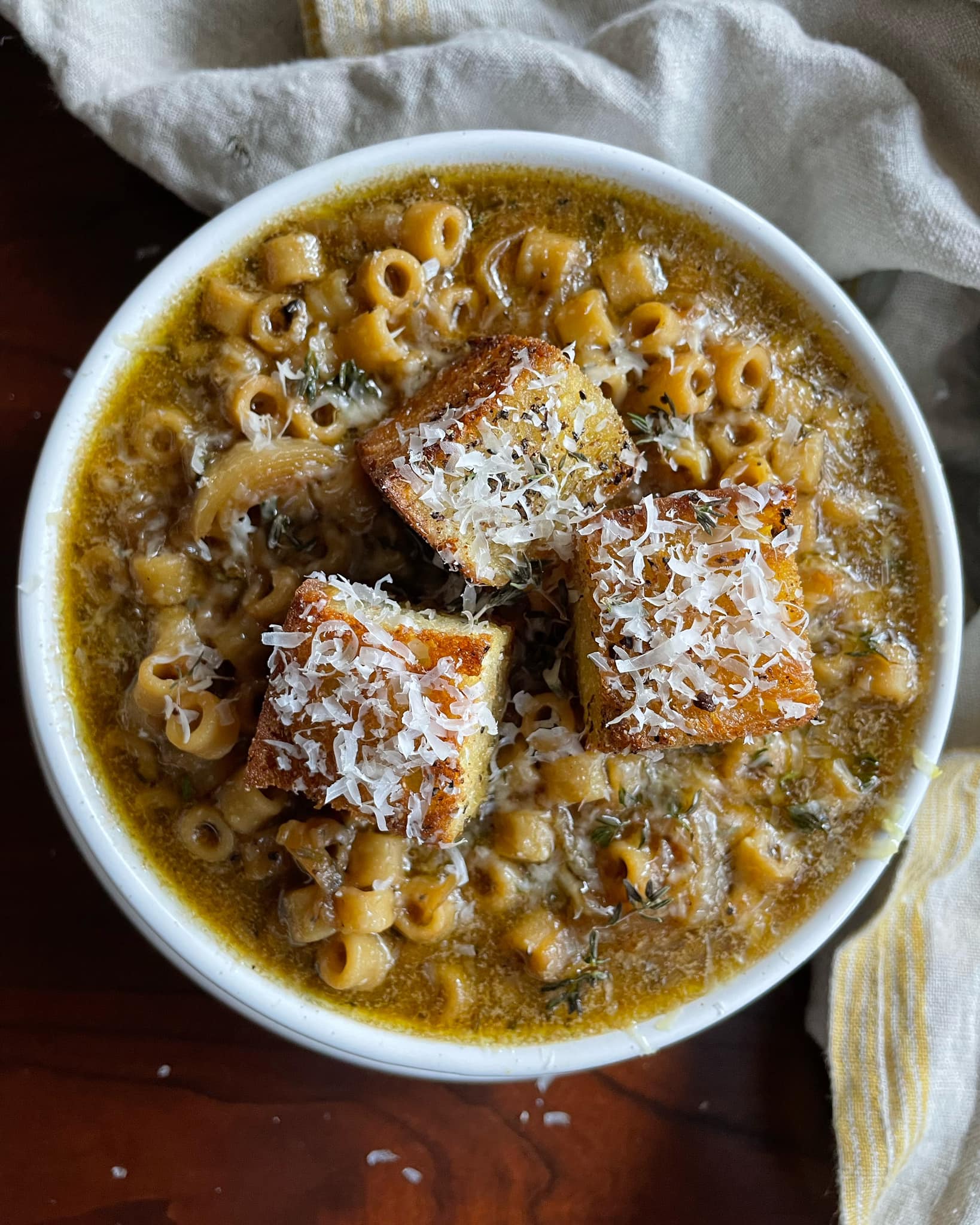
Finished with crispy Parmesan croutons, this dish becomes a perfect balance of soft pasta, silky onions, rich broth, and crunchy golden topping.
Why People Will Love French Onion Pasta Recipe
It brings the cozy flavor of French onion soup into a pasta dish.
Slow-cooked onions create natural sweetness and deep flavor.
Garlic adds warmth and savory richness.
Beef stock gives the pasta a hearty, comforting base.
Worcestershire sauce adds bold umami depth.
Dijon mustard gives a subtle tang that balances the richness.
Thyme and bay leaves make the broth taste aromatic and classic.
The Parmesan rind adds a salty, nutty background flavor.
Pasta absorbs the broth, making every bite flavorful.
The croutons add crunch, texture, and a cheesy toasted finish.
It feels elegant but is still simple and rustic.
It is perfect for cold evenings, cozy dinners, or comfort food nights.
Key Ingredients
Onions:
Onions are the heart of this recipe. When cooked slowly, they become soft, golden, sweet, and deeply flavorful.
Garlic:
Garlic adds a savory layer that supports the richness of the onions and broth.
Fresh Thyme:
Thyme gives the dish its classic French onion aroma. It adds earthy, herbal depth without overpowering the pasta.
Bay Leaves:
Bay leaves bring a subtle background flavor that makes the broth taste more rounded and slow-simmered.
Worcestershire Sauce:
Worcestershire adds salty, tangy, umami richness that deepens the beef stock.
Dijon Mustard:
Dijon adds gentle sharpness and helps balance the sweetness of the onions.
Beef Stock:
Beef stock creates the rich, savory base that makes this pasta taste like French onion soup.
Pasta:
Small pasta such as ditalini works beautifully because it cooks evenly and holds the broth well.
Parmesan Rind:
The Parmesan rind slowly releases salty, nutty flavor into the broth, making the pasta taste richer.
Butter and Olive Oil:
Butter adds richness, while olive oil helps sauté the onions and keeps them from burning too quickly.
Expert Tips
Slice the onions evenly so they cook at the same pace.
Cook the onions slowly for the deepest flavor.
Do not rush the onion step; 25 minutes gives the dish its sweet, savory base.
Stir the onions often so they soften without burning.
Add a splash of stock if the onions begin sticking too much.
Use good-quality beef stock because it becomes the main flavor of the dish.
Add the pasta near the end so it does not overcook.
Stir the pasta while it cooks to prevent sticking.
Remove the bay leaves and Parmesan rind before serving.
Taste before adding extra salt because beef stock, Worcestershire, and Parmesan can already be salty.
Broil the croutons carefully because they can brown quickly.
Serve the pasta right away for the best texture.
French Onion Pasta
Ingredients
6 yellow or white onions
6 cloves of garlic
Bundle of fresh time
2 bay leaves
1 tbsp Worcestershire sauce
1 tbsp dijon mustard
8 cups beef stock
1 lb pasta such as ditalini
1 parmesan rind
Butter
Olive oil
Instructions:
Sautée your onions and garlic with s&p in a large dutch oven in butter and olive oil for 25 minutes over medium heat.
Add Worcestershire sauce, Dijon, bay leaves, thyme, parmesan rind, and stock.
Simmer for as long or as little as you’d like! Add pasta in the last 8-10 minutes of cooking. More s&p to taste.
For the croutons, just toss some cubed day-old bread in olive oil, garlic powder, grated parmesan, and Italian seasoning. Toast for a few minutes under the broiler.
Important Notes When Making French Onion Pasta
This dish depends heavily on the flavor of the onions, so give them enough time to cook down.
The broth may thicken as the pasta releases starch.
Add extra stock if the pasta absorbs too much liquid.
Ditalini, elbows, small shells, or orecchiette can all work well.
Fresh thyme gives the best aroma, but dried thyme can be used in a smaller amount.
The Parmesan rind is optional but adds excellent depth.
The croutons should be added right before serving so they stay crisp.
Leftovers may become thicker after refrigeration.
Reheat gently with extra beef stock or water to loosen the sauce.
This recipe is best served warm and fresh.
How to Enjoy French Onion Pasta After Cooking
After the French Onion Pasta finishes cooking, let it rest for a few minutes so the pasta can settle into the rich onion broth. Remove the bay leaves, thyme bundle, and Parmesan rind before serving.
Spoon the pasta into deep bowls while it is still hot and saucy. Make sure each bowl has plenty of soft onions, broth, and tender pasta.
Top with crispy Parmesan croutons right before serving. The croutons add crunch and give the dish that classic French onion soup feeling.
For extra richness, sprinkle more grated Parmesan over the top. A little cracked black pepper, fresh thyme, or a drizzle of olive oil can make the dish feel even more finished.
Serve this pasta with a simple green salad, roasted vegetables, garlic bread, or a light protein such as grilled chicken or steak. It is best enjoyed warm, cozy, and slightly brothy.
Nutrition Information
Approximate nutrition per serving, based on 6 servings, not including optional croutons:
Calories: 485 kcal | Total Fat: 12 g | Saturated Fat: 4.5 g | Monounsaturated Fat: 5 g | Polyunsaturated Fat: 1.2 g | Cholesterol: 15 mg | Sodium: 950–1,650 mg depending on beef stock, Worcestershire sauce, Parmesan rind, added salt, butter, and final serving size | Total Carbohydrates: 75 g | Dietary Fiber: 5 g | Sugars: 11 g | Protein: 17 g
Additional estimate:
Calcium: 90–180 mg | Potassium: 520–850 mg | Iron: 3–5 mg | Vitamin A: 250–650 IU | Vitamin C: 10–20 mg
Frequently Asked Questions:
Can I use a different type of pasta in this recipe?
Yes, you can use different pasta shapes based on your preference.
While the recipe suggests ditalini, feel free to choose another small pasta like penne or elbow macaroni.
How long should I simmer the soup for the best flavor?
The simmering time is flexible, and you can adjust it based on your preference.
Simmering for at least 30 minutes allows the flavors to meld, but you can simmer longer for a richer taste.
Can I make this recipe vegetarian?
Yes, you can make a vegetarian version by substituting vegetable stock for beef stock.
Additionally, omitting the Worcestershire sauce or using a vegetarian alternative will make the dish entirely vegetarian.
What can I use as a substitute for fresh thyme?
If fresh thyme is not available, you can use dried thyme.
However, use approximately half the amount of dried thyme, as dried herbs are more concentrated than fresh.
Can I prepare the croutons ahead of time?
Yes, you can prepare the croutons in advance.
Store them in an airtight container once cooled.
When ready to serve, you can reheat them in the oven or briefly under the broiler for a crispy texture.
Can I use a different type of onion for this recipe?
Yes, you can use yellow or white onions as suggested, or try sweet onions for a milder flavor.
Experimenting with different onion varieties can add unique nuances to the dish.
How can I make this recipe vegetarian?
To make the French Onion Pasta vegetarian, substitute vegetable stock for beef stock.
You can also enhance the umami flavor by adding a splash of soy sauce or a vegetarian Worcestershire sauce.
Is there a substitute for fresh thyme in this recipe?
If fresh thyme is unavailable, you can use dried thyme as a substitute.
Keep in mind that dried herbs are more potent, so adjust the quantity accordingly (typically half the amount of fresh).
Can I freeze the leftovers?
While the pasta might absorb some liquid upon reheating, you can freeze the leftovers in an airtight container.
Consider slightly undercooking the pasta if you plan to freeze a portion to help maintain its texture.
What can I use instead of ditalini pasta?
Ditalini pasta works well in this recipe, but you can substitute it with other small pasta shapes like elbow macaroni, small shells, or penne.
Choose a shape that complements the hearty soup.