Cioppino (Fisherman’s Stew)
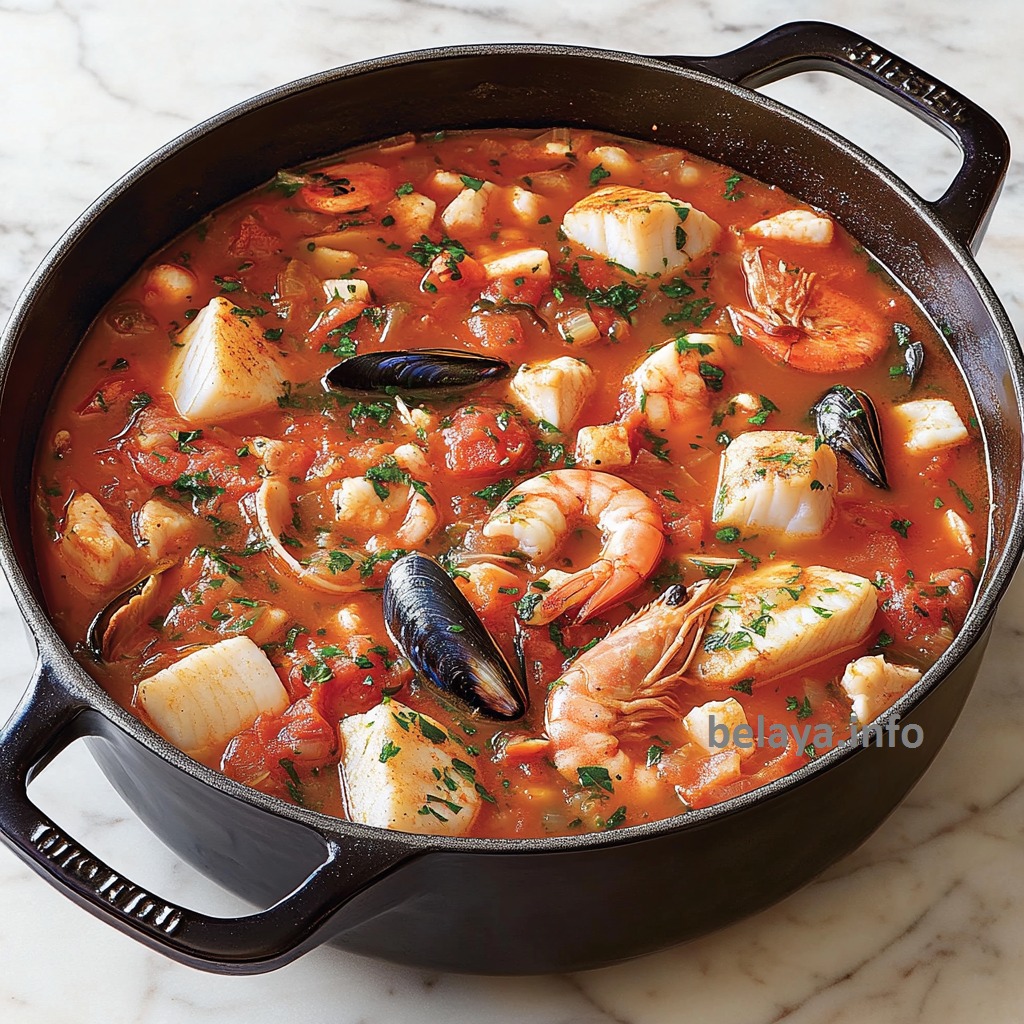
Cioppino is a bold, soul-warming fisherman’s stew that captures the spirit of the sea in every spoonful.
Originating from Italian-American fishing communities, this dish layers sweet fennel, aromatic garlic, bright tomatoes, and a splash of white wine to create a deeply savory broth that lets fresh seafood shine.
Rustic yet elegant, Cioppino is meant to be shared—steamy bowls, crusty bread, and the simple pleasure of dipping, sipping, and savoring the ocean’s richness together.
Why People Will Love This Cioppino (Fisherman’s Stew) Recipe:
It celebrates the natural sweetness of seafood – Each type of fish and shellfish is gently cooked in layers, allowing their flavors to remain distinct yet harmonious.
The broth is deeply aromatic and balanced – Fennel, garlic, tomatoes, and white wine create a rich, complex base without overwhelming the seafood.
It feels both rustic and refined – Simple, honest ingredients come together in a dish that’s elegant enough for entertaining yet comforting enough for a cozy meal.
Layered cooking ensures perfect texture – Adding the seafood in stages prevents overcooking and keeps everything tender and succulent.
It’s meant for sharing – Served family-style with crusty bread, Cioppino naturally brings people together around the table.
The anise finish adds subtle sophistication – A touch of Pernod or Pastis enhances the fennel notes and gives the stew a signature depth.
Visually impressive with minimal effort – The vibrant colors of seafood and broth make it look special without complicated techniques.
Customizable to what’s fresh – The recipe adapts easily to seasonal or local seafood, making it both flexible and practical.
Deeply satisfying yet light – Rich in flavor but not heavy, it leaves you comforted without feeling weighed down.
Key Ingredients
Fresh mixed seafood – Cod, shrimp, scallops, mussels, and clams form the heart of Cioppino, each contributing its own texture and natural sweetness to the stew.
Fennel bulb and fennel seeds – These add a gentle anise note that defines Cioppino’s character and balances the richness of the broth.
Crushed tomatoes – Provide body, brightness, and subtle acidity, creating a robust yet clean tomato base.
Dry white wine – Lends depth and complexity, lifting the seafood flavors while keeping the broth light and aromatic.
Seafood stock – Builds a savory foundation that intensifies the oceanic character of the stew.
Red pepper flakes – Introduce a soft, warming heat that enhances rather than dominates.
Anise-flavored liqueur – A small but essential finishing touch that amplifies fennel notes and adds elegant complexity.
Fresh parsley – Brings a final burst of freshness and color, balancing the stew just before serving.
Expert Tips:
Start with the freshest seafood possible – Cioppino is only as good as its seafood. Fresh, high-quality fish and shellfish deliver clean flavor and better texture than frozen substitutes.
Cut seafood into generous pieces – Larger chunks of fish and halved scallops hold their shape better and prevent overcooking in the simmering broth.
Sauté the fennel slowly, not aggressively – Gentle cooking softens the fennel and onion, releasing sweetness without browning, which keeps the broth balanced and refined.
Toast the fennel seeds briefly – Letting them warm in the oil for a minute unlocks their aroma and deepens the stew’s signature anise flavor.
Use dry white wine, not sweet – A crisp, dry wine adds brightness and acidity without introducing sweetness that could compete with the seafood.
Simmer the broth fully before adding seafood – The base should taste complete and well-seasoned before the fish goes in, since seafood cooks quickly and won’t absorb seasoning afterward.
Add seafood in stages, without stirring – Layering prevents delicate fish from breaking apart and ensures each type cooks perfectly.
Discard unopened shellfish without hesitation – Any mussels or clams that don’t open should be removed to ensure safety and quality.
Use the anise liqueur sparingly – A small amount enhances complexity; too much can overpower the dish.
Finish with rest time, not extra heat – Letting the stew sit briefly after cooking allows flavors to meld naturally without risking overcooked seafood.
Cioppino (Fisherman’s Stew)
Ingredients
¼ cup olive oil
2 cups fennel bulb , white part only, cut into ½-inch dice
1 ½ cup yellow onion , 1 large, cut into ½-inch dice
3 garlic cloves , pressed or minced
1 teaspoon whole fennel seeds
½ teaspoon red pepper flakes
1 28-ounce can crushed tomatoes
4 cups seafood stock
1 ½ cups dry white wine , such as Pinot Grigio
kosher salt and freshly ground black pepper
1 pound cod fillets , skin removed, cut into 2-inch dice
1 pound large shrimp , peeled and deviened
1 pound sea scallops , halved crosswise
1 dozen mussels , scrubbed
1 dozen littleneck clams or other small clam
1 tablespoon anise flavored liqueur such as Pernod or Pastis
3 tablespoons parsley minced
Instructions
Heat the olive oil in a heavy pot or Dutch oven over medium heat. Add the fennel and onion and sauté for 10 minutes, until tender.
Stir in the garlic, fennel seeds, and red pepper flakes and cook for 2 minutes, until fragrant.
Add the tomatoes, stock, wine, 1 tablespoon salt, and 1 teaspoon black pepper. Bring to a boil, lower the heat, and simmer uncovered for 30 minutes.
Add the seafood in the following order: first the cod, then the shrimp, scallops, and finally the mussels. Do not stir. Bring to a simmer, lower the heat, cover and cook for 10 minutes until the seafood is cooked and the shellfish open.
Stir in the liqueur, being careful not to break up the fish; cover and set aside for 3 minutes for the flavors to blend. Discard any mussels that have not opened.
Ladle into large, shallow bowls, sprinkle with parsley and serve with slices of sourdough baguette.
Important Notes When Making Cioppino
This is a seafood-driven dish – Cioppino is not about heavy seasoning; the goal is to highlight the natural sweetness and brininess of the seafood.
Timing is critical – Overcooking even by a few minutes can turn seafood rubbery. Once shellfish open and fish turns opaque, the stew is ready.
The broth should be complete before adding seafood – Final seasoning must happen prior to adding fish, as seafood releases moisture and won’t absorb much salt afterward.
Do not stir after adding delicate seafood – Stirring can break fish into the broth and cloud both texture and presentation.
Shellfish safety matters – Always discard any mussels or clams that do not open during cooking.
Anise flavor should be subtle – Pernod or Pastis is meant to support the fennel, not dominate the dish.
This stew thickens naturally – Tomatoes and seafood juices create body; avoid flour or thickeners.
Serve immediately for best quality – Cioppino is at its peak right after cooking; holding it too long dulls flavors and textures.
Leftovers require care – If storing, remove shellfish from their shells and reheat gently to avoid overcooking.
Bread is essential, not optional – Crusty sourdough isn’t just a side—it’s part of the experience, meant for soaking up every drop of broth.
How to Enjoy Cioppino After Cooking
Let the stew rest briefly before serving
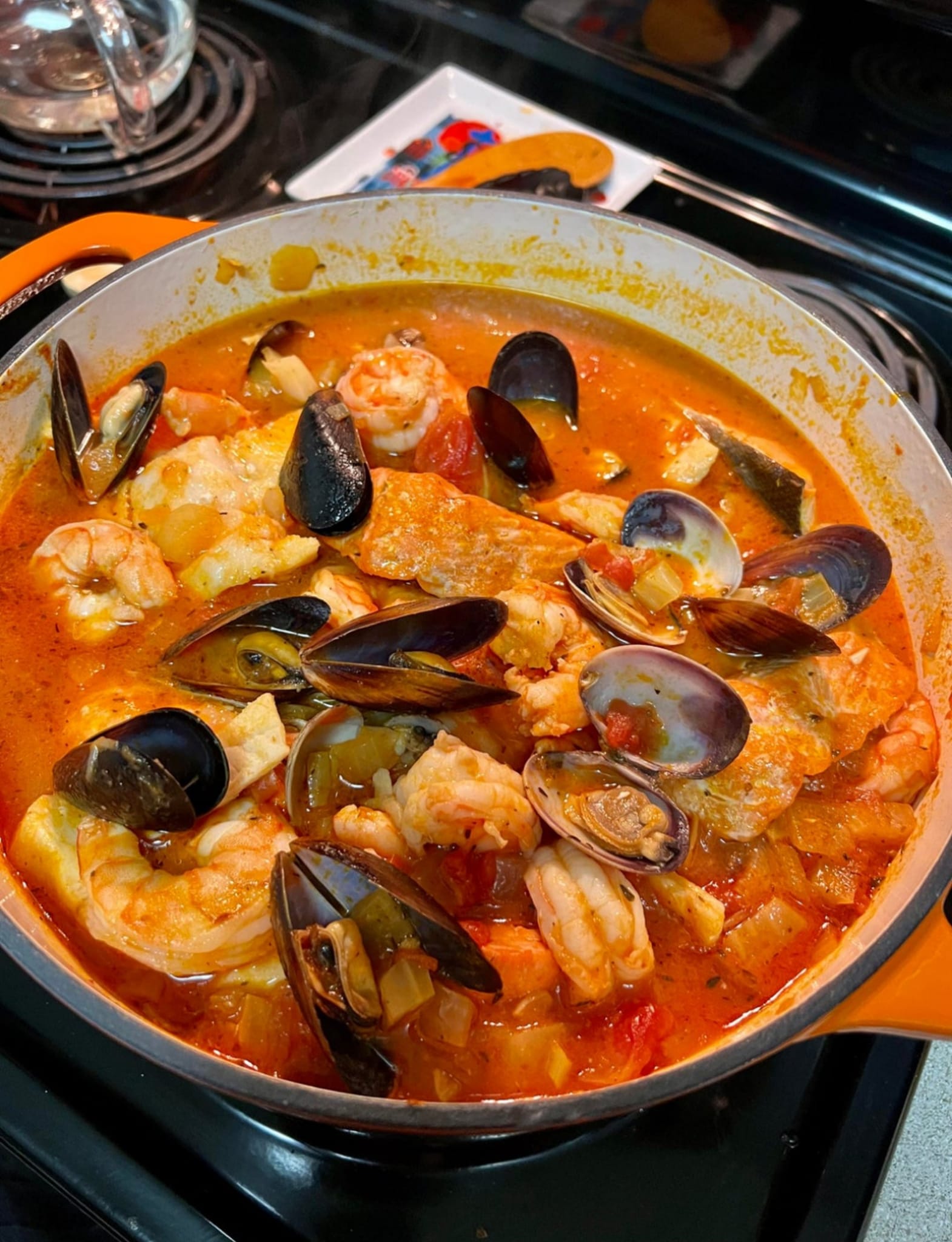
Allow Cioppino to sit off the heat for 3–5 minutes. This short pause lets the flavors settle and the seafood finish gently in the residual heat.
Serve in wide, shallow bowls
This presentation highlights the variety of seafood and makes it easier to enjoy both the broth and the shellfish.
Add finishing herbs just before eating
Sprinkle fresh parsley at the last moment to preserve its brightness and contrast the rich broth.
Pair with crusty sourdough bread
Use thick slices to soak up the flavorful broth—this is an essential part of the Cioppino experience.
Eat in stages
Start with the broth to appreciate its depth, then move on to the seafood, enjoying how each element tastes in the same base.
Handle shellfish thoughtfully
Remove mussels and clams from their shells as you go, keeping empty shells to the side for ease.
Enjoy while hot and fresh
Cioppino is best served immediately; heat keeps the seafood tender and the broth aromatic.
Keep the table casual
Napkins, bowls for shells, and relaxed conversation suit the rustic nature of the dish.
Pair with a light white wine
A crisp, dry white complements the seafood without overpowering it.
Savor slowly
Cioppino isn’t rushed food—it’s meant to be enjoyed deliberately, appreciating each spoonful and bite.
Nutrition Information:
Calories: ~420 kcal | Total Fat: 14 g | Saturated Fat: 2.5 g | Monounsaturated Fat: 8 g | Polyunsaturated Fat: 2.5 g | Cholesterol: 165 mg | Sodium: 850–1,050 mg (depending on stock, shellfish, and added salt) | Total Carbohydrates: 28 g | Dietary Fiber: 5 g | Sugars: 10 g | Protein: 42 g
Frequently Asked Questions:
What kind of seafood can I use in Cioppino?
You can use a variety of seafood, such as shrimp, scallops, mussels, clams, and different fish like cod, halibut, or tilapia.
Feel free to mix and match based on your preferences.
Can I make Cioppino ahead of time?
While the stew is best enjoyed fresh, you can prepare the base (vegetables and broth) ahead of time.
Add the seafood just before serving for the best texture.
Is Cioppino spicy?
The heat level is mild to moderate, depending on the amount of red pepper flakes you use.
Adjust the quantity to suit your taste.
What can I serve with Cioppino?
Cioppino pairs well with crusty sourdough bread, rice, or a simple green salad.
Can I substitute seafood stock with something else?
Yes, if you don’t have seafood stock, you can use vegetable stock or chicken broth, although it may alter the flavor slightly.
Do I have to use anise-flavored liqueur?
The liqueur adds a unique flavor, but it can be omitted if you prefer.
You can substitute with a splash of additional white wine or omit it altogether.
How do I know when the seafood is cooked?
Seafood is cooked when it becomes opaque and firm.
Mussels and clams should open up; discard any that remain closed.
Can I freeze leftover Cioppino?
It’s not recommended to freeze Cioppino with the seafood, as it can affect the texture.
However, you can freeze the broth and add fresh seafood when reheating.
What type of wine works best in Cioppino?
A dry white wine like Pinot Grigio or Sauvignon Blanc works well.
Avoid sweet wines, as they can alter the dish’s balance.
How can I make Cioppino gluten-free?
Ensure that your seafood stock and any other packaged ingredients are gluten-free.
You can serve it without bread or with gluten-free alternatives.