Spring Pea Pesto Pasta Salad
Spring Pea Pesto Pasta Salad captures everything fresh, bright, and alive about the season in one vibrant bowl.
Sweet green peas blend into a silky pesto with fragrant basil, parsley, and lemon, creating a sauce that feels both light and deeply satisfying. Every bite layers textures—tender pasta, crisp prosciutto, peppery arugula, and soft mozzarella—so the dish never feels one-note.
This is more than just a pasta salad—it’s a balance of richness and freshness, where citrus cuts through the savory elements and herbs bring everything to life. Whether served at a gathering or enjoyed as a simple meal, it delivers that clean, uplifting flavor that makes spring cooking so special.
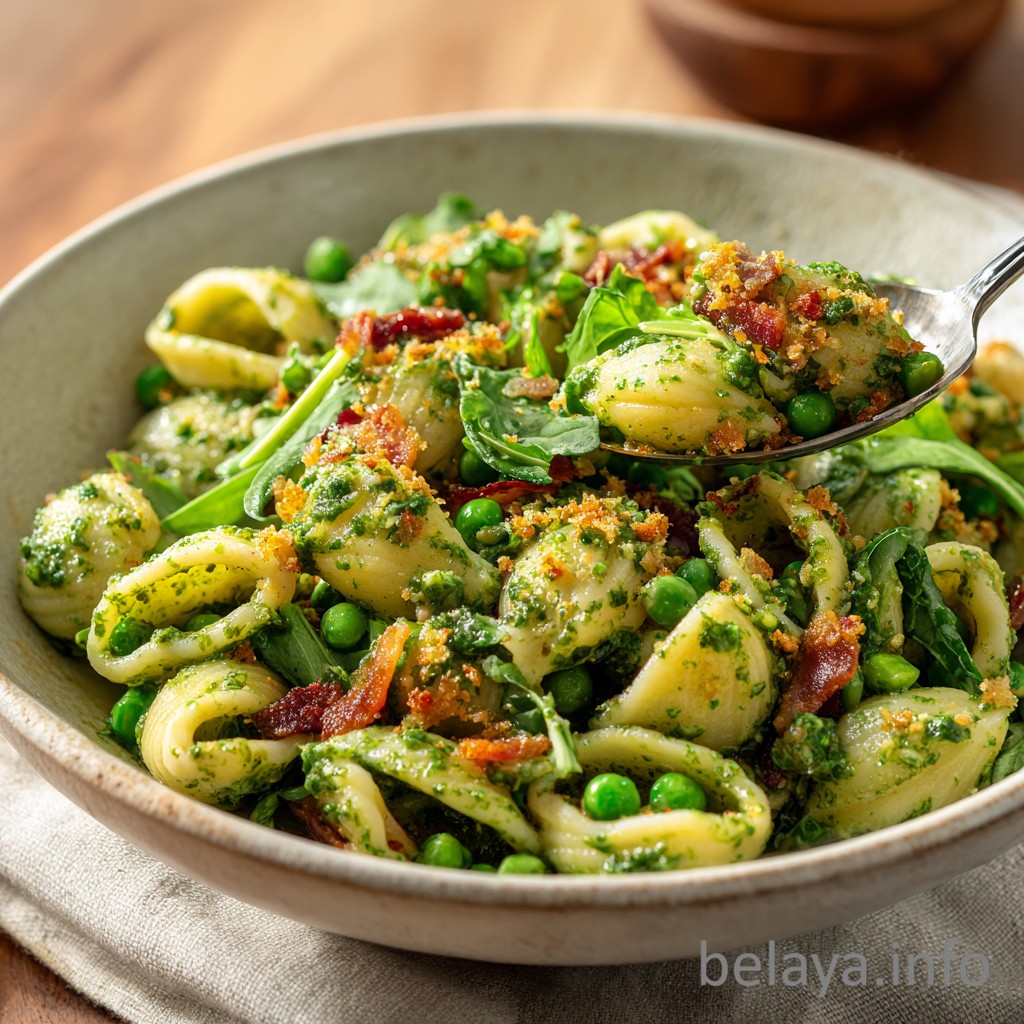
Why People Will Love Spring Pea Pesto Pasta Salad Recipe
Bright, fresh flavor profile – Sweet spring peas, zesty lemon, and fragrant herbs create a clean, vibrant taste that feels light yet deeply satisfying
Perfect balance of textures – Creamy pesto, tender pasta, crisp prosciutto, crunchy breadcrumbs, and soft mozzarella deliver contrast in every bite
Seasonal and uplifting – It captures the essence of spring with fresh greens and citrus, making it feel refreshing and energizing
Elevated yet approachable – While it looks and tastes gourmet, the ingredients are simple and familiar, making it easy to recreate at home
Layered depth of flavor – The combination of savory Parmesan, salty prosciutto, and bright lemon creates complexity without being heavy
Versatile for any occasion – Works as a main dish, side, or potluck favorite—equally suited for casual meals or special gatherings
Make-ahead friendly – The flavors continue to meld as it sits, making it even more delicious when prepared in advance
Visually stunning – The vibrant greens, golden crumbs, and pops of white mozzarella make it as beautiful as it is tasty
Comforting but not heavy – It satisfies like a classic pasta dish while still feeling fresh and not overly rich
Customizable to taste – Easy to adjust with different greens, proteins, or cheeses to suit personal preferences while keeping its core appeal
Key Ingredients:
Sweet Green Peas – The heart of the dish, peas bring natural sweetness and a soft, buttery texture. When blended into pesto, they create a vibrant, slightly creamy base that feels lighter and fresher than traditional versions.
Fresh Basil & Parsley – These herbs build the aromatic backbone. Basil adds a sweet, slightly peppery note, while parsley brings brightness and a clean, green finish that keeps the pesto from feeling too rich.
Lemon Zest & Juice – The defining element of freshness. Lemon lifts every component, cutting through the richness of cheese and oil while adding a crisp, citrusy sparkle that ties the salad together.
Extra Virgin Olive Oil – Provides smoothness and depth, binding the pesto into a silky sauce. Its fruity richness enhances the herbs without overpowering them.
Parmesan Cheese – Adds umami and a subtle saltiness. It deepens the flavor of the pesto and also appears in the breadcrumb topping for an extra savory layer.
Prosciutto – When crisped, it introduces a delicate saltiness and crunch. Its rich, savory character contrasts beautifully with the bright greens and citrus.
Panko Breadcrumbs – Light and airy, they toast into a golden, crunchy topping. Combined with lemon zest and Parmesan, they add texture and a burst of flavor in every bite.
Arugula – Offers a peppery bite that cuts through the creaminess of the pesto, adding freshness and a slight sharpness that balances the dish.
Mozzarella Pearls – Soft, milky, and mild, they provide creamy pockets throughout the salad, rounding out the flavors without overwhelming them.
Small Pasta Shells – Designed to catch and hold the pesto, ensuring every bite is coated in flavor while maintaining a satisfying, tender texture.
Expert Tips:
Salt your pasta water properly – It should taste like the sea. This is your only chance to season the pasta itself, and it makes a noticeable difference in the final flavor of the dish
Undercook the pasta slightly – Stop cooking 1–2 minutes before fully done. The pasta will absorb the pesto and any added liquid, finishing perfectly without becoming mushy
Shock or cool pasta correctly – Instead of rinsing, spread the pasta out or toss it lightly with a bit of olive oil to cool. This prevents sticking while keeping flavor intact
Use peas at their peak texture – Steam just until tender and bright green. Overcooked peas lose their sweetness and vibrant color, which are key to the dish
Build pesto gradually – When blending, drizzle the olive oil slowly. This emulsifies the sauce, giving it a smoother, silkier consistency rather than a heavy or separated texture
Balance acidity carefully – Add lemon juice in stages and taste as you go. Too much can overpower the herbs; just enough will make the flavors pop
Reserve and use pasta water strategically – The starch in the water helps loosen the pesto while keeping it creamy and cohesive instead of watery
Crisp prosciutto low and slow – Use medium heat and give it time. This renders the fat properly and creates a delicate, crispy texture without burning
Toast breadcrumbs to golden, not dark – Stir constantly and remove once lightly golden. They continue to cook slightly after removing from heat
Layer flavors instead of mixing all at once – Add components in stages (pesto first, then greens, cheese, and toppings) to maintain texture and prevent everything from becoming overly soft
Add arugula at the end – Toss it in just before serving so it stays fresh and slightly crisp instead of wilting too much
Finish with a final drizzle and seasoning check – A touch of good olive oil, a pinch of salt, and freshly cracked pepper right before serving elevates the entire dish
Let it rest briefly before serving – Give the salad 10–15 minutes to sit so the flavors meld, but not so long that the textures lose their contrast
Serve slightly warm or room temperature – This allows the pesto to stay fluid and aromatic, making the dish more flavorful than when fully chilled
Spring Pea Pesto Pasta Salad
Ingredients
1 lb small pasta shells
1 (16 oz) bag frozen peas, steamed and divided
2 garlic cloves, peeled and lightly crushed
1 1/4 cups fresh basil, loosely packed
1/2 cup flat-leaf parsley (leaves and tender stems), loosely packed
1/2 cup freshly grated Parmesan cheese, divided
2 tablespoons lemon zest (about 2 lemons), divided
1/4 cup fresh lemon juice (about 2 lemons), divided
1/4 cup + 2 tablespoons extra virgin olive oil (plus extra for drizzling)
Kosher salt, to taste
Black pepper, to taste
6 slices prosciutto (about 2 oz)
1/2 cup panko breadcrumbs
3 cups baby arugula, loosely packed
1 cup mozzarella pearls
Instructions
1. Cook the pasta
Bring a large pot of salted water to a boil.
Cook the pasta until al dente, about 2 minutes less than package directions.
Drain, reserving 1/2 cup of the pasta water.
Transfer pasta to a large bowl and let it cool.
2. Make the pea pesto
In a food processor, combine 1 1/4 cups peas, garlic, basil, parsley, 1/4 cup Parmesan, 1 tablespoon lemon zest, and 2 tablespoons lemon juice.
Pulse until roughly blended.
Scrape down the sides, then slowly drizzle in 1/4 cup olive oil while blending until smooth.
Season with salt and pepper.
Add the pesto to the cooled pasta and toss to coat. If needed, add reserved pasta water 1–2 tablespoons at a time to loosen the sauce.
3. Crisp prosciutto & toast breadcrumbs
Heat the remaining 2 tablespoons olive oil in a large skillet over medium heat.
Cook the prosciutto in a single layer (in batches if needed), turning occasionally, until crispy (about 6–8 minutes). Transfer to paper towels.
In the same pan, add panko (and a little extra oil if needed).
Toast, stirring frequently, until lightly golden (3–5 minutes).
Transfer to a bowl and mix with:
- 1 teaspoon lemon zest
- remaining 1/4 cup Parmesan
Set aside.
4. Assemble the salad
Roughly chop the crispy prosciutto and add half to the pasta.
Add remaining peas, arugula, mozzarella, remaining lemon zest, remaining lemon juice, and a drizzle of olive oil.
Toss everything together.
Taste and adjust seasoning if needed.
5. Serve
Top with the lemon-Parmesan breadcrumbs and the remaining crispy prosciutto.
Serve immediately or slightly chilled.
Important Notes When Making Spring Pea Pesto Pasta Salad
Balance is the soul of the dish – This recipe relies on harmony between richness (cheese, olive oil, prosciutto) and freshness (peas, herbs, lemon). If one element dominates, the entire dish can feel off, so taste and adjust as you go
Texture contrast is intentional – The success of this pasta salad comes from layering soft, creamy, crisp, and crunchy components. Avoid overmixing, which can break down these contrasts and make the dish feel flat
Pesto consistency matters – It should be smooth and lightly creamy, not too thick or too runny. A thick pesto will clump, while a thin one will coat poorly—adjust with pasta water gradually
Ingredient quality makes a difference – Since the recipe is simple and fresh-forward, high-quality olive oil, real Parmesan, and fresh herbs will significantly elevate the final result
Timing affects flavor and texture – Adding delicate ingredients like arugula and mozzarella too early can cause them to wilt or lose structure. Incorporate them closer to serving time
Temperature changes the experience – This dish tastes different depending on how it’s served. Slightly warm highlights the aroma and richness, while chilled makes it more refreshing and crisp
Lemon should enhance, not dominate – Citrus is key, but too much can overpower the herbs and cheese. Always add in stages and taste before adding more
Prosciutto is a finishing element – Keep it crisp and add it last or just before serving. Mixing it too early will soften it and remove that essential crunch
Breadcrumb topping is best fresh – For maximum crunch, add it right before serving. If added too early, it will absorb moisture and lose its texture
Make-ahead requires small adjustments – If preparing in advance, hold back some pesto, lemon juice, and toppings. Refresh the salad before serving to restore brightness and texture
Seasoning evolves over time – As the salad sits, flavors meld and salt levels can shift. Always re-taste and adjust before serving
Customization should respect the base – You can swap proteins or greens, but the core identity—pea pesto, lemon brightness, and textural contrast—should remain intact for the dish to shine
How to Enjoy Spring Pea Pesto Pasta Salad After Cooking
Let it rest briefly before serving – Allow the pasta salad to sit for about 10–15 minutes after assembling. This gives the pesto time to cling to the pasta and lets the flavors settle into a more cohesive, balanced taste
Choose the right serving temperature – Enjoy it slightly warm or at room temperature for the best flavor expression. If chilled, let it sit out for a few minutes so the olive oil loosens and the aromas come back to life
Refresh before serving – Add a light drizzle of extra virgin olive oil, a squeeze of fresh lemon juice, and a pinch of salt or pepper right before serving to revive brightness and depth
Add toppings at the last moment – Sprinkle the toasted breadcrumbs and crispy prosciutto just before serving to preserve their crunch and prevent sogginess
Toss gently for even coating – Give the salad a light toss right before plating to redistribute the pesto and ensure every bite is well coated without breaking delicate ingredients
Serve in a wide, shallow dish – This helps showcase the vibrant colors and prevents the salad from becoming compressed, keeping textures intact
Pair thoughtfully – Serve alongside grilled chicken, seafood, or a simple glass of white wine like Sauvignon Blanc to complement the citrus and herb notes
Portion with balance in mind – When serving, aim to scoop a mix of pasta, greens, cheese, and toppings in each portion so every plate has the full experience
Enjoy the contrast in every bite – Notice how the creamy pesto, sweet peas, peppery arugula, crispy prosciutto, and crunchy crumbs interact—this layered experience is what makes the dish special
Store leftovers properly – Keep refrigerated in an airtight container, but store breadcrumbs and prosciutto separately if possible. Reassemble and refresh before eating again
Revive leftovers the right way – Before serving again, add a splash of lemon juice or a spoonful of reserved pesto and a drizzle of olive oil to bring back moisture and flavor
Make it your moment – Whether it’s a quick lunch or part of a gathering, slow down and enjoy the freshness and balance—it’s a dish designed to feel both comforting and alive at the same time
Nutrition Information:
YIELDS: 6–8 servings
Calories: 520–580 kcal | Total Fat: 28–32 g | Saturated Fat: 9–11 g | Monounsaturated Fat: 13–16 g | Polyunsaturated Fat: 2–3 g | Cholesterol: 35–50 mg | Sodium: 550–750 mg (depending on prosciutto and added salt) | Total Carbohydrates: 50–58 g | Dietary Fiber: 5–7 g | Sugars: 5–7 g | Protein: 18–22 g
Frequently Asked Questions:
Can I make this pasta salad ahead of time?
Yes, but for best results, prepare the pasta and pesto in advance and store them separately if possible. Add arugula, prosciutto, and breadcrumbs just before serving to maintain freshness and texture. Refresh with a little lemon juice and olive oil before serving.
What can I use instead of prosciutto?
You can substitute crispy bacon, pancetta, grilled chicken, or even toasted nuts like pine nuts or almonds for a vegetarian option. Each adds a different kind of richness or crunch while keeping the dish balanced.
Can I use fresh peas instead of frozen?
Absolutely. Fresh peas will give an even sweeter, brighter flavor. Just blanch them briefly in boiling water, then cool quickly to preserve their color and texture before using.
How do I keep the pesto from becoming too thick or dry?
Reserve some pasta water and add it gradually when mixing. The starch helps loosen the pesto while keeping it creamy and well-coated instead of watery.
Is this dish better warm or cold?
It’s best served slightly warm or at room temperature, where the flavors are most vibrant and the pesto is silky. If served cold, let it sit out for a few minutes and refresh with olive oil or lemon juice before eating.
Why is my pea pesto not smooth and creamy?
This usually happens if the ingredients aren’t blended properly or the oil is added too quickly. Blend in stages, scrape down the sides, and slowly drizzle in the olive oil to create a well-emulsified, silky texture.
How do I prevent the pasta from sticking together while cooling?
After draining, toss the pasta lightly with a small drizzle of olive oil and spread it out slightly. This keeps the pieces separated without washing away the starch that helps the pesto cling later.
Why did my pesto turn dull instead of bright green?
Overcooking the peas or overprocessing the herbs can cause color loss. Use just-steamed peas and pulse gently to preserve that vibrant, fresh green color.
How can I keep the prosciutto crispy?
Cook it over medium heat until fully crisp, then let it cool on paper towels. Add it only at the end, right before serving—mixing it in too early will make it soft.
Why are my breadcrumbs not crunchy enough?
They may not have been toasted long enough or the heat was too low. Cook them in a hot pan with a bit of oil, stirring constantly until golden. Also, avoid covering them after cooking, as trapped steam can soften them.