Sammartine Calabrese
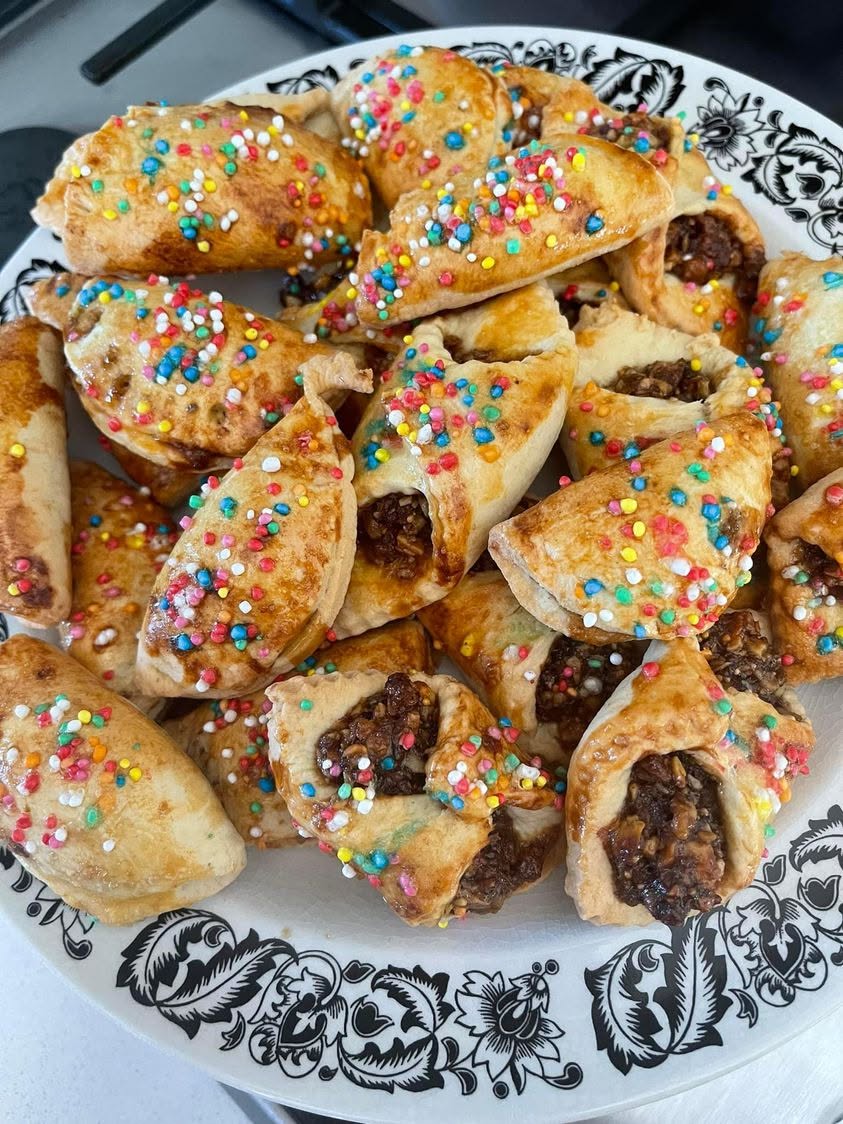
Sammartine Calabrese are traditional-style Calabrian pastries made with a very thin lemon-scented dough wrapped around a dense, aromatic filling of dried figs, almonds, raisins, dark chocolate, coffee, vincotto, cinnamon, cloves, and mandarin peel. They are rustic cookies with a remarkable contrast between the delicate outer pastry and the dark, moist, intensely flavored center.
What makes these cookies especially distinctive is the filling. Dried figs provide concentrated fruit sweetness, while almonds add texture, raisins deepen the dried-fruit character, and dark chocolate and coffee contribute subtle bitterness that keeps the filling from becoming overly sweet. Vincotto brings a rich grape-like sweetness and ties all of the flavors together.
The filling is rested for a full day before the cookies are assembled, giving the fruit, chocolate, coffee, citrus, and spices time to meld. Finished with beaten egg and colorful sprinkles, Sammartine are particularly suited to Christmas and other festive occasions, when their jewel-like filling and decorative appearance can become part of a larger Italian holiday dessert table.
Why People Will Love Sammartine Calabrese Recipe
The filling is rich with naturally sweet dried figs.
Almonds provide a satisfying contrast to the soft fruit filling.
Raisins add extra chewiness and concentrated sweetness.
Dark chocolate balances the fruit with a slightly bitter note.
Coffee deepens the chocolate and fig flavors.
Vincotto gives the filling a distinctive cooked-grape richness.
Cinnamon adds warm spice without overpowering the fruit.
Cloves contribute a deeper holiday aroma.
Mandarin peel adds fragrant citrus notes.
Lemon zest keeps the pastry bright and fresh.
The pastry is rolled very thin, allowing the filling to remain the star.
Each cookie has a contrast between tender dough and dense, chewy filling.
The filling rests overnight, which allows the flavors to develop more deeply.
The cookies can be shaped in several different ways.
They may be fully sealed or left partially open to show the filling.
Colorful sprinkles give them a festive appearance.
They are especially appropriate for Christmas cookie trays.
They pair beautifully with espresso or strong coffee.
The cookies can be made ahead for holiday gatherings.
Their flavor often improves after resting.
They are sweet but more complex than a typical sugar cookie.
The recipe combines fruit, nuts, chocolate, coffee, citrus, and warm spices in one pastry.
Their rustic appearance gives them a traditional homemade character.
They are ideal for gifting because they are sturdy enough to arrange in tins or boxes.
Key Ingredients
Dried Figs:
Dried figs form the heart of the filling. Their natural sweetness, tiny seeds, and dense texture give the cookies their signature chewy center.
Almonds:
Coarsely chopped almonds provide nutty flavor and texture. They keep the filling from becoming completely smooth and add pleasant crunch.
Raisins:
Raisins reinforce the dried-fruit character and add moisture and sweetness. Grinding them with the figs creates a smoother filling, while adding them separately gives more texture.
Dark or Bittersweet Chocolate:
Chocolate adds richness and slight bitterness, preventing the fig mixture from tasting one-dimensionally sweet.
Coffee:
Strong brewed coffee enhances both the chocolate and dried-fruit flavors while contributing a subtle roasted note.
Vincotto:
Vincotto is a concentrated cooked grape must with deep sweetness and complexity. It moistens the filling while contributing dark fruit and caramel-like flavors.
Cinnamon and Cloves:
These warm spices give the filling its holiday character. Cloves are especially powerful, so only a small amount is needed.
Mandarin Peel:
Mandarin rind contributes fragrant citrus oils that brighten the rich fig filling.
Lemon Zest:
Lemon zest perfumes the pastry and creates contrast with the darker, sweeter filling.
Neutral Oil:
Oil keeps the pastry tender while allowing the citrus and fig flavors to remain prominent.
Expert Tips
Choose soft, moist dried figs rather than extremely hard ones.
Remove all hard fig stems before grinding.
If the figs are unusually dry, soften them slightly before grinding.
A meat grinder gives the filling a traditional coarse texture.
A food processor also works, but avoid processing until completely smooth.
Keep some almond pieces coarse for better texture.
Toast the almonds lightly if you want a deeper nut flavor.
Use strong coffee so its flavor is not lost among the figs and vincotto.
Add vincotto gradually rather than pouring it all in at once.
The filling should be moist and cohesive but never runny.
Let the filling rest for the full 24 hours if possible.
Cover the filling well while it rests so it does not dry out.
Use finely grated citrus zest without including much bitter white pith.
Keep the clove quantity modest because it can quickly dominate the filling.
Make the dough soft and pliable rather than stiff.
Add warm milk one tablespoon at a time if the dough feels dry.
Roll the pastry as thinly as possible without tearing it.
A pasta machine can make consistently thin sheets.
Keep unused dough covered while working so it does not dry out.
Do not overfill the cookies.
About one teaspoon of filling is enough for most small pastries.
Press the edges gently but firmly if making fully sealed cookies.
Brush with only a thin layer of beaten egg.
Add sprinkles before baking so they adhere.
Watch the first batch closely because thin pastry bakes very quickly.
Remove the cookies when lightly golden rather than deeply browned.
Sammartine Calabrese
Calabrian Fig-Filled Cookies
Ingredients
For the Fig Filling
500 g dried figs, hard stems removed
150 g almonds, coarsely chopped
100 g raisins
50 g dark or bittersweet chocolate, finely chopped or grated
⅓ cup strong brewed coffee
½ cup vincotto, warmed until lukewarm, plus more as needed
1 teaspoon ground cinnamon
¼ teaspoon ground cloves
Finely chopped rind or zest of 1–2 mandarins
These filling quantities are estimated because the original recipe lists the ingredients but does not provide measurements.
For the Pastry
600 g all-purpose flour, plus extra for rolling
160 g granulated sugar
2 large eggs
Finely grated zest of 1 lemon
60 g neutral oil, such as sunflower oil or light olive oil
2 teaspoons yeast or leavening, as stated in the original recipe
About ½ cup warm milk, plus more as needed
For Finishing
1 egg, beaten
Colorful sugar sprinkles
Instructions
Prepare the Fig Filling One Day Ahead
Remove the hard stems from the dried figs.
Pass the figs through a meat grinder, or pulse them in a food processor until finely ground and sticky.
Transfer the ground figs to a large mixing bowl.
Add the coarsely chopped almonds.
Add the raisins. If you prefer, grind the raisins together with the figs, as suggested in the original recipe.
Add the Coffee and Chocolate
Combine the warm coffee with the finely chopped dark chocolate.
Stir until the chocolate softens and begins to blend with the coffee.
Pour the mixture over the ground figs.
Add the Vincotto and Spices
Pour in the lukewarm vincotto.
Add the cinnamon, cloves, and finely chopped mandarin rind.
Mix thoroughly until the filling becomes evenly blended, moist, and thick.
The filling should be soft enough to spoon but firm enough to stay inside the pastry.
If it seems too dry, add a little more vincotto.
Cover and let the filling rest for 24 hours before assembling the cookies.
Prepare the Pastry
Mix the Eggs and Sugar
Place the eggs and granulated sugar in a large bowl.
Whisk until well combined.
Add the oil and lemon zest and continue whisking until incorporated.
Combine with the Flour
Place the flour in a large mixing bowl or mound it onto a clean work surface, creating a well in the center.
Pour the egg mixture into the center.
Dissolve the yeast or leavening in approximately ½ cup warm milk, following the wording of the original recipe.
Add it gradually to the flour mixture.
Knead the Dough
Begin mixing and kneading until a smooth dough forms.
The dough should remain soft and workable rather than firm.
If it feels too dry or hard, add additional warm milk 1 tablespoon at a time until the dough becomes pliable.
Cover the dough and let it rest briefly while preparing the work surface.
The source does not specify a separate rising period.
Roll the Dough
Divide the dough into smaller portions.
Roll each portion very thinly using a rolling pin or pasta machine.
The original recipe specifically notes that the pastry should be very thin.
Dust the work surface lightly with flour as needed to prevent sticking.
Shape the Cookies
Cut the pastry into any preferred shape, such as:
- Rectangles
- Squares
- Ovals
- Half-moons
- Decorative folded shapes
Place about 1 teaspoon of fig filling in the center of each piece.
Fold the dough around the filling.
You can seal the cookies completely or leave them slightly open so some of the dark fig filling remains visible.
Press the edges gently so they hold their shape during baking.
Decorate
Arrange the filled pastries on parchment-lined baking sheets.
Brush the tops lightly with beaten egg.
Sprinkle generously with colorful sugar sprinkles.
Bake
Preheat the oven to 350°F / 180°C.
Bake for approximately 8–10 minutes, or until the pastry is set and only lightly golden.
Because the dough is rolled very thinly, watch the first batch carefully to prevent overbaking.
Cool
Remove the cookies from the oven and let them rest on the baking sheet for a few minutes.
Transfer to a wire rack and cool completely.
Important Notes When Making Sammartine Calabrese
The original filling ingredients were provided without exact measurements, so the filling amounts in this adapted recipe are estimates.
The exact amount of vincotto required depends on how dry the figs are.
The filling needs a full day of resting for the best flavor.
Do not skip the mandarin peel if you want the characteristic citrus complexity.
Dark chocolate works better than very sweet milk chocolate in this filling.
The pastry should be rolled very thin.
A thick pastry shell can overwhelm the fig filling.
The dough should remain soft and workable.
If it becomes too stiff, gradually add more warm milk.
The source refers to “yeast or leavening” but does not specify a separate rising period.
Because of that ambiguity, the exact leavening method may depend on the family version being followed.
Do not use excessive flour while rolling.
Too much additional flour can make the pastry dry.
Avoid overfilling because the filling can break through the thin dough.
The cookies bake very quickly at 350°F / 180°C.
Overbaking can make the thin pastry hard.
Allow the cookies to cool completely before storing.
Their flavor generally becomes more integrated after resting for a day.
How to Enjoy Sammartine Calabrese After Cooking
Allow the cookies to cool completely before serving. The filling becomes more settled and the pastry firms slightly as it cools.
For the best flavor, let the finished cookies rest for several hours or even overnight before serving. This gives the citrus, coffee, chocolate, spices, and vincotto additional time to meld.
Arrange them on a large serving platter with the colorful sprinkles facing upward.
If you have made different shapes, mix rectangles, half-moons, and partially open cookies together for a more rustic presentation.
Sammartine are particularly good with a small cup of strong espresso.
They also pair beautifully with cappuccino, black coffee, or unsweetened tea because the slight bitterness balances the sweet fig filling.
For a holiday dessert table, serve them alongside biscotti, pizzelle, struffoli, amaretti, or other Italian Christmas sweets.
Because the filling is rich, the cookies are best enjoyed in small portions rather than as a very large dessert.
They can also be packed into parchment-lined tins for gifting.
If storing them for several days, keep them in an airtight container in a cool place so the pastry does not dry out.
Nutrition Information
Approximate nutrition is based on about 40 cookies, using the estimated filling quantities listed in this adapted recipe. Because the original source did not specify exact filling amounts, these numbers should be treated as approximate.
Calories: 160–175 kcal | Total Fat: 4.5–5.5 g | Saturated Fat: 0.8–1.2 g | Monounsaturated Fat: 2.2–2.8 g | Polyunsaturated Fat: 1–1.5 g | Cholesterol: 14–18 mg | Sodium: 35–60 mg depending on the leavening and milk used | Total Carbohydrates: 28–30 g | Dietary Fiber: 2–2.5 g | Sugars: 13–15 g | Protein: 3–4 g
Additional estimate:
Potassium: 150–210 mg | Calcium: 35–50 mg | Iron: 1–1.5 mg | Magnesium: 25–35 mg | Vitamin A: 30–60 IU | Vitamin C: 1–2 mg | Vitamin B6: 0.05–0.1 mg | Vitamin B12: trace amount | Folate: 20–30 mcg | Phosphorus: 65–90 mg
Frequently Asked Questions:
What are Sammartine Calabrese?
They are Calabrian-style filled pastries made with thin dough surrounding a rich dried-fruit mixture, commonly featuring figs, nuts, spices, citrus, and vincotto.
What do Sammartine taste like?
They are fruity, nutty, citrusy, and warmly spiced, with deeper notes from coffee, dark chocolate, and vincotto.
Why does the filling need to rest for 24 hours?
Resting allows the dried fruit to absorb moisture from the coffee and vincotto while giving the citrus, chocolate, cinnamon, and cloves time to blend into a more unified flavor.
What is vincotto?
Vincotto is a concentrated cooked grape must with a thick texture and rich, naturally sweet grape flavor. It contributes both moisture and depth to the filling.
When are Sammartine usually served?
They are especially suited to Christmas and holiday gatherings, although they can be enjoyed whenever a rich fig-filled pastry is desired.
Why is my fig filling too dry?
The dried figs may contain less moisture than expected. Add a little more lukewarm vincotto, one tablespoon at a time, until the filling becomes moist and cohesive.
Why is my pastry dough too hard?
It may need additional liquid. Add warm milk gradually, one tablespoon at a time, until the dough becomes soft and easy to roll.
How thin should I roll the pastry?
Very thin. The dough should be thin enough that the fig filling remains the dominant part of the cookie, but not so thin that it tears during shaping.
Why did my cookies open while baking?
They may have been overfilled or the edges were not sealed firmly enough. Use about one teaspoon of filling and press the edges together carefully before baking.
How do I know when Sammartine are finished baking?
The pastry should be set and only lightly golden after approximately 8–10 minutes. Avoid waiting for a dark brown color, because the thin pastry can quickly become dry or hard.