Pasta e Fagioli Soup (Italian Pasta and Bean Soup)
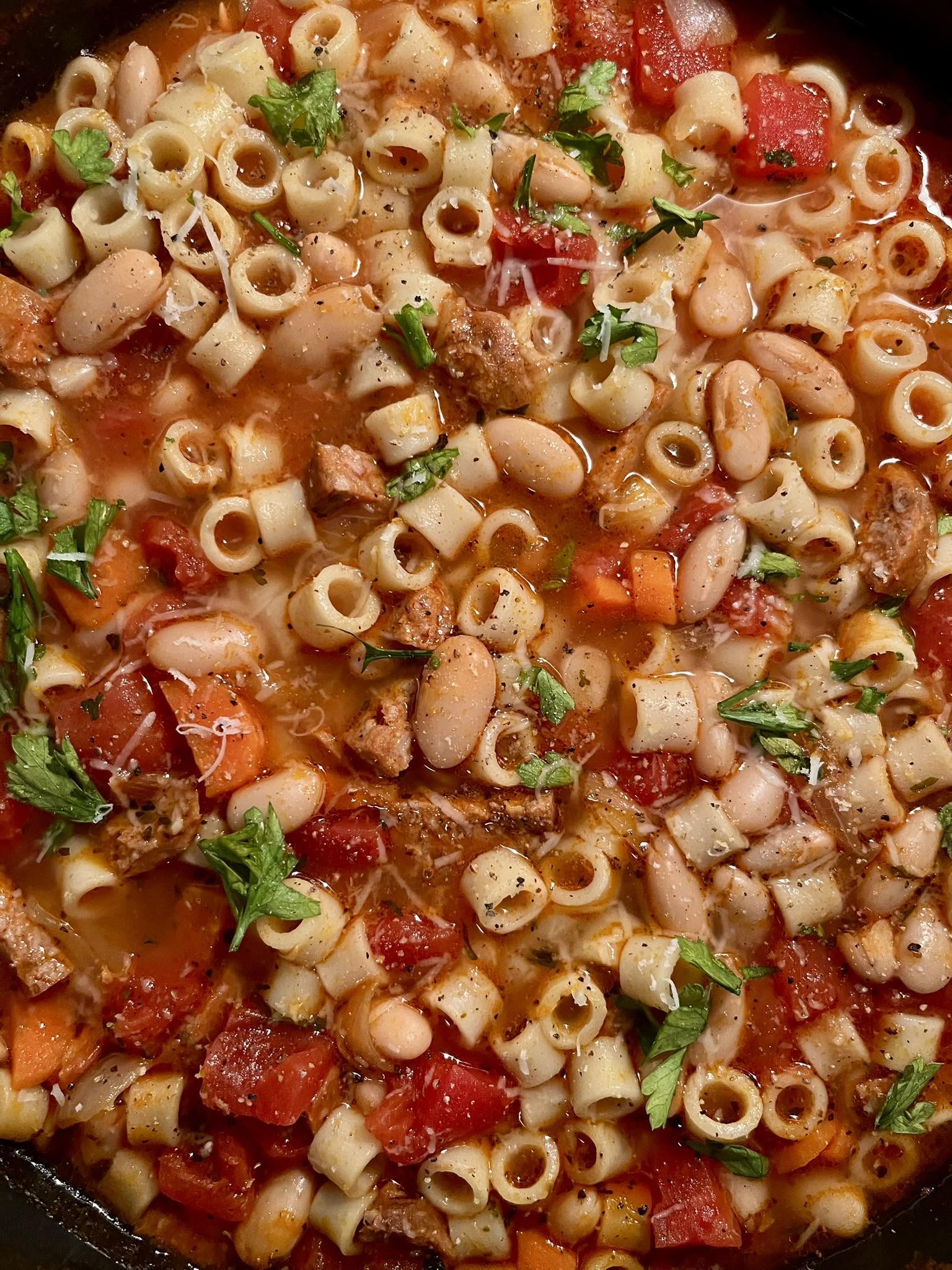
Pasta e Fagioli Soup is a warm, hearty Italian-style soup made with sausage, tender vegetables, beans, pasta, tomatoes, herbs, broth, and Parmigiano Reggiano. It is rustic, comforting, and deeply satisfying, with the kind of flavor that feels both simple and nourishing.
This soup is built in layers. The sausage creates a savory base, the onion, carrot, celery, and garlic add sweetness and depth, the tomato paste gives richness, and the beans make the soup creamy and filling. The small pasta turns it into a complete meal, while Parmesan adds a salty, nutty finish.
It is the kind of soup that feels perfect for cold days, family dinners, meal prep, or any time you want something cozy and generous in one bowl.
Why People Will Love Pasta e Fagioli Soup (Italian Pasta and Bean Soup) Recipe
It is hearty enough to be a full meal. Sausage, beans, pasta, vegetables, and broth come together in one satisfying bowl.
It has deep Italian-style flavor. Garlic, oregano, rosemary, thyme, tomato paste, fennel, sausage, and Parmesan create a warm, savory taste.
The beans make it comforting and filling. Cannellini beans and red kidney beans add creaminess, texture, protein, and body.
The pasta makes it extra cozy. Ditalini pasta gives the soup a classic, spoonable texture that feels filling without being too heavy.
It is easy to customize. You can use Italian sausage, ground beef, different beans, gluten-free pasta, or a different broth.
It tastes even better after resting. The broth, herbs, sausage, tomatoes, and beans continue to blend together as the soup sits.
It is simple but rich. The ingredients are familiar, but the finished soup tastes layered, rustic, and deeply homemade.
It is perfect with bread. Crusty bread, garlic bread, or focaccia makes the meal feel complete.
Key Ingredients
Italian Sausage:
Italian sausage gives the soup a bold, savory foundation. It adds seasoning, richness, and meaty depth. Ground beef can also be used, but sausage brings more built-in flavor.
Olive Oil:
Olive oil helps sauté the vegetables and creates a smooth base for the soup.
Onion, Carrot, and Celery:
These three vegetables create the classic aromatic base. Onion adds sweetness, carrot adds gentle earthiness, and celery gives the soup a clean savory note.
Garlic:
Garlic brings warmth and depth. It works beautifully with tomato paste, herbs, sausage, and beans.
Red Pepper Flakes:
Red pepper flakes add gentle heat. They do not need to make the soup spicy, but they help wake up the flavor.
Ground Fennel Seeds:
Fennel is optional, but it gives the soup a deeper Italian sausage-style flavor. It adds a slightly sweet, aromatic note.
Tomato Paste:
Tomato paste adds concentrated tomato flavor and helps give the broth a deeper color and richer taste.
Broth:
Chicken broth, beef broth, or ham broth can be used. Chicken broth keeps the flavor balanced, beef broth makes it deeper, and ham broth gives a smoky, savory character.
Diced Tomatoes:
Diced tomatoes add acidity, texture, and brightness. They balance the richness of the sausage and beans.
Cannellini Beans and Kidney Beans:
Cannellini beans are creamy and mild, while kidney beans are firmer and heartier. Together, they give the soup great texture and body.
Ditalini Pasta:
Ditalini is a small pasta shape that fits perfectly on a spoon. It makes the soup filling and classic.
Parmigiano Reggiano:
Parmigiano Reggiano adds salty, nutty richness. Stirring it in at the end gives the broth a deeper, more rounded flavor.
Parsley:
Parsley adds freshness and color at the end, balancing the richness of the soup.
Expert Tips
Brown the sausage well. Letting the sausage develop color creates a richer, more savory base for the soup.
Use the same pot for the vegetables. Cooking the onion, carrot, and celery in the sausage drippings adds extra flavor.
Cook the tomato paste briefly. Stirring tomato paste into the hot pot for a minute deepens its flavor and removes the raw tomato taste.
Do not overcook the pasta. Ditalini cooks quickly. Simmer only until al dente so it does not become mushy.
Add more broth if the soup thickens. Pasta and beans absorb liquid as they sit, so you may need extra broth when reheating.
Use freshly grated Parmesan if possible. It melts better and gives the soup a smoother, richer finish.
Taste after adding Parmesan. The cheese adds saltiness, so adjust salt only at the end.
For meal prep, cook the pasta separately. This keeps the pasta from soaking up too much broth in the refrigerator.
Finish with fresh herbs. Parsley added at the end gives the soup a fresher, brighter flavor.
Pasta e Fagioli Soup
Ingredients
1 pound Italian sausage, casings removed (or ground beef)
1 tablespoon olive oil
1 cup onion, diced
1 cup carrot, diced
1 cup celery, diced
3 cloves garlic, chopped
1 pinch red pepper flakes
1/2 teaspoon ground fennel seeds (optional)
3 tablespoons tomato paste
6 cups chicken broth (or beef broth, or ham broth)
1 (14.5 ounce) can diced tomatoes
1 (14.5 ounce) cans cannellini beans, drained and rinsed
1 (14.5 ounce) cans red kidney beans, drained and rinsed
1 teaspoon oregano
1/2 teaspoon rosemary (optional)
1/2 teaspoon thyme (optional)
1 cup ditalini pasta (gluten free for gluten free)
1/4 cup parmigiano reggiano (parmesan cheese), grated
salt and pepper to taste
1 tablespoon parsley, chopped (optional)
Instructions:
Brown the Sausage: In a large pot, heat the sausage over medium-high heat, breaking it into pieces as it cooks. Once fully browned, remove the sausage from the pot and set it aside.
Sauté the Vegetables: Pour the olive oil into the same pot, then add the onion, carrot, and celery. Cook the vegetables until they soften, around 5-7 minutes.
Add Flavor: Stir in the garlic, red pepper flakes, fennel seeds (if using), and tomato paste. Continue to cook for another minute, allowing the mixture to become fragrant.
Combine Ingredients: Add the broth, browned sausage, diced tomatoes, beans, oregano, rosemary, thyme, and pasta. Bring the soup to a boil, then reduce the heat and let it simmer until the pasta is cooked al dente, about 7 minutes.
Finish the Soup: Turn off the heat and stir in the grated Parmigiano Reggiano, allowing it to melt and blend into the soup.
Season and Serve: Taste and adjust with salt and pepper as needed. Stir in the chopped parsley (if using) and serve the soup hot. Enjoy!
Important Notes When Making Pasta e Fagioli Soup
The soup thickens as it sits. Pasta and beans continue absorbing broth, so leftovers may become more stew-like.
Broth choice changes the flavor. Chicken broth is lighter, beef broth is deeper, and ham broth gives a smoky taste.
Sausage can be mild or spicy. Use mild sausage for a gentler soup or hot sausage for more heat.
Beans should be drained and rinsed. This keeps the broth cleaner and helps control saltiness.
Gluten-free pasta can be used. Cook it carefully because gluten-free pasta can soften faster.
Parmesan should be added off the heat. This helps it melt smoothly into the soup instead of clumping.
Leftovers may need extra liquid. Add broth or water when reheating to bring back the soup texture.
How to Enjoy Pasta e Fagioli Soup After Cooking
After cooking, let the Pasta e Fagioli Soup rest for about 5 minutes before serving. This short rest allows the broth, sausage, herbs, beans, and pasta to settle into a deeper, more balanced flavor.
Ladle the soup into deep bowls while it is hot. Make sure each bowl has a good mix of sausage, pasta, beans, vegetables, tomatoes, and broth. Sprinkle extra Parmigiano Reggiano on top for a salty, nutty finish. Add chopped parsley for freshness and color.
Serve this soup with crusty bread, garlic bread, focaccia, or warm dinner rolls. Bread is especially good because it soaks up the savory tomato-bean broth. For a lighter meal, pair it with a green salad, cucumber salad, or roasted vegetables.
For extra richness, drizzle a little olive oil over the top before serving. For more heat, add red pepper flakes. For a brighter finish, add a small squeeze of lemon.
This soup is excellent for leftovers. Store it in an airtight container in the refrigerator. When reheating, add extra broth or water because the pasta will continue to absorb liquid. Warm gently on the stove or in the microwave until hot.
Nutrition Information
Calories: 380–540 kcal | Total Fat: 16–28 g | Saturated Fat: 5–10 g | Monounsaturated Fat: 7–12 g | Polyunsaturated Fat: 2–4 g | Cholesterol: 35–70 mg | Sodium: 800–1,350 mg, depending on sausage, broth, beans, Parmesan, and added salt | Total Carbohydrates: 38–58 g | Dietary Fiber: 8–13 g | Sugars: 6–10 g | Protein: 20–32 g
Frequently Asked Questions:
Can I substitute Italian sausage with another protein?
Yes, you can use ground beef, turkey, or chicken as alternatives to Italian sausage.
Choose your preferred option based on taste preferences.
Is it necessary to use fennel seeds in the recipe?
No, ground fennel seeds are optional. They add a subtle, aromatic flavor, but you can omit them if you prefer.
Can I use vegetable broth for a vegetarian version?
Absolutely! Replace chicken or beef broth with vegetable broth to make a delicious vegetarian Pasta e Fagioli Soup.
What kind of pasta works best for this soup?
Ditalini pasta is traditional, but you can use any small pasta shape.
Consider gluten-free options if needed.
Can I use dried herbs instead of fresh ones?
Yes, you can substitute dried oregano, rosemary, and thyme for fresh herbs.
Use smaller quantities, as dried herbs are more concentrated.
How can I make the soup less spicy?
Adjust the quantity of red pepper flakes to control the spice level.
Start with a small pinch and add more if desired.
What type of beans should I use?
The recipe calls for cannellini and red kidney beans, but you can experiment with other varieties like Great Northern beans or black beans.
Can I make this soup ahead of time?
Yes, Pasta e Fagioli Soup reheats well. Prepare the soup, excluding the pasta, and add the pasta just before serving to prevent it from becoming mushy.
Why use tomato paste in the soup?
Tomato paste adds depth and richness to the broth.
It enhances the overall flavor profile of the soup.
Can I freeze Pasta e Fagioli Soup?
While the soup can be frozen, keep in mind that pasta may change texture upon freezing.
Consider adding cooked pasta when reheating for better results.