Octopus Carpaccio
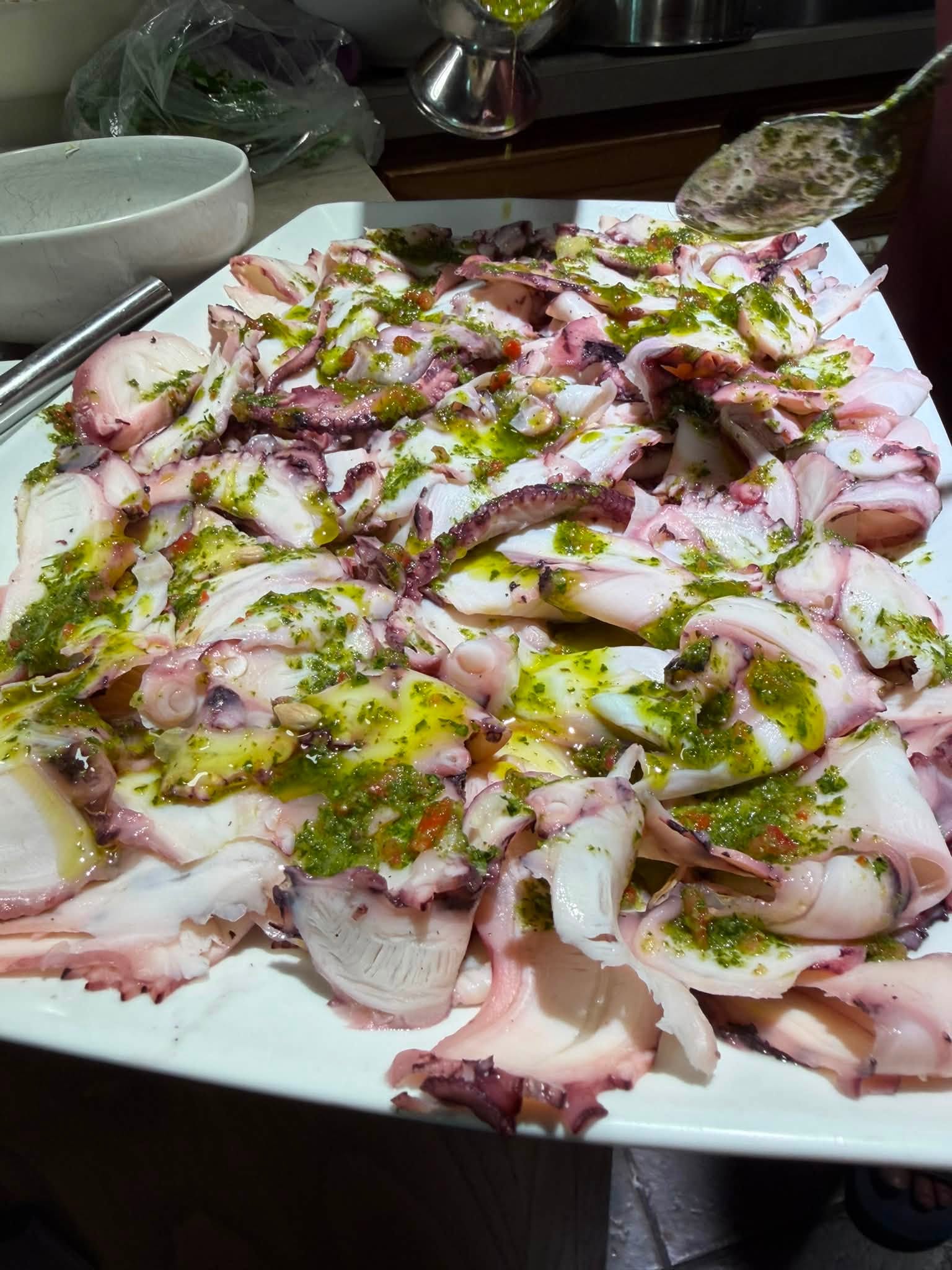
Octopus Carpaccio is an elegant cold seafood appetizer made with tender cooked octopus, pressed into a compact shape, sliced paper-thin, and finished with a bright lemon-olive oil dressing.
This dish is simple in ingredients but refined in texture and presentation. The octopus becomes delicate, clean, and almost silky when sliced thinly, while the dressing adds freshness, warmth, and a gentle touch of spice.
It is a beautiful recipe for seafood lovers who enjoy light, refreshing dishes that feel both rustic and sophisticated.
Why People Will Love Octopus Carpaccio Recipe
The presentation is elegant and restaurant-style.
The octopus becomes tender, delicate, and easy to slice.
The lemon and olive oil dressing keeps the dish fresh and bright.
Piment d’Espelette adds gentle warmth without overpowering the seafood.
Fresh parsley gives color and herbal freshness.
It is served cold, making it perfect for warm weather or light appetizers.
The flavor is clean, briny, citrusy, and refined.
It can be prepared ahead of time.
The pressed octopus creates beautiful thin slices.
It works beautifully as a starter for seafood dinners.
The ingredients are simple, but the final dish feels special.
It pairs well with white wine, sparkling wine, crusty bread, or a fresh salad.
Key Ingredients
Octopus:
Octopus is the center of the dish. When cooked until tender and then chilled under pressure, it becomes firm enough to slice thinly while staying delicate and flavorful.
Carrot, Celery, and Bay Leaf:
These aromatics gently flavor the cooking water and give the octopus a more rounded, savory taste.
Olive Oil:
Olive oil creates the base of the dressing. It adds richness and smoothness while carrying the lemon, herbs, and spice.
Lemon Juice:
Lemon juice brightens the dish and balances the natural richness of the octopus. Meyer lemon gives a softer, slightly sweeter citrus note.
Piment d’Espelette:
This pepper adds mild heat, beautiful color, and a subtle fruity spice that works well with seafood.
Fresh Parsley:
Parsley brings freshness, color, and a clean herbal finish.
Salt and Black Pepper:
Simple seasoning enhances the natural flavor of the octopus without covering it.
Expert Tips
Cook the octopus gently until tender, not rubbery.
Let the octopus cool in its cooking water to keep it moist and flavorful.
Drain and squeeze out excess water before pressing so the slices hold together better.
Use a clean plastic bottle as a mold to compress the octopus tightly.
Press the octopus firmly into the bottle to remove gaps.
Chill for at least 24 hours so the octopus sets properly.
Slice the octopus as thinly as possible for the best carpaccio texture.
Use a very sharp knife or a mandoline-style slicer if suitable.
Mix the dressing just before serving for the freshest flavor.
Do not overdress the slices; a light drizzle is enough.
Serve the dish cold for the cleanest texture.
Add the parsley at the end so it stays bright and fresh.
Octopus Carpaccio
Ingredients
For the Octopus
1 large octopus, about 3 to 4 pounds, uncooked
1 carrot, peeled
1 celery stalk
1 bay leaf
For the Dressing
6 tablespoons olive oil
2 tablespoons lemon juice, preferably Meyer lemon
Piment d’Espelette, to taste
1 tablespoon chopped parsley
Salt, to taste
Black pepper, to taste
Instructions
Place the octopus in a large pot with the carrot, celery stalk, and bay leaf.
Cover with water and cook until the octopus becomes tender, about 30 to 40 minutes.
Once cooked, leave the octopus to cool in the cooking liquid.
When fully cooled, drain the octopus well.
Gently squeeze out any excess water.
Cut the top off a clean plastic bottle to create a cylinder-shaped mold.
Push the octopus firmly into the bottle, pressing it down tightly so it becomes compact.
Place the filled bottle in the refrigerator for at least 24 hours to set.
To prepare the dressing, mix together the olive oil, lemon juice, Piment d’Espelette, chopped parsley, salt, and black pepper.
After chilling, carefully cut away the plastic bottle to release the compressed octopus.
Slice the octopus very thinly.
Arrange the slices neatly on individual serving plates.
Drizzle the dressing over the top.
Serve cold.
Important Notes When Making Octopus Carpaccio
The octopus must be fully tender before chilling.
Cooking time can vary depending on the size and age of the octopus.
Older or larger octopus may need more time than 30 to 40 minutes.
Do not slice the octopus before it has fully chilled and set.
The plastic bottle mold should be clean and food-safe.
Pressing tightly is important for smooth, compact slices.
The dish should be served cold, not warm.
The dressing should enhance the octopus, not drown it.
Taste the dressing before serving and adjust lemon, salt, and pepper as needed.
Leftovers should be refrigerated and eaten within a short time for the best freshness.
How to Enjoy Octopus Carpaccio After Cooking
After the octopus has cooked, cooled, pressed, and chilled for at least 24 hours, remove it carefully from the bottle mold and slice it very thinly.
Arrange the slices flat on chilled plates, slightly overlapping them for a clean carpaccio-style presentation. The slices should look delicate, glossy, and almost translucent around the edges.
Drizzle the lemon-olive oil dressing lightly over the top. Add a final sprinkle of Piment d’Espelette, fresh parsley, and a little cracked black pepper if desired.
Serve the carpaccio cold as an appetizer. It pairs beautifully with toasted bread, crostini, arugula salad, fennel salad, olives, capers, lemon wedges, or roasted peppers.
For drinks, it goes especially well with crisp white wine, sparkling wine, rosé, or mineral water with lemon. Eat it slowly and simply, allowing the texture of the octopus and the brightness of the dressing to shine.
Nutrition Information
Approximate nutrition per serving, based on 4 servings:
Calories: 365 kcal | Total Fat: 22 g | Saturated Fat: 3.2 g | Monounsaturated Fat: 15 g | Polyunsaturated Fat: 2.3 g | Cholesterol: 150 mg | Sodium: 620–1,100 mg depending on octopus, added salt, cooking liquid, and final seasoning | Total Carbohydrates: 3 g | Dietary Fiber: 0.5 g | Sugars: 1 g | Protein: 36 g
Additional estimate:
Calcium: 90–160 mg | Potassium: 650–950 mg | Iron: 7–10 mg | Vitamin B12: 25–35 mcg | Vitamin C: 5–12 mg
Frequently Asked Questions:
What is Octopus Carpaccio?
Octopus Carpaccio is a cold seafood dish made from cooked octopus that is pressed, chilled, sliced very thinly, and served with a light dressing.
What does Octopus Carpaccio taste like?
It tastes clean, delicate, slightly briny, citrusy, and savory, with a tender seafood texture and a bright olive oil-lemon finish.
Is this dish served hot or cold?
Octopus Carpaccio is served cold, usually as an appetizer or light seafood starter.
What can I serve with Octopus Carpaccio?
Serve it with crostini, crusty bread, arugula salad, fennel salad, olives, capers, roasted peppers, or lemon wedges.
Is Octopus Carpaccio good for special occasions?
Yes. Its elegant presentation and delicate texture make it excellent for dinner parties, holidays, seafood menus, or romantic meals.
Why do I need to press the octopus in a bottle?
Pressing the octopus compacts it into a firm shape, making it easier to slice thinly and giving the dish its beautiful carpaccio presentation.
How do I know when the octopus is tender?
The octopus is ready when a knife or fork can pierce the thickest part easily without much resistance.
Can I cook the octopus ahead of time?
Yes. This recipe is designed for advance preparation because the octopus needs to chill for at least 24 hours after pressing.
What should I do if the octopus is difficult to slice?
Make sure it is fully chilled and very firm. Use a sharp knife and slice slowly into thin pieces.
Can I change the dressing?
Yes. You can add capers, lemon zest, extra parsley, a little garlic, or a touch of Dijon mustard, but keep the dressing light so the octopus remains the focus.