Italian Pignoli Cookies
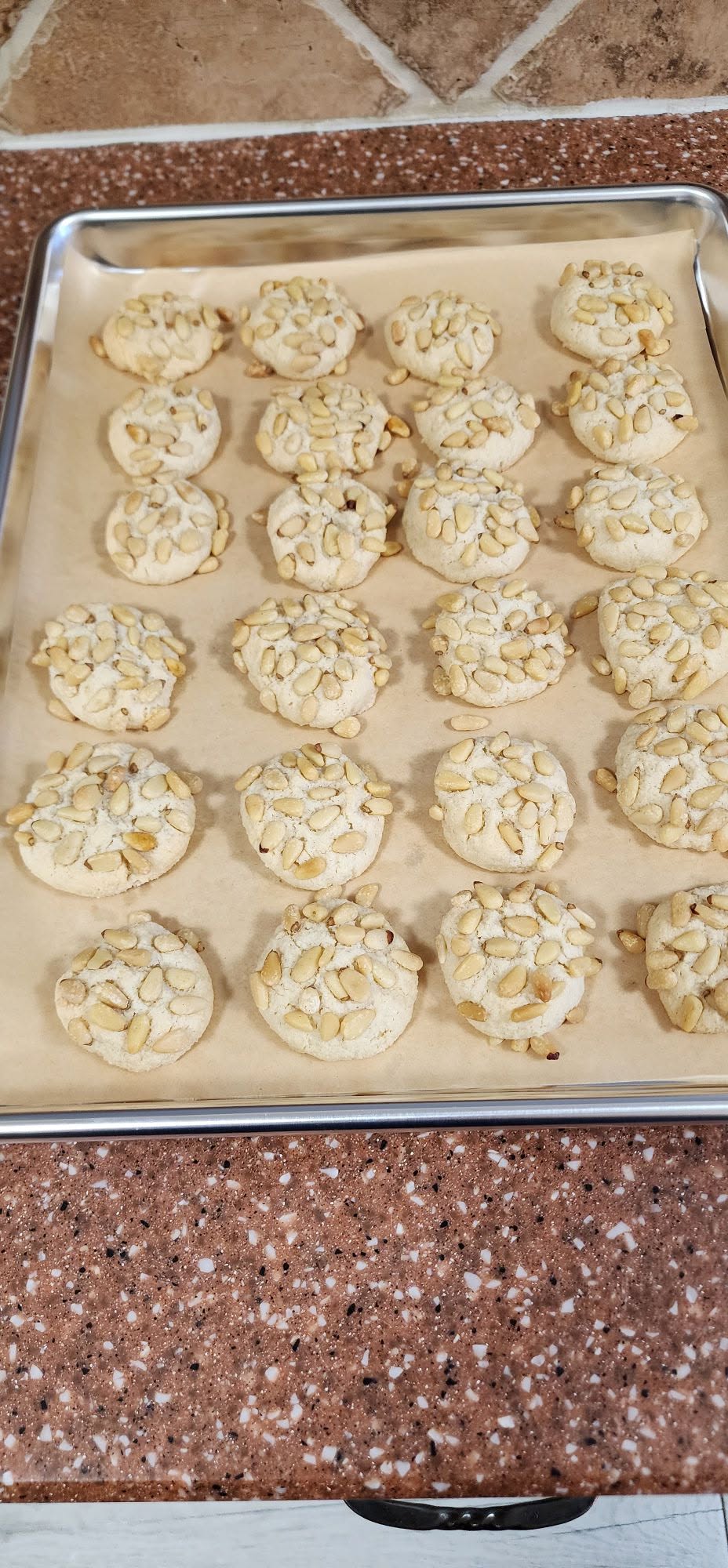
Italian Pignoli Cookies are classic almond-based cookies with a soft, chewy center, lightly golden edges, and a beautiful coating of toasted pine nuts.
These cookies feel elegant, old-world, and deeply traditional. The almond flour gives them a rich nutty base, the egg whites create their signature chewy texture, and the almond extract makes every bite fragrant and sweet.
They are simple in ingredients but luxurious in flavor — perfect for holidays, Italian cookie trays, weddings, coffee breaks, or special family gatherings.
Why People Will Love Italian Pignoli Cookies Recipe
They have a soft, chewy almond center.
The outside is covered with golden toasted pignoli nuts.
Almond flour gives the cookies a rich, naturally nutty flavor.
Egg whites help create the classic light and chewy texture.
Almond extract adds a beautiful bakery-style aroma.
They are naturally flourless, making them a great gluten-free-style cookie when ingredients are verified.
The pine nuts make them look elegant and special.
They are sweet, delicate, and deeply satisfying.
They are perfect for holidays, cookie platters, and gifting.
They pair beautifully with coffee, espresso, tea, or dessert wine.
They taste like traditional Italian bakery cookies.
Every bite has a lovely contrast of chewy cookie and tender toasted nuts.
Key Ingredients
Almond Flour:
Almond flour is the heart of these cookies. It gives them a rich almond flavor, tender texture, and slightly dense chew.
Granulated Sugar:
Sugar sweetens the dough and helps the cookies bake with lightly golden edges.
Egg Whites:
Egg whites bind the almond flour and sugar together while giving the cookies their soft, chewy structure.
Almond Extract:
Almond extract deepens the almond flavor and gives the cookies their classic Italian bakery fragrance.
Pignoli Nuts:
Pignoli, or pine nuts, coat the outside of the cookies and add a delicate buttery crunch.
Powdered Sugar:
Powdered sugar is optional, but it gives the finished cookies a pretty, delicate bakery-style look.
Expert Tips
Use finely ground almond flour for the smoothest dough.
Mix until the dough is thick and sticky.
Lightly dampen your hands before rolling to make shaping easier.
Press the dough gently into the pignoli nuts so they stick well.
Do not flatten the cookies too much; they should stay slightly rounded.
Line the baking sheet with parchment paper to prevent sticking.
Leave space between the cookies because they may spread slightly.
Watch carefully near the end of baking because pine nuts can brown quickly.
Bake until the edges are golden but the centers still look soft.
Let the cookies cool on the baking sheet before moving them.
Use a thin spatula to transfer them because they are delicate when warm.
Dust with powdered sugar only after the cookies have cooled completely.
Italian Pignoli Cookies
Ingredients
4 cups almond flour
2 cups granulated sugar
6 large egg whites
1 tablespoon almond extract
2 to 3 cups pignoli, pine nuts, for coating
Powdered sugar, optional for dusting
Instructions
Preheat the oven to 350°F.
Line a baking sheet with parchment paper.
In a large mixing bowl, combine the almond flour and granulated sugar.
Add the egg whites and almond extract.
Mix until a thick, sticky almond dough forms.
Place the pignoli nuts in a shallow bowl or plate.
Scoop small portions of dough, about 1 tablespoon each.
Roll each portion gently into a ball.
Press each dough ball into the pignoli nuts so the outside is coated.
Place the cookies on the prepared baking sheet, leaving a little space between each one.
Lightly press each cookie down so it is slightly flattened.
Bake for 15 to 17 minutes, or until the cookies are lightly golden brown.
Watch carefully near the end so the pignoli nuts do not burn.
Remove from the oven and let the cookies cool on the baking sheet for a few minutes.
Transfer to a cooling rack and let them cool completely.
Dust lightly with powdered sugar if desired.
Yield
Makes about 42 cookies.
Pro Tip
The dough will be sticky, which is normal. Lightly dampen your hands with water before rolling the cookies to make shaping easier. For the best flavor and texture, bake until the edges are golden but the centers still look soft.
Important Notes When Making Italian Pignoli Cookies
The dough will be sticky, and that is normal.
Pignoli nuts can be expensive, but they are important for the traditional flavor and appearance.
Do not overbake the cookies, or they may lose their soft chewy center.
The cookies firm up as they cool.
Egg whites should be well mixed into the almond flour and sugar.
Almond extract is strong, so measure carefully.
The cookies should be lightly golden, not dark brown.
If the dough feels too loose, chill it briefly before shaping.
Store the cookies in an airtight container to keep them soft.
These cookies are best enjoyed within a few days for the freshest texture.
How to Enjoy Italian Pignoli Cookies After Baking
After the Italian Pignoli Cookies have cooled completely, arrange them on a small dessert plate, cookie tray, or holiday platter.
They are best served at room temperature, when the centers are soft and chewy and the pine nuts have a delicate toasted flavor.
Enjoy them with espresso, cappuccino, black coffee, hot tea, or a glass of milk. Their almond flavor also pairs beautifully with fresh berries, chocolate desserts, biscotti, or other Italian cookies.
For a pretty presentation, dust the cookies lightly with powdered sugar right before serving. They also make wonderful gifts when packed in a cookie tin or bakery box with parchment paper between the layers.
These cookies are rich and sweet, so small portions feel satisfying and elegant.
Nutrition Information
Approximate nutrition per cookie, based on about 42 cookies:
Calories: 145 kcal | Total Fat: 9.5 g | Saturated Fat: 0.8 g | Monounsaturated Fat: 4.5 g | Polyunsaturated Fat: 3.2 g | Cholesterol: 0 mg | Sodium: 10–35 mg depending on almond flour, pine nuts, and added ingredients | Total Carbohydrates: 13 g | Dietary Fiber: 1.5 g | Sugars: 10 g | Protein: 3.5 g
Additional estimate:
Calcium: 35–65 mg | Potassium: 90–150 mg | Iron: 0.8–1.4 mg | Vitamin E: 2–4 mg
Note: Nutrition will vary depending on cookie size, amount of pine nuts used for coating, almond flour brand, and final yield.
Frequently Asked Questions:
What are Italian Pignoli Cookies?
Italian Pignoli Cookies are traditional almond cookies coated with pine nuts and baked until lightly golden, with a soft chewy center.
What do pignoli cookies taste like?
They taste sweet, nutty, almond-rich, slightly chewy, and lightly buttery from the toasted pine nuts.
Are pignoli cookies gluten-free?
They are made with almond flour instead of wheat flour, but always check ingredient labels to make sure everything is certified gluten-free if needed.
Why are pine nuts used on these cookies?
Pine nuts give the cookies their classic Italian look and add a delicate nutty flavor and light crunch.
What should I serve with pignoli cookies?
Serve them with espresso, cappuccino, tea, hot chocolate, fresh fruit, or an Italian cookie platter.
Why is my dough so sticky?
Pignoli cookie dough is naturally sticky because it is made with almond flour, sugar, and egg whites. Lightly damp hands make it easier to shape.
How do I keep the pine nuts from falling off?
Press each dough ball gently but firmly into the pine nuts so they stick to the surface before baking.
Can I chill the dough before baking?
Yes. Chilling the dough for 15 to 30 minutes can make it easier to handle and shape.
How do I know when the cookies are done?
The cookies are ready when the edges are lightly golden and the centers still look soft. They will firm up as they cool.
How should I store pignoli cookies?
Store them in an airtight container at room temperature for a few days, or refrigerate them if you want them to last longer.