Homemade Caesar Dressing
Homemade Caesar Dressing is one of those classic kitchen staples that transforms a simple salad into something rich, bold, and deeply satisfying. Unlike many store-bought versions, making it from scratch allows every ingredient—from the sharp Parmesan to the bright lemon and savory garlic—to shine with fresh, balanced flavor.
This dressing is built on a creamy base with layers of complexity: tangy mustard, umami-rich Worcestershire sauce, and the nutty depth of freshly grated Parmesan. When whisked together slowly with olive oil, the ingredients emulsify into a smooth, velvety dressing that coats every leaf of lettuce beautifully.
The result is a Caesar dressing that feels authentic, vibrant, and far more flavorful than anything from a bottle—perfect not only for classic Caesar salads but also for drizzling over roasted vegetables, grilled chicken, or crisp greens whenever you want a touch of bold, savory richness.
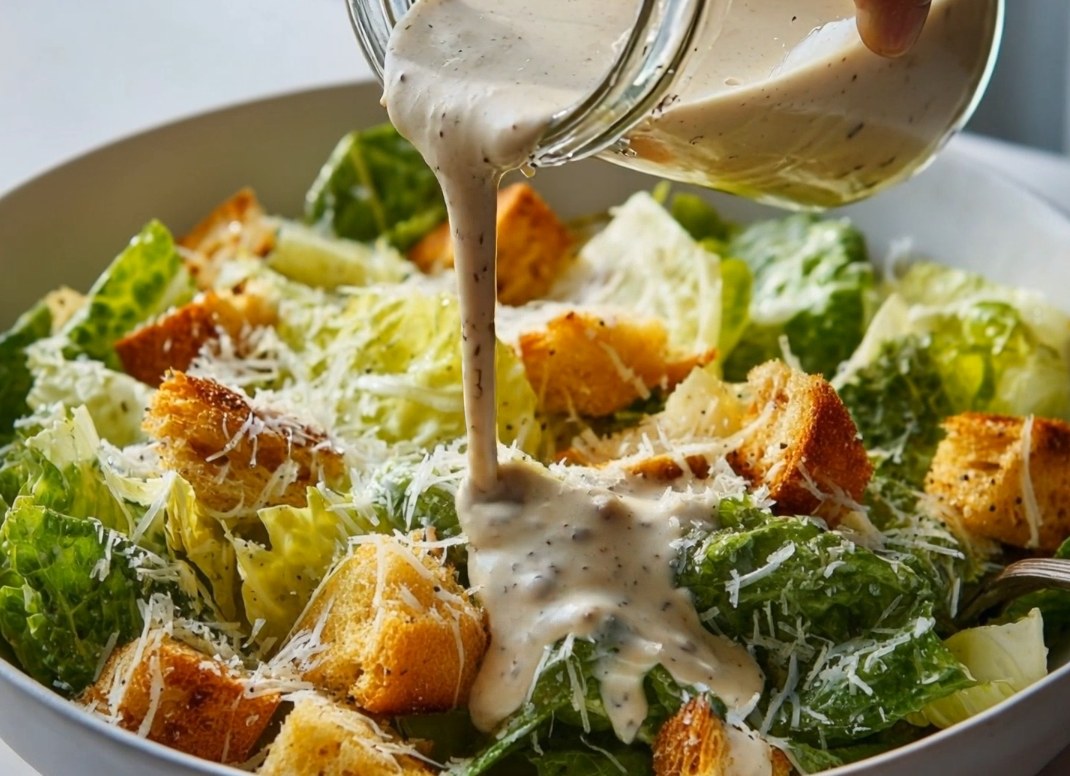
Why People Will Love Homemade Caesar Dressing Recipe
Bold, Classic Caesar Flavor
This dressing delivers the unmistakable taste that makes Caesar salad so beloved—rich, tangy, garlicky, and deeply savory. Each ingredient contributes to a balanced flavor that feels both bright and indulgent.
Fresh and Homemade Quality
Making Caesar dressing from scratch means every component is fresh and vibrant. The garlic is aromatic, the lemon juice is bright, and the Parmesan cheese brings authentic depth that bottled dressings rarely achieve.
Perfectly Creamy Texture
Slowly whisking the olive oil into the base creates a smooth, velvety emulsion. The result is a dressing that coats lettuce beautifully without feeling heavy or greasy.
Rich Umami Depth
Worcestershire sauce and Parmesan cheese add layers of savory complexity. These ingredients create the deep, satisfying flavor that defines a truly great Caesar dressing.
Simple Ingredients with Big Impact
The recipe relies on a handful of pantry staples—mayonnaise, mustard, garlic, lemon, olive oil, and cheese—but together they create a dressing that tastes restaurant-quality.
Versatile Beyond Caesar Salad
While perfect for romaine lettuce, this dressing also works wonderfully as a dip for vegetables, a spread for sandwiches, or a drizzle over grilled chicken and roasted vegetables.
Quick and Easy to Prepare
Despite its rich flavor, the dressing takes only a few minutes to make. With just a bowl and a whisk, you can create a fresh dressing that elevates any salad instantly.
More Flavor Control
Making it at home allows you to adjust the garlic, lemon, salt, or cheese to match your personal taste, creating a dressing that is perfectly balanced for you.
Key Ingredients
Mayonnaise
Mayonnaise forms the creamy foundation of the dressing. It provides body and smoothness while helping the other ingredients blend together into a stable, velvety emulsion.
Dijon Mustard
Dijon mustard adds a subtle tang and gentle sharpness that balances the richness of the mayonnaise and Parmesan. It also helps the dressing emulsify, giving it a smooth and cohesive texture.
Worcestershire Sauce
This ingredient brings a deep savory complexity often described as umami. Its blend of fermented flavors adds depth and enhances the overall richness of the dressing.
Fresh Garlic
Garlic gives Caesar dressing its distinctive aromatic bite. Finely grated or crushed garlic releases natural oils that infuse the dressing with a bold, savory character.
Fresh Lemon Juice
Lemon juice provides brightness and acidity, cutting through the richness of the dressing. It balances the creamy base and keeps the flavor fresh and lively.
Light Olive Oil
A mild olive oil helps create a silky texture while maintaining a clean, smooth flavor. Using a lighter olive oil prevents the dressing from becoming too bitter or overpowering.
Parmesan Cheese
Freshly grated Parmesan adds nutty, salty depth and thickens the dressing slightly. It is one of the signature flavors that gives Caesar dressing its rich and authentic taste.
Salt and Black Pepper
These simple seasonings enhance all the other ingredients. Freshly cracked black pepper adds a subtle warmth that complements the garlic and cheese beautifully.
Expert Tips:
Use Freshly Grated Parmesan for Maximum Flavor
Freshly grated Parmesan melts smoothly into the dressing and delivers a much deeper nutty flavor than pre-grated varieties. Finely grate it so it blends seamlessly into the creamy base.
Grate the Garlic Instead of Chopping
Using a microplane or fine grater turns the garlic into a smooth paste, allowing its oils to release fully into the dressing. This distributes the flavor evenly and prevents harsh bites of raw garlic.
Add the Olive Oil Slowly to Create a Stable Emulsion
Drizzling the olive oil gradually while whisking constantly allows the dressing to emulsify properly. This step ensures the final texture is thick, smooth, and creamy rather than separated.
Use Fresh Lemon Juice, Not Bottled
Fresh lemon juice brings bright acidity and natural citrus oils that elevate the dressing. Bottled lemon juice often lacks the vibrant flavor needed for a well-balanced Caesar dressing.
Taste and Adjust the Balance
Caesar dressing is all about balance between creamy, tangy, salty, and savory elements. Taste the dressing before serving and adjust with a little extra lemon juice, Parmesan, or black pepper if needed.
Let the Dressing Rest Before Using
Allowing the dressing to chill in the refrigerator for about 20–30 minutes helps the flavors blend together. The garlic softens slightly and the dressing thickens to the perfect consistency.
Choose a Mild Olive Oil
A light olive oil works best because it adds richness without overpowering the other ingredients. Strong extra virgin olive oil can sometimes make the dressing taste bitter.
Whisk Thoroughly for the Right Texture
Proper whisking ensures all ingredients combine evenly, giving the dressing a smooth, restaurant-quality consistency that clings perfectly to lettuce leaves.
Store Properly to Maintain Freshness
Keep the dressing in an airtight jar in the refrigerator. Stir or shake it gently before using to bring the ingredients back together and refresh the creamy texture.
Homemade Caesar Dressing
Ingredients
½ cup creamy mayonnaise
2 teaspoons Dijon-style mustard
2 teaspoons Worcestershire sauce
2 garlic cloves, finely grated or crushed
3 tablespoons freshly squeezed lemon juice (from about 1 large lemon)
½ teaspoon fine salt
½ teaspoon freshly cracked black pepper
½ cup light olive oil (mild flavor, not extra virgin)
½ cup Parmesan cheese, freshly grated
Instructions
Combine the Base Ingredients
In a medium mixing bowl, add the mayonnaise, Dijon mustard, Worcestershire sauce, grated garlic, fresh lemon juice, salt, and black pepper.
Whisk everything together until the mixture becomes smooth and evenly blended.
Emulsify the Dressing
While whisking continuously, slowly pour in the olive oil in a thin, steady stream.
Keep whisking until all the oil has been added and the dressing becomes creamy and fully emulsified.
Add the Cheese
Stir in the freshly grated Parmesan cheese and whisk again until it is evenly incorporated into the dressing.
Store the Dressing
Pour the finished dressing into a clean jar or airtight container.
Cover with a lid and refrigerate until ready to use.
Important Notes When Making This Recipe
Use High-Quality Ingredients for the Best Flavor
Because Caesar dressing contains only a handful of ingredients, the quality of each one matters. Fresh lemon juice, good Parmesan cheese, and flavorful garlic will significantly improve the final taste.
Freshly Grated Parmesan Is Essential
Pre-shredded or powdered Parmesan often contains anti-caking agents that prevent it from blending smoothly. Freshly grated Parmesan melts naturally into the dressing and gives it a richer, more authentic flavor.
Choose a Mild Olive Oil
A light olive oil is recommended because strong extra virgin olive oil can sometimes create a bitter taste when mixed with garlic and lemon. A milder oil keeps the dressing smooth and balanced.
Balance Is the Key to a Good Caesar Dressing
The flavor of Caesar dressing depends on a careful balance between creamy, tangy, salty, and savory elements. Taste the dressing before storing and adjust the lemon, cheese, or pepper if needed.
The Dressing Will Thicken in the Refrigerator
After chilling, the dressing naturally becomes slightly thicker as the oil and cheese settle. If it becomes too thick, you can whisk in a small amount of water or lemon juice to loosen it.
Garlic Flavor Becomes Stronger Over Time
Fresh garlic intensifies as the dressing rests in the refrigerator. If you prefer a milder garlic flavor, start with a smaller amount and adjust later if needed.
Store in an Airtight Container
Keeping the dressing in a sealed jar helps preserve its freshness and prevents it from absorbing other flavors in the refrigerator.
Shake or Stir Before Each Use
Natural separation may occur during storage. Simply shake the jar or stir the dressing to restore its smooth and creamy texture before serving.
How to Enjoy This Homemade Caesar Dressing After Cooking
Chill the Dressing Before Using
After preparing the dressing, allow it to rest in the refrigerator for at least 20–30 minutes. This resting time helps the flavors of garlic, lemon, mustard, and Parmesan blend together and gives the dressing a thicker, creamier consistency.
Toss with Crisp Romaine Lettuce
The classic way to enjoy Caesar dressing is with fresh romaine lettuce. Add the dressing gradually and toss gently so every leaf is lightly coated without becoming soggy.
Add Classic Caesar Toppings
For a traditional Caesar salad, top the dressed lettuce with crunchy croutons and extra freshly grated Parmesan cheese. A few cracks of black pepper enhance the bold flavors even further.
Pair with Grilled Protein for a Complete Meal
Caesar dressing pairs beautifully with grilled chicken, shrimp, or salmon. Adding a warm protein transforms the salad into a satisfying and balanced main dish.
Use It as a Versatile Sauce
Beyond salads, this dressing works wonderfully as a dip for fresh vegetables, a spread for sandwiches and wraps, or a drizzle over roasted vegetables.
Serve with Fresh Bread or Croutons
The rich, savory dressing pairs well with toasted bread or homemade croutons, adding a crunchy texture that contrasts nicely with the creamy dressing.
Adjust the Consistency if Needed
If the dressing becomes too thick after refrigeration, whisk in a teaspoon of water or lemon juice before serving to restore its smooth, pourable texture.
Finish with Extra Parmesan and Pepper
Just before serving, add a final sprinkle of Parmesan cheese and freshly cracked black pepper. This finishing touch enhances the aroma and presentation.
Enjoy While Fresh
Homemade Caesar dressing tastes best within a few days of preparation. Its bright, bold flavors are most vibrant when freshly made and properly chilled.
Nutrition Information:
Yields: About 1½ cups (12 servings)
Calories: 190 kcal | Total Fat: 18 g | Saturated Fat: 4 g | Monounsaturated Fat: 9 g | Polyunsaturated Fat: 3 g | Cholesterol: 15 mg | Sodium: 320–380 mg (depending on Parmesan and added salt) | Total Carbohydrates: 2 g | Dietary Fiber: 0 g | Sugars: 0.5 g | Protein: 4 g
Frequently Asked Questions
Can I make this Caesar dressing ahead of time?
Yes, this dressing can be made in advance and stored in the refrigerator for up to 4–5 days in an airtight container. In fact, the flavor often improves after a few hours as the garlic, lemon, and Parmesan blend together.
Can I use this dressing for more than just Caesar salad?
Absolutely. This dressing is very versatile. It works well as a dip for fresh vegetables, a spread for sandwiches or wraps, or even as a sauce drizzled over grilled chicken, roasted vegetables, or baked potatoes.
What type of olive oil works best for this recipe?
A mild or light olive oil is recommended. Strong extra virgin olive oil can sometimes overpower the dressing and introduce a slightly bitter taste when mixed with garlic and lemon.
Can I make this dressing without mayonnaise?
Yes. Traditional Caesar dressing sometimes uses egg yolks instead of mayonnaise. If you prefer a more classic approach, you can substitute mayonnaise with raw egg yolk and whisk it with the other ingredients to create a similar creamy base.
How can I adjust the flavor if the dressing tastes too strong?
If the dressing tastes too garlicky or tangy, you can soften the flavor by adding a small amount of extra mayonnaise or olive oil. If it needs more brightness, a little extra lemon juice or Parmesan cheese can help balance the taste.
Why should the olive oil be added slowly while whisking?
Adding the olive oil gradually helps create a stable emulsion. This process allows the oil and the creamy base to blend smoothly, producing a thick, silky dressing instead of a mixture that separates.
What is the best way to incorporate the garlic into the dressing?
Finely grating or pressing the garlic is the best method. This turns the garlic into a paste, allowing its flavor to distribute evenly throughout the dressing without leaving large sharp pieces.
How can I make sure the dressing is smooth and well blended?
Whisk the ingredients thoroughly at each stage, especially when adding the olive oil. Consistent whisking ensures the dressing becomes creamy and prevents the oil from separating from the base.
Should the Parmesan cheese be added at the beginning or the end?
It’s best to add the Parmesan after the oil has been fully incorporated. This keeps the emulsion smooth and allows the cheese to blend evenly into the finished dressing.
What should I do if the dressing becomes too thick?
If the dressing thickens too much, simply whisk in a small amount of water or lemon juice. This will loosen the texture while maintaining the balance of flavors.