Chicken Udon Soup
This Chicken Udon Soup is a soothing, nourishing bowl built on clean, comforting flavors. A gently simmered chicken broth infused with fresh ginger creates a light yet deeply satisfying base, while tender chicken, crisp vegetables, and soft udon noodles make it hearty enough for a complete meal.
Simple, balanced, and restorative, this soup is perfect for cozy nights, quick weeknight dinners, or anytime you crave something warm, wholesome, and quietly comforting.
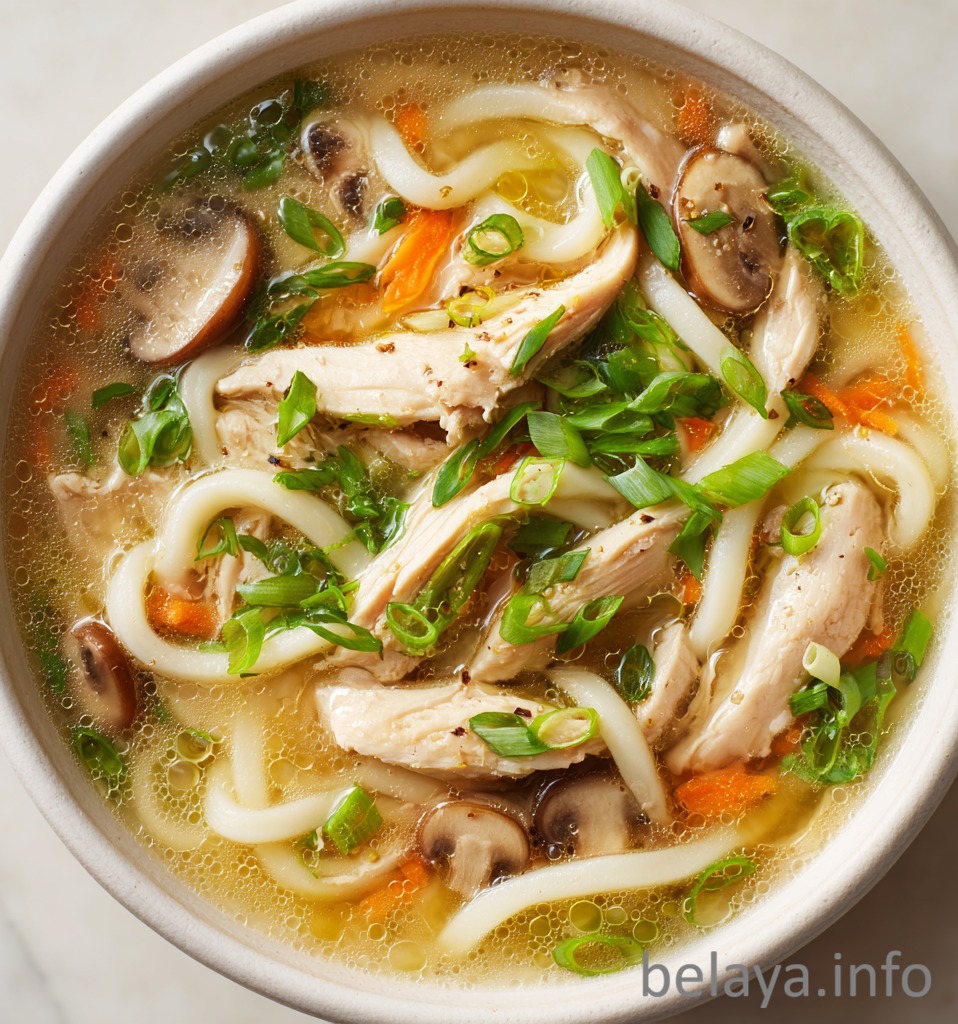
Why People Will Love This Chicken Udon Soup Recipe
Clean, Comforting Flavors – The light chicken broth infused with fresh ginger delivers warmth and depth without heaviness.
Perfect Balance of Hearty and Light – Tender chicken, vegetables, and udon noodles make the soup filling while still feeling soothing and easy to enjoy.
Fresh, Nourishing Ingredients – Simple, wholesome components like cabbage, carrots, mushrooms, and green onions create a naturally satisfying bowl.
Quick and Weeknight-Friendly – Comes together in under 30 minutes, making it ideal for busy evenings.
Restaurant-Style at Home – The flavor profile feels like something you’d order at a Japanese café or noodle shop.
Customizable to Taste – Easily adjusted with extra ginger, soy sauce, chili oil, or different vegetables.
Comfort Food Without Guilt – Low-sodium broth and balanced ingredients make it cozy yet mindful.
Great for All Seasons – Light enough for warmer months and comforting enough for cold days.
Perfect for Leftovers – Reheats well and remains flavorful the next day.
Soothing and Restorative – A go-to meal when you want something warm, calming, and satisfying.
Key Ingredients
Low-Sodium Chicken Stock – Forms a clean, savory base that allows the natural flavors of ginger, vegetables, and chicken to shine without overpowering saltiness.
Cooked Chicken Breast – Lean and tender, the chicken adds satisfying protein while absorbing the delicate broth flavors.
Fresh Ginger – The aromatic heart of the soup, ginger brings warmth, brightness, and a subtle spicy note that enhances both flavor and comfort.
Udon Noodles – Thick, chewy noodles provide substance and a silky texture that turns the soup into a complete, comforting meal.
Carrots – Add gentle sweetness and vibrant color, balancing the savory broth.
Napa or Green Cabbage – Lightly cooked cabbage contributes freshness, crunch, and body without heaviness.
Mushrooms (Shiitake or Button) – Bring earthy umami depth that enriches the broth naturally.
Green Onions – Used in two stages, they add savory aroma to the broth and a fresh, crisp finish when sprinkled on top.
Low-Sodium Soy Sauce – Enhances umami and seasoning while keeping the soup balanced and light.
Simple, Whole Ingredients – Together, these components create a nourishing bowl that feels clean, satisfying, and thoughtfully composed.
Expert Tips
Infuse the Broth Gently – Simmer the ginger and green onion whites slowly rather than boiling hard. Gentle heat extracts flavor without turning the broth cloudy.
Use Fresh Ginger, Not Powdered – Freshly grated ginger provides brightness and warmth that dried ginger can’t replicate.
Add Noodles Last – Udon noodles cook quickly and can become mushy if overcooked. Add them just before serving for the best texture.
Slice Vegetables Evenly – Uniform cuts ensure the carrots, cabbage, and mushrooms cook at the same rate and remain tender-crisp.
Season Gradually – Soy sauce adds salt quickly. Taste the broth before adding more to avoid overpowering the delicate flavors.
Don’t Overcook the Chicken – Since the chicken is already cooked, it only needs enough time to warm through. Prolonged simmering can make it dry.
Finish with Fresh Greens – Adding green onion tops at the end keeps their flavor bright and aromatic.
Adjust Texture with Broth – If the soup thickens as it sits, add a splash of hot broth when reheating.
Enhance with Optional Add-Ins – A dash of sesame oil, chili oil, or a soft-boiled egg can elevate the soup without overpowering it.
Serve Immediately – The soup is best enjoyed fresh, when the noodles are tender and the broth is clear and flavorful.
Chicken Udon Soup
Ingredients
6 cups low-sodium chicken stock
2 cups cooked chicken breast, skinless and chopped
1 tablespoon freshly grated ginger
2 green onions, thinly sliced, whites and greens separated
1 tablespoon low-sodium soy sauce
2 large carrots, thinly sliced or shaved into ribbons
2 cups shredded Napa cabbage or green cabbage
6 mushrooms (shiitake or button), thinly sliced
6 ounces udon noodles
Instructions
Prep the Ingredients
Slice the vegetables and chop the cooked chicken so everything is ready to go before cooking.
Build the Broth
In a large pot, add the chicken broth, grated ginger, soy sauce, and the white portions of the green onions.
Bring the mixture to a boil.
Simmer the Base
Lower the heat and let the broth gently simmer for about 5 minutes to infuse the flavors.
Add the Vegetables and Chicken
Stir in the chopped chicken, carrots, cabbage, and mushrooms.
Continue simmering for another 5 minutes until the vegetables begin to soften.
Cook the Noodles
Add the udon noodles to the pot and cook for 3–5 minutes, or until tender.
Finish and Serve
Ladle the soup into bowls and top with the sliced green onion greens.
Serve hot.
Important Notes When Making Chicken Udon Soup
This Is a Light, Broth-Forward Soup – The recipe is designed to be clean and soothing rather than rich or heavy. Avoid adding too many strong ingredients that could overpower the delicate balance.
Low-Sodium Ingredients Matter – Using low-sodium broth and soy sauce allows better control over seasoning and keeps the soup from becoming overly salty.
Noodles Continue to Absorb Liquid – Udon noodles will soak up broth as the soup sits. For leftovers, store noodles separately if possible or add extra broth when reheating.
Timing Is Key – Vegetables and chicken are added in stages to preserve texture. Overcooking can lead to mushy vegetables and dry chicken.
Ginger Flavor Develops Quickly – Fresh ginger infuses fast. Simmering too long can make the broth sharp rather than balanced.
Best Served Fresh – The soup has the best texture and clarity right after cooking. Extended holding time can dull flavors.
Clear Broth Depends on Gentle Heat – Avoid rolling boils after adding ingredients to keep the broth clear and clean-tasting.
Flexible but Intentional – While add-ins like spinach or bok choy work well, adding too many extras can disrupt the soup’s simplicity.
Reheat Slowly – Warm over low heat to protect the noodles and preserve the broth’s delicate flavor.
Comfort First – This dish is meant to soothe and nourish, making restraint and balance more important than complexity.
How to Enjoy Chicken Udon Soup After Cooking
Serve Immediately for Best Texture
Enjoy the soup right after cooking while the udon noodles are perfectly tender and the vegetables are fresh and vibrant.
Let It Cool Slightly Before Eating
Allow the soup to rest for a minute or two so the flavors settle and the broth isn’t too hot to fully appreciate.
Enhance with Fresh Garnishes
Top with sliced green onion greens, a drizzle of sesame oil, chili oil, or a sprinkle of white pepper to add aroma and depth.
Pair with Light Sides
Serve alongside simple sides like steamed dumplings, edamame, or a small cucumber salad to complement the soup without overwhelming it.
Customize at the Table
Let diners adjust seasoning with extra soy sauce, chili paste, or a squeeze of lime for personal balance.
Enjoy as a Complete Meal
With protein, vegetables, and noodles, this soup is satisfying on its own and doesn’t require heavy accompaniments.
Reheat Gently for Leftovers
Warm leftovers slowly over low heat, adding extra broth if the noodles have absorbed too much liquid.
Store Thoughtfully
If possible, store noodles separately from broth to preserve their chewy texture.
Savor the Clean Flavors
Take time to enjoy the subtle interplay of ginger, broth, and vegetables—this soup rewards a calm, mindful pace.
Share and Relax
Chicken Udon Soup is ideal for quiet dinners, recovery meals, or moments when comfort and simplicity matter most.
Nutrition Information
(Estimated, per serving)
Calories: 360–400 kcal | Total Fat: 5–7 g | Saturated Fat: 1–1.5 g | Monounsaturated Fat: 2–3 g | Polyunsaturated Fat: 1–1.5 g | Cholesterol: 65–80 mg | Sodium: 650–800 mg (depending on broth and soy sauce used) | Total Carbohydrates: 45–50 g | Dietary Fiber: 4–6 g | Sugars: 5–7 g | Protein: 28–32 g
Frequently Asked Questions
Can I use raw chicken instead of cooked chicken?
Yes. If using raw chicken, add it to the simmering broth first and cook until fully done before adding the vegetables and noodles. This ensures the chicken is tender and safely cooked.
What type of udon noodles work best for this soup?
Fresh or vacuum-sealed udon noodles provide the best chewy texture, but dried udon noodles also work well—just adjust cooking time according to the package.
Is this soup suitable for meal prep?
Yes, with one adjustment: store the noodles separately from the broth. This prevents them from absorbing too much liquid and becoming overly soft.
Can I make this soup gluten-free?
You can substitute rice noodles for udon and use gluten-free soy sauce or tamari to make the soup gluten-free.
How can I add more flavor without increasing sodium?
Enhance flavor with extra fresh ginger, mushrooms, green onions, or a splash of sesame oil rather than adding more soy sauce or salt.
Why should the broth be simmered before adding vegetables and chicken?
Simmering the broth first allows the ginger and green onion whites to fully infuse their aroma, creating a more flavorful base before other ingredients are introduced.
How do I keep the broth clear and clean-tasting?
Avoid a rolling boil once ingredients are added. Gentle simmering prevents cloudiness and preserves the soup’s light, refined flavor.
When is the best time to add udon noodles?
Add udon noodles at the very end. They cook quickly and can become overly soft or absorb too much liquid if added too early.
Can I adjust the soup thickness while cooking?
Yes. If the soup becomes too thick, add a splash of hot broth or water. If it’s too thin, allow it to simmer briefly before adding noodles.
Should I season early or at the end of cooking?
Season lightly at the beginning and adjust at the end. Soy sauce and broth concentrate as the soup simmers, so final seasoning ensures balance without over-salting.