Carbonara Recipe
Carbonara is a deeply comforting Italian pasta dish built from a few powerful ingredients: pasta, eggs, Parmigiano-Reggiano, cured pork, black pepper, and starchy pasta water. It does not need cream because the sauce becomes naturally silky when the hot pasta meets the egg, cheese, and rendered pork fat.
This recipe is rich, simple, and elegant at the same time. The bacon, guanciale, or pancetta adds savory depth, the cheese brings sharpness and saltiness, and the black pepper gives the dish its warm, bold finish. When made correctly, carbonara feels creamy and luxurious without being heavy or complicated.
It is the kind of meal that proves simple cooking can still feel special. Every bite should be glossy, cheesy, peppery, and deeply satisfying.
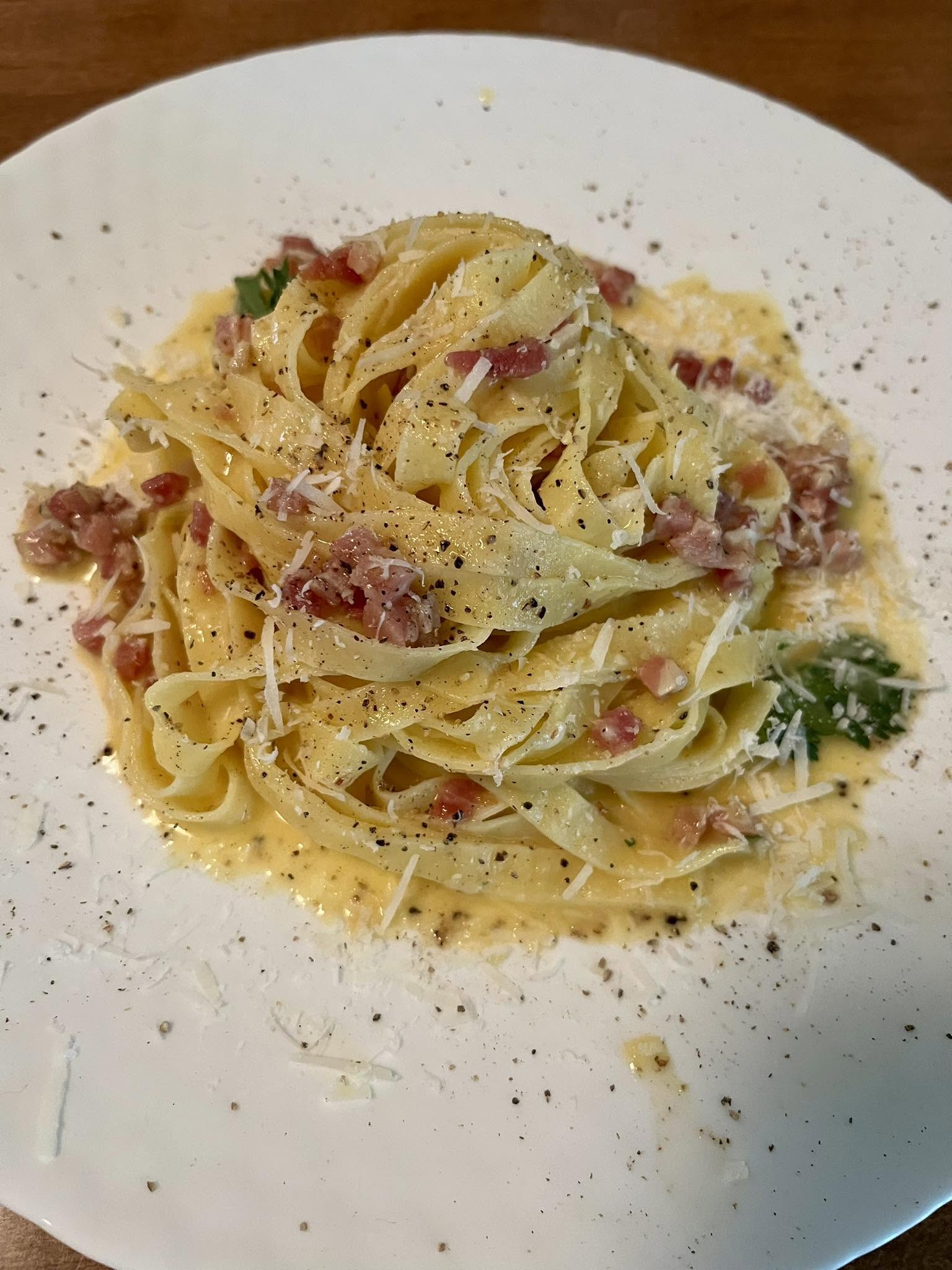
Why People Will Love Carbonara Recipe Recipe
It is creamy without using cream. The sauce comes from eggs, cheese, pasta water, and pork fat, creating a smooth, authentic-style texture.
It uses simple ingredients with big flavor. Pasta, eggs, cheese, black pepper, and bacon come together to make something rich and memorable.
It feels elegant but cooks quickly. Carbonara has restaurant-quality flavor, but it can be made in a short amount of time.
The sauce is deeply savory. Parmigiano-Reggiano and bacon drippings give the pasta a rich, salty, umami-packed taste.
The black pepper adds warmth and character. Freshly ground pepper keeps the dish from tasting flat and gives carbonara its signature bite.
It is perfect for a cozy dinner. The texture is silky, the flavor is bold, and the dish feels comforting without needing many extras.
It is flexible with cured pork. Bacon works well, but guanciale or pancetta can make the dish even more traditional and complex.
It teaches an important cooking technique. Learning how to emulsify the sauce with hot pasta and pasta water makes the recipe feel rewarding.
Key Ingredients
Spaghetti or Fettuccine:
The pasta is the foundation of the dish. Spaghetti is classic, while fettuccine gives a wider surface for the sauce to cling to. Cooking it al dente helps the pasta hold its texture when tossed with the sauce.
Parmigiano-Reggiano:
Freshly grated Parmigiano-Reggiano gives the sauce its salty, nutty, deeply savory flavor. Finely grated cheese melts more smoothly into the eggs and pasta water.
Bacon, Guanciale, or Pancetta:
Bacon adds smoky, salty richness. Guanciale gives a more traditional Italian flavor with deeper pork richness, while pancetta offers a milder cured-pork taste.
Whole Eggs and Egg Yolks:
The eggs create the creamy body of the sauce. Extra yolks make the sauce richer, silkier, and more luxurious.
Freshly Ground Black Pepper:
Black pepper is essential in carbonara. It adds warmth, spice, and aroma that balance the richness of the eggs and cheese.
Reserved Pasta Water:
Starchy pasta water helps loosen and emulsify the sauce. It turns the egg and cheese mixture into a glossy coating instead of a thick paste.
Reserved Bacon Drippings:
A small amount of rendered fat adds depth and helps carry the pork flavor throughout the pasta.
Salted Pasta Water:
The pasta water seasons the pasta from the inside. Since the cheese and bacon are already salty, the final seasoning should be adjusted carefully.
Expert Tips
Use freshly grated cheese. Pre-grated cheese often contains anti-caking ingredients and may not melt smoothly into the sauce.
Let the bacon fat cool before adding it to the eggs. Hot fat can scramble the eggs too early, so it should be warm but not sizzling.
Move quickly when combining the pasta and sauce. The heat from the pasta should gently thicken the eggs into a creamy sauce.
Do not cook the sauce directly over high heat. Carbonara can turn into scrambled eggs if the egg mixture gets too hot too fast.
Reserve pasta water before draining. The starchy water is important for adjusting the sauce texture.
Toss constantly. Fast mixing helps the cheese melt, the eggs thicken gently, and the sauce coat the pasta evenly.
Use warm bowls for serving. Warm bowls keep the sauce creamy longer and prevent the pasta from cooling too quickly.
Taste before adding extra salt. Bacon, cheese, and salted pasta water already bring plenty of saltiness.
Serve immediately. Carbonara is best when hot, glossy, and freshly tossed.
Why You’ll Love This Recipe:
People will love this Classic Carbonara because it’s simple, rich, and incredibly flavorful.
The creamy, silky sauce coats each strand of pasta without the need for heavy cream, creating a luxurious texture with just eggs, cheese, and pasta water.
The crispy bacon (or traditional guanciale) adds smoky, savory depth, while freshly ground black pepper brings just the right amount of heat.
Plus, it’s a quick and easy meal, perfect for busy weeknights or special occasions when you want something indulgent yet effortless!
Key Ingredients:
Spaghetti or Fettuccine – The perfect pasta for holding the rich, creamy sauce. You can also use bucatini or fettuccine.
Parmigiano-Reggiano – Freshly grated cheese adds a nutty, savory depth to the sauce. Avoid pre-grated versions for the best texture.
Bacon (or Guanciale/Pancetta) – Provides a crispy, salty bite and adds a smoky, meaty richness to the dish.
Eggs & Egg Yolks – The secret to the creamy sauce, emulsifying beautifully with the pasta water and cheese.
Black Pepper – Freshly ground for a bold, slightly spicy kick that balances the dish.
Reserved Pasta Water – Helps bind everything together, creating a smooth, velvety sauce without heavy cream.
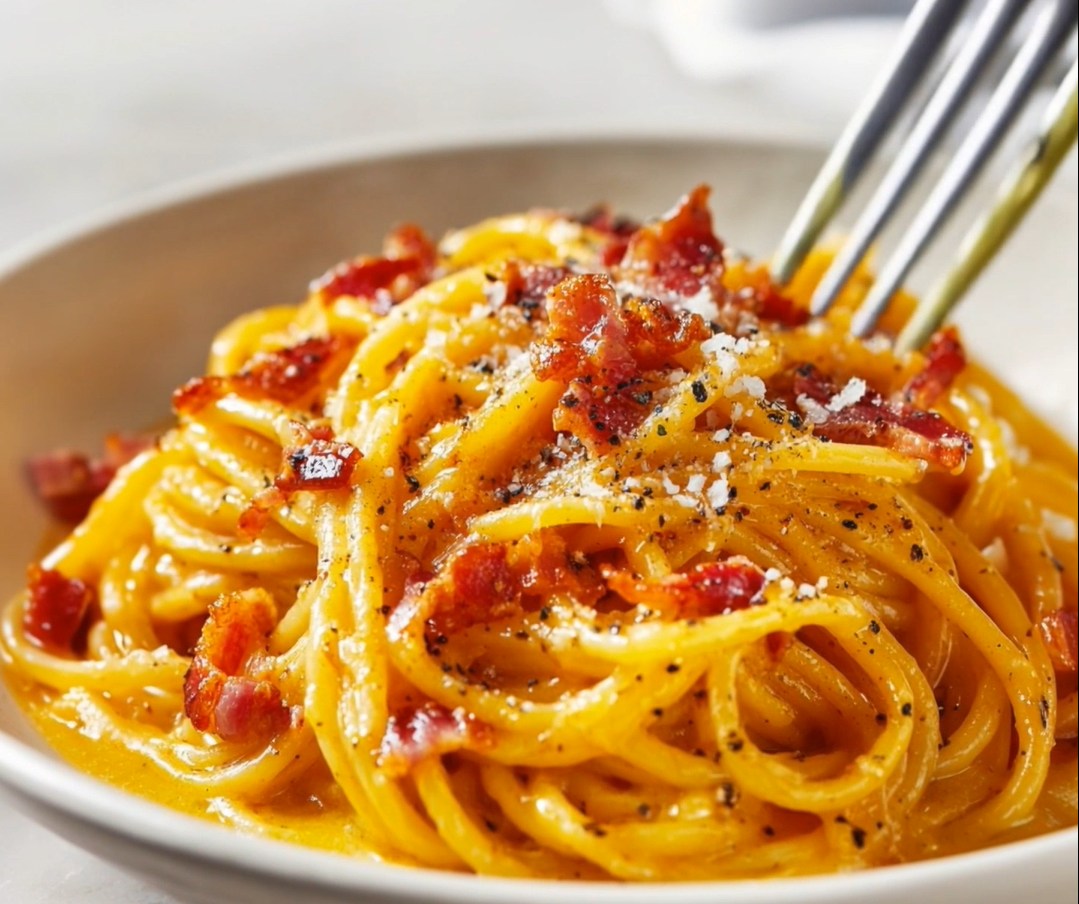
Carbonara Recipe
Ingredients:
8 oz spaghetti or fettuccine
4 oz finely grated Parmigiano-Reggiano (avoid pre-grated cheese for best results)
6 oz thick-cut bacon (or substitute with guanciale or pancetta)
2 whole eggs
2 egg yolks
½ teaspoon freshly ground black pepper
½ cup reserved pasta water
1 tablespoon reserved bacon drippings
For Cooking Pasta:
4 quarts water
4 tablespoons salt
Instructions:
Prep the Ingredients: Grate the Parmigiano-Reggiano using the finest side of a grater. Cut the bacon into ½-inch strips and set aside.
Make the Sauce Base: In a large bowl, whisk together the whole eggs and yolks. Mix in the grated cheese and black pepper to form a thick paste. Set aside.
Cook the Bacon: Heat a large pan over medium-high heat. Cook the bacon pieces until they are slightly crisp on the outside but still tender inside, about 5 minutes. Remove and place on a paper towel-lined plate to drain. Save 1-2 tablespoons of the rendered bacon fat in a small bowl and let it cool.
Combine the Bacon and Sauce: Stir the cooled bacon and reserved fat into the egg and cheese mixture.
Boil the Pasta: In a large pot, bring 4 quarts of water to a rolling boil and add 4 tablespoons of salt.
Cook the pasta until al dente (about 10-11 minutes, following package directions). Reserve ½ cup of pasta water before draining.
Finish the Dish: Immediately transfer the hot pasta to the bowl with the sauce mixture, stirring quickly with tongs or a wooden spoon to emulsify the sauce. Continue stirring for 30 seconds to 1 minute until it turns smooth and creamy. If needed, add a tablespoon or two of reserved pasta water to reach the desired consistency.
Serve and Enjoy: Plate the carbonara in warm bowls. Top with extra bacon and a sprinkle of Parmigiano-Reggiano for an extra burst of flavor.
Important Notes When Making Carbonara Recipe
Carbonara should not be watery or dry. The ideal texture is glossy, creamy, and lightly coating the pasta.
The pasta must be hot when added to the sauce. The heat of the pasta is what gently cooks and thickens the egg mixture.
Do not rinse the pasta. The starch on the pasta helps the sauce cling properly.
Egg safety depends on heat. The eggs are gently warmed by the hot pasta, but they are not cooked the same way as scrambled eggs.
Bacon is a substitute, not the most traditional choice. Guanciale is more traditional, pancetta is also common, and bacon gives a smoky American-style version.
The sauce thickens as it sits. If the pasta becomes too thick, loosen it with a small splash of reserved pasta water.
Use the finest side of the grater. Very fine cheese blends more easily into the egg mixture and creates a smoother sauce.
How to Enjoy This Carbonara Recipe After Cooking
Carbonara should be enjoyed immediately after it is tossed, while the sauce is still warm, creamy, and glossy. Plate the pasta in warm bowls and twist it into a neat mound so the sauce stays close to the noodles.
Top each serving with a little extra Parmigiano-Reggiano, a few pieces of crisp-tender bacon, and a final sprinkle of freshly ground black pepper. The extra pepper gives the dish a bold aroma and helps balance the richness of the eggs and cheese.
Eat the pasta while it is hot. The best carbonara has a silky sauce that clings to every strand, with little bites of savory pork throughout. It should feel rich but not heavy, creamy but not soupy, and peppery without overpowering the cheese.
This dish pairs well with a simple green salad, roasted asparagus, garlic bread, sautéed spinach, or roasted vegetables. A crisp salad with lemon dressing is especially good because it cuts through the richness of the pasta.
For leftovers, store the pasta in an airtight container in the refrigerator. Reheat gently over low heat with a splash of water, but understand that carbonara is always best fresh. High heat can make the sauce separate or turn grainy.
Nutrition Information
Calories: 620–780 kcal | Total Fat: 32–45 g | Saturated Fat: 13–20 g | Monounsaturated Fat: 12–18 g | Polyunsaturated Fat: 3–6 g | Cholesterol: 230–320 mg | Sodium: 950–1,450 mg, depending on bacon, cheese, pasta water, and added salt | Total Carbohydrates: 48–65 g | Dietary Fiber: 2–4 g | Sugars: 1–3 g | Protein: 28–40 g
Frequently Asked Questions:
Can I use heavy cream in carbonara?
No, traditional carbonara does not use heavy cream.
The creamy texture comes from the emulsification of eggs, cheese, and reserved pasta water.
Adding cream alters the authentic taste and consistency.
Why did my eggs scramble in the sauce?
This happens if the pasta is too hot or if the mixture is heated directly on the stove.
To prevent scrambling, mix the pasta with the sauce off the heat and stir quickly to emulsify.
Can I use regular bacon instead of guanciale or pancetta?
Yes! While guanciale (cured pork cheek) is the traditional choice, bacon or pancetta are great substitutes that still provide a rich, smoky flavor.
What can I use instead of spaghetti?
While spaghetti is the classic choice, you can use bucatini, linguine, or fettuccine.
Any pasta that holds the creamy sauce well will work.
How do I store and reheat leftovers?
Carbonara is best enjoyed fresh, but if you have leftovers, store them in an airtight container in the fridge for up to 2 days.
Reheat gently in a pan over low heat with a splash of water to loosen the sauce—avoid microwaving, as it may cause the eggs to cook further.
How do I prevent the sauce from becoming too thick?
If the sauce is too thick, gradually add small amounts of reserved pasta water while stirring until you reach a smooth, silky consistency.
The starchy water helps emulsify the sauce.
Can I make carbonara without eggs?
Traditional carbonara relies on eggs for its creamy texture, but you can try a cheese-based alternative using extra Parmesan, butter, and pasta water.
However, this will not have the same authentic richness.
Can I make this dish vegetarian?
Yes! Simply omit the bacon/guanciale or replace it with mushrooms, sun-dried tomatoes, or smoked paprika for a similar depth of flavor.
What’s the best way to mix the sauce with the pasta?
After draining the pasta, immediately toss it with the egg mixture off the heat in a large bowl.
The residual heat from the pasta will gently cook the eggs, creating a creamy sauce without scrambling.
Can I make carbonara ahead of time?
Carbonara is best served fresh, as the sauce tends to thicken and lose its silky texture when reheated.
If needed, you can prep the ingredients in advance, but cook and mix everything just before serving for the best results.