Beef Orzo Soup
Beef Orzo Soup is the kind of meal that feels like home in a bowl—hearty, nourishing, and deeply comforting.
Tender chunks of slow-simmered beef, vegetables, and delicate orzo pasta come together in a rich tomato-beef broth that warms you from the inside out.
Simple and rustic, this soup is perfect for cozy weeknights, meal prep, or when you want a satisfying dish that tastes even better the next day.
Why People Will Love This Beef Orzo Soup Recipe:
Deep, comforting flavor from simple ingredients – Slow-simmered beef, aromatic vegetables, and tomato-rich broth create layers of savory flavor without complicated techniques.
Tender, satisfying beef in every bite – Using chuck roast ensures the meat becomes melt-in-your-mouth tender as it simmers, making the soup hearty and filling.
Perfect balance of broth and pasta – Orzo adds body and comfort like pasta, while still keeping the soup light and spoonable rather than heavy or starchy.
Classic, timeless comfort food appeal – This soup feels familiar and nostalgic, the kind of dish people grew up loving and crave on cold or busy days.
Great for make-ahead meals – The flavors deepen overnight, making leftovers even better and ideal for meal prep or next-day lunches.
One-pot cozy meal with minimal effort – Aside from cooking the orzo separately, the soup comes together easily in one pot with straightforward steps.
Family-friendly and crowd-pleasing – Mild, savory flavors appeal to all ages, and the recipe scales well for feeding a group.
Customizable to taste – Easy to adjust seasoning, add extra vegetables, or finish with Parmesan for richness.
Restaurant-quality feel at home – The combination of beef, orzo, and Parmesan gives the soup a refined, Italian-inspired touch while staying rustic.
Comforting without being heavy – It’s hearty enough to satisfy, yet light enough to enjoy year-round.
Key Ingredients:
Chuck roast (or chuck steak) – The soul of the soup. This cut is rich in connective tissue and marbling, which slowly breaks down during simmering, giving you tender, flavorful beef and a naturally rich broth.
Orzo pasta – Small and delicate, orzo adds comforting body without overpowering the soup. It absorbs the savory broth while keeping each spoonful light and balanced.
Beef broth – Forms the backbone of the soup, carrying deep, savory flavor that ties the beef and vegetables together into a cohesive, warming base.
Tomato sauce – Adds gentle acidity and subtle sweetness, enhancing the broth’s depth without making it taste overly tomato-forward.
Carrots, celery, and onion – The classic aromatic trio that builds flavor from the ground up, adding sweetness, earthiness, and balance as they soften in the pot.
Garlic – Brings warmth and aroma, quietly intensifying the overall flavor without dominating the dish.
Bay leaves – Infuse the soup with a subtle herbal note that rounds out the richness of the beef and broth.
Olive oil – Used for browning the beef and sautéing vegetables, helping develop depth and bringing out natural flavors early in the cooking process.
Salt and black pepper – Essential for sharpening and balancing flavors, ensuring the soup tastes full and satisfying rather than flat.
Parmesan cheese (optional) – A finishing touch that adds umami and richness, elevating the soup with a slightly nutty, savory note when sprinkled on top.
Expert Tips:
Choose well-marbled chuck
Look for chuck roast with visible marbling rather than very lean pieces. The fat and connective tissue slowly melt during simmering, giving the broth natural richness and ensuring the beef stays tender instead of dry.
Brown the beef in batches
Avoid overcrowding the pot. Searing the beef in batches allows proper caramelization (fond) to develop on the bottom of the pot, which adds deep, savory flavor once deglazed with broth.
Deglaze the pot before simmering
After sautéing the vegetables, add a small splash of beef broth and scrape up the browned bits stuck to the bottom. This step unlocks concentrated flavor that would otherwise be lost.
Cut vegetables evenly
Dice carrots, celery, and onion to similar sizes so they soften evenly and maintain a pleasant texture throughout the soup.
Let the soup simmer gently, not rapidly
A low, steady simmer prevents the beef from tightening and keeps the broth clear and flavorful. Rapid boiling can make the meat tough and emulsify fats into the broth.
Cook the orzo separately (always)
Orzo absorbs liquid quickly. Cooking it separately keeps the broth from becoming overly thick or starchy and prevents mushy pasta, especially if you plan on leftovers.
Season in layers
Lightly season the beef first, then adjust seasoning again after simmering. The broth reduces and concentrates, so final seasoning should always be done at the end.
Remove bay leaves before serving
Bay leaves add aroma, not bite. Leaving them in too long after cooking can introduce bitterness.
Finish with Parmesan at the table
Let diners add Parmesan individually so it melts into the soup rather than thickening the entire pot. This preserves broth clarity and flavor balance.
Let it rest if time allows
Like many soups, this one improves after resting 15–20 minutes off heat—or even overnight. The flavors deepen and meld beautifully.
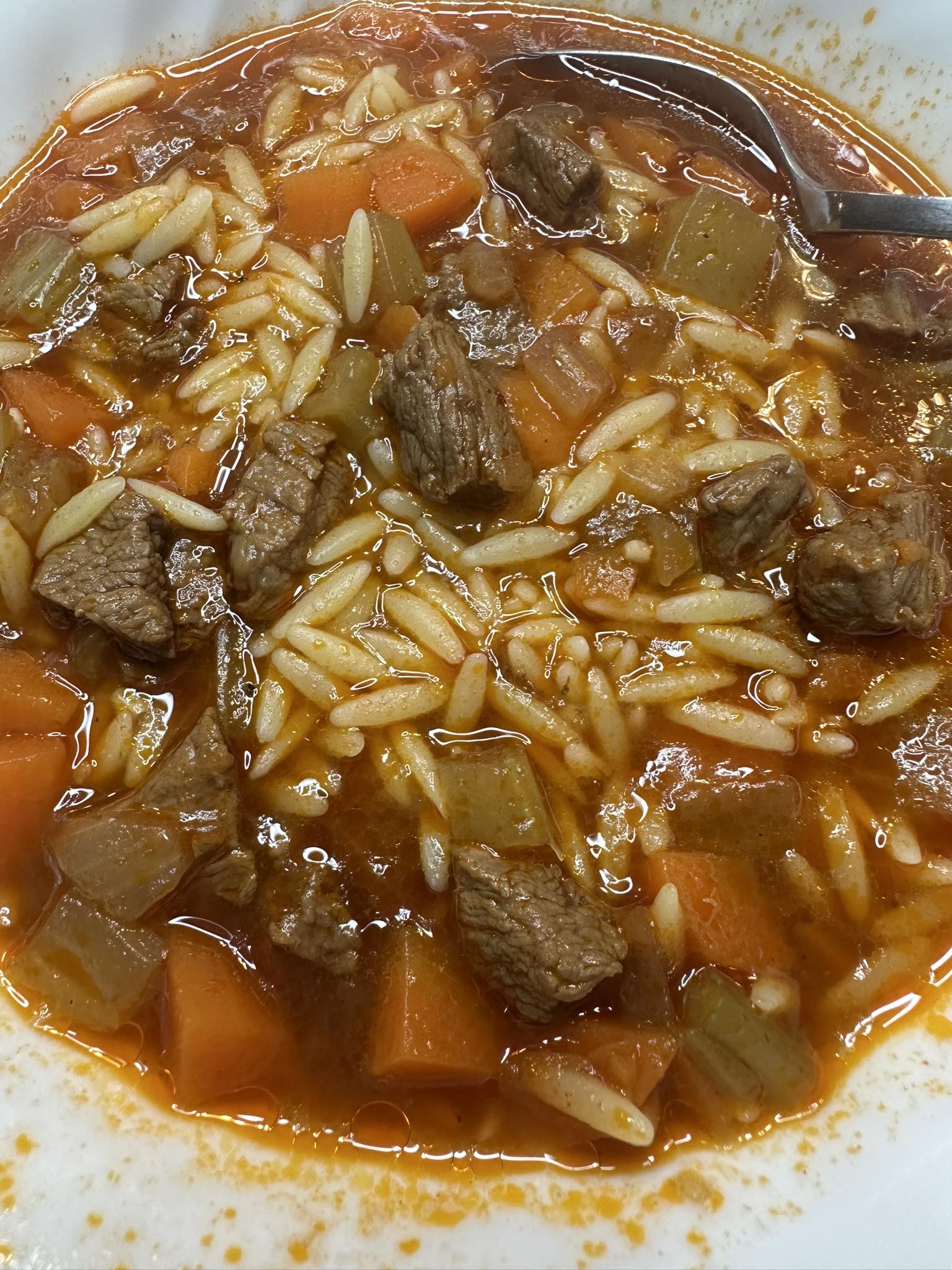
Beef Orzo Soup
Ingredients
Chuck roast or chuck steak — 1½ to 2 pounds, cut into bite-sized pieces
Olive oil — 1 tablespoon
Carrots — 4 large, diced
Celery — 3 stalks, diced
Onion — 1 medium, diced
Garlic — 2–3 cloves, minced (or to taste)
Salt and black pepper — to taste
Bay leaves — 2
Beef broth — 2 cartons (32 oz each)
Tomato sauce — 2 cans (8 oz each)
Orzo pasta — about ½ standard box
Parmesan cheese — for serving (optional)
Instructions
Brown the Beef
Heat the olive oil in a large pot or Dutch oven over medium-high heat.
Add the beef and cook until browned on all sides.
Sauté the Vegetables
Add the diced carrots, celery, and onion to the pot.
Cook for about 5 minutes, stirring occasionally, until the vegetables begin to soften.
Season the Soup
Stir in the garlic, salt, black pepper, and bay leaves.
Cook for another minute until fragrant.
Add the Liquids
Pour in the beef broth and tomato sauce.
Bring the soup to a boil, then reduce the heat and let it simmer for about 30 minutes, until the beef is tender and flavors are well developed.
Cook the Orzo Separately
While the soup simmers, cook the orzo in a separate pot according to package instructions.
Drain well once cooked.
Combine and Finish
Add the cooked orzo to the soup and stir to combine.
Remove bay leaves before serving.
Serve
Ladle the soup into bowls and sprinkle with Parmesan cheese if desired. Serve hot.
Notes & Tips
Cooking the orzo separately keeps it from absorbing too much broth.
The soup tastes even better the next day as the flavors deepen.
Add extra broth when reheating if needed.
Expert Tips When Making Beef Orzo Soup:
Choose well-marbled chuck
Look for chuck roast with visible marbling rather than very lean pieces. The fat and connective tissue slowly melt during simmering, giving the broth natural richness and ensuring the beef stays tender instead of dry.
Brown the beef in batches
Avoid overcrowding the pot. Searing the beef in batches allows proper caramelization (fond) to develop on the bottom of the pot, which adds deep, savory flavor once deglazed with broth.
Deglaze the pot before simmering
After sautéing the vegetables, add a small splash of beef broth and scrape up the browned bits stuck to the bottom. This step unlocks concentrated flavor that would otherwise be lost.
Cut vegetables evenly
Dice carrots, celery, and onion to similar sizes so they soften evenly and maintain a pleasant texture throughout the soup.
Let the soup simmer gently, not rapidly
A low, steady simmer prevents the beef from tightening and keeps the broth clear and flavorful. Rapid boiling can make the meat tough and emulsify fats into the broth.
Cook the orzo separately (always)
Orzo absorbs liquid quickly. Cooking it separately keeps the broth from becoming overly thick or starchy and prevents mushy pasta, especially if you plan on leftovers.
Season in layers
Lightly season the beef first, then adjust seasoning again after simmering. The broth reduces and concentrates, so final seasoning should always be done at the end.
Remove bay leaves before serving
Bay leaves add aroma, not bite. Leaving them in too long after cooking can introduce bitterness.
Finish with Parmesan at the table
Let diners add Parmesan individually so it melts into the soup rather than thickening the entire pot. This preserves broth clarity and flavor balance.
Let it rest if time allows
Like many soups, this one improves after resting 15–20 minutes off heat—or even overnight. The flavors deepen and meld beautifully.
How to Enjoy Beef Orzo Soup After Cooking
Serve It Fresh and Hot
Ladle the hot soup into warm bowls to keep the temperature steady.
Add cooked orzo directly to each bowl rather than the pot to preserve the broth’s texture.
Finish with freshly grated Parmesan for a salty, savory boost that melts beautifully into the soup.
Enhance with Simple Garnishes
Sprinkle chopped fresh parsley or basil for brightness and color.
Add a crack of black pepper or a pinch of red pepper flakes for gentle heat.
Drizzle a touch of olive oil on top to enhance richness and aroma.
Pair with the Right Sides
Serve alongside crusty bread, sourdough, or garlic toast to soak up the broth.
A light green salad with a lemon vinaigrette balances the soup’s hearty depth.
For a comforting meal, pair with a grilled cheese or toasted panini.
Adjust Texture to Your Preference
Prefer a thinner soup? Add warm beef broth or water just before serving.
Like it thicker and heartier? Add a bit more orzo to the bowl and stir well.
Enjoy It as Leftovers
Store soup and orzo separately in airtight containers.
Reheat gently on the stovetop over medium-low heat, adding broth as needed.
Stir occasionally to prevent sticking and ensure even heating.
Transform It into a New Meal
Turn leftovers into a stew-style dish by adding more orzo and letting it thicken.
Add extra vegetables like spinach, kale, or zucchini while reheating.
Stir in a spoonful of tomato paste or a splash of cream for a richer twist.
Freeze for Later Comfort
Freeze the soup base without orzo for best results.
Thaw overnight in the refrigerator and reheat slowly.
Add freshly cooked orzo just before serving for the best texture.
Perfect for Any Occasion
Ideal for cozy weeknight dinners, meal prep, or cold-weather comfort.
Great for sharing—this soup holds heat well and feeds a crowd easily.
Even better the next day, making it perfect for make-ahead meals.
Nutrition Information:
Per serving of Beef Orzo Soup
Calories: 420–460 kcal | Total Fat: 20–23 g | Saturated Fat: 7–9 g | Monounsaturated Fat: 8–10 g | Polyunsaturated Fat: 2–3 g | Cholesterol: 85–100 mg | Sodium: 900–1,150 mg (depending on broth, salt, and Parmesan) | Total Carbohydrates: 30–34 g | Dietary Fiber: 4–5 g | Sugars: 6–8 g | Protein: 32–36 g
Frequently Asked Questions:
Can I cook the orzo directly in the soup instead of separately?
Yes, you can, but cooking the orzo separately is recommended. Orzo absorbs a lot of liquid as it cooks and continues to swell as it sits. Cooking it separately helps keep the broth from becoming too thick or starchy and gives you better control over the soup’s texture.
What cut of beef works best for this soup?
Chuck roast or chuck steak is ideal because it becomes tender and flavorful when simmered. The natural marbling breaks down during cooking, enriching the broth. Avoid very lean cuts, as they can become dry and lack depth.
Can this soup be made ahead of time?
Absolutely. Beef Orzo Soup tastes even better the next day as the flavors deepen and meld. Store the soup and orzo separately if possible, then combine when reheating to maintain the best texture.
How can I adjust the thickness of the soup?
If the soup becomes too thick, simply add more warm beef broth or water until you reach your desired consistency. If you prefer a thicker, stew-like soup, reduce the broth slightly or let it simmer uncovered for a few extra minutes.
Is this soup freezer-friendly?
Yes, with one key tip: freeze the soup without the orzo. Pasta can become mushy after freezing and thawing. Freeze the broth, beef, and vegetables, then cook fresh orzo and add it when reheating for best results.
How long should I brown the beef for best flavor?
Brown the beef for 5–7 minutes over medium-high heat, working in batches if needed. The goal is a deep golden crust, not fully cooking the meat. This caramelization (fond) adds rich, savory depth to the soup, so avoid overcrowding the pot.
Why is it important to sauté the vegetables after the beef?
Sautéing the carrots, celery, and onion in the beef drippings allows them to absorb the browned flavors left in the pot. This step builds the soup’s base and creates a more layered, restaurant-quality taste compared to simply boiling everything together.
When should the garlic be added to prevent burning?
Garlic should be added after the vegetables have softened, just before adding liquids. Cooking it for about 30–60 seconds is enough to release aroma without turning bitter, which can happen if it’s exposed to high heat for too long.
Why should the soup simmer before adding the orzo?
Simmering the soup for about 30 minutes allows the beef to tenderize and the flavors to fully develop. Adding orzo too early can result in overcooked pasta and a broth that’s overly thick and starchy.
What’s the best way to combine the orzo with the soup?
Once the orzo is cooked and drained, add it to the soup just before serving or during the final few minutes of cooking. Stir gently to avoid breaking the pasta, and remove the bay leaves before serving to keep the flavor balanced.