Sammartine Calabrese
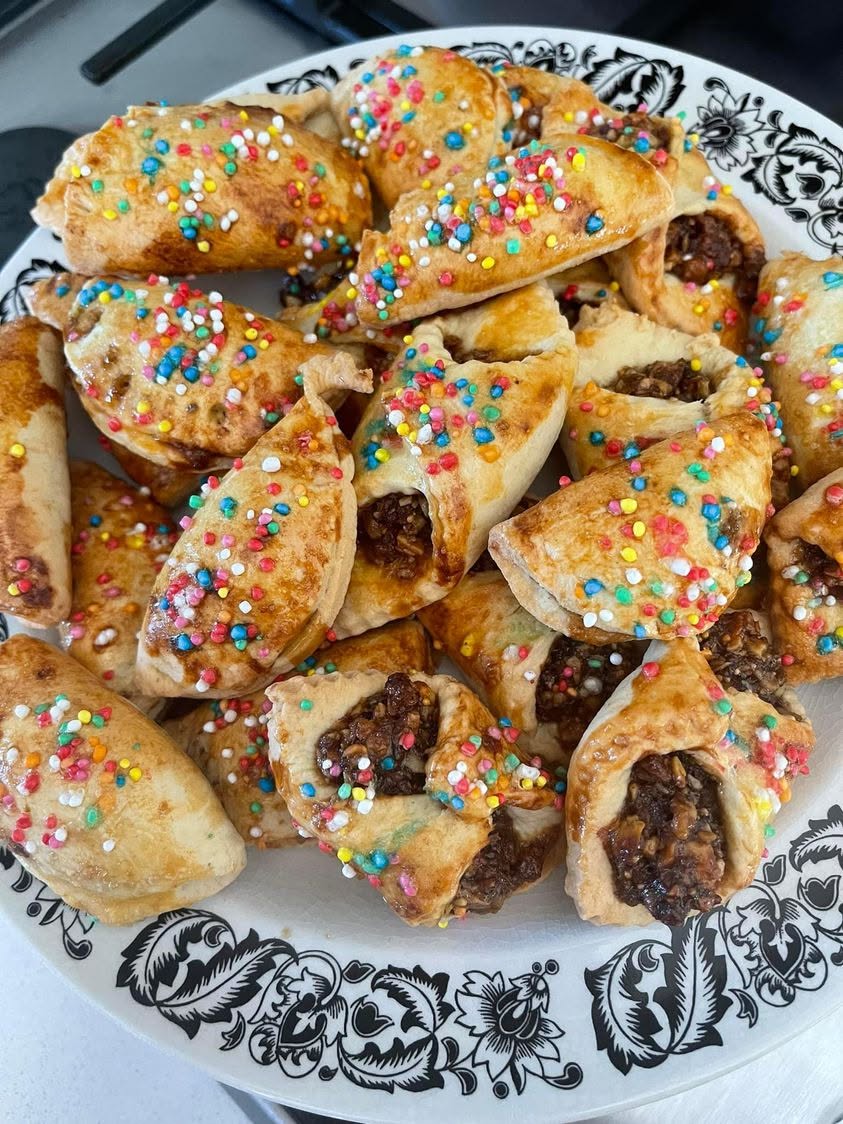
Sammartine Calabrese
Calabrian Fig-Filled Cookies
Ingredients
For the Fig Filling
500 g dried figs, hard stems removed
150 g almonds, coarsely chopped
100 g raisins
50 g dark or bittersweet chocolate, finely chopped or grated
⅓ cup strong brewed coffee
½ cup vincotto, warmed until lukewarm, plus more as needed
1 teaspoon ground cinnamon
¼ teaspoon ground cloves
Finely chopped rind or zest of 1–2 mandarins
These filling quantities are estimated because the original recipe lists the ingredients but does not provide measurements.
For the Pastry
600 g all-purpose flour, plus extra for rolling
160 g granulated sugar
2 large eggs
Finely grated zest of 1 lemon
60 g neutral oil, such as sunflower oil or light olive oil
2 teaspoons yeast or leavening, as stated in the original recipe
About ½ cup warm milk, plus more as needed
For Finishing
1 egg, beaten
Colorful sugar sprinkles
Instructions
Prepare the Fig Filling One Day Ahead
Remove the hard stems from the dried figs.
Pass the figs through a meat grinder, or pulse them in a food processor until finely ground and sticky.
Transfer the ground figs to a large mixing bowl.
Add the coarsely chopped almonds.
Add the raisins. If you prefer, grind the raisins together with the figs, as suggested in the original recipe.
Add the Coffee and Chocolate
Combine the warm coffee with the finely chopped dark chocolate.
Stir until the chocolate softens and begins to blend with the coffee.
Pour the mixture over the ground figs.
Add the Vincotto and Spices
Pour in the lukewarm vincotto.
Add the cinnamon, cloves, and finely chopped mandarin rind.
Mix thoroughly until the filling becomes evenly blended, moist, and thick.
The filling should be soft enough to spoon but firm enough to stay inside the pastry.
If it seems too dry, add a little more vincotto.
Cover and let the filling rest for 24 hours before assembling the cookies.
Prepare the Pastry
Mix the Eggs and Sugar
Place the eggs and granulated sugar in a large bowl.
Whisk until well combined.
Add the oil and lemon zest and continue whisking until incorporated.
Combine with the Flour
Place the flour in a large mixing bowl or mound it onto a clean work surface, creating a well in the center.
Pour the egg mixture into the center.
Dissolve the yeast or leavening in approximately ½ cup warm milk, following the wording of the original recipe.
Add it gradually to the flour mixture.
Knead the Dough
Begin mixing and kneading until a smooth dough forms.
The dough should remain soft and workable rather than firm.
If it feels too dry or hard, add additional warm milk 1 tablespoon at a time until the dough becomes pliable.
Cover the dough and let it rest briefly while preparing the work surface.
The source does not specify a separate rising period.
Roll the Dough
Divide the dough into smaller portions.
Roll each portion very thinly using a rolling pin or pasta machine.
The original recipe specifically notes that the pastry should be very thin.
Dust the work surface lightly with flour as needed to prevent sticking.
Shape the Cookies
Cut the pastry into any preferred shape, such as:
- Rectangles
- Squares
- Ovals
- Half-moons
- Decorative folded shapes
Place about 1 teaspoon of fig filling in the center of each piece.
Fold the dough around the filling.
You can seal the cookies completely or leave them slightly open so some of the dark fig filling remains visible.
Press the edges gently so they hold their shape during baking.
Decorate
Arrange the filled pastries on parchment-lined baking sheets.
Brush the tops lightly with beaten egg.
Sprinkle generously with colorful sugar sprinkles.
Bake
Preheat the oven to 350°F / 180°C.
Bake for approximately 8–10 minutes, or until the pastry is set and only lightly golden.
Because the dough is rolled very thinly, watch the first batch carefully to prevent overbaking.
Cool
Remove the cookies from the oven and let them rest on the baking sheet for a few minutes.
Transfer to a wire rack and cool completely.