Cajun Seafood Enchilada Skillet
Cajun Seafood Enchilada Skillet is the kind of dish that brings together bold Southern flavors and comforting Tex-Mex style in one irresistible pan.
Juicy shrimp and sweet lump crab are gently simmered with Cajun spices, sautéed peppers, and garlic, creating a rich, savory filling layered with warmth and depth. The creamy, cheesy sauce wraps everything together, while tortillas soak up all the flavor, turning each bite into something indulgent and satisfying.
This recipe feels both hearty and elevated—a perfect balance of rustic comfort food and coastal-inspired cooking. The smoky spice from the Cajun seasoning, the slight tang from tomatoes and cream, and the natural sweetness of the seafood create a layered flavor experience that feels restaurant-worthy yet easy to make at home.
Whether you serve it straight from the skillet for a cozy family dinner or prepare it as rolled enchiladas for guests, this dish is designed to impress. It’s warm, bold, creamy, and just a little bit spicy—the kind of meal that fills the kitchen with incredible aroma and keeps everyone coming back for one more bite.
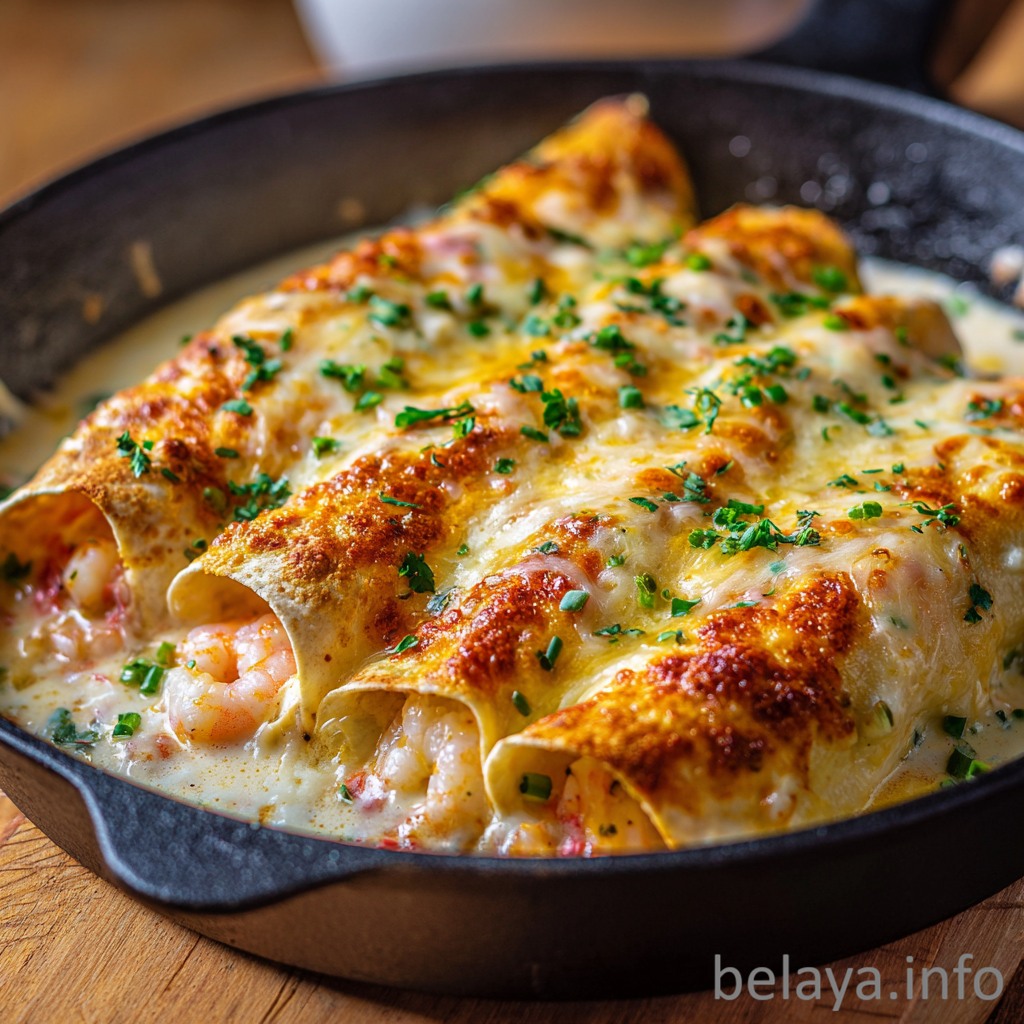
Why People Will Love With This Cajun Seafood Enchilada Skillet:
A bold fusion of Cajun and Tex-Mex flavors
This dish brings together the smoky, spicy depth of Cajun seasoning with the creamy, cheesy comfort of enchiladas—creating a flavor experience that feels exciting, layered, and unforgettable.
Loaded with premium seafood
Tender shrimp and sweet lump crab meat give this recipe a rich, coastal flavor that feels indulgent and restaurant-quality, yet it’s made easily at home.
Creamy, cheesy, and irresistibly comforting
The silky Cajun cream sauce and melted cheese wrap every bite in warmth and richness, delivering that cozy, satisfying comfort food experience people crave.
One-skillet convenience with big flavor payoff
Everything comes together in a single pan, making it simple to cook, serve, and clean up—perfect for busy weeknights or relaxed weekend dinners.
Versatile serving options
Enjoy it as a scoopable skillet casserole, rolled enchiladas, or even a hearty seafood dip—this flexibility makes it perfect for both family meals and entertaining.
Customizable heat level
Whether you prefer mild and creamy or bold and spicy, you can easily adjust the Cajun seasoning, jalapeños, or cheese to match your taste.
Perfect balance of textures
You get tender seafood, soft tortillas, creamy sauce, and melted cheese all in one bite—creating a rich, layered mouthfeel that keeps every bite interesting.
Great for entertaining and sharing
This dish looks impressive when it comes out of the oven bubbling and golden, making it a crowd-pleasing centerpiece for gatherings and celebrations.
Deep, savory flavor with simple ingredients
Everyday pantry staples combine with seafood and spices to create a dish that tastes complex and slow-cooked, even though it’s quick and approachable.
Comfort food with a gourmet twist
It takes familiar enchiladas and elevates them with seafood and Cajun flair, giving people something unique yet still comforting and recognizable.
Meal-prep and leftover friendly
The flavors deepen over time, making leftovers just as delicious—if not better—the next day.
Visually stunning and crave-worthy
Golden melted cheese, vibrant peppers, and flecks of herbs create a dish that’s not only delicious but also beautiful enough for photos, videos, and social sharing.
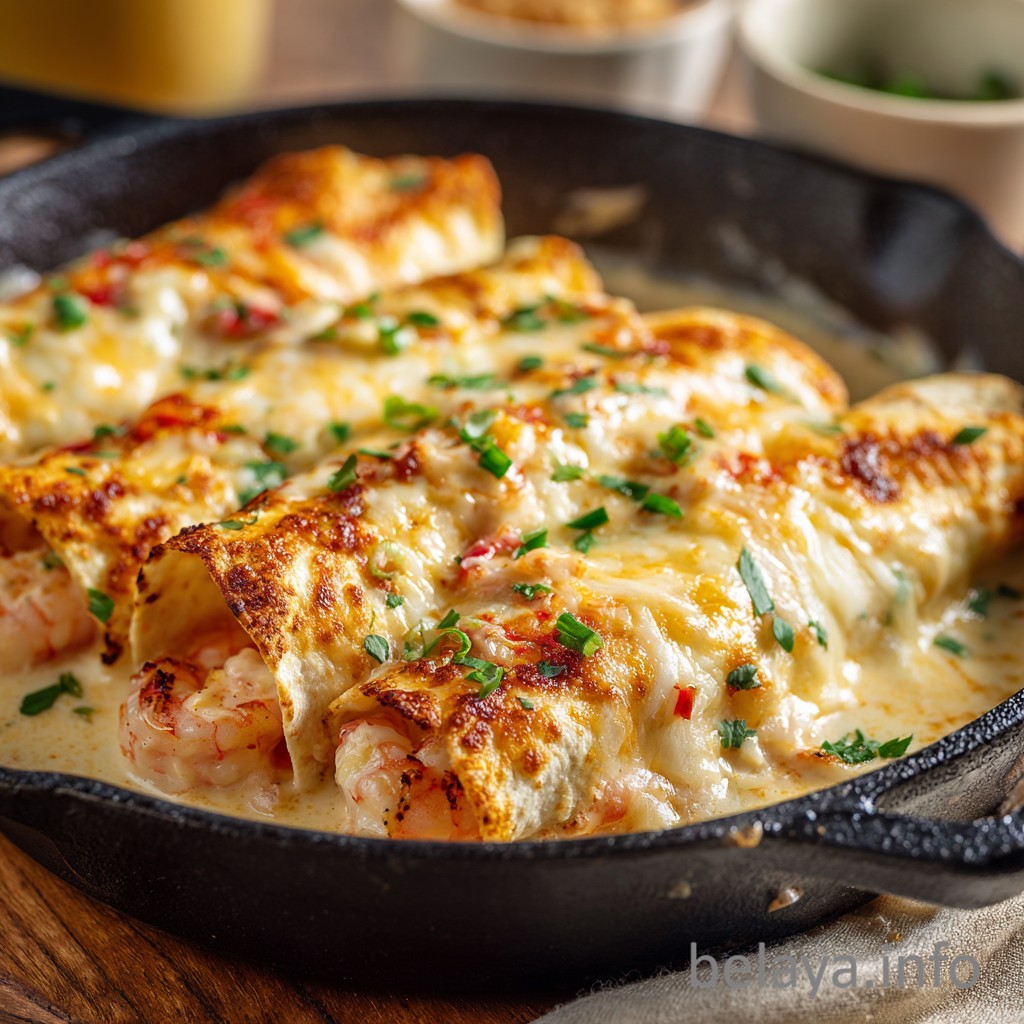
Key Ingredients
Shrimp (peeled, deveined, chopped)
The foundation of the seafood filling, shrimp bring a tender, juicy texture and a naturally sweet, ocean-fresh flavor. When cooked just until pink, they stay succulent and absorb the Cajun spices beautifully.
Lump Crab Meat
Delicate, slightly sweet, and luxurious, lump crab adds a soft, flaky richness that elevates the entire dish. It brings a coastal, restaurant-quality feel and pairs perfectly with the bold seasoning.
Cajun / Creole Seasoning
This is the soul of the dish—an aromatic blend of paprika, garlic, herbs, and spices that delivers warmth, smokiness, and a gentle kick of heat. It transforms the seafood filling into something deeply savory and full of character.
Onion, Bell Pepper & Garlic
This classic trio creates a flavorful base, often known as the “holy trinity” in Cajun cooking. They add sweetness, depth, and aromatic richness that build the foundation of every bite.
Diced Tomatoes with Green Chilies
These add brightness, mild acidity, and a subtle hint of spice. They cut through the richness of the cream and cheese, keeping the dish balanced and lively.
Butter & Flour (Roux Base)
Melted butter and flour form the base of the creamy sauce, creating a smooth, velvety texture that coats the seafood and tortillas in a rich, comforting layer.
Chicken Broth & Cream (or Sour Cream)
These bring body and silkiness to the sauce. The broth adds savory depth, while the cream introduces a gentle tang and richness that ties all the flavors together.
Monterey Jack or Colby Jack Cheese
Mild, melty, and creamy, this cheese blends seamlessly into the sauce and melts into a golden layer on top, adding that classic enchilada comfort.
Tortillas (Flour or Corn)
The structure of the dish—soft tortillas soak up the sauce and hold the seafood filling, creating a hearty, satisfying bite in every layer.
Fresh Cilantro & Green Onions
These bright, fresh garnishes add color, lightness, and a pop of herbal flavor that balances the richness of the dish and brings everything to life.
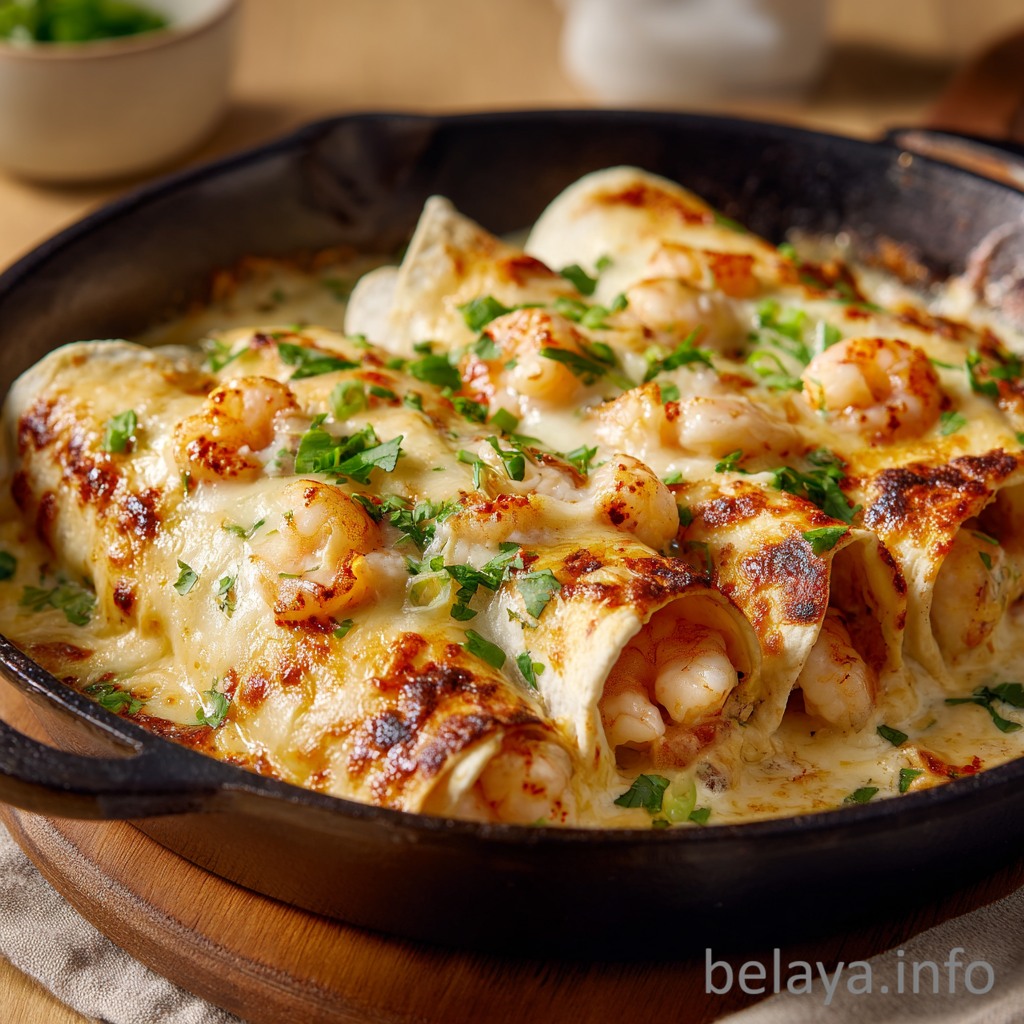
Expert Tips:
Cook the seafood just until done—never overcook
Shrimp cook very quickly and can become rubbery if left on the heat too long. Cook only until they turn pink and opaque, then remove from heat. The seafood will continue to cook slightly in the oven.
Season in layers for deeper flavor
Add Cajun seasoning both to the seafood filling and, if needed, lightly to the sauce. This builds a more complex, restaurant-quality flavor rather than tasting one-dimensional.
Taste your Cajun seasoning first
Some blends are saltier or spicier than others. Start with less, taste, and adjust—this prevents the dish from becoming overly salty or too spicy.
Use high-quality lump crab meat
Gently fold it in at the end of cooking to keep those beautiful, flaky pieces intact. Avoid stirring too aggressively so you don’t break the crab apart.
Build a smooth, lump-free sauce
When making the roux, cook the flour and butter just long enough to remove the raw flour taste (about 1 minute). Then slowly whisk in the liquids while stirring constantly to prevent lumps.
Control sauce thickness carefully
The sauce should be slightly thick but still pourable. It will thicken further in the oven and as it cools, so don’t over-reduce it on the stovetop.
Lightly toast or fry tortillas before assembling
A quick pass in a hot pan or oil creates a barrier that prevents tortillas from absorbing too much sauce and becoming soggy.
Don’t overcrowd the skillet when assembling
Give the enchiladas a little space so heat can circulate evenly and the cheese melts uniformly across the top.
Mix some sauce into the filling before baking
Adding a small amount of sauce to the seafood mixture ensures the inside stays moist and flavorful, not dry.
Finish with extra cheese for a golden top
For a more appealing finish, add a final layer of cheese and let it melt until bubbly. For extra color, broil for 1–2 minutes at the end.
Let it rest before serving
Allow the dish to sit for 5–10 minutes after baking. This helps the sauce set slightly and makes serving cleaner and more structured.
Brighten the final dish with fresh garnishes
Cilantro, green onions, or even a squeeze of lime add freshness that balances the richness of the cream and cheese.
Adjust heat level to your audience
Add jalapeños or use pepper jack cheese for more spice, or keep it mild by reducing Cajun seasoning and removing seeds from chilies.
Serve with simple, fresh sides
Pair with a crisp salad, roasted vegetables, or light rice to balance the richness and make the meal feel complete.
Make ahead for easier entertaining
You can assemble the dish a few hours ahead and refrigerate. When ready to serve, bake until hot and bubbly—perfect for hosting without last-minute stress.
Cajun Seafood Enchilada Skillet
Ingredients
For the Seafood Filling
1 pound raw shrimp, peeled, deveined, and roughly chopped
6–8 ounces lump crab meat, picked over for shells
2 tablespoons unsalted butter
1 small onion, finely diced
1 green bell pepper, diced
3–4 garlic cloves, finely minced
1 to 2 tablespoons Cajun or Creole seasoning (such as Tony Chachere’s), to taste
1 can (10–14 ounces) diced tomatoes with green chilies, undrained
Fresh cilantro and sliced green onions, for garnish
For the Creamy Sauce & Assembly
2 tablespoons unsalted butter
2 tablespoons all-purpose flour
1 cup chicken broth
1/2 cup heavy cream or sour cream
2 cups shredded Monterey Jack or Colby Jack cheese
8–10 tortillas (flour or corn, depending on preference)
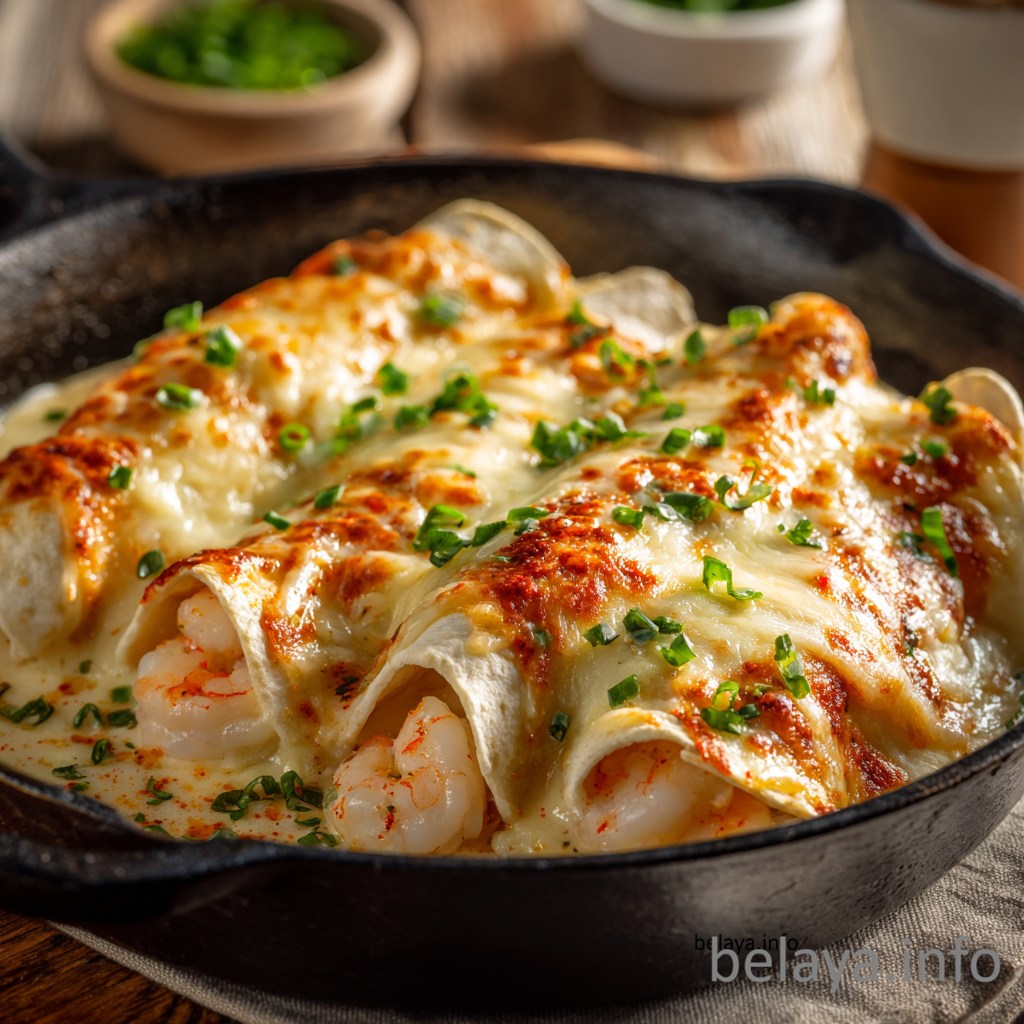
Instructions
1. Prepare the Skillet Base
In a large oven-safe skillet, melt 2 tablespoons of butter over medium-high heat.
Add the diced onion and green bell pepper, sautéing for about 5–7 minutes until softened.
Stir in the minced garlic and cook for about 1 minute, just until fragrant.
2. Cook the Seafood Filling
Add the chopped shrimp and about 1 tablespoon of Cajun seasoning to the skillet.
Cook for 3–4 minutes, or until the shrimp turn pink and opaque.
Gently fold in the lump crab meat and the diced tomatoes with green chilies.
Let everything simmer together for about 5 minutes to blend the flavors, then remove from heat.
3. Make the Creamy Cajun Sauce
In a separate saucepan (or after transferring the seafood mixture out of the skillet), melt the remaining 2 tablespoons of butter over medium heat.
Whisk in the flour and cook for about 1 minute to form a light roux.
Gradually whisk in the chicken broth, followed by the cream or sour cream.
Simmer gently, stirring often, until the sauce thickens.
Stir in 1 cup of the shredded cheese and continue mixing until fully melted and smooth.
4. Assemble the Enchilada Skillet
Option A – Skillet-Style (Quick & Easy):
Pour the creamy sauce directly into the seafood mixture in the skillet.
Stir gently to combine.
Sprinkle the remaining cheese evenly over the top.
Bake at 350°F (175°C) for 10–15 minutes, until hot and bubbly.
Option B – Rolled Enchiladas (More Traditional):
Lightly dip each tortilla into the sauce to soften it.
Spoon the seafood filling into each tortilla, roll tightly, and place seam-side down in the skillet.
Pour the remaining sauce over the rolled enchiladas.
Top with the rest of the cheese.
Bake at 350°F (175°C) for 20–25 minutes, until melted and bubbling.
5. Finish and Serve
Remove from the oven and let rest for a few minutes.
Top with chopped cilantro, sliced green onions, and extra jalapeños if you like more heat.
Serve warm and enjoy!
Helpful Tips for Best Results
Keep tortillas from getting soggy: Lightly fry each tortilla in a bit of oil for a few seconds before filling.
Swap your seafood: Crawfish, scallops, or a mix of seafood all work beautifully.
Boost the heat level: Add diced jalapeño to the filling or use pepper jack cheese instead of Monterey Jack.
Important Notes When Making Cajun Seafood Enchilada Skillet
Balance richness with brightness
This dish is naturally rich from butter, cream, and cheese. The diced tomatoes with green chilies and fresh garnishes (cilantro, green onion, or even a squeeze of lime) are essential to keep the flavor from feeling heavy and to bring a fresh, lively finish.
Seafood cooks quickly—handle it gently
Shrimp and crab require minimal cooking time. Overcooking can make shrimp rubbery and break down the delicate texture of crab. Always cook seafood just until done, then remove from heat promptly.
The “holy trinity” builds the flavor base
Onion, bell pepper, and garlic form the aromatic backbone of Cajun-style cooking. Take time to sauté them until soft and fragrant—this step creates depth that carries through the entire dish.
Cajun seasoning varies by brand
Some blends are salt-heavy, while others are more herbal or spicy. Taste your seasoning first and adjust the amount gradually to control both saltiness and heat.
Roux is the foundation of the sauce
Cooking the butter and flour together removes the raw flour taste and gives the sauce a smooth, velvety body. Keep the heat moderate and whisk continuously to avoid burning or clumping.
Sauce consistency matters
The cream sauce should be thick enough to coat a spoon but still pourable. It will thicken more as it bakes and rests, so avoid over-reducing it on the stovetop.
Tortilla choice affects texture
Flour tortillas create a softer, creamier bite, while corn tortillas offer a more traditional, slightly firmer texture with a subtle corn flavor. Either works—choose based on your preference.
Prevent soggy enchiladas
If you’re rolling the enchiladas, lightly frying or toasting the tortillas first creates a barrier that helps them hold their structure during baking.
Layering flavor is essential
Season the seafood filling well, but also make sure the sauce is flavorful on its own. When both layers are well seasoned, the final dish tastes cohesive and rich.
Cheese selection impacts melt and flavor
Monterey Jack or Colby Jack melts smoothly and keeps the sauce creamy. For extra kick, you can blend in pepper jack—but avoid overly sharp cheeses that may separate when melted.
Resting time improves structure
Let the skillet sit for 5–10 minutes after baking. This allows the sauce to set slightly, making it easier to serve and helping the flavors settle together.
This dish is naturally flexible
You can substitute crawfish, scallops, or even a seafood mix depending on availability. The recipe adapts well without losing its core flavor identity.
Leftovers deepen in flavor
As the dish rests overnight, the Cajun spices and seafood flavors meld even more, making reheated portions incredibly flavorful.
Reheating requires gentle heat
When reheating, use low to medium heat and add a splash of broth or cream if needed to loosen the sauce and keep it creamy rather than dry.
Presentation matters for this dish
The contrast of golden melted cheese, colorful peppers, and fresh green garnishes makes it visually appealing—perfect for both family meals and entertaining.
How to Enjoy Cajun Seafood Enchilada Skillet After Cooking
1. Let the Dish Rest and Set
Once the skillet comes out of the oven, allow it to rest for 5–10 minutes.
This gives the creamy sauce time to thicken slightly and settle, making the enchiladas easier to serve and helping the flavors come together more fully.
2. Serve It Hot and Bubbling
This dish is at its best when served warm and freshly baked, while the cheese is still melted and the sauce is silky and smooth.
Scoop generous portions straight from the skillet or plate the rolled enchiladas carefully to keep their shape.
3. Add Fresh, Bright Garnishes
Balance the richness of the creamy Cajun sauce with fresh toppings:
- Chopped cilantro for herbal brightness
- Sliced green onions for a mild, fresh bite
- Fresh jalapeño slices for extra heat
- A squeeze of lime juice to add acidity and lift the flavors
These finishing touches enhance both taste and visual appeal.
4. Choose the Best Serving Style
Enjoy this dish in a way that fits your occasion:
Family-style skillet meal
Place the skillet at the center of the table and let everyone serve themselves—perfect for cozy, shared dinners.
Plated enchiladas
Serve 2–3 enchiladas per plate with a drizzle of extra sauce on top for a more composed presentation.
Party or buffet style
Cut or scoop portions into smaller servings so guests can easily enjoy it as a hearty appetizer.
5. Pair with Complementary Side Dishes
Since this dish is rich and creamy, balance it with lighter sides:
- Crisp green salad with a light vinaigrette
- Cilantro-lime rice or simple white rice
- Grilled or roasted vegetables (zucchini, corn, asparagus)
- Fresh slaw or pickled vegetables for a refreshing crunch
These sides help keep the meal balanced and satisfying.
6. Select Refreshing Drinks
Pair with beverages that cut through the richness:
- Iced tea or sparkling water with citrus
- Lemonade or limeade
- Light beer or a crisp white wine (for adults)
The acidity and freshness of these drinks enhance the Cajun flavors.
7. Make It a Full Flavor Experience
Encourage diners to enjoy each bite slowly:
- Notice the tender seafood and creamy texture
- Taste the layers of Cajun spice and garlic
- Enjoy the melty cheese and soft tortillas soaked in sauce
This dish is meant to be a rich, comforting experience—one that engages multiple flavors and textures at once.
8. Enjoy Leftovers Creatively
Leftovers are just as delicious and can be repurposed:
- Reheat and serve as-is for a quick meal
- Chop and wrap in tortillas for a seafood burrito
- Spoon over rice for a Cajun seafood bowl
- Serve with eggs for a bold, savory brunch option
9. Store and Reheat Properly
- Store leftovers in an airtight container in the refrigerator for up to 3–4 days
- Reheat gently in the oven or microwave
- Add a splash of broth or cream to keep the sauce smooth and creamy
Nutrition Information:
Based on the full recipe divided into about 6 servings using shrimp, crab, cream, cheese, and flour tortillas.
Per Serving (about 1 generous portion):
Calories: 480–560 kcal | Total Fat: 28–34 g | Saturated Fat: 14–18 g | Monounsaturated Fat: 8–10 g | Polyunsaturated Fat: 2–3 g | Cholesterol: 180–210 mg | Sodium: 950–1,200 mg (depending on Cajun seasoning and broth) | Total Carbohydrates: 24–30 g | Dietary Fiber: 2–3 g | Sugars: 4–6 g | Protein: 30–36 g
Frequently Asked Questions:
Can I use frozen seafood instead of fresh?
Yes, frozen shrimp and crab work well for this recipe. Just make sure to thaw completely and pat dry before cooking to avoid excess moisture in the skillet. This helps the seafood cook properly and keeps the sauce from becoming watery.
How spicy is this dish, and can I adjust the heat level?
The spice level depends on your Cajun seasoning and whether you add extra jalapeños. For a milder version, use less seasoning and skip spicy add-ins. For more heat, increase the Cajun seasoning, add diced jalapeños, or use pepper jack cheese. It’s very easy to customize.
Can I make this dish ahead of time?
Absolutely. You can prepare the seafood filling and sauce up to a day in advance and store them separately in the refrigerator. When ready to serve, assemble and bake. This makes it perfect for entertaining or busy schedules.
What type of tortillas work best—flour or corn?
Both work well, but they create slightly different textures.
- Flour tortillas are softer and creamier when baked.
- Corn tortillas have a more traditional enchilada flavor and hold their structure a bit better.
Choose based on your texture preference.
How do I store and reheat leftovers without drying them out?
Store leftovers in an airtight container in the refrigerator for up to 3–4 days. Reheat gently in the oven or microwave. If the sauce thickens too much, add a small splash of broth or cream to bring back its smooth, creamy texture.
How do I keep the seafood tender and not rubbery?
Cook the shrimp just until they turn pink and opaque—this usually takes only 3–4 minutes. Remove the skillet from heat soon after and avoid overbaking later. The residual heat in the oven will finish cooking the seafood gently without making it tough.
Why did my cream sauce turn lumpy or grainy?
This usually happens if the flour wasn’t whisked smoothly into the butter or if the liquid was added too quickly. To fix this, cook the butter and flour together first (forming a smooth roux), then slowly whisk in the broth and cream while stirring constantly. Keep the heat moderate and avoid boiling too hard.
How do I keep the tortillas from getting soggy?
Before filling, quickly warm or lightly fry the tortillas in a small amount of oil. This creates a light barrier that prevents them from soaking up too much sauce during baking. Also avoid over-saucing the filling.
Can I make this recipe without baking it in the oven?
Yes. You can keep everything on the stovetop by combining the seafood filling and sauce directly in the skillet and letting it simmer gently until hot and melted. It won’t have the baked, bubbly top, but it will still taste rich and delicious.
How do I know when the dish is fully cooked and ready to serve?
The skillet is ready when the cheese is fully melted, the sauce is bubbling around the edges, and everything is heated through. This usually takes about 10–15 minutes for the skillet version or 20–25 minutes for rolled enchiladas at 350°F (175°C).