Pasta alla Genovese Recipe
Pasta alla Genovese is a deeply savory Neapolitan pasta built around an extraordinary amount of slow-cooked onions, tender beef, white wine, aromatic vegetables, and aged cheese. Despite the name, this dish is associated with Naples rather than the green basil pesto most people think of when they hear “Genovese.”
The defining characteristic is the transformation of several pounds of onions into a silky, almost jam-like ragù. During the long cooking process, the onions collapse, release their natural sweetness, and absorb the richness of the beef and wine. The result is not an onion-heavy sauce in the raw sense, but a deeply concentrated, savory-sweet coating with remarkable body.
Beef chuck provides richness and texture, while carrot, celery, tomato paste, white wine, parsley, and Pecorino or Parmigiano add layers of balance. Finished with short tubular pasta, the sauce works its way into every ridge and hollow, making each bite incredibly flavorful.
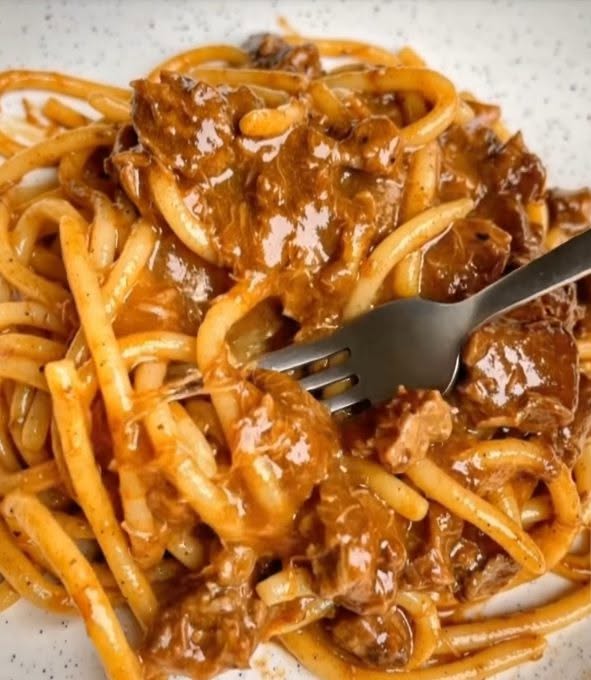
Why People Will Love Pasta alla Genovese Recipe Recipe
The onions transform into an incredibly rich, silky sauce.
Slow cooking creates deep flavor without relying on heavy cream.
Beef chuck becomes tender and succulent after a long braise.
The natural sweetness of onions balances the savory beef.
White wine adds acidity and prevents the sauce from tasting too heavy.
Tomato paste contributes concentrated umami without turning the dish into a tomato sauce.
Carrot and celery add subtle sweetness and aromatic depth.
The sauce has a luxurious texture despite relatively simple ingredients.
Short tubular pasta captures the ragù beautifully.
Pecorino Romano adds a sharp, salty finish.
Parmigiano-Reggiano provides a milder, nuttier alternative.
Fresh parsley brightens the rich sauce.
Cherry tomatoes, when used, add small bursts of acidity and freshness.
The dish tastes even more complex after resting.
It is perfect for a slow weekend cooking project.
It uses affordable ingredients in a sophisticated way.
The recipe makes a substantial family-style meal.
The beef can remain chunky or be broken down for a more cohesive ragù.
Pasta water helps create a glossy restaurant-style finish.
Every bite delivers a balance of sweetness, savoriness, richness, and acidity.
Key Ingredients
Yellow or Red Onions:
The onions are the heart of Pasta alla Genovese. Three pounds may seem excessive at first, but they gradually collapse into a thick, sweet-savory sauce after hours of gentle cooking.
Beef Chuck Roast:
Chuck contains enough connective tissue and fat to become tender during long cooking. It also releases beef flavor into the onions, helping transform them into a true ragù.
Lard or Extra-Virgin Olive Oil:
Lard gives the sauce a particularly rich and traditional character, while olive oil creates a slightly lighter flavor. Either works well.
Carrots and Celery:
These form the aromatic base and contribute subtle sweetness and vegetal complexity.
White Wine:
Wine is added in stages. It deglazes the pot, lifts browned flavors, and later adds acidity that balances the sweetness of the onions.
Tomato Paste:
Only a small amount is needed. Its purpose is to deepen the savory flavor and color, not to make the sauce taste tomato-forward.
Cherry Tomatoes:
These are optional, but they provide brightness and little pockets of acidity that contrast with the long-cooked onion sauce.
Short Tubular Pasta:
Rigatoni, paccheri, or ziti are ideal because their hollow centers and ridges trap the thick ragù.
Pecorino Romano or Parmigiano-Reggiano:
Both cheeses add saltiness and umami. Pecorino gives a sharper, more assertive finish, while Parmigiano is nuttier and gentler.
Expert Tips
Slice the onions as evenly as possible so they cook at the same rate.
Use a very large Dutch oven because the raw onions take up considerable volume.
Do not rush the first hour of cooking.
Keep the heat low enough that the onions soften rather than fry.
Stir often enough to prevent the bottom layer from scorching.
Maintain a layer of onions beneath the beef whenever possible.
Season lightly in stages instead of heavily at the beginning.
The onions reduce dramatically, concentrating salt as they cook.
Pat the beef dry before seasoning.
Letting the beef rest after salting helps seasoning penetrate.
Do not cut the beef too small before braising.
Larger pieces stay juicier during the long cooking time.
Use dry white wine rather than sweet wine.
Scrape the bottom of the pot thoroughly after adding wine.
Let the onions become deeply golden, but do not let them burn.
Add small amounts of water if the pot becomes dry before the onions have softened.
Remove the beef once it becomes tender enough to cut easily.
Return it to the sauce only after cutting it into smaller pieces.
Cook the pasta 1–2 minutes short of al dente.
Finish the pasta directly in the ragù.
Add pasta water gradually rather than all at once.
Stir vigorously at the end to help emulsify the sauce.
Add parsley only after removing the pot from direct high heat.
Finish with cheese at the table so everyone controls the saltiness.
Pasta alla Genovese
Ingredients
1½ pounds (700 g) boneless beef chuck roast, trimmed and cut into 4×3-inch pieces
Kosher salt and freshly ground black pepper, for seasoning
¼ cup (60 g / 60 ml) lard or extra-virgin olive oil
3½ ounces (100 g) carrots, peeled and finely diced (about 2 small carrots)
1 celery stalk (75 g), finely diced
3 pounds (1.4 kg) yellow or red onions, thinly sliced, divided
1 tablespoon (15 g) tomato paste
1 cup (240 ml) dry white wine, divided
1 bay leaf
5 ounces (150 g) cherry tomatoes (optional)
1 pound (450 g) short tubular pasta, such as ziti, paccheri, or rigatoni
1 loosely packed cup (15 g) fresh parsley, finely chopped (leaves and tender stems)
Finely grated Pecorino Romano or Parmigiano-Reggiano, for serving
Instructions
1. Season the Beef
Pat the beef dry and season all over with salt and black pepper. Let it rest for at least 45 minutes to absorb the seasoning.
2. Sauté the Vegetables
Heat the lard or olive oil in a large Dutch oven over medium-high heat until shimmering.
Add the diced carrots and celery and cook, stirring occasionally, for about 5 minutes until softened but not browned.
Add one-third of the sliced onions (about 1 pound / 450 g), season lightly with salt, and cook another 5 minutes until the onions soften.
3. Build the Base Layer
Stir in the tomato paste and ¼ cup (60 ml) of the white wine. Scrape the bottom of the pot to release any browned bits.
Spread the onion mixture evenly across the bottom of the pot.
Reduce the heat to medium-low and nestle the beef pieces into the pot in a single layer.
Cover the meat with the remaining onions (about 2 pounds / 900 g), add the bay leaf, lightly season with salt, and place the lid on the pot.
4. Slow-Cook the Onions and Beef
Simmer gently, uncovering occasionally to stir and prevent sticking, for about 1 hour.
Keep the heat low enough to maintain a slow, steady simmer and ensure a layer of onions stays between the beef and the bottom of the pot.
5. Continue Cooking Until Tender
Crack the lid open slightly and continue cooking for 1½ hours, or until the beef is very tender and a knife slides in with little resistance.
Remove the beef and bay leaf using tongs. Set the beef aside to cool slightly; discard the bay leaf.
6. Add Wine and Tomatoes
Pour the remaining ¾ cup (180 ml) white wine into the pot along with the cherry tomatoes (if using).
Bring to a gentle simmer.
Once the beef is cool enough to handle, cut it into 1½-inch pieces and return it to the pot.
Season with salt and cook for about 15 minutes, stirring occasionally, until the tomatoes begin to burst and the mixture thickens into a rich ragù.
Break the beef up slightly with a spoon if desired, but keep some larger chunks for texture.
7. Cook the Pasta
In a separate pot of generously salted boiling water, cook the pasta until just shy of al dente—about 1–2 minutes less than the package instructions.
Use a spider skimmer to transfer the pasta directly into the sauce along with ½ cup (120 ml) of pasta cooking water.
(If draining in a colander, reserve at least 1 cup of pasta water.)
8. Combine and Finish
Increase heat to high and cook the pasta in the sauce for 1–2 minutes, stirring vigorously until the sauce thickens and coats the pasta.
Add more pasta water in small increments if needed.
Remove from heat, stir in the chopped parsley, and season with salt to taste.
9. Serve
Serve immediately with plenty of finely grated Pecorino Romano or Parmigiano-Reggiano.
Important Notes When Making Pasta alla Genovese Recipe
Pasta alla Genovese is not pesto Genovese.
This is a slow-cooked onion and beef ragù traditionally associated with Naples.
The large quantity of onions is intentional.
The onions should become soft, deeply caramelized, and nearly sauce-like.
Do not use very high heat to speed up the process.
Burned onions will make the entire ragù bitter.
Beef chuck is better suited to long braising than lean cuts.
The sauce may appear dry at certain points; add a splash of water or wine if needed.
Cherry tomatoes are optional and not essential to the core dish.
The finished sauce should be thick enough to cling to pasta.
Pasta water is important for loosening and emulsifying the ragù.
The beef can be left chunky or partially shredded.
Pecorino Romano is significantly saltier than Parmigiano-Reggiano.
Taste before adding additional salt at the end.
The dish improves after a short rest and is excellent the next day.
Refrigerate leftovers promptly.
How to Enjoy This Pasta alla Genovese Recipe After Cooking
Serve Pasta alla Genovese immediately after the pasta has finished cooking in the sauce.
Use warm, shallow pasta bowls so the ragù stays hot longer.
Spoon the pasta into each bowl with plenty of beef and soft onion sauce.
Finish generously with finely grated Pecorino Romano if you want a sharper, saltier flavor.
Use Parmigiano-Reggiano for a smoother, nuttier finish.
Add a little fresh parsley on top for color and brightness.
A small drizzle of good extra-virgin olive oil can add another layer of aroma.
Serve with crusty bread to capture any remaining onion-beef sauce.
A simple bitter green salad, such as arugula or radicchio, works beautifully on the side because its freshness balances the sweet richness of the onions.
For wine, a medium-bodied red or dry white with enough acidity pairs well with the long-cooked beef and onions.
When reheating leftovers, add a tablespoon or two of water or broth and warm gently so the sauce loosens without drying out.
Nutrition Information
Approximate nutrition is based on 8 servings, using 700 g beef chuck, 450 g dry pasta, 1.4 kg onions, ¼ cup olive oil or lard, wine, vegetables, and a moderate amount of grated cheese for serving.
Calories: 590 kcal | Total Fat: 24 g | Saturated Fat: 8 g | Monounsaturated Fat: 11 g | Polyunsaturated Fat: 2.5 g | Cholesterol: 65–80 mg | Sodium: 600–850 mg depending on the cheese, pasta water, and added salt | Total Carbohydrates: 65–70 g | Dietary Fiber: 6–7 g | Sugars: 12–15 g | Protein: 27–30 g
Additional estimate:
Potassium: 850–1,050 mg | Calcium: 140–200 mg | Iron: 3.5–5 mg | Magnesium: 55–75 mg | Vitamin A: 1,500–2,200 IU | Vitamin C: 15–25 mg | Vitamin B12: 1.8–2.5 mcg | Zinc: 4–6 mg | Phosphorus: 300–400 mg
Frequently Asked Questions:
Why is it called Pasta alla Genovese if it is associated with Naples?
The exact origin of the name is debated, but the dish is firmly associated with Neapolitan cooking today. It should not be confused with basil pesto from Genoa.
Does the finished pasta taste strongly of onions?
Not in the sharp raw-onion sense. After hours of cooking, the onions become sweet, savory, soft, and almost jam-like.
What pasta shape is best?
Rigatoni, ziti, paccheri, or another large tubular pasta works especially well because the thick ragù collects inside and around the pasta.
Should the beef be shredded or left in chunks?
Either is appropriate. Keeping some larger pieces gives the dish more texture, while breaking some down helps integrate the beef into the sauce.
Is tomato supposed to be the main flavor?
No. Tomato paste and optional cherry tomatoes are supporting ingredients. The defining flavors should remain beef, onions, wine, and aromatics.
Why are my onions browning too quickly?
The heat is probably too high. Lower it and add a small splash of water if necessary. The onions should cook slowly and gradually soften.
Why is my Genovese sauce too watery?
Continue simmering uncovered until excess moisture evaporates. The finished ragù should be thick and cling to the pasta.
Why is my beef still tough after 2½ hours?
Chuck roast sometimes needs longer depending on the size and cut. Continue cooking gently until a knife slides in easily.
Can I make the sauce ahead of time?
Yes. The ragù can be prepared a day in advance and often tastes even better after resting overnight. Reheat gently before cooking the pasta.
Why should I finish the pasta directly in the sauce?
The pasta absorbs flavor while releasing starch into the ragù. Combined with pasta water, this creates a smoother, glossier sauce that clings much better to the noodles.