Homemade Sopressata
Homemade Sopressata is a traditional dry-cured Italian-style salami made with pork shoulder, pork back fat, salt, curing ingredients, starter culture, spices, and time. It is bold, savory, slightly tangy, and deeply aromatic, with a firm sliceable texture that develops slowly during fermentation and curing.
This recipe is not a quick sausage recipe. It is a patient, craft-style preparation where temperature, humidity, salt, curing salt, starter culture, and weight loss all matter. The flavor becomes richer as the sausage dries, and the final sopressata has a concentrated pork flavor with notes of garlic, pepper, wine, and gentle heat if red pepper flakes are used.
Homemade sopressata is best enjoyed thinly sliced as part of a charcuterie board, with cheese, olives, crusty bread, wine, or simple antipasto-style snacks. It is rustic, traditional, and rewarding for cooks who enjoy careful curing projects.
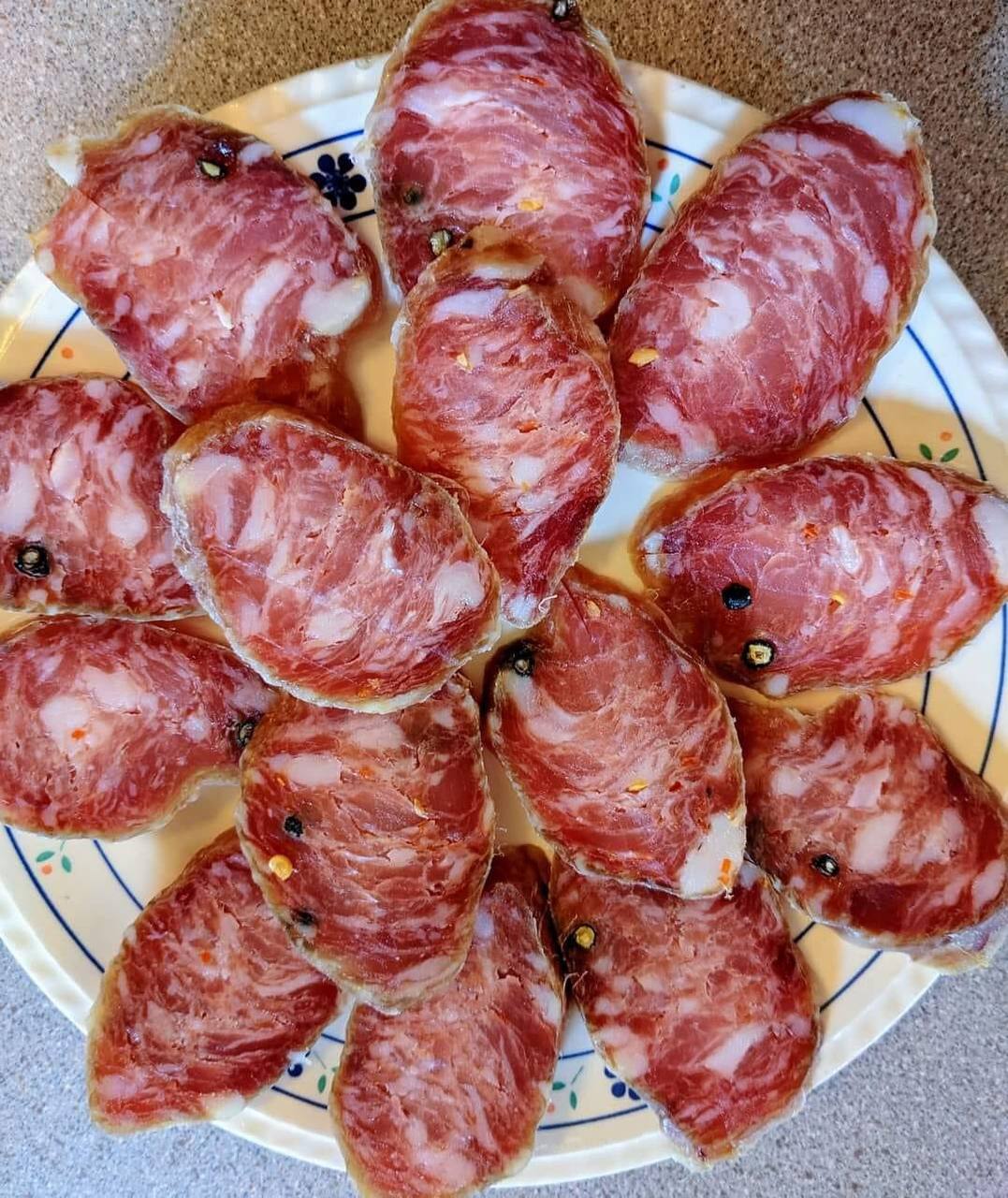
Why People Will Love Homemade Sopressata Recipe
It has deep traditional flavor. Pork shoulder, back fat, garlic, pepper, wine, and slow curing create a rich, old-world salami taste.
The texture is firm, sliceable, and satisfying. Proper drying gives sopressata its classic dense but tender bite.
It feels like a true homemade craft. Making sopressata requires patience and care, which makes the finished product feel special.
It is perfect for charcuterie boards. Thin slices pair beautifully with cheese, bread, olives, pickles, fruit, and wine.
The flavor develops over time. Fermentation and curing create complexity that cannot be rushed.
It can be adjusted for heat. Red pepper flakes can be added for a spicy version or omitted for a milder sopressata.
The wine adds subtle depth. A dry white wine gives the meat mixture a light aromatic note and helps round out the flavor.
It is excellent for gifting or special occasions. When made safely and correctly, homemade sopressata feels thoughtful, rustic, and memorable.
Key Ingredients
Pork Shoulder:
Pork shoulder provides the main meat base. It has a good balance of lean meat and natural richness, making it ideal for cured sausage.
Pork Back Fat:
Back fat gives sopressata its classic texture and mouthfeel. When diced, chilled, and ground properly, it stays distinct in the sausage and creates a rich bite.
Bactoferm F-RM-52 Starter Culture:
Starter culture helps fermentation by encouraging beneficial bacteria to grow. This contributes to the tangy flavor and helps create the proper cured sausage environment.
Distilled Water:
Distilled water is used to dissolve the starter culture evenly before mixing it into the meat.
Kosher Salt:
Salt seasons the meat and plays an important role in preservation, texture, and moisture control.
Insta Cure #2:
Cure #2 is used for long dry-cured meats. It supports proper curing during the extended drying period.
Nonfat Dry Milk Powder:
Dry milk powder helps bind the mixture and improve texture. It also supports a smoother, more cohesive sausage.
Dextrose:
Dextrose feeds the starter culture during fermentation. This helps the bacteria produce lactic acid and develop the proper tang.
Black or White Pepper:
Pepper gives sopressata warmth and subtle spice. Black pepper adds a stronger bite, while white pepper is slightly more delicate.
Garlic:
Garlic adds savory aroma and depth. A small amount gives the sausage a classic cured-meat flavor.
Hot Red Pepper Flakes:
Red pepper flakes are optional, but they add heat and make a spicy sopressata variation.
Pinot Bianco or Dry White Wine:
Wine adds aroma, acidity, and depth. It gives the sausage a more complex finished flavor.
Hog Middles or Hog Casings:
Casings hold the meat mixture during fermentation and drying. Properly soaked and rinsed casings help the sausage cure evenly.
Expert Tips
Keep the meat and fat very cold. Cold meat grinds cleaner, prevents smearing, and gives the finished sopressata a better texture.
Grind fat and meat separately. Fat should be ground while very cold through a medium die, while the meat can be ground through a larger die for a traditional texture.
Mix only until evenly distributed. The seasonings, culture, and cure should be mixed thoroughly, but the meat should not become warm.
Use accurate measurements. Dry curing depends on precision, especially with salt, cure, starter culture, and meat weight.
Remove air pockets. Pricking the casing with a sterile pin helps release trapped air and supports even drying.
Record the starting weight. Weight loss is one of the most important signs of progress during curing.
Dry until about 30 percent weight loss. This helps create the proper firm texture and concentrated flavor.
Control temperature and humidity carefully. A proper curing chamber is important for safe and even drying.
Slice thinly when serving. Sopressata is rich and flavorful, so thin slices give the best texture and taste.
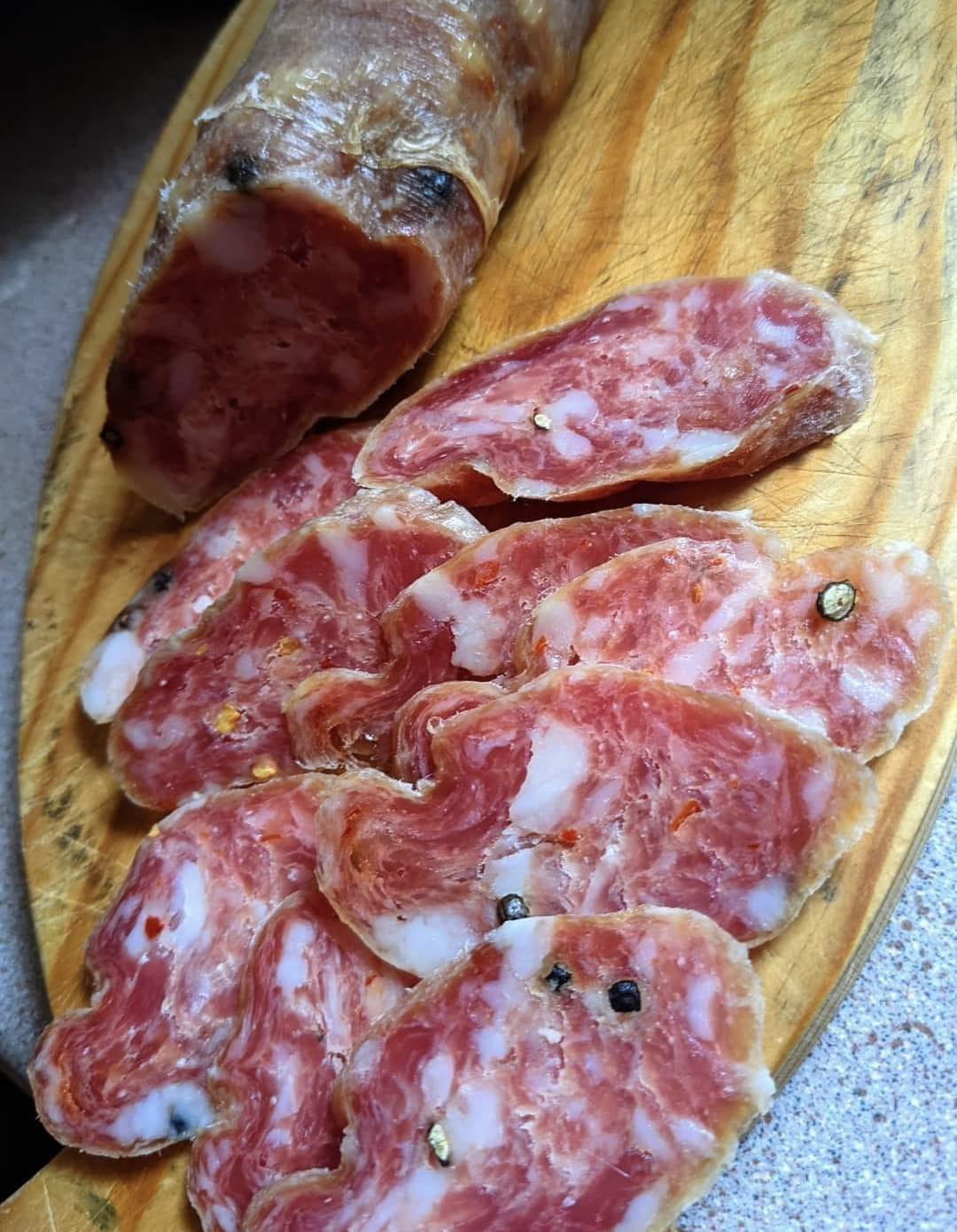
Homemade Sopressata
Ingredients
1 lb pork back fat (450 grams, diced)
4 lbs boneless pork shoulder (1800 g, diced)
1 tsp Bactoferm F-RM-52 starter culture (5 g)
1/4 cup distilled water (60 ml)
1/4 cup kosher salt (60 g)
1 tsp Insta Cure #2 (6 g)
1/2 cup nonfat dry milk powder (70 g)
3 Tbsp dextrose (30 g)
1 tsp ground black pepper (3 g; or white pepper)
1 tsp minced garlic (6 g)
1 tsp hot red pepper flakes (2 g; optional)
1/4 cup Pinot Bianco (60 ml; or comparable dry white wine; optional)
14 inches hog middles or hog casings, soaked in tepid water for at least 30 minutes and rinsed
Instructions
While the fat is very cold, grind it through the medium die (6mm / 1/4 inch) into a bowl set in ice
Chill while you grind the meat through the large die (12mm / 1/2 inch). Combine the ground meat and fat in the bowl of a standing mixer and refrigerate while you ready the culture and the remaining ingredients.
Dissolve the Bactoferm culture in the distilled water and add it, along with the remaining ingredients, to the meat. Mix by hand, or using a meat mixer, until the seasonings are thoroughly distributed, 1 to 2 minutes.
Stuff the sausage into casings. Tie the ends of the hog middle, if using. Using a sterile pin or needle, prick the casings all over to remove any air pockets and facilitate drying. Hang the sausage at room temperature, ideally 85 degrees F./29 degrees C., for 12 hours to “incubate” the bacteria; the beneficial bacteria will grow and produce more lactic acid at a warmer temperature.
Weigh your sausages and write down the weight.
Hang the sausage in the curing chamber (ideally at 60 degrees F./15 degrees C. with 60 to 70 percent humidity) until completely dry or until it’s lost 30 percent of its weight. The time will differ depending on the size of the casings you use and your drying conditions— roughly 3 to 4 weeks.
Important Notes When Making Homemade Sopressata
This is an advanced curing recipe. Dry-cured sausage requires strict attention to sanitation, temperature, humidity, curing salt, starter culture, and weight loss.
Do not replace Cure #2 with regular salt. Cure #2 is specifically used for long curing processes and should be measured accurately.
Do not guess curing conditions. Improper temperature or humidity can lead to unsafe food or poor texture.
Use a reliable curing chamber. A refrigerator without humidity control is usually not the same as a proper curing environment.
Sanitation is essential. Equipment, surfaces, casings, grinder parts, and hands should be clean before handling the meat.
Discard anything with unusual odor, slime, or suspicious mold. When in doubt, do not taste it.
White surface mold can be normal in some cured meats, but not all mold is safe. If you are not experienced with dry curing, use a tested process and trusted curing guidance.
This recipe should not be rushed. Sopressata needs time to ferment, dry, and develop flavor safely.
How to Enjoy Homemade Sopressata After Cooking
Sopressata is not served like a cooked sausage. Once properly cured and dried, it is best enjoyed thinly sliced at room temperature. Let the sausage sit out briefly before slicing so the fat softens slightly and the flavor becomes more aromatic.
Use a sharp knife or deli slicer to cut thin slices. The best bite should have firm cured pork, rich fat, gentle tang from fermentation, garlic, pepper, and a savory finish. If red pepper flakes were used, the sopressata will also have a warm spicy note.
Serve sopressata on a charcuterie board with aged cheese, fresh mozzarella, provolone, olives, pickled vegetables, roasted peppers, crusty bread, crackers, grapes, figs, or dried fruit. Its salty richness pairs well with acidic, creamy, and sweet foods.
It also works beautifully in sandwiches, antipasto platters, pasta salads, pizza toppings, or served alongside marinated artichokes and roasted peppers. A small amount adds a lot of flavor.
Store cured sopressata properly wrapped in the refrigerator once cut. Keep it dry, clean, and protected from excess moisture. Slice only what you need for serving to preserve the best texture.
Nutrition Information
Calories: 120–180 kcal | Total Fat: 9–15 g | Saturated Fat: 3.5–6 g | Monounsaturated Fat: 4–7 g | Polyunsaturated Fat: 0.8–1.8 g | Cholesterol: 25–45 mg | Sodium: 520–850 mg, depending on salt, cure, drying loss, and serving size | Total Carbohydrates: 1–3 g | Dietary Fiber: 0–0.3 g | Sugars: 0–1 g | Protein: 8–13 g
Frequently Asked Questions:
Can I substitute the pork back fat with another type of fat?
It’s crucial to use pork back fat in this recipe as it contributes to the texture and flavor of sopressata.
Substituting with a different fat may alter the traditional characteristics of the sausage.
Is it necessary to use Pinot Bianco or white wine in the recipe?
While the wine is optional, it adds a nuanced flavor to the sopressata.
If you prefer to omit it, the sausage will still cure properly, but the wine does enhance the overall taste.
Can I adjust the level of spiciness in the sopressata?
Absolutely! The spiciness comes from the hot red pepper flakes, which are optional.
You can increase or decrease the amount according to your preference.
What if I don’t have a curing chamber? Can I air-dry the sopressata in a regular refrigerator?
While a curing chamber is ideal, you can air-dry the sopressata in a regular refrigerator.
Just ensure it maintains the recommended temperature and humidity levels.
Can I use a different type of starter culture if I can’t find Bactoferm F-RM-52?
Using the specified Bactoferm F-RM-52 is recommended for the desired fermentation and flavor profile.
If you need to substitute, consult with a knowledgeable source for alternative starter cultures suitable for dry-cured sausages.
Can I use a different type of meat for sopressata, or does it have to be pork shoulder?
The traditional recipe calls for pork shoulder, but you can experiment with other meats.
Keep in mind that the fat content and texture may vary, affecting the final product.
Is there a substitute for Pinot Bianco in the sopressata recipe?
While Pinot Bianco adds flavor, you can omit it or use another dry white wine.
The wine enhances the taste but isn’t crucial for the curing process.
Can I air-dry sopressata without a curing chamber?
Yes, you can air-dry sopressata in a regular refrigerator.
Ensure it stays within the recommended temperature and humidity range for successful curing.
What is the purpose of using Insta Cure #2 in the recipe?
Insta Cure #2 is a curing salt that helps prevent the growth of harmful bacteria and ensures the meat is safe for consumption during the curing process.
Can I adjust the level of spiciness in sopressata by altering the amount of red pepper flakes?
Certainly! The red pepper flakes contribute spiciness, and you can modify the quantity based on your preference for heat in the sopressata.