Mexican Homemade Pho
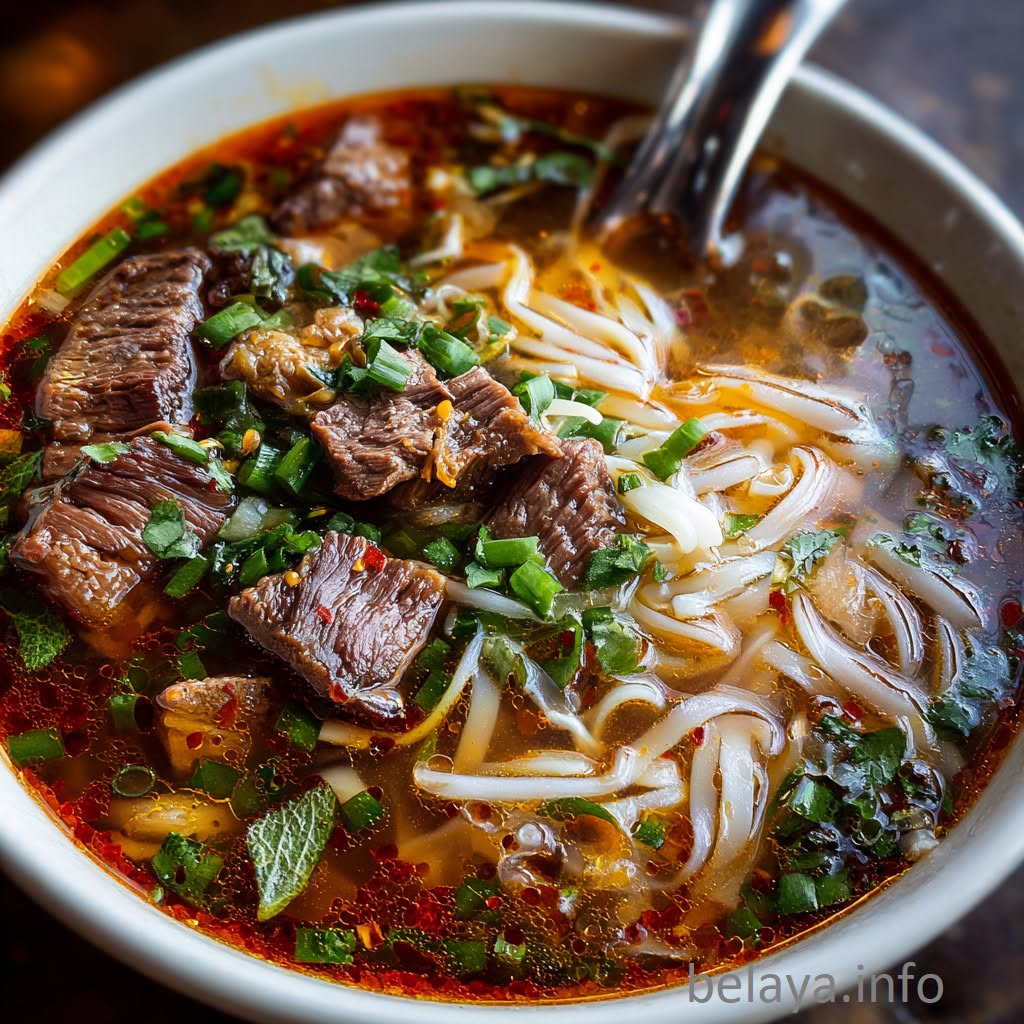
Mexican Homemade Pho is a bold fusion noodle soup that combines the comforting structure of a Vietnamese-style rice noodle soup with the warm, fresh flavors of Mexican cooking. The broth is built with beef, carrots, celery, onion, garlic, jalapeño, cumin, Mexican oregano, smoked paprika, cilantro, and lime, then served over tender rice noodles.
The most important contrast in this dish comes from the deeply savory beef broth and the bright finish of fresh lime and cilantro. Cumin and Mexican oregano add earthy warmth, while jalapeño contributes fresh chile flavor without making the soup excessively hot. Thin slices of beef cook directly in the hot broth at the end, which helps them remain tender instead of becoming tough from prolonged simmering.
The finished soup is warming and satisfying but still feels fresh because of the herbs, citrus, and optional raw toppings. It is particularly good when served as a customizable bowl with lime wedges, cilantro, jalapeños, avocado, radishes, and diced onion so everyone can adjust the flavor to their own preference.
This recipe should be considered a Mexican-Vietnamese inspired fusion dish, rather than traditional Vietnamese pho or a traditional Mexican soup.
PIN This Recipe Here
Why People Will Love Mexican Homemade Pho Recipe
The broth is rich and savory without being excessively heavy.
Thinly sliced beef cooks quickly and stays tender.
Rice noodles make the soup satisfying without overwhelming the broth.
Fresh lime gives every bowl a bright finish.
Cilantro adds freshness and herbal complexity.
Jalapeño provides adjustable heat.
Cumin contributes warm, earthy Mexican flavor.
Mexican oregano gives the broth a distinctive herbal character.
Smoked paprika adds subtle smokiness and color.
Carrots contribute natural sweetness.
Celery adds a classic savory soup flavor.
Onion develops sweetness as it cooks.
Garlic gives the broth additional depth.
The recipe combines comforting soup with fresh taco-style garnishes.
Each bowl can be customized with different toppings.
The soup can be made milder or spicier very easily.
The broth can be prepared ahead.
The rice noodles cook quickly.
It is a complete meal in one bowl.
It provides a substantial amount of protein.
The fresh toppings provide contrast to the hot broth.
It is especially satisfying during cold weather.
Leftover broth reheats well.
It offers something unusual for people who enjoy both Mexican and Asian-inspired flavors.
The final squeeze of lime keeps the rich beef broth from tasting too heavy.
Key Ingredients
Beef Sirloin, Flank Steak, or Skirt Steak:
Beef is the main protein and provides the soup with its savory character. Thinly slicing it against the grain is essential because these cuts can become chewy if sliced incorrectly or cooked for too long.
Rice Noodles:
Rice noodles provide the soft, delicate noodle texture associated with pho-style soups. Cooking them separately helps keep the broth clear and prevents the noodles from absorbing too much liquid during storage.
Beef Broth:
The broth is the foundation of the entire dish. A strong but balanced beef broth supports the spices without overpowering the fresh lime and cilantro.
Jalapeño:
Fresh jalapeño gives the soup a distinctly Mexican chile flavor. Its heat can easily be controlled by removing the pale inner membranes or using a smaller amount.
Ground Cumin:
Cumin brings warm, earthy depth and immediately shifts the flavor profile toward Mexican-inspired cooking.
Mexican Oregano:
Mexican oregano has a slightly more citrusy and robust character than Mediterranean oregano and works particularly well with beef, chile, and lime.
Smoked Paprika:
Smoked paprika adds gentle smokiness and color without making the broth aggressively spicy.
Fresh Cilantro:
Cilantro is added near the end to preserve its fresh flavor and aroma.
Fresh Lime Juice:
Lime is essential for balancing the richness of the beef broth. It gives the finished soup brightness and makes the flavors taste more lively.
Carrots, Celery, and Onion:
These vegetables create the aromatic foundation of the broth while adding sweetness, texture, and body.
Expert Tips
Partially freeze the beef for about 20–30 minutes before slicing.
Slightly firm beef is much easier to slice paper-thin.
Always slice flank or skirt steak against the grain.
Use a very sharp knife for clean, thin slices.
Do not add the beef at the beginning of the simmer.
Thin steak needs only a few minutes in hot broth.
Long cooking can make lean beef tough.
Sauté the vegetables before adding water to develop a deeper broth.
Add garlic after the other vegetables have begun softening.
Garlic can become bitter if browned too aggressively.
Briefly bloom cumin, oregano, and paprika in the oil before adding liquid.
Keep the spices moving so they do not burn.
Use low-sodium beef broth or carefully control the amount of broth base.
Broth concentrates as it simmers, so avoid oversalting early.
Cook rice noodles separately for the cleanest broth.
Rinse or drain the noodles according to package instructions.
Add noodles directly to individual bowls rather than storing them in the broth.
Add cilantro near the end to preserve its fresh flavor.
Add lime juice after the broth has finished its main cooking period.
Excessive boiling can dull fresh lime flavor.
Taste the broth before serving and adjust lime, salt, and chile separately.
Serve extra lime at the table.
Keep raw toppings separate until serving.
Use warm bowls if possible so the soup remains hot longer.
PIN This Recipe Here
Mexican Homemade Pho
Ingredients
For the Soup
– 1 tablespoon butter
– 2 tablespoons olive oil
– 3 celery stalks, diced
– 3 medium carrots, sliced
– 1 medium onion, chopped
– 3 cloves garlic, minced
– 1 jalapeño, finely chopped
– 1 teaspoon ground cumin
– 1 teaspoon dried Mexican oregano
– ½ teaspoon smoked paprika
– ½ teaspoon freshly ground black pepper
– Salt, to taste
– 4 tablespoons beef broth base, or enough beef bouillon for about 7 cups broth
– 7 cups water
– 1½ pounds beef sirloin, flank steak, or skirt steak, thinly sliced against the grain
– 1 package (8.8 ounces) rice noodles
– ½ cup freshly chopped cilantro
– Juice of 1 large lime
Optional Toppings
– Fresh cilantro
– Thinly sliced jalapeños
– Diced white onion
– Lime wedges
– Sliced avocado
– Thinly sliced radishes
– Crumbled queso fresco
– Mexican crema
– Hot sauce
Instructions
1. Sauté the Vegetables
Heat the butter and olive oil in a large soup pot over medium heat.
Add the celery, carrots, onion, and jalapeño.
Cook for about **5–7 minutes**, stirring occasionally, until the onion begins to soften and turn translucent.
Add the minced garlic and cook for another **30–60 seconds**, just until fragrant.
2. Add the Mexican Seasonings
Stir in the cumin, Mexican oregano, smoked paprika, black pepper, and a small amount of salt.
Cook for about **30 seconds** to allow the spices to bloom in the butter and oil.
3. Prepare the Broth
Add the beef broth base and pour in the water.
Stir thoroughly until the broth base has completely dissolved.
Bring the soup to a gentle boil, then reduce the heat to medium-low.
Cover partially and simmer for approximately **15–20 minutes** so the vegetables soften and the broth develops more flavor.
4. Prepare the Beef
While the broth simmers, slice the beef very thinly **against the grain**.
For easier slicing, place the beef in the freezer for about **20–30 minutes** beforehand so it becomes slightly firm without freezing completely.
5. Cook the Rice Noodles
Prepare the rice noodles according to the package directions.
For the best texture, cook them separately rather than leaving them in the broth for a long period.
Drain and divide the noodles among serving bowls.
6. Cook the Beef
Increase the broth to a gentle simmer.
Add the thinly sliced beef and cook for approximately **2–4 minutes**, depending on the thickness of the slices.
Avoid boiling the beef for too long, as thin steak can quickly become tough.
7. Finish the Soup
Stir in the chopped cilantro and fresh lime juice.
Taste the broth and adjust with additional salt, pepper, lime juice, or cumin if needed.
Simmer for another **1–2 minutes**, then remove from the heat.
8. Assemble the Bowls
Place a portion of rice noodles into each serving bowl.
Ladle the hot beef broth, vegetables, and sliced beef over the noodles.
Make sure each bowl receives plenty of broth.
9. Add the Toppings
Finish each bowl with additional cilantro, sliced jalapeños, diced white onion, radishes, or avocado.
Serve with fresh lime wedges so everyone can adjust the acidity to taste.
For a richer Mexican-style variation, add a small amount of queso fresco or Mexican crema just before serving.
Important Notes When Making Mexican Homemade Pho
This recipe is a fusion dish, not traditional Vietnamese pho.
It also should not be presented as a traditional Mexican soup.
The rice noodles and bowl-style presentation are pho-inspired, while cumin, Mexican oregano, jalapeño, lime, and toppings introduce Mexican flavors.
Different beef cuts behave differently during cooking.
Sirloin is relatively tender and easy to use.
Flank and skirt steak have stronger flavor but must be sliced against the grain.
Do not simmer thinly sliced beef for 20–30 minutes.
Add it near the end instead.
Rice noodles become very soft if stored in hot broth.
Store leftover noodles separately whenever possible.
Beef broth bases can contain large amounts of sodium.
Taste before adding additional salt.
Jalapeño heat varies considerably from pepper to pepper.
Removing the pale interior membranes reduces the heat more effectively than simply removing loose seeds.
Fresh lime should be added toward the end.
Cilantro is best added shortly before serving.
Avocado, crema, cheese, and additional toppings will change the nutritional values.
Refrigerate leftovers promptly.
Reheat broth gently and add fresh noodles or previously cooked noodles only at serving time.
PIN This Recipe Here
How to Enjoy Mexican Homemade Pho After Cooking
Begin by placing a portion of cooked rice noodles into a deep serving bowl.
Ladle the piping-hot broth over the noodles, making sure each bowl contains plenty of vegetables and tender slices of beef.
Add fresh cilantro immediately before serving so the heat releases its aroma without completely cooking the herb.
Squeeze a fresh lime wedge directly over the soup. Start with a small amount, taste, and add more if desired.
For additional freshness, scatter diced white onion or sliced green onion over the top.
Add thinly sliced jalapeño or serrano if you want more chile heat.
Sliced radishes are excellent for adding crisp texture and a mild peppery note.
Avocado can be added for richness and a creamy contrast to the hot broth.
For a more strongly Mexican-inspired version, finish the bowl with a small amount of crumbled queso fresco or a light drizzle of Mexican crema.
Serve additional lime wedges and hot sauce at the table so each person can customize the acidity and spice.
The soup is best eaten immediately after assembly because rice noodles continue absorbing broth as they sit.
For leftovers, store the broth and noodles in separate containers. Reheat the broth until steaming, warm the noodles briefly, and combine only when ready to eat.
Nutrition Information
Approximate nutrition is based on 6 servings, using 1½ pounds of relatively lean beef, 8.8 ounces of dry rice noodles, 1 tablespoon butter, 2 tablespoons olive oil, the vegetables, and the broth. Optional toppings are not included.
Calories: 430–480 kcal | Total Fat: 17–21 g | Saturated Fat: 5–7 g | Monounsaturated Fat: 8–10 g | Polyunsaturated Fat: 1.5–2.5 g | Cholesterol: 75–95 mg | Sodium: 850–1,300 mg depending heavily on the beef broth base and added salt | Total Carbohydrates: 35–41 g | Dietary Fiber: 3–4 g | Sugars: 4–6 g | Protein: 30–35 g
Additional estimate:
Potassium: 650–850 mg | Calcium: 55–80 mg | Iron: 3.5–5 mg | Magnesium: 45–65 mg | Vitamin A: 4,500–6,500 IU | Vitamin C: 15–25 mg | Vitamin B6: 0.5–0.8 mg | Vitamin B12: 2–3 mcg | Zinc: 5–7 mg | Phosphorus: 300–400 mg
Frequently Asked Questions:
Is Mexican Beef Pho traditional pho?
No. It is a fusion recipe inspired by the rice noodles and broth-based serving style of pho, combined with Mexican ingredients such as jalapeño, cumin, Mexican oregano, cilantro, and lime.
What type of beef works best?
Sirloin is one of the easiest options because it is naturally tender. Flank steak and skirt steak provide excellent beef flavor but should be sliced very thinly against the grain.
Is Mexican Beef Pho spicy?
It can be mild or spicy. Using one jalapeño with the membranes removed creates a relatively mild soup, while additional jalapeño, serrano, or hot sauce increases the heat.
What toppings are best for Mexican Beef Pho?
Fresh cilantro, lime wedges, diced onion, sliced jalapeño, radishes, avocado, and hot sauce are excellent choices. Queso fresco or crema can also be added for a richer Mexican-style variation.
Can I make the soup ahead?
Yes. The broth can be prepared in advance, but cook or add the beef near serving time and keep the rice noodles separate so they do not become overly soft.
Why did my beef become tough?
It was probably sliced too thickly, cut with the grain, or cooked too long. Slice it very thinly across the grain and cook it briefly in the hot broth.
Why should I cook the rice noodles separately?
Rice noodles continue absorbing liquid after cooking. Preparing them separately keeps the broth from becoming starchy and prevents leftover noodles from becoming mushy.
Why is my broth too salty?
Beef broth base or bouillon can contain a large amount of sodium. Start with less salt, allow the broth to simmer, and adjust seasoning only near the end.
How can I make the broth taste more flavorful without adding more salt?
Add more fresh lime, cilantro, cumin, Mexican oregano, garlic, or jalapeño. These ingredients increase flavor complexity without relying exclusively on sodium.
When should I add the lime juice and cilantro?
Add both near the end of cooking. Their flavors are freshest when they are exposed to heat only briefly rather than simmered for a long time.