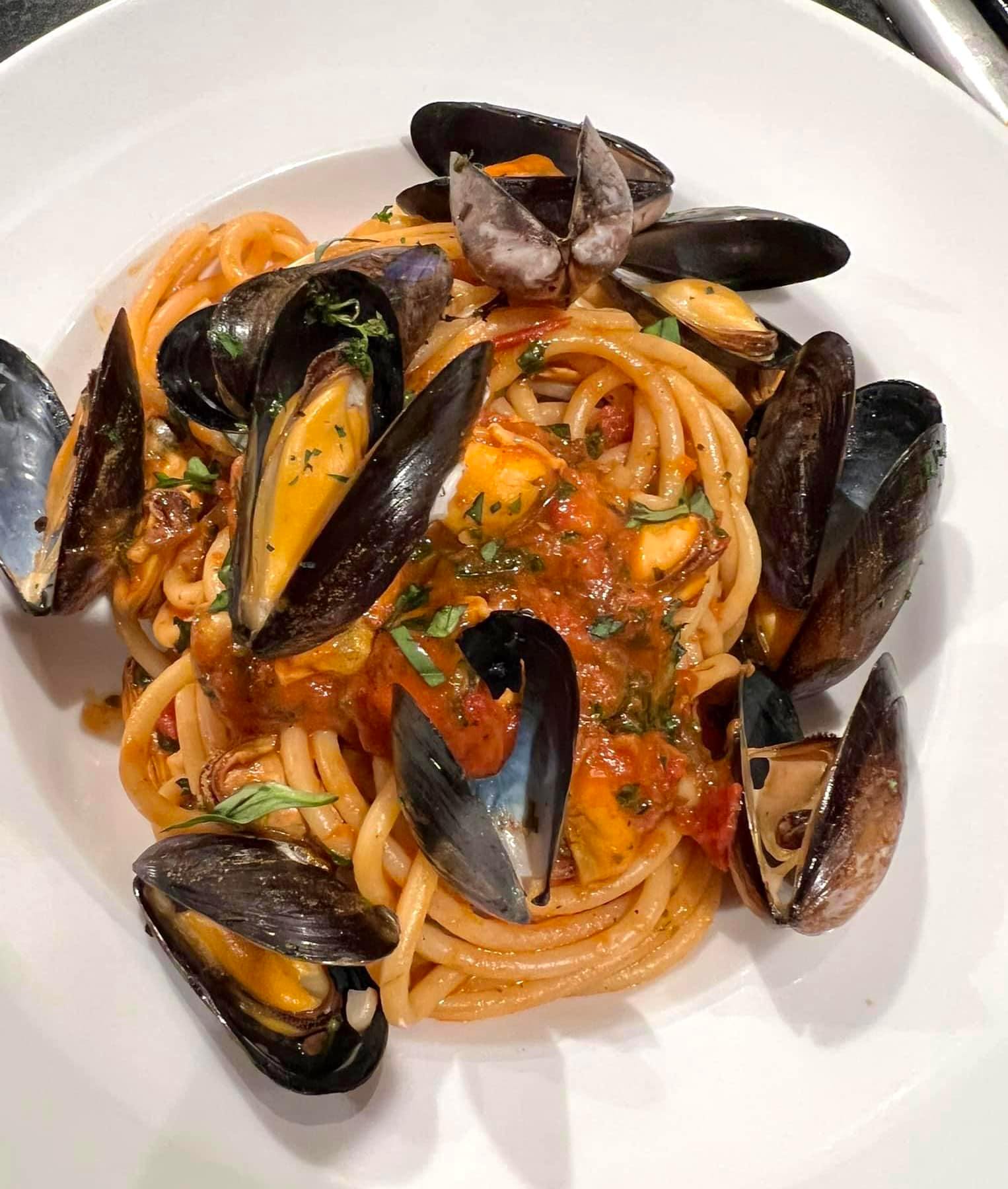
Bucatini Mussels and Tomatoes Sauce
Bucatini with Mussels, Cod & Spicy Tomato Sauce is a bold, seafood-forward pasta that combines briny mussels, tender chunks of cod, sweet tomato purée, dry white wine, Calabrian chile, garlic, butter, parsley, and lemon in a glossy sauce that clings beautifully to thick strands of bucatini.
What makes this dish especially flavorful is the way the sauce is built in layers. The mussels first steam in white wine, releasing their naturally salty, ocean-like juices into the pot. Tomato purée and Calabrian chile are then added directly to that flavorful cooking liquid before the cod gently cooks in the sauce. Instead of using a separate seafood stock, the mussels effectively create one while they cook.
Finishing the pasta with butter, parsley, lemon juice, and starchy pasta water brings everything together. The result is rich without being cream-heavy, spicy without overwhelming the seafood, and substantial enough for a special family dinner or a large gathering.
Why People Will Love Bucatini Mussels and Tomatoes Sauce Recipe
Mussels naturally create an intensely flavorful seafood broth.
Cod adds tender, substantial pieces of fish without making the sauce oily.
Bucatini has a thick, hollow shape that captures sauce inside and outside each strand.
Dry white wine gives the sauce acidity and aromatic complexity.
Calabrian chile provides fruity, savory heat rather than simple sharp spiciness.
Tomato purée gives the sauce body without creating a chunky texture.
Shallots provide gentle sweetness and a softer flavor than regular onions.
Ten cloves of garlic create a deeply aromatic base.
Butter gives the finished tomato sauce a smoother, more luxurious texture.
Olive oil adds richness while helping the aromatics cook gently.
Fresh parsley adds brightness after the long-cooked flavors develop.
Lemon juice cuts through the butter and seafood richness.
The pasta water naturally emulsifies the sauce instead of requiring cream.
Mussels provide dramatic presentation with very little complicated preparation.
Cod remains mild enough to let the tomato, wine, and chile flavors shine.
The dish combines pasta and two different seafood elements in one meal.
The heat level can easily be adjusted.
It feels restaurant-worthy while using familiar cooking techniques.
It is ideal for entertaining because the recipe makes a generous quantity.
Every serving contains a balance of pasta, seafood, spice, acidity, and fresh herbs.
Key Ingredients
Mussels:
Mussels are one of the most important ingredients because they flavor the entire sauce. As they steam in white wine, they release naturally briny liquid that becomes part of the seafood broth.
Cod:
Cod has firm, flaky flesh and a mild flavor that readily absorbs the tomato and chile sauce. Cutting it into large cubes helps it remain intact during cooking.
Bucatini:
Bucatini resembles thick spaghetti with a small hollow center. The shape makes it particularly good with a loose, glossy sauce because liquid can coat the outside and work its way into the pasta.
Calabrian Chile Paste:
Calabrian chile contributes fruity, slightly smoky heat and deeper flavor than ordinary crushed red pepper alone.
Dry White Wine:
Wine provides acidity and helps extract and carry the flavor of the mussels, garlic, and shallots.
Tomato Purée:
Tomato purée gives the dish its smooth red sauce and balances the natural salinity of the shellfish.
Garlic and Shallots:
These form the aromatic foundation. Shallots provide sweetness while garlic contributes a stronger savory character.
Butter:
Butter is added near the end rather than used as the primary cooking fat. This gives the sauce richness and helps create a glossy finish.
Fresh Parsley and Lemon:
These ingredients provide the final fresh note that prevents the seafood and tomato sauce from tasting too heavy.
Expert Tips
Buy mussels as fresh as possible and keep them refrigerated until cooking.
Clean the mussels shortly before preparing the dish.
Scrub the shells thoroughly under cold running water.
Remove any visible beards by pulling them toward the hinge.
Discard cracked or badly damaged mussels.
Tap open mussels before cooking; fresh live mussels should usually close.
Do not soak mussels for an extended period in plain fresh water.
Cook shallots and garlic gently so the garlic does not burn.
Add the white wine before the mussels so the steam becomes aromatic.
Use a dry wine rather than a sweet wine.
Keep the pot covered while steaming the mussels.
Remove mussels as soon as they open so they remain tender.
Do not repeatedly cook already-opened mussels while waiting for others.
Discard mussels that remain firmly closed after proper cooking.
Add cod only after the tomato sauce has reached a gentle simmer.
Cut the cod into similarly sized cubes so they cook evenly.
Stir cod very gently because cooked fish breaks apart easily.
Cook bucatini slightly firm because it finishes in the sauce.
Reserve more pasta water than you think you will need.
Add pasta water gradually rather than all at once.
Toss in butter over moderate or low heat so it emulsifies into the sauce.
Add lemon at the end to preserve its fresh flavor.
Taste before adding additional salt because mussel liquid can already be quite salty.
Bucatini Mussels and Tomatoes Sauce
Ingredients:
Salt
3 tablespoons extra-virgin olive oil
2 shallots, minced
10 garlic cloves, thinly sliced
Black pepper
Crushed red pepper
1½ cups dry white wine
2 pounds mussels, cleaned (see Tip)
1(28-ounce) can tomato purée
1 tablespoon Calabrian chile paste, plus more to taste
3 pounds cod fillet, cut into 1-inch cubes
2 pounds bucatini or other long pasta
4 tablespoons salted butter
1 cup chopped parsley, plus more for garnish
1 lemon
Instructions:
Step 1
Bring a large pot of salted water to boil over high heat.
Step 2
In a separate large pot over medium heat, add the olive oil, shallots and garlic plus a few pinches of salt, black pepper and red pepper.
Cook, stirring a few times, until translucent, about 3 minutes.
Step 3
Add white wine, then cover and bring to a simmer.
Add mussels and cover again.
Cook for 5 to 7 minutes, until mussels have all opened.
Place opened mussels into a bowl and cover with foil to keep warm.
If there are a few left unopened, cover the pot for a minute at a time until they all open. (Discard any that don’t open.)
Step 4
Stir the tomato purée, chile paste and a few pinches of salt into the mussel broth, maintaining medium heat.
Add the cod, gently stir to coat, cover and cook for 7 minutes, until the cod is opaque but still firm.
Step 5
Meanwhile, drop the bucatini into the boiling water and cook until al dente according to the package’s directions.
Reserve 1 cup of pasta water, then drain the pasta.
Step 6
Add the bucatini, butter and parsley to the tomato sauce and stir.
Add reserved pasta water, ¼ cup at a time, as needed until the sauce is glossy and clinging to the pasta.
Squeeze the juice of the lemon over pasta and stir.
Season with salt and pepper to taste.
Step 7
Transfer pasta to a serving bowl (or keep in the pot) and add the mussels and any accumulated liquid.
Garnish with more chopped parsley.
Serve immediately.
TIP
Soak mussels in cold water and scrub any dirt or debris off of their shells. Discard any mussels with open, cracked or chipped shells.
Important Notes When Making Bucatini Mussels and Tomatoes Sauce
The recipe makes a large quantity, approximately 10 hearty servings.
Mussels naturally contain salt, so additional seasoning should be added cautiously.
Salted butter also contributes sodium.
The amount of pasta water added will affect both texture and saltiness.
Calabrian chile paste varies significantly in heat between brands.
Start with 1 tablespoon and add more only after tasting.
Cod should be opaque and flake easily when properly cooked.
Cod is generally cooked safely at approximately 145°F / 63°C.
Overcooking cod can make it dry and cause the cubes to fall apart.
Mussels cook much faster than cod and should be removed before the tomato sauce is finished.
Do not boil cooked mussels repeatedly.
White wine does not necessarily lose all of its alcohol during a short cooking period.
Seafood broth can contain small shell fragments, so inspect carefully when serving.
Pasta continues absorbing sauce after cooking.
Serve immediately for the best consistency.
This dish contains both fish and shellfish allergens.
How to Enjoy Bucatini Mussels and Tomatoes Sauce After Cooking
Serve the pasta as soon as it has been tossed with the butter, parsley, lemon, cod, and mussels.
Use wide pasta bowls or a large serving platter so the mussels remain visible instead of becoming buried beneath the bucatini.
Twirl a portion of bucatini into each bowl and spoon the tomato-seafood sauce around it.
Place several pieces of cod and mussels over the top.
Spoon a little of the mussel cooking liquid and tomato sauce over each serving so the pasta remains glossy.
Finish with freshly chopped parsley just before serving.
A small squeeze of additional lemon can brighten individual servings, especially for people who prefer stronger acidity.
Serve with crusty Italian bread or garlic bread to absorb the seafood tomato sauce left in the bowl.
A simple arugula, fennel, or mixed-green salad makes an excellent side because the fresh acidity contrasts with the rich seafood pasta.
For wine, serve the same style of dry white wine used in the sauce, such as Pinot Grigio, Sauvignon Blanc, Vermentino, or another crisp white.
If you want additional spice, offer Calabrian chile paste or crushed red pepper separately rather than making the entire pot hotter.
Nutrition Information
Approximate nutrition is based on 10 hearty servings, using 2 pounds dry bucatini, 3 pounds cod, 2 pounds shell-on mussels, 3 tablespoons olive oil, 4 tablespoons salted butter, tomato purée, wine, and the remaining ingredients.
Calories: 640 kcal | Total Fat: 14 g | Saturated Fat: 4.5 g | Monounsaturated Fat: 6 g | Polyunsaturated Fat: 2 g | Cholesterol: 85–105 mg | Sodium: 850–1,150 mg depending on the mussels, salted butter, pasta water, and added salt | Total Carbohydrates: 78–83 g | Dietary Fiber: 5–6 g | Sugars: 8–10 g | Protein: 45–50 g
Additional estimate:
Potassium: 1,000–1,250 mg | Calcium: 90–140 mg | Iron: 4–6 mg | Magnesium: 80–110 mg | Vitamin A: 700–1,000 IU | Vitamin C: 18–28 mg | Vitamin B12: 3–5 mcg | Selenium: 70–100 mcg | Zinc: 2.5–4 mg | Phosphorus: 500–650 mg
Frequently Asked Questions:
Why do mussels work so well in tomato pasta sauce?
Mussels release a naturally briny cooking liquid that strengthens the seafood flavor of the entire sauce. Tomato provides acidity and sweetness that balances this natural salinity.
What is special about bucatini compared with spaghetti?
Bucatini is thicker and has a hollow center. This allows it to capture more sauce and gives the finished pasta a substantial, chewy texture.
Is this pasta very spicy?
It is moderately spicy when made with 1 tablespoon Calabrian chile paste and a little crushed red pepper. You can reduce or increase either ingredient to control the heat.
What type of white wine is best?
A dry, crisp wine such as Pinot Grigio, Sauvignon Blanc, or Vermentino works best. Avoid strongly sweet wines.
What should I serve alongside this seafood pasta?
Crusty bread, garlic bread, a simple green salad, roasted vegetables, or a fennel-and-lemon salad are excellent choices.
Why do I need to remove the mussels before finishing the sauce?
Mussels become tough when overcooked. Removing them as soon as they open preserves their tender texture while leaving their flavorful cooking liquid behind.
Why are some of my mussels still closed after cooking?
Give them another minute or so of covered steaming, but discard any that remain firmly closed after adequate cooking.
How do I keep the cod from falling apart?
Cut it into large, even cubes, add it only after the sauce is simmering, and stir very gently. Avoid aggressively boiling the fish.
Why should pasta water be added to the sauce?
Pasta water contains starch that helps the tomato sauce, butter, and seafood juices emulsify into a glossy coating that sticks to the bucatini.
Can I prepare this recipe ahead of time?
The tomato base can be started ahead, but the mussels, cod, and pasta are best cooked shortly before serving. Reheating seafood repeatedly can make both mussels and cod tough.