Scallops & Cherry Tomatoes with Caper-Butter Sauce
Scallops & Cherry Tomatoes with Caper-Butter Sauce is an elegant, bright, and flavorful seafood dish that feels restaurant-quality while still being simple enough to prepare at home.
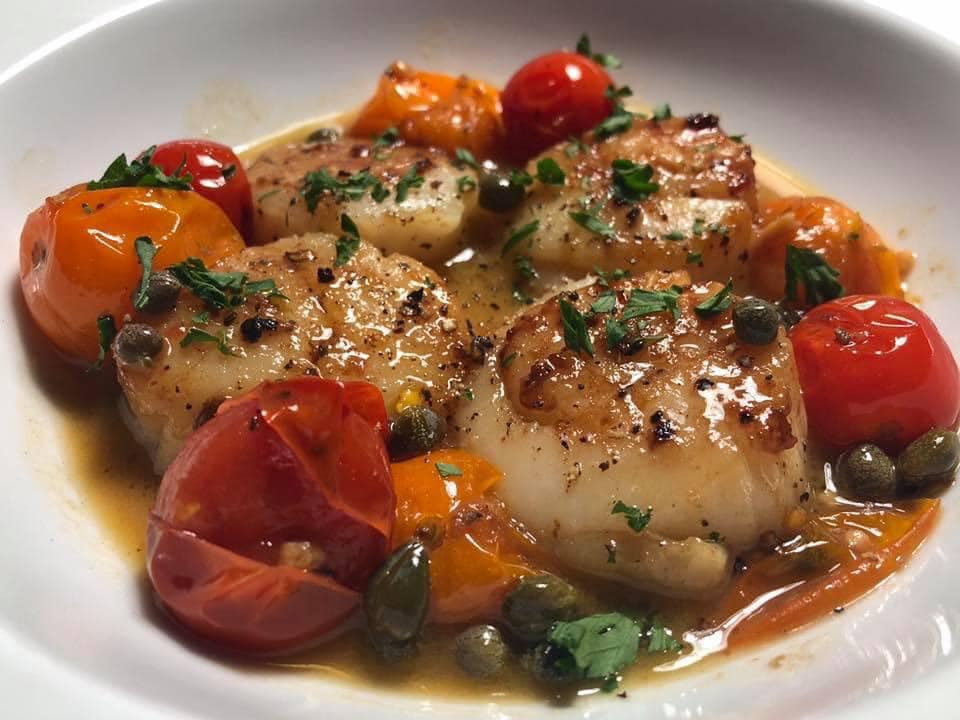
The scallops are seared until golden on the outside and tender inside, then served with a rich pan sauce made from burst cherry tomatoes, dry white wine, capers, butter, and black pepper.
What makes this recipe so special is the balance of richness and freshness. The scallops bring a delicate sweetness, the tomatoes add juicy brightness, the capers provide a salty briny bite, and the butter creates a silky finish. It is a beautiful dish for a special dinner, but it also works wonderfully when you want something light, fast, and deeply satisfying.
Why People Will Love Scallops & Cherry Tomatoes with Caper-Butter Sauce Recipe
It feels elegant but is surprisingly simple: The dish looks refined and impressive, but it comes together quickly with just a few fresh ingredients.
The scallops are sweet, tender, and golden: A good sear gives the scallops a beautiful crust while keeping the inside soft and delicate.
The sauce is bright and buttery: Cherry tomatoes, capers, wine, and butter create a sauce that is rich without feeling heavy.
It has a perfect balance of flavors: Sweet scallops, tangy tomatoes, salty capers, dry wine, and creamy butter all work together beautifully.
It cooks quickly: This is a great recipe when you want a high-quality meal without spending a long time in the kitchen.
It is perfect for date night or special dinners: The colors, texture, and flavor make it feel like something served at a coastal restaurant.
It pairs well with many sides: Pasta, rice, crusty bread, roasted vegetables, or a light salad all work beautifully with the sauce.
Key Ingredients
Dry sea scallops: The star of the dish. Dry scallops sear better than wet-packed scallops because they contain less added moisture.
Cherry tomatoes: Add natural sweetness, acidity, color, and juiciness. As they blister and burst, they become part of the sauce.
Capers: Bring a salty, briny flavor that cuts through the butter and enhances the sweetness of the scallops.
Dry white wine: Adds acidity and depth while helping lift the browned bits from the pan into the sauce.
Unsalted butter: Creates a smooth, rich, glossy sauce and balances the brightness of the tomatoes and wine.
Extra-virgin olive oil: Helps sear the scallops and gives a light fruity base to the dish.
Ground black pepper: Adds gentle warmth and sharpness to the sauce.
Fresh parsley: A fresh garnish that adds color and a clean herbal finish.
Expert Tips
Pat the scallops very dry: Moisture prevents browning. Use paper towels to dry the scallops well before cooking.
Use a hot skillet: A hot cast-iron skillet helps create a golden crust quickly without overcooking the scallops.
Do not move the scallops too soon: Let them sear undisturbed before flipping so they develop a beautiful crust.
Avoid overcrowding the pan: If the scallops are too close together, they will steam instead of sear.
Use dry white wine: Choose a wine that is crisp and not sweet, such as Sauvignon Blanc, Pinot Grigio, or dry Chardonnay.
Rinse the capers: Rinsing removes excess salt while keeping their briny flavor.
Remove the pan from heat before adding butter: This helps the butter melt smoothly into the sauce instead of separating.
Serve immediately: Scallops are best when freshly cooked, while they are still tender and warm.
Scallops & Cherry Tomatoes with Caper-Butter Sauce
Ingredients:
4 tablespoons unsalted butter
cherry tomatoes
½ – 1 cup dry white wine
1 pound dry sea scallops, tough side muscle removed
1 tablespoon extra-virgin olive oil
1- 2 tablespoons capers, rinsed
½ teaspoon ground pepper
For garnish: fresh parsley chopped
Instructions:
Step 1:
Pat scallops dry.
Heat oil in a large cast-iron skillet over medium-high heat.
Add the scallops and cook, flipping once, until browned on both sides, about 5 minutes total.
Then you transfer them to a plate and tent with foil to keep warm.
Step 1:
Add tomatoes to the pan and cook, stirring once, until browned on one side and starting to burst, 2 to 3 minutes.
Add wine and capers; cook, stirring and scraping up any browned bits, until the wine is reduced by half, about 1 minute.
Remove from heat and stir in butter and pepper.
Serve the sauce over the scallops, garnished with parsley, if desired.
Important Notes When Making Scallops & Cherry Tomatoes with Caper-Butter Sauce
Make sure the tough side muscle is removed from each scallop before cooking.
Dry scallops are best for searing. Wet-packed scallops may release too much liquid and become harder to brown.
Scallops cook very quickly, so watch them closely.
Overcooked scallops can become firm and chewy, so remove them from the pan once they are browned and just cooked through.
The wine reduces quickly, so keep stirring and scraping the pan to capture the flavor from the browned bits.
Use unsalted butter so you can better control the saltiness, especially because capers are already salty.
The sauce should be spooned over the scallops right before serving for the best texture and flavor.
How to Enjoy Scallops & Cherry Tomatoes with Caper-Butter Sauce After Cooking
Serve Scallops & Cherry Tomatoes with Caper-Butter Sauce immediately after cooking. This dish is best enjoyed hot, while the scallops are still tender and the sauce is glossy, warm, and fragrant.
Arrange the scallops on a plate or shallow bowl, then spoon the cherry tomato caper-butter sauce generously over the top. Make sure each serving gets some burst tomatoes, capers, and buttery wine sauce.
Garnish with chopped fresh parsley for color and freshness. A little extra black pepper can also be added if you enjoy a slightly sharper finish.
This dish pairs beautifully with crusty bread because the bread can soak up the buttery tomato-caper sauce. It is also excellent over angel hair pasta, linguine, risotto, mashed potatoes, rice, or cauliflower mash.
For a lighter meal, serve it with a simple green salad, roasted asparagus, sautéed spinach, green beans, or steamed vegetables. Since the sauce is rich and buttery, fresh or simple sides create the best balance.
When eating, try to enjoy each bite with a little scallop, tomato, caper, and sauce together. That combination gives the perfect mix of sweetness, brightness, saltiness, and richness.
Nutrition Information
Approximate nutrition per serving, based on 4 servings:
Calories: 260 kcal | Total Fat: 16 g | Saturated Fat: 8 g | Monounsaturated Fat: 6 g | Polyunsaturated Fat: 1 g | Cholesterol: 75 mg | Sodium: 520–760 mg, depending on capers and added salt | Total Carbohydrates: 7 g | Dietary Fiber: 1.5 g | Sugars: 3 g | Protein: 22 g
Frequently Asked Questions:
Can I use frozen scallops instead of fresh ones?
While fresh scallops are preferred for optimal flavor and texture, you can use frozen scallops if fresh ones are not available.
Just make sure to thaw them thoroughly and pat them dry before cooking.
What can I use as a substitute for dry white wine?
If you prefer not to use wine, you can substitute it with seafood or chicken broth.
Alternatively, you can use a mixture of lemon juice and water to provide acidity and moisture to the sauce.
Can I omit the capers from the recipe?
Certainly! If you’re not a fan of capers or don’t have them on hand, you can omit them from the recipe without significantly affecting the overall flavor.
Alternatively, you can substitute them with chopped olives for a similar briny taste.
How do I know when the scallops are cooked through?
Scallops are cooked when they turn opaque and firm to the touch.
Avoid overcooking them, as they can become tough and rubbery.
Aim for a slightly translucent center to retain their tender texture.
Can I prepare this dish ahead of time?
While scallops are best served immediately after cooking to preserve their freshness and texture, you can prepare the sauce in advance and reheat it gently before serving.
However, it’s best to cook the scallops just before serving for the best taste and texture.
Can I use frozen scallops instead of fresh ones?
Frozen scallops can be used if fresh ones aren’t available.
Just ensure they’re thawed completely and patted dry before cooking to prevent excess moisture.
How do I properly clean and prepare scallops?
To clean scallops, rinse them under cold water and remove the tough side muscle if present.
Pat them dry with paper towels before cooking.
What’s the best way to store scallops before cooking?
Store fresh scallops in the coldest part of your refrigerator, preferably on ice or in a sealed container.
Use them within 1-2 days for optimal freshness.
Can I substitute cherry tomatoes with regular tomatoes?
Yes, you can substitute cherry tomatoes with diced regular tomatoes.
Adjust the cooking time as needed to ensure they soften and release their juices.
What can I use instead of white wine in the sauce?
You can use chicken or vegetable broth as a substitute for white wine in the sauce.
Alternatively, lemon juice can provide acidity and flavor.
How do I prevent overcooking the scallops?
To prevent overcooking, ensure your skillet is hot before adding the scallops and cook them just until they’re opaque and firm to the touch, usually about 2-3 minutes per side.
Can I make this dish ahead of time for a dinner party?
While the sauce can be prepared in advance, it’s best to cook the scallops just before serving to maintain their delicate texture and flavor.
What other herbs can I use besides parsley for garnish?
You can garnish the dish with chopped fresh basil, chives, or cilantro for added flavor and visual appeal.
Can I use a different type of pan if I don’t have a cast-iron skillet?
Yes, you can use a stainless steel or non-stick skillet instead of a cast-iron one.
Just make sure it’s large enough to accommodate the scallops and tomatoes without overcrowding.
How do I know when the sauce is ready?
The sauce is ready when the wine is reduced by half, and the butter has melted, creating a smooth and flavorful sauce.
Taste and adjust seasoning if necessary before serving.