Parmesan Pasta Soup
This Parmesan Pasta Soup is the kind of simple, soothing dish that nourishes both body and spirit. Built on buttery garlic, tender ditalini, and melted Parmesan, it delivers warmth in every spoonful—comforting without being heavy, rich without being complicated.
The broth is silky and fragrant, the pasta soft and satisfying, and the Parmesan adds a gentle depth that feels like a warm embrace.
It’s a bowl meant for quiet evenings, tired days, or any moment when you need something uncomplicated, calming, and deeply comforting.
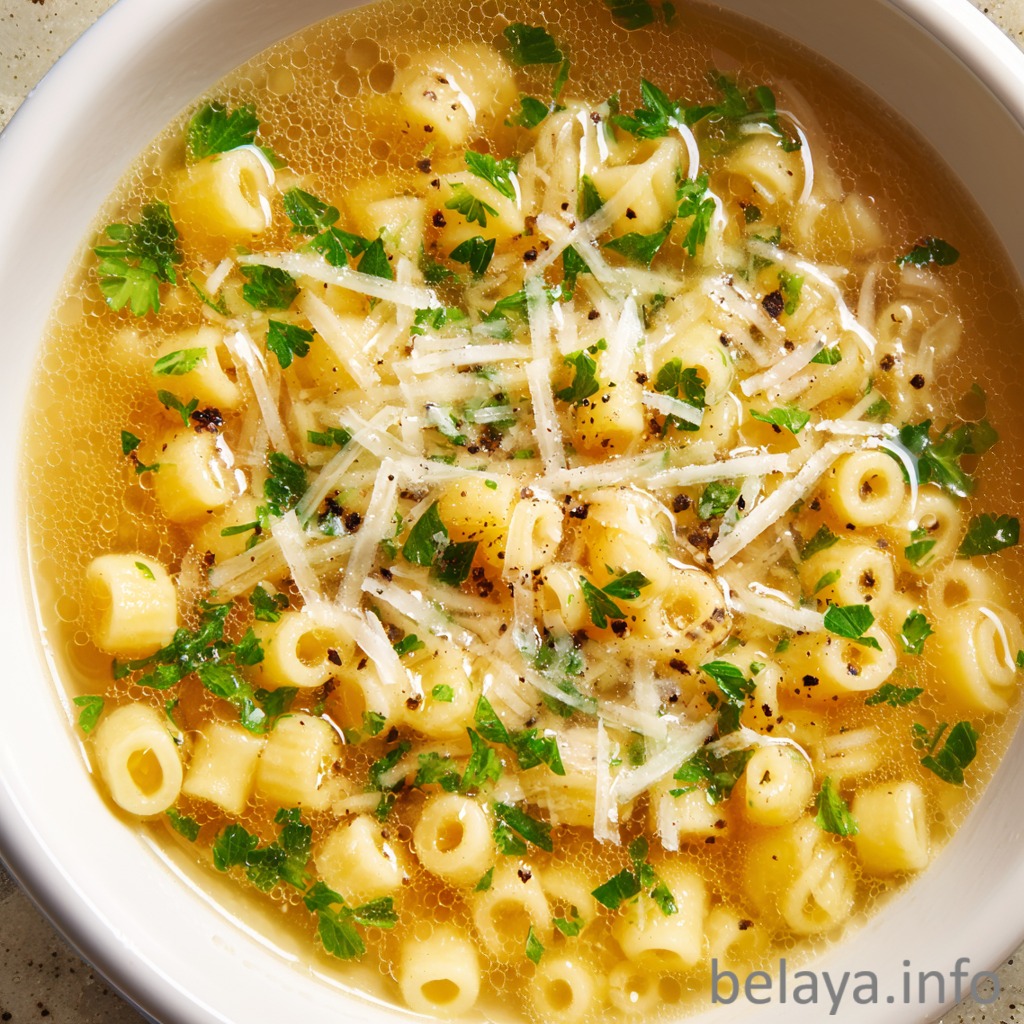
Why People Will Love This Parmesan Pasta Soup:
It delivers pure comfort with minimal ingredients, proving that simple flavors—garlic, butter, Parmesan, and pasta—can create something deeply soothing and satisfying.
The rich buttery base and fragrant garlic create an immediate sense of warmth, making every spoonful feel like a gentle, restorative hug.
The ditalini pasta brings soft, comforting texture, turning a light broth into something more substantial without feeling heavy or overwhelming.
Freshly melted Parmesan adds depth, umami, and creaminess, transforming the broth into a silky, savory soup that feels luxurious despite its simplicity.
It’s fast, easy, and unfussy, making it the perfect recipe for tired days, sick days, busy evenings, or when you want something warm without spending much time in the kitchen.
The flavor is incredibly adaptable, allowing people to enjoy it as-is or customize it with herbs, lemon, vegetables, or proteins without losing its comforting core.
It tastes nostalgic and homemade, reminiscent of childhood soups and quiet nights, offering emotional comfort as much as physical nourishment.
Key Ingredients:
Butter – the foundation of warmth in this soup, it melts into the pot and creates a soft, rich base that makes every spoonful feel comforting and familiar.
Fresh garlic – gently sautéed until fragrant, it infuses the broth with a mellow aroma that lifts the entire dish without overpowering it.
Chicken broth – the soulful backbone of the soup, adding savory depth and transforming simple ingredients into something deeply nourishing.
Ditalini pasta – small, tender pasta that absorbs the broth beautifully, giving the soup its heartiness and making each bite soft, cozy, and satisfying.
Finely grated Parmesan – the essence of umami in this recipe, melting into the broth and giving it a silky texture and a rich, savory character.
Fresh parsley – a bright, herbal touch that balances the richness and adds a hint of freshness to every bowl.
Salt and black pepper – simple seasonings that awaken the flavors, ensuring every ingredient shines in harmony.
Expert Tips:
Sauté the garlic gently to unlock sweetness instead of sharpness.
Garlic burns fast, and even slight browning can introduce bitterness. A soft, fragrant sauté gives the soup its warm, mellow foundation.
Use high-quality broth, because it becomes the soul of the dish.
With so few ingredients, the broth you choose matters. A good chicken broth—homemade or low-sodium boxed—creates a cleaner, richer, more soothing base.
Salt gradually, not early.
Parmesan is naturally salty and releases flavor as it melts. Always season after adding the cheese, allowing you to find the perfect balance without overwhelming the delicate broth.
Cook the pasta just until al dente.
Ditalini softens quickly, and cooking it beyond al dente can make the soup too thick or starchy. Gentle simmering keeps the broth clear and the pasta tender without losing structure.
Use finely grated Parmesan to ensure a silky texture.
Coarse shreds won’t melt smoothly. Finely grated cheese dissolves seamlessly into the hot broth, enriching it without clumps or graininess.
Serve immediately to preserve the perfect balance of broth and pasta.
As the soup sits, the pasta continues to drink up the liquid. For a more broth-forward bowl, serve right away; for a thicker, heartier bowl, allow a few extra minutes of rest.
Add a touch of lemon or red pepper flakes only if you want brightness or heat.
These small additions can transform the soup—but use them lightly so they don’t overshadow the comforting simplicity that defines this recipe.
Parmesan Pasta Soup
Ingredients
Base
¼ cup (½ stick) butter
5 garlic cloves, minced
32 oz chicken broth
Pasta
1½ cups ditalini pasta
Cheese
½ cup finely grated Parmesan, plus extra for serving
Garnish
Fresh parsley, minced
Seasoning
Kosher salt, to taste
Freshly ground black pepper, to taste
Instructions
1. Sauté the Garlic
In a large pot set over medium heat, melt the butter.
Add the minced garlic and cook for about 30 seconds, just until fragrant—be careful not to brown it.
2. Add the Broth
Pour in the chicken broth and bring the mixture to a full boil.
3. Cook the Pasta
Add the ditalini pasta, then reduce the heat to a gentle simmer.
Cook according to the package directions until the pasta is al dente.
4. Add the Parmesan
Stir in the grated Parmesan until fully melted and incorporated.
Taste the soup and season with kosher salt and freshly ground black pepper as needed.
5. Serve
Ladle the hot soup into bowls.
Finish with extra Parmesan and a sprinkle of fresh parsley, if desired.
Enjoy warm and comforting!
Important Notes When Making Parmesan Pasta Soup
The butter-and-garlic beginning sets the emotional tone of the soup.
This quiet step is the heart of the recipe—slowly melting butter and softly blooming garlic creates the foundation of warmth that carries through every spoonful.
The broth determines how soothing or rich the soup feels.
A lighter broth will make the soup gentle and hydrating, while a richer broth adds depth and comfort. Your choice directly influences the character of the dish.
Pasta absorbs liquid continuously, even after cooking stops.
If you prefer a soupier consistency, serve right away or add an extra splash of broth before serving. If you enjoy a thicker, cozier soup, let it sit for a few minutes to allow the ditalini to soak up more broth.
Parmesan should be finely grated to melt smoothly.
Coarse shreds can clump or sit on the surface, while finely grated Parmesan dissolves into the broth, giving it a velvety, deeply savory finish.
Season only after adding the cheese.
Parmesan contains natural salt, and the soup may need less seasoning than expected. Taste first, then adjust—this prevents the delicate broth from becoming too salty.
Serve warm, not boiling hot, for the best flavor and comfort.
Gentle warmth helps the Parmesan shine and makes the soup more soothing, especially if you’re seeking something calming or easy on the stomach.
Add toppings sparingly to preserve the soup’s simplicity.
A touch of extra Parmesan or a sprinkle of parsley enhances the dish—but too many additions can overwhelm its quiet, comforting nature.
How to Enjoy This Parmesan Pasta Soup After Cooking:
• Let the soup rest for a minute to settle and soften.
Freshly cooked soup is often too hot to taste fully. Allowing it to rest briefly lets the flavors open, the butter mellow, and the pasta relax into the broth, creating a smoother, more comforting experience.
• Stir gently before serving to blend the Parmesan evenly.
As the soup sits, the melted Parmesan may drift toward the bottom. A gentle stir brings its silky richness back into every ladleful, ensuring each serving has balanced flavor and texture.
• Serve in warm bowls for maximum comfort.
Warming your bowls (with hot water or a quick rinse) keeps the soup hotter for longer and helps maintain the velvety consistency of the melted Parmesan as you eat.
• Add fresh elements right before eating.
A sprinkle of parsley and a small handful of extra Parmesan give each bowl brightness and depth. These little finishing touches elevate the dish without overshadowing its simplicity.
• Eat slowly to savor the textures.
The soft ditalini, silky broth, fragrant garlic, and melted Parmesan create a layered, soothing mouthfeel. Slow bites allow you to appreciate how the flavors and textures complement one another.
• Pair it thoughtfully, based on your mood.
For a light meal: enjoy the soup on its own.
For something heartier: pair with crusty bread, a simple salad, or a warm piece of buttered toast.
Each option enhances the cozy, nourishing character of the soup in a different way.
• Adjust as you go.
If the pasta absorbs too much broth while eating or during storage, simply add a splash of hot chicken broth or water to restore the perfect consistency without losing flavor.
• Enjoy leftovers with a slightly thicker texture.
As the soup sits in the fridge, the pasta naturally absorbs more of the broth. Many people love the thicker, almost risotto-like consistency the next day. Reheat gently and add extra broth if you prefer it thinner.
Nutrition Information
(Estimated per serving — 4 servings)
Calories: 310 kcal | Total Fat: 14.8 g | Saturated Fat: 9.1 g | Monounsaturated Fat: 3.0 g | Polyunsaturated Fat: 0.7 g | Cholesterol: 40 mg | Sodium: 780–980 mg (depending on broth & added salt) | Total Carbohydrates: 33.4 g | Dietary Fiber: 1.6 g | Sugars: 3.1 g | Protein: 13.2 g
Frequently Asked Questions
Can I substitute another type of pasta if I don’t have ditalini?
Yes. Any small pasta shape works well—elbow macaroni, small shells, or orzo. Just adjust the cooking time based on the package instructions.
How can I keep the soup from getting too thick as it sits?
The pasta will naturally absorb broth over time. If it thickens more than you prefer, simply add a splash of warm chicken broth or water before serving to restore the soupiness.
Can I make this soup vegetarian?
Absolutely. Replace chicken broth with vegetable broth and ensure your Parmesan is vegetarian-friendly. The flavor stays rich and comforting.
How do I prevent the Parmesan from clumping in the soup?
Use finely grated Parmesan, add it off the heat or on low, and whisk gently. This helps the cheese melt smoothly into the broth instead of forming clumps.
Can I add protein or vegetables to make it heartier?
Yes—try cooked chicken, spinach, peas, white beans, or mushrooms. Add them at the end so they warm through without overcooking.
How do I keep the garlic from burning in the butter?
Garlic burns very quickly.
Make sure the heat is medium, not high, and sauté only until fragrant (about 30 seconds). If it starts browning, lower the heat immediately or pull the pot off the stove for a moment.
Should I cook the pasta separately to prevent over-thickening?
You can, but it’s not necessary.
Cooking pasta in the broth gives the soup more flavor.
If you want a thinner soup, add a little extra broth or water toward the end to compensate for pasta absorption.
How do I ensure the Parmesan melts smoothly instead of clumping?
Use finely grated Parmesan, not shredded.
Stir it in off the heat or on low heat to prevent curdling.
Adding cheese too quickly or at a rolling boil can cause it to separate.
What should I do if the soup becomes too thick while cooking?
This happens because ditalini absorbs broth quickly.
Add ½ cup of warm chicken broth or water at a time until it reaches your ideal consistency.
Adjust seasoning after adding extra liquid.
Can I double the recipe without changing the technique?
Yes—just use a larger pot to prevent boiling over.
Keep the same cooking times, but stir more frequently so the pasta doesn’t settle or clump at the bottom.