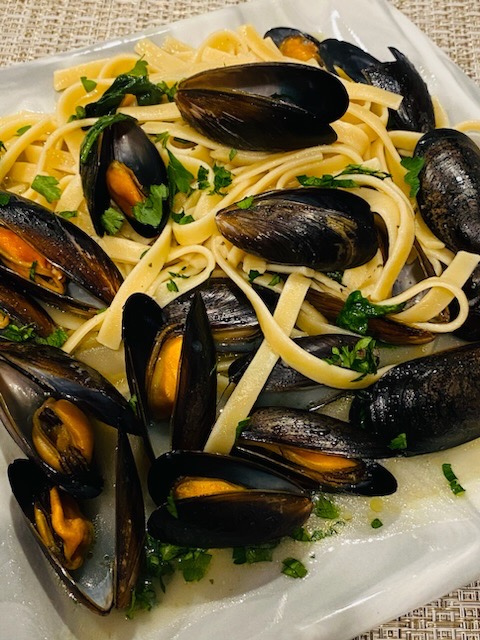
Mussels in White Wine, Garlic And Butter Sauce a bed of pasta
Mussels in White Wine, Garlic and Butter Sauce over Pasta is an elegant seafood dish with a rich, creamy, aromatic sauce and tender mussels served over linguine or spaghetti. It brings together the briny sweetness of mussels, the brightness of white wine, the warmth of garlic and shallots, and the silky richness of butter, cream, and Parmesan.
This recipe feels special without being overly complicated. The mussels steam quickly in a fragrant wine sauce, releasing their natural seafood juices into the broth. When the pasta is added, it absorbs the buttery garlic flavor and becomes coated in a creamy white wine sauce.
It is the kind of dish that feels restaurant-worthy but still comforting. Every bite has tender pasta, savory sauce, fresh basil, gentle heat from red pepper flakes, and the delicate ocean flavor of mussels.
Why People Will Love Mussels in White Wine, Garlic And Butter Sauce a bed of pasta Recipe
It feels elegant and comforting at the same time. The mussels make the dish feel special, while the creamy pasta makes it warm and satisfying.
The sauce is deeply flavorful. White wine, garlic, shallots, butter, olive oil, cream, Parmesan, basil, and mussel juices create a rich and layered sauce.
The mussels add natural briny sweetness. As they steam open, they release flavorful juices that blend into the white wine sauce.
It is a beautiful seafood pasta for dinner. The open mussel shells over creamy linguine or spaghetti make the dish look impressive and abundant.
The recipe has balance. Cream and butter bring richness, white wine adds brightness, basil adds freshness, and red pepper flakes add gentle heat.
It cooks faster than it looks. Mussels steam quickly, and the pasta can cook at the same time, making the dish practical for a special weeknight meal.
It pairs beautifully with bread. The creamy garlic-wine sauce is perfect for soaking up with crusty bread.
It is easy to customize. You can make it spicier, creamier, lighter, or add shrimp, scallops, clams, or extra herbs.
Key Ingredients
Mussels:
Mussels are the heart of this dish. They bring a delicate seafood sweetness and release briny juices into the sauce as they steam. Fresh mussels give the broth a deep ocean flavor that cannot be replaced by seasoning alone.
Linguine or Spaghetti:
Long pasta works well because it catches the creamy garlic and wine sauce. Linguine gives a slightly wider bite, while spaghetti keeps the dish classic and simple.
White Wine:
White wine adds acidity, brightness, and depth. It balances the richness of the butter, cream, and Parmesan while helping create the steaming liquid for the mussels.
Garlic:
Garlic gives the sauce its bold savory base. It pairs naturally with mussels, butter, olive oil, and pasta.
Shallot:
Shallot adds mild sweetness and a delicate onion flavor. It gives the sauce more depth without overpowering the seafood.
Butter and Olive Oil:
Butter makes the sauce rich and silky, while olive oil helps carry the garlic, shallot, and basil flavors.
Fresh Basil:
Basil adds freshness, color, and a fragrant herbal note. It keeps the creamy sauce from feeling too heavy.
Crushed Red Pepper Flakes:
Red pepper flakes add gentle heat and make the sauce more lively. They give the dish warmth without hiding the mussels’ natural flavor.
Heavy Cream:
Heavy cream gives the sauce body and softness. It turns the wine and seafood juices into a smooth, comforting pasta sauce.
Parmesan Cheese:
Parmesan adds salty, nutty richness and helps slightly thicken the sauce. It gives the pasta a deeper savory finish.
Expert Tips
Clean the mussels carefully. Rinse them well and remove any beards before cooking. Clean mussels make the sauce taste fresher and prevent grit.
Discard bad mussels before cooking. Any mussels with cracked shells or shells that do not close when tapped should not be used.
Do not overcook the mussels. Mussels cook quickly. Once the shells open, they are done. Overcooking can make them tough.
Use a dry white wine. A dry wine keeps the sauce bright and balanced. Avoid sweet wine because it can make the sauce taste flat or sugary.
Cook the pasta al dente. The pasta will continue to absorb sauce after it is mixed with the mussels, so it should not be overcooked.
Do not let the garlic burn. Garlic only needs about 1 minute. Burnt garlic can make the sauce bitter.
Add cream gently. Once the mussels and pasta are combined, simmer gently so the cream stays smooth.
Reserve a little pasta water if needed. If the sauce becomes too thick, a splash of starchy pasta water can loosen it while helping it cling to the noodles.
Serve right away. Mussel pasta is best hot and fresh, when the mussels are tender and the sauce is silky.
Mussels in White Wine, Garlic And Butter Sauce a bed of pasta
Ingredients
2 pounds mussels rinsed
1 pound linguine or spaghetti
3/4 cup white wine
1 shallot finely chopped
3 tablespoons butter
1/4 cup fresh basil finely chopped
3 tablespoons olive oil
2 cloves garlic minced
1 teaspoon crushed red pepper flakes
3/4 cup heavy cream
1/2 cup grated parmesan cheese
Instructions
Rinse the mussels and remove beards if necessary, discard any that do not fully close when rinsing (these are dead).
Bring a large pot of water to a boil, add a pinch of salt, and cook linguine until al dente.
Meanwhile, heat butter and oil in a large covered saucepan on medium-high heat. Cook garlic and shallots until fragrant, about 1 minute. Add wine, basil, and red pepper flakes to the pan. Cover and simmer mussels in the white wine sauce until fully cooked and shells open up, about 5 minutes. Stir mussels to coat in the sauce.
When linguine is finished, strain and stir into the mussels and white wine sauce. Now add cream and Parmesan cheese. Simmer for 5-7 minutes, covered, stirring occasionally until the sauce slightly thickens. Serve topped with a pinch of fresh basil, more Parmesan cheese, and 6-7 mussels.
Important Notes When Making Mussels in White Wine, Garlic And Butter Sauce
Mussels must be fresh and alive before cooking. They should smell clean and ocean-like, not sour or unpleasant.
Discard any mussels that do not open after cooking. Closed mussels after steaming should not be eaten.
The sauce can become salty. Mussels, Parmesan, and salted pasta water all add salt, so season carefully at the end.
Do not overcrowd the pan. Mussels need space and steam to open evenly.
The cream should not boil aggressively. A gentle simmer helps keep the sauce smooth and prevents separation.
This dish is best eaten fresh. Mussels can become chewy when reheated, so enjoy the pasta soon after cooking.
Use fresh herbs for the best finish. Fresh basil gives the sauce a brighter flavor than dried basil.
How to Enjoy Mussels in White Wine, Garlic And Butter Sauce After Cooking
Serve the mussel pasta immediately after cooking, while the sauce is warm, creamy, and fragrant. Use shallow pasta bowls so the linguine or spaghetti can sit in the sauce and the mussels can be arranged beautifully on top.
For the best bite, twirl a small portion of pasta with the creamy garlic-wine sauce, then enjoy it with a tender mussel. The flavor should be rich from butter and cream, bright from white wine, savory from Parmesan, and fresh from basil.
Finish each serving with extra Parmesan, a pinch of fresh basil, and a light sprinkle of red pepper flakes if you enjoy heat. A squeeze of lemon can also brighten the dish and balance the richness of the sauce.
This dish pairs wonderfully with crusty bread, garlic bread, toasted baguette slices, or sourdough. The bread is perfect for soaking up the creamy wine sauce at the bottom of the bowl. A crisp green salad, roasted asparagus, sautéed spinach, or grilled vegetables also makes a beautiful side.
For a more complete seafood dinner, serve it with a simple appetizer such as bruschetta, Caesar salad, or roasted vegetables. Keep the sides light so the mussels and pasta remain the focus.
Leftovers can be stored in the refrigerator, but this dish tastes best fresh. If reheating, warm gently over low heat with a small splash of cream, broth, or pasta water. Avoid high heat because mussels can become tough and the cream sauce may separate.
Nutrition Information
Calories: 620–820 kcal | Total Fat: 28–42 g | Saturated Fat: 14–24 g | Monounsaturated Fat: 10–15 g | Polyunsaturated Fat: 2–4 g | Cholesterol: 90–145 mg | Sodium: 850–1,350 mg, depending on mussels, Parmesan, pasta water, and added salt | Total Carbohydrates: 62–82 g | Dietary Fiber: 3–5 g | Sugars: 3–6 g | Protein: 32–48 g
Frequently Asked Questions:
Can I use frozen mussels?
Yes, you can use frozen mussels.
Just make sure to thaw them completely before cooking.
What if I can’t find fresh mussels?
If fresh mussels are unavailable, consider using canned or jarred mussels, but the flavor and texture will differ.
Can I substitute the pasta type?
Absolutely! You can use any pasta shape you prefer, such as fettuccine or penne.
Is there a non-alcoholic substitute for white wine?
Yes, you can use vegetable or chicken broth mixed with a splash of vinegar or lemon juice for acidity.
Can I make this dish ahead of time?
It’s best to cook it fresh, but you can prep the ingredients ahead.
Cooked mussels and pasta may not hold up well if reheated.
How do I know when the mussels are cooked?
Mussels are done when their shells open up.
Discard any that remain closed after cooking.
Can I make this recipe dairy-free?
Yes, substitute the butter and heavy cream with plant-based alternatives like olive oil and coconut cream, and skip the parmesan or use a dairy-free cheese.
How spicy is the dish with crushed red pepper flakes?
The heat level is adjustable; you can reduce or omit the red pepper flakes if you prefer a milder flavor.
What can I serve with this dish?
A side salad or crusty bread works well to complement the rich flavors of the dish.
How should I store leftovers?
Store leftovers in an airtight container in the refrigerator for up to 2 days.
Reheat gently to avoid overcooking the mussels.