Italian Zucchini Soup
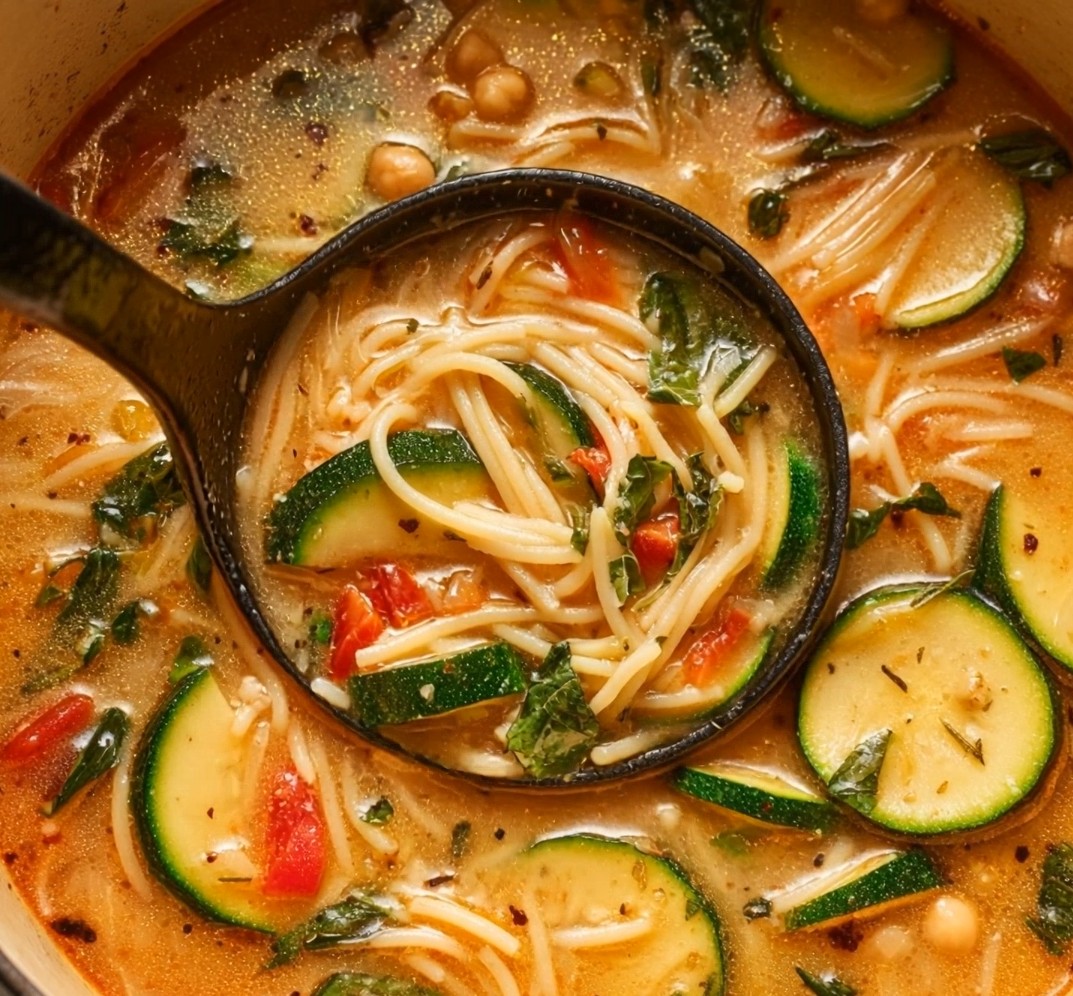
Italian Zucchini Soup is a warm, rustic, vegetable-rich soup made with tender zucchini, sweet onions, garlic, basil, tomatoes, chickpeas, and delicate pasta. It has the comforting feeling of a homemade Italian soup, but it still tastes light, fresh, and nourishing.
The flavor comes from simple ingredients layered carefully: olive oil gives richness, onions and garlic create the savory base, zucchini adds softness, tomatoes bring brightness, and the cheese rind slowly adds deep umami flavor to the broth. Chickpeas and pasta make the soup hearty enough to serve as a full meal.
This is the kind of soup that feels cozy without being too heavy. It is perfect for family dinners, chilly evenings, garden zucchini season, meal prep, or anytime you want a comforting bowl filled with vegetables, herbs, and Italian flavor.
Why People Will Love Italian Zucchini Soup Recipe
It is comforting but not heavy.
The soup has pasta, chickpeas, broth, tomatoes, and zucchini, so it feels filling while still staying fresh and vegetable-forward.
It has deep Italian flavor from simple ingredients.
Onion, garlic, basil, olive oil, tomatoes, and a Parmesan or pecorino rind create a rich, savory broth without needing complicated steps.
It is a great way to use zucchini.
Zucchini becomes tender and mild in the soup, soaking up the tomato, basil, garlic, and cheese-rind flavor.
The chickpeas make it hearty.
Chickpeas add protein, fiber, and a creamy bite, turning the soup into something more satisfying than a plain vegetable soup.
The pasta makes every bowl feel cozy.
Broken angel hair pasta gives the soup a soft, comforting texture and makes it feel like a classic homemade Italian meal.
It is flexible and easy to adjust.
You can use vegetable broth or chicken broth, add more herbs, use a different pasta, or finish it with cheese, pesto, or extra virgin olive oil.
The toppings make it special.
A sprinkle of pecorino, a drizzle of olive oil, or a spoonful of basil pesto can make the soup taste richer and more restaurant-style.
It works well for leftovers.
The flavors deepen as the soup sits, making it a great make-ahead meal for the next day.
Key Ingredients
Zucchini
Zucchini is the main vegetable in this soup. When sliced thinly and simmered, it becomes tender and absorbs the savory broth. It gives the soup body without making it too heavy.
Yellow Onions
Onions create the sweet, savory base of the soup. Cooking them slowly in olive oil helps build flavor before the broth is added.
Garlic
Garlic gives the soup a bold Italian aroma and savory depth. Chopped or thinly sliced garlic works well because it infuses the oil and broth.
Fresh Basil
Basil adds a fresh herbal flavor. Using some at the beginning gives the broth depth, while adding the rest at the end keeps the soup bright and fragrant.
Olive Oil
Olive oil helps soften the onions and garlic while adding richness to the broth. It gives the soup a smooth, rounded flavor.
Crushed Red Pepper
A small pinch adds gentle heat in the background. It does not make the soup overly spicy, but it gives the broth more character.
Vegetable or Chicken Broth
Broth forms the base of the soup. Low-sodium or no-sodium broth is best because it allows you to control the salt level.
Whole Tomatoes
Hand-crushed tomatoes add brightness, acidity, and texture. They balance the mild zucchini and rich olive oil.
Pecorino or Parmesan Rind
A cheese rind slowly releases salty, savory, umami flavor into the soup. It makes the broth taste deeper and more developed.
Chickpeas
Chickpeas add heartiness, protein, and fiber. They also bring a soft, creamy texture that works beautifully with the zucchini and pasta.
Angel Hair Pasta
Broken angel hair cooks quickly and gives the soup a delicate pasta texture. It makes the dish more filling and comforting.
Expert Tips
Prep everything before cooking.
This soup moves quickly once the onions and garlic begin cooking. Having the zucchini, basil, chickpeas, tomatoes, and pasta ready makes the process smoother.
Do not rush the aromatics.
Let the onions soften gently with the garlic, basil, and red pepper. This first step builds the flavor foundation of the soup.
Use low-sodium broth.
The cheese rind, salt, and toppings can all add sodium. Low-sodium broth gives you better control over the final taste.
Slice the zucchini evenly.
Thin, even slices cook at the same speed and give the soup a better texture. Large pieces may stay too firm while smaller pieces become too soft.
Deglaze the pot well.
When you add the first 2 cups of broth, scrape the bottom of the pot. Those browned bits add savory flavor to the broth.
Add the pasta near the end.
Thin pasta cooks quickly. Adding it too early can make it too soft or mushy.
Stir often after adding pasta.
Angel hair can clump together if left alone. Stir regularly so the pasta separates and cooks evenly.
Remove the cheese rind before serving.
The rind is used for flavor, not for eating. Take it out once the soup is finished.
Finish with fresh basil.
Adding basil at the end gives the soup a fresh, fragrant lift that cooked basil alone cannot provide.
Adjust seasoning after simmering.
The broth, cheese rind, and tomatoes change the flavor as they cook. Taste at the end before adding extra salt.
Italian Zucchini Soup
Ingredients
1/4 cup olive oil, for sautéing the aromatics
2 cups yellow onions, diced
1/3 cup fresh basil, chopped and divided
1/4 cup garlic, chopped or thinly sliced
1 pinch crushed red pepper, for gentle heat
8 cups low-sodium or no-sodium vegetable broth or chicken broth
3 pounds zucchini, ends trimmed and sliced into thin half-moons or quarter-moons, depending on size
1 can whole tomatoes, 28 ounces, crushed by hand
1 pecorino or Parmesan cheese rind, for savory depth
1 teaspoon salt, or adjust to taste
1/2 teaspoon black pepper, or adjust to taste
1 can chickpeas, 15 ounces, rinsed and drained
4 ounces angel hair pasta, or another thin long pasta, broken into bite-sized pieces
Grated pecorino cheese, optional, for serving
Extra virgin olive oil, optional, for drizzling before serving
Basil pesto, optional, for adding extra basil flavor and richness
Instructions
Prepare all the ingredients before you begin cooking. Dice the onions, chop the basil, slice or chop the garlic, cut the zucchini into thin half-moons, rinse and drain the chickpeas, and break the pasta into bite-sized pieces.
Heat the olive oil in a large 6-quart pot or Dutch oven over medium-low heat.
Add the diced onions, half of the fresh basil, garlic, and crushed red pepper to the pot.
Cook for about 5 minutes, stirring occasionally, until the onions begin to soften and the garlic becomes fragrant. You may cover the pot briefly to help the onions soften faster.
Pour in 2 cups of the broth and stir well, scraping the bottom of the pot to loosen any browned bits. This helps add more flavor to the soup.
Increase the heat to medium.
Add the remaining broth, sliced zucchini, hand-crushed tomatoes, pecorino or Parmesan rind, salt, and black pepper.
Stir everything together until the vegetables and broth are well combined.
Cover the pot and bring the soup to a gentle simmer.
Once simmering, remove the lid and continue cooking for about 10 minutes, or until the zucchini is almost tender.
Stir in the rinsed chickpeas and broken angel hair pasta.
Cook until the pasta is al dente, stirring often so the pasta does not stick together or clump in the soup.
Turn off the heat and stir in the remaining fresh basil.
Taste the soup and adjust the seasoning with more salt or black pepper if needed.
Remove and discard any remaining cheese rind before serving.
Ladle the soup into bowls while it is hot.
Finish each serving with grated pecorino cheese, a light drizzle of extra virgin olive oil, or a small spoonful of basil pesto if desired.
Serve warm and enjoy this comforting Italian zucchini soup.
Important Notes When Making Italian Zucchini Soup
The pasta will continue to absorb broth.
If the soup sits for a while, the pasta may thicken the soup. Add extra broth or water when reheating if needed.
The zucchini should be tender, not mushy.
Simmer only until the zucchini is almost tender before adding chickpeas and pasta. Overcooking can make the zucchini too soft.
A cheese rind adds major flavor.
If you have one, use it. It gives the soup a deeper, more savory taste. If you do not have one, finish with grated pecorino or Parmesan instead.
Use fresh basil for the best flavor.
Dried basil will not give the same bright, fresh aroma. Fresh basil makes the soup taste more lively.
The soup can be vegetarian.
Use vegetable broth instead of chicken broth and make sure the cheese is vegetarian-friendly if needed.
Salt carefully.
Pecorino, Parmesan rind, broth, and pesto can all be salty. Taste before adding more salt.
The soup thickens as it cools.
This is normal because pasta absorbs liquid. Add more broth before serving leftovers if you want a soupier texture.
How to Enjoy Italian Zucchini Soup After Cooking
Once the soup is finished, let it rest for a few minutes off the heat. This short resting time allows the basil, tomatoes, zucchini, chickpeas, and broth to settle into a more balanced flavor.
Ladle the soup into warm bowls while it is still hot. Make sure each bowl has a good mix of zucchini, chickpeas, pasta, tomatoes, and broth. The best spoonful should taste savory, herby, slightly tomato-bright, and comforting.
Finish each serving with grated pecorino cheese for a salty, nutty flavor. A light drizzle of extra virgin olive oil adds richness and a silky finish. For a stronger basil flavor, add a small spoonful of pesto on top and stir it gently into the hot soup.
This soup pairs beautifully with crusty bread, garlic bread, focaccia, grilled cheese, a simple green salad, roasted vegetables, or a light antipasto plate. Bread is especially good because it soaks up the flavorful broth.
For a fuller meal, serve the soup with roasted chicken, Italian sausage, baked fish, or a tomato-mozzarella salad. For a lighter meal, serve it with only bread and a little extra cheese on top.
Leftovers should be stored in an airtight container in the refrigerator. When reheating, add a splash of broth or water because the pasta may absorb liquid as it sits. Warm gently on the stove until hot, then finish with fresh basil, cheese, or olive oil before serving again.
Nutrition Information
Approximate per serving, based on 8 servings
Calories: 260 kcal | Total Fat: 10 g | Saturated Fat: 2 g | Monounsaturated Fat: 6 g | Polyunsaturated Fat: 1.5 g | Cholesterol: 2 mg | Sodium: 420–700 mg depending on broth, cheese rind, and added salt | Total Carbohydrates: 35 g | Dietary Fiber: 7 g | Sugars: 8 g | Protein: 10 g
Frequently Asked Questions:
What does Italian Zucchini Soup taste like?
It tastes savory, fresh, herby, and lightly tomato-rich. The zucchini is tender, the chickpeas add heartiness, the pasta makes it comforting, and the basil gives it a fresh Italian flavor.
Is this soup vegetarian?
It can be vegetarian if you use vegetable broth instead of chicken broth. Also check the cheese or cheese rind if you want it to be fully vegetarian, because some cheeses use animal rennet.
What can I serve with Italian Zucchini Soup?
It pairs well with crusty bread, garlic bread, focaccia, grilled cheese, Caesar salad, roasted vegetables, or a simple tomato and mozzarella salad.
Can I make this soup ahead of time?
Yes, but the pasta may absorb broth as it sits. For best results, you can cook the pasta separately and add it when serving, or add more broth when reheating.
Can I freeze this soup?
You can freeze the soup, but it is better to freeze it without the pasta because pasta can become soft after thawing. Add fresh cooked pasta when reheating for the best texture.
How do I keep the pasta from clumping in the soup?
Stir often after adding the pasta, especially during the first few minutes. Breaking the pasta into small pieces also helps it spread evenly through the soup.
Why did my soup become too thick?
The pasta absorbed the broth as it sat. Add extra broth or water when reheating until the soup reaches your preferred consistency.
Can I use a different type of pasta?
Yes. Small pasta shapes like ditalini, orzo, small shells, or broken spaghetti work well. Just adjust the cooking time based on the pasta shape.
What can I use if I do not have a Parmesan or pecorino rind?
You can skip it and add grated pecorino or Parmesan at the end. You can also add a little extra olive oil, pesto, or herbs to build flavor.
How do I avoid overcooking the zucchini?
Slice the zucchini evenly and simmer only until it is almost tender before adding the chickpeas and pasta. The zucchini will continue softening as the pasta cooks.