Linguine alla Puttanesca
Linguine alla Puttanesca is a bold Southern Italian-style pasta built around a deeply savory tomato sauce flavored with anchovies, garlic, capers, black olives, red chile, oregano, and extra-virgin olive oil. Rather than relying on meat, cream, or cheese for richness, the recipe develops its intensity from salty Mediterranean ingredients that melt together into a complex sauce.
The anchovies dissolve completely into the olive oil, adding depth and umami without leaving the finished pasta tasting strongly fishy. Capers contribute a sharp briny note, black olives add richness and a slightly bitter edge, while tomatoes provide sweetness and acidity. Fresh parsley added at the end brightens the entire dish and balances the stronger flavors.
What makes this pasta especially appealing is that it delivers enormous flavor from pantry-friendly ingredients in a relatively short amount of time. The finished linguine should be savory, tangy, garlicky, slightly spicy, briny, tomato-rich, and beautifully glossy, with enough sauce to coat every strand without becoming heavy.
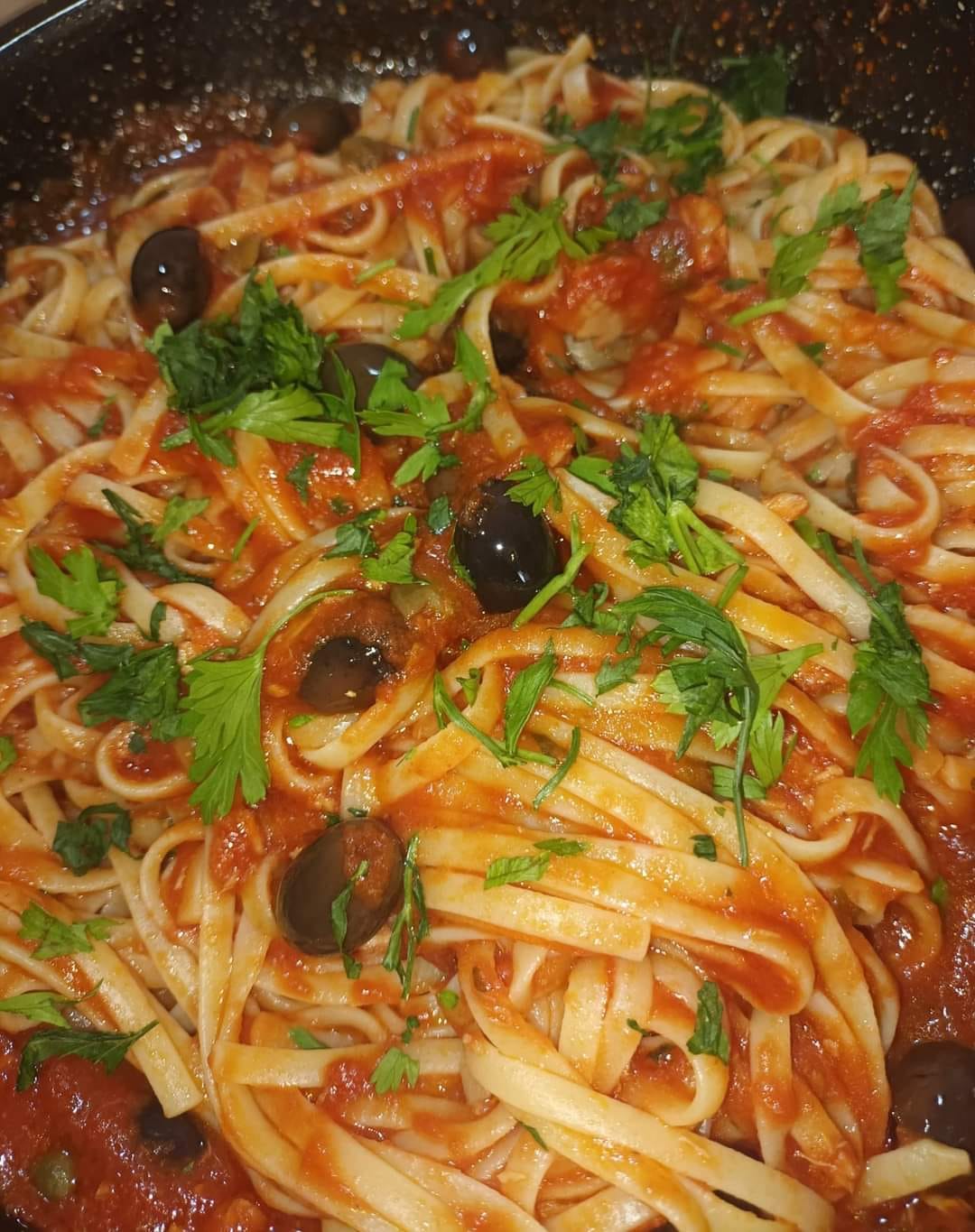
Why People Will Love Linguine alla Puttanesca Recipe
It delivers intense flavor from a short list of ingredients.
Anchovies add deep umami without making the sauce taste obviously fishy.
Capers bring bright, salty acidity.
Black olives add richness and Mediterranean character.
Tomatoes create a naturally sweet and tangy sauce.
Garlic perfumes the olive oil without overwhelming the dish.
Red chile provides gentle warmth.
Oregano adds an earthy herbal background.
Fresh parsley gives the finished pasta a fresh contrast.
Extra-virgin olive oil creates richness without cream or butter.
Linguine holds the sauce beautifully along its long strands.
The entire sauce can be prepared while the pasta cooks.
Most of the ingredients are pantry staples.
It requires no complicated techniques.
The recipe is naturally dairy-free.
The sauce can easily be made slightly spicier.
Reserved pasta water helps create a silky finish.
It is flavorful enough to serve without Parmesan.
It works equally well as a quick weeknight dinner or casual Italian-style meal.
Key Ingredients
Linguine:
Linguine is slightly flatter and wider than spaghetti, which gives the tomato-olive sauce more surface area to cling to. Cook it only until al dente so it retains structure when tossed in the hot sauce.
Extra-Virgin Olive Oil:
Olive oil forms the foundation of the sauce. It carries the flavors of garlic, anchovy, chile, and capers and gives the finished pasta its glossy texture.
Anchovy Fillets:
Anchovies are one of the most important ingredients in puttanesca. They dissolve into the warm oil, providing salty, savory depth rather than a strong fish flavor.
Garlic:
Leaving the garlic cloves whole and lightly crushed allows them to perfume the sauce gradually. Removing them before serving keeps the flavor balanced.
Capers:
Capers bring sharp brininess and a subtle floral acidity that cuts through the richness of the olive oil and olives.
Chopped Tomatoes:
Tomatoes provide the body of the sauce, balancing the salty ingredients with natural sweetness and acidity.
Black Olives:
Olives contribute richness, saltiness, and a slightly bitter edge that gives puttanesca its unmistakable Mediterranean flavor.
Red Chile:
Fresh red chile introduces gentle heat and helps keep the sauce lively.
Flat-Leaf Parsley:
Parsley is added at the end so its fresh herbal flavor is not lost during prolonged cooking.
Expert Tips
Use good-quality canned tomatoes because they form most of the sauce.
Rinse capers briefly if they are extremely salty.
Use oil-packed anchovies for the richest flavor.
Let the anchovies melt completely into the olive oil.
Keep the heat moderate when cooking garlic so it does not burn.
Whole garlic cloves are easier to remove at the end.
Adjust the amount of red chile according to your preferred heat level.
Simmer the tomato sauce gently rather than boiling aggressively.
Add olives later in cooking so they retain some texture.
Salt the pasta water carefully because the sauce already contains anchovies, capers, and olives.
Reserve at least ½–1 cup pasta water before draining.
Move the linguine directly into the sauce while it is still hot.
Toss vigorously so the starch from the pasta helps emulsify the sauce.
Add pasta water only a little at a time.
Finish the pasta in the sauce for about a minute rather than simply spooning sauce over the top.
Add parsley only after removing the pan from the heat.
Serve immediately because long pasta absorbs sauce rapidly as it sits.
How to make Linguine alla Puttanesca
Ingredients
4 tbsp extra virgin olive oil
4 garlic cloves , lightly crushed and left whole
4 anchovy fillets
½ red chilli , finely chopped
40 g (1½ oz) capers
2 x 400g (14oz) cans chopped tomatoes
couple of pinches of dried oregano
80 g (3oz) pitted black olives
320 g (11½ oz) dried linguine
handful of flat-leaf parsley , finely chopped
sea salt
Instructions:
Step 1:
Heat the olive oil in a large frying pan, add the garlic, anchovy fillets, chilli and capers and sweat over a medium heat until the anchovies have dissolved, about 2 minutes.
Stir in the tomatoes, oregano and a little salt to taste.
Cover with a lid and cook over a medium-low heat for 15 minutes.
Stir in the olives and continue to cook for a further 10 minutes.
Step 2:
In the meantime, bring a large pot of salted water to the boil, add the linguine and cook according to the packet instructions until al dente.
Step 3:
Drain the linguine, reserving a little of the pasta cooking water, then add both to the tomato sauce.
Cook over a high heat for a minute, mixing well.
Remove from the heat, discard the garlic, then stir in the parsley and serve immediately.
Important Notes When Making Linguine alla Puttanesca
Anchovies, capers, and olives all contain considerable sodium.
Taste the sauce before adding extra salt.
If using very salty olives, rinse and drain them first.
Do not let the garlic turn dark brown; burnt garlic can make the entire sauce bitter.
Dried chile flakes can replace fresh red chile if necessary.
Kalamata olives can be used, although they create a slightly fruitier flavor.
Traditional puttanesca does not require cheese.
Parmesan can mute some of the sharper caper and olive flavors.
The sauce should remain loose enough to coat the linguine.
Pasta water is preferable to plain water because its starch improves sauce texture.
Do not rinse the cooked linguine after draining.
Cook pasta slightly under your final preferred texture because it cooks another minute in the sauce.
The garlic cloves are intentionally removed before serving.
If you prefer more garlic flavor, mince one additional clove instead of leaving all of them whole.
Fresh parsley is best added immediately before serving.
Refrigerate leftovers promptly.
How to Enjoy Linguine alla Puttanesca After Cooking
Serve Linguine alla Puttanesca immediately after tossing it with the sauce. This is when the pasta has the best texture and the sauce remains glossy.
Twirl the linguine into warmed shallow bowls, making sure every serving receives tomatoes, olives, capers, and sauce.
Spoon a little additional sauce from the skillet over the top if necessary.
Finish with a generous sprinkling of freshly chopped flat-leaf parsley.
A small drizzle of high-quality extra-virgin olive oil can be added just before serving for a fresh, fruity aroma.
For additional heat, sprinkle crushed red pepper flakes over individual portions.
Serve with crusty Italian bread or focaccia to soak up the tomato and olive oil sauce remaining in the bowl.
A simple arugula, fennel, or mixed-green salad dressed with lemon works especially well because the fresh acidity balances the salty pasta.
Roasted zucchini, eggplant, or broccoli can also be served alongside.
For leftovers, reheat gently with a splash of water or tomato sauce. Avoid overheating because linguine becomes soft quickly.
Nutrition Information
Approximate nutrition per serving, based on 4 servings:
Calories: 485 kcal | Total Fat: 18 g | Saturated Fat: 2.6 g | Monounsaturated Fat: 12 g | Polyunsaturated Fat: 2.2 g | Cholesterol: 5–10 mg | Sodium: 900–1,250 mg depending on the anchovies, capers, olives, tomatoes, and added salt | Total Carbohydrates: 66 g | Dietary Fiber: 6 g | Sugars: 9 g | Protein: 14 g
Additional estimate:
Potassium: 700–900 mg | Calcium: 90–130 mg | Iron: 4–5.5 mg | Magnesium: 65–90 mg | Vitamin A: 900–1,300 IU | Vitamin C: 25–35 mg | Folate: 60–90 mcg
Frequently Asked Questions:
What does Linguine alla Puttanesca taste like?
It is savory, tomato-rich, garlicky, briny, slightly spicy, and deeply umami, with noticeable olive and caper flavor.
Does the pasta taste strongly of anchovies?
Usually not. The anchovies dissolve into the olive oil and function more as a savory seasoning than as a noticeable fish component.
What kind of olives are best?
Good-quality pitted black olives work well. Kalamata or Gaeta olives can also be used for a stronger, fruitier flavor.
Should Parmesan be served with puttanesca?
It is not necessary. The sauce already has plenty of savory intensity, and many versions are served without cheese.
What should I serve with Linguine alla Puttanesca?
Crusty bread, focaccia, a simple green salad, roasted vegetables, or grilled seafood are excellent accompaniments.
Why do the anchovies need to dissolve in the oil?
Dissolving them distributes their savory flavor evenly throughout the sauce and prevents noticeable pieces of anchovy from remaining.
Why should I reserve pasta cooking water?
The starchy water loosens the sauce while helping olive oil and tomato juices cling more smoothly to the linguine.
Why is my puttanesca too salty?
Anchovies, capers, olives, and canned tomatoes can all contribute sodium. Use less salt in the pasta water, rinse very salty capers or olives, and season only after tasting.
Can I prepare the sauce ahead of time?
Yes. The tomato, anchovy, caper, and olive sauce can be made ahead and refrigerated. Reheat gently while cooking fresh linguine, then finish the pasta directly in the sauce.
How can I make the sauce spicier?
Increase the fresh chile or add crushed red pepper flakes while cooking the garlic and anchovies. Add gradually so the chile heat does not overpower the briny tomato flavors.