Lemon Artichoke Chicken Soup
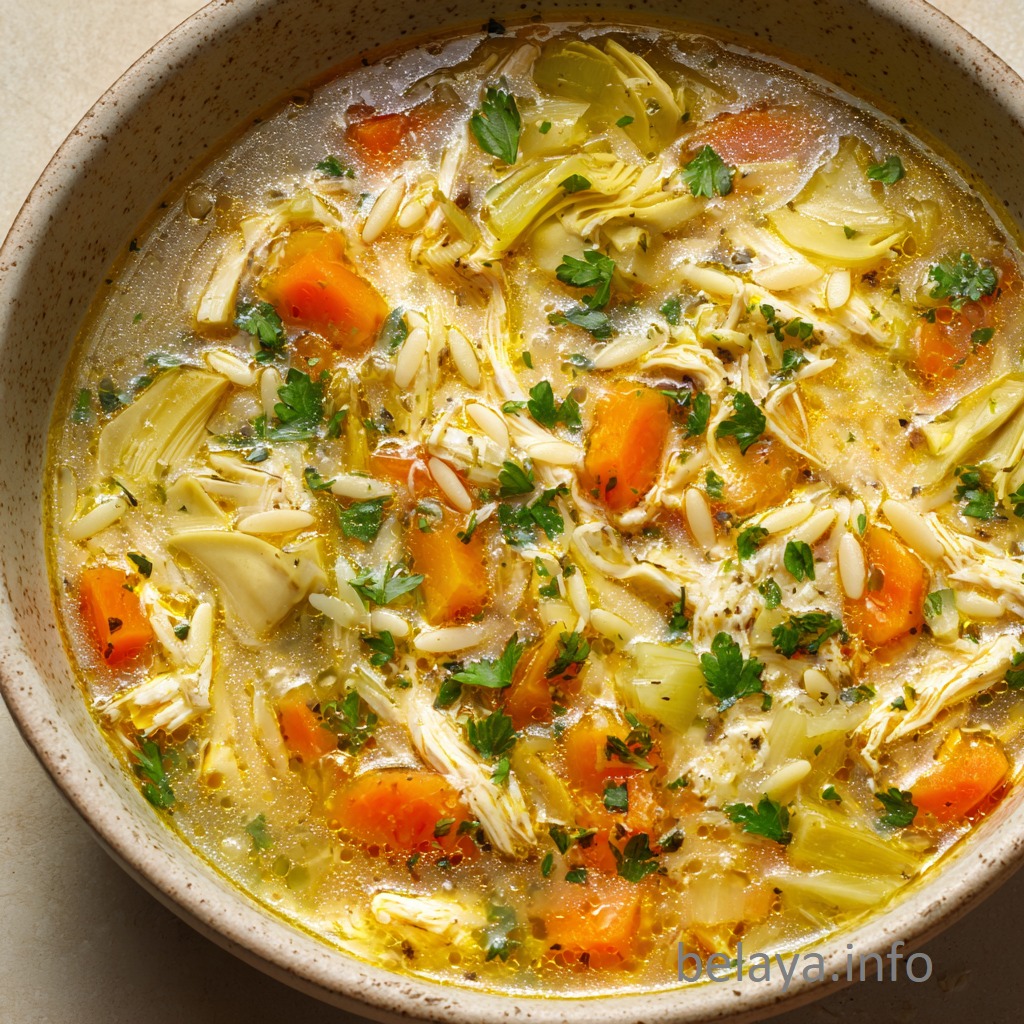
There’s something deeply comforting about a bowl of soup that feels both nourishing and bright, and this Lemon Artichoke Chicken Soup captures that balance beautifully. Tender shredded chicken simmers in a savory, slow-built broth layered with aromatic vegetables, while delicate pastina adds a soft, almost velvety texture that makes every spoonful feel cozy and satisfying.
What truly sets this soup apart is the vibrant contrast of flavors—the gentle earthiness of artichokes meets the fresh, zesty lift of lemon, creating a broth that feels light yet deeply flavorful. It’s the kind of dish that comforts like a classic chicken soup but surprises you with its brightness, making it perfect for both chilly evenings and days when you crave something soothing without being heavy.
This is more than just a soup—it’s a quiet, elegant upgrade to a timeless favorite, bringing warmth, freshness, and a touch of Mediterranean charm into every bowl.
Why People Will Love This Lemon Artichoke Chicken Soup
Perfect balance of comfort and brightness
It delivers the cozy, soul-warming feeling of classic chicken soup while the lemon adds a fresh, uplifting twist that keeps every bite from feeling heavy.
Layered, sophisticated flavor profile
The gentle sweetness of sautéed vegetables, savory chicken broth, tangy artichokes, and zesty citrus create a depth of flavor that feels both homey and refined.
Light yet deeply satisfying
Thanks to lean chicken, broth-based base, and delicate pastina, it fills you up without weighing you down—ideal for both lunch and dinner.
Unique Mediterranean-inspired twist
The combination of lemon and artichokes gives this soup a distinctive character that stands out from traditional chicken soups.
Comfort food with a fresh, modern feel
It brings nostalgic warmth but feels lighter and cleaner, making it perfect for people who want comfort without richness.
Simple ingredients, elevated result
Everyday pantry staples transform into something that tastes like it took much more effort than it actually did.
Great for all seasons
Warm enough for colder days, yet bright and refreshing enough to enjoy year-round.
Easy to digest and nourishing
Gentle on the stomach while still being packed with protein, vitamins, and hydration—perfect for recovery days or when you need something soothing.
Customizable to personal taste
You can easily adjust the lemon level, spice, or add greens to make it exactly how you like it.
Family-friendly yet elegant enough for guests
It’s approachable for everyday meals but has enough flavor complexity to serve when you want to impress.
Key Ingredients
Chicken Breasts
Lean and tender, chicken breasts form the heart of this soup, providing clean, mild flavor that absorbs the aromatic broth beautifully. When shredded, the chicken creates a soft, comforting texture in every spoonful while adding satisfying protein.
Artichoke Hearts
These bring a subtle earthiness and slightly tangy depth that makes the soup feel more elevated. Their tender, almost buttery texture contrasts perfectly with the light broth, giving each bite a unique Mediterranean character.
Fresh Lemon Juice
The true flavor enhancer of the dish—lemon brightens the entire soup, cutting through richness and lifting all the other ingredients. It transforms a classic chicken soup into something vibrant, fresh, and layered.
Pastina (Tiny Pasta)
These delicate pasta grains melt gently into the broth, adding body without heaviness. They create a soft, comforting mouthfeel that makes the soup especially soothing and cozy.
Aromatic Vegetables (Onion, Carrot, Celery)
This classic trio builds the flavor foundation. Slowly sautéed, they release natural sweetness and depth, creating a rich base that supports and enhances every other ingredient.
Garlic & Red Chili Flakes
Garlic adds warmth and savory richness, while a touch of chili flakes introduces a gentle heat that subtly lingers, balancing the brightness of the lemon.
Chicken Stock
The backbone of the soup, providing depth, richness, and cohesion. A good-quality stock ties all the flavors together and gives the soup its comforting, full-bodied character.
Fresh Parsley
Added at the end, parsley brings a clean, herbal freshness that lightens the overall flavor and adds a pop of color, making the soup feel lively and complete.
Olive Oil
Used to sauté the aromatics, it adds a smooth, slightly fruity richness that enhances the natural flavors without overpowering them.
Expert Tips:
Build flavor slowly at the start
Don’t rush the sautéing step. Let the onion, carrot, and celery cook until truly soft and slightly golden—this is where the soup develops its deep, natural sweetness and rich base.
Season in layers, not just at the end
Lightly season the vegetables, then the broth, and finally adjust at the end. This creates a more balanced, well-rounded flavor instead of a flat, salty finish.
Use high-quality chicken stock
Since the broth is the backbone of the soup, a rich, well-made stock makes a huge difference. If using store-bought, choose low-sodium so you can control the salt yourself.
Don’t overcook the chicken
Simmer gently and remove the chicken as soon as it’s cooked through. Overcooking will make it dry and stringy instead of tender and juicy when shredded.
Shred chicken while warm
Warm chicken shreds much more easily and evenly. Use two forks or even your hands (carefully) for a more natural texture.
Cook pastina just to al dente
The pasta will continue to soften slightly in the hot broth even after cooking. Stopping at al dente prevents it from becoming mushy.
Stir the pasta frequently
Pastina is small and tends to sink and stick to the bottom. Stirring ensures even cooking and prevents burning.
Add lemon at the end for brightness
Never add lemon juice too early—it can lose its fresh, vibrant flavor when overcooked. Stir it in right before serving for the best impact.
Balance the acidity carefully
Taste after adding lemon. If it feels too sharp, a pinch of salt or a drizzle of olive oil can round it out beautifully.
Enhance the artichoke flavor
Pat the artichokes dry before adding them to avoid diluting the broth, and add them toward the end so they keep their texture and flavor.
Finish with fresh herbs, not cooked ones
Stir in parsley at the very end to preserve its bright, herbal notes instead of letting it wilt into the soup.
Let the soup rest briefly before serving
Giving it 5–10 minutes off heat allows the flavors to settle and meld together, resulting in a more cohesive and flavorful bowl.
Adjust texture to your preference
If the soup thickens too much (especially after sitting), add a splash of warm stock or water to loosen it back to your desired consistency.
Lemon Artichoke Chicken Soup
Ingredients
1 tablespoon olive oil
1 medium onion, diced
1 medium carrot, diced
2-3 celery stalks, diced
2 garlic cloves, finely chopped
¼ teaspoon red chili flakes
2 chicken breasts (about 1 lb / 450 g)
6 cups (1.5 liters) chicken stock
½ cup (75 g) pastina
1 can (14 oz / 400 g) artichoke hearts, drained, rinsed and quartered
Juice of 1 small lemon
A handful of fresh parsley
Salt and freshly ground black pepper to taste
Instructions
Heat the olive oil in a large stock pot or Dutch oven and sauté the onion, carrot and celery for 6-8 minutes over medium heat until softened.
Next, add the garlic and red chili flakes and continue to cook for another minute.
Place the chicken breasts in the pot and cover everything with the chicken stock. Bring to a boil, then cover with a lid and simmer on medium-low heat for 15 minutes.
Take the chicken breasts out of the pot and add the pastina. Cook for 10 more minutes until the pasta is al dente. Make sure you stir from time to time to prevent the pasta from sticking to the bottom of the pot.
Meanwhile, shred the chicken with two forks. Add it back to the pot when the pasta is cooked together with the artichoke and lemon juice.
Stir in the fresh parsley, adjust the seasoning and serve hot, with some extra lemon juice if you like.
Important Notes When Making Lemon Artichoke Chicken Soup
This is a broth-driven soup—quality matters
The final taste depends heavily on the chicken stock. A weak or overly salty broth will directly affect the entire dish, so choose or make one with depth and balance.
The lemon defines the character of the soup
Lemon is not just an add-on—it’s the key element that transforms the flavor. Too little and the soup feels flat; too much and it becomes overly sharp. Always add gradually and taste as you go.
Timing is crucial for ingredient integrity
Each component has an ideal cooking moment—overcooking the chicken dries it out, overcooking the pastina makes it mushy, and overcooking the artichokes dulls their texture.
Pastina continues to absorb liquid after cooking
Even off the heat, the pasta will keep soaking up broth, thickening the soup over time. This is normal, but you may need to add extra stock when reheating.
Artichokes should complement, not overpower
Their tangy, earthy flavor is distinctive. Make sure they are well-drained and balanced with the lemon so neither element dominates the dish.
Texture should remain light and fluid
This soup is meant to be silky and brothy, not thick like a stew. Keep an eye on the liquid-to-solid ratio for the best eating experience.
Salt levels can shift as the soup reduces
As the soup simmers and flavors concentrate, saltiness can intensify. It’s better to under-season early and adjust at the end.
Fresh herbs are essential for the final flavor
Parsley isn’t just garnish—it adds a clean, fresh finish that lifts the entire dish. Skipping it will make the soup feel less vibrant.
Heat level should stay subtle
The red chili flakes are meant to gently warm the palate, not dominate. Keep the spice balanced so it enhances rather than distracts.
This soup improves slightly after resting—but not too long
A short rest helps flavors meld, but extended holding can soften the pasta too much. For best results, serve soon after cooking or cook pasta separately if planning ahead.
Ideal for reheating with slight adjustments
When reheating, always check consistency and brightness—add a splash of broth and a small squeeze of fresh lemon to revive the flavors.
A delicate balance between comfort and freshness
The success of this recipe lies in maintaining harmony between rich, comforting elements and bright, fresh notes—neither should overpower the other.
How to Enjoy Lemon Artichoke Chicken Soup After Cooking
Let it rest briefly before serving
After cooking, allow the soup to sit for 5–10 minutes off the heat. This helps the flavors settle and meld together, creating a more cohesive and balanced taste.
Taste and adjust right before serving
This is the final moment to perfect the dish. Add a small squeeze of fresh lemon for brightness, a pinch of salt if needed, or a drizzle of olive oil to round out the flavors.
Serve it hot, not boiling
The ideal temperature is warm and comforting, not piping hot. Letting it cool slightly allows you to fully taste the layers—especially the lemon and herbs.
Finish with fresh parsley and optional garnish
Sprinkle freshly chopped parsley on top just before serving. For extra depth, you can add a light drizzle of olive oil or a touch of freshly cracked black pepper.
Pair with simple, complementary sides
Enjoy the soup with warm crusty bread, toasted baguette slices, or even a light salad. The goal is to complement the soup without overpowering its delicate flavor.
Control the broth-to-solid ratio in each bowl
Stir the pot before serving to evenly distribute the pasta, chicken, and vegetables so every bowl has a balanced mix—not just broth or solids.
Enhance individual servings to taste
Let each person customize their bowl—extra lemon juice for brightness, chili flakes for heat, or a bit more parsley for freshness.
Enjoy slowly to appreciate the layers
This is not a rushed dish. Take time to notice how the flavors evolve—from savory broth to tender chicken to the bright citrus finish.
Reheat thoughtfully for leftovers
When reheating, add a splash of broth or water to loosen the texture, as the pastina will have absorbed liquid. Refresh with a little lemon juice to bring back brightness.
Best enjoyed fresh, but adaptable for later
While it’s at its peak right after cooking, it can still be delicious the next day with small adjustments to texture and acidity.
Turn it into a fuller meal if desired
Add extra greens (like spinach) when reheating or serve alongside protein-rich sides to make it more filling without losing its light character.
Create a cozy serving experience
Serve in deep bowls, with warm bread on the side and a relaxed setting—this soup shines when enjoyed as a comforting, mindful meal.
Nutrition Information:
Yield: 6 Serving Size: 1
Amount Per Serving:
YIELDS: 4–6 servings | Serving Size: 1 bowl
Calories: 320 kcal | Total Fat: 9.5 g | Saturated Fat: 1.8 g | Monounsaturated Fat: 5.2 g | Polyunsaturated Fat: 1.6 g | Cholesterol: 65 mg | Sodium: 650–850 mg (depending on stock and added salt) | Total Carbohydrates: 22 g | Dietary Fiber: 3.5 g | Sugars: 4 g | Protein: 34 g
Frequently Asked Questions:
Can I use rotisserie chicken instead of raw chicken breasts?
Yes, absolutely. Using rotisserie chicken is a great time-saver. Simply skip the step of cooking the chicken in the broth and add shredded cooked chicken toward the end, just long enough to heat through. Keep in mind the flavor may be slightly richer and saltier, so adjust seasoning accordingly.
How do I keep the pastina from getting mushy?
The key is to cook it just until al dente and avoid overcooking. If you plan to store leftovers, consider cooking the pastina separately and adding it to each bowl when serving to maintain the best texture.
Can I make this soup ahead of time?
Yes, but for best results, store the soup without the pasta or with slightly undercooked pasta. When reheating, add a splash of broth and a bit of fresh lemon juice to revive both texture and brightness.
What can I use instead of artichoke hearts?
If you’re not a fan of artichokes, you can substitute with zucchini, spinach, or even mushrooms. However, keep in mind that artichokes contribute a unique tangy depth that defines the character of this soup.
How can I make the flavor richer or more complex?
You can deepen the flavor by using homemade chicken stock, adding a Parmesan rind while simmering, or finishing with a drizzle of high-quality olive oil. A touch more garlic or herbs can also enhance complexity without overpowering the soup.
How do I know when the chicken is perfectly cooked for shredding?
The chicken is ready when it’s opaque all the way through and easily pulls apart with a fork (internal temp ~165°F / 74°C). Avoid overcooking—once it’s done, remove it promptly to keep it tender and juicy.
Why should I sauté the vegetables before adding the broth?
Sautéing builds a deeper flavor base by releasing natural sugars and aromas from the onion, carrot, and celery. Skipping this step can result in a flatter, less developed soup.
When is the best time to add the lemon juice?
Always add lemon juice at the end of cooking, off the heat or just before serving. Cooking it too long dulls its brightness and can make the flavor slightly bitter.
How do I prevent the pastina from sticking or clumping?
Stir the soup regularly after adding the pastina, especially in the first few minutes. Keeping the heat at a gentle simmer (not a hard boil) also helps it cook evenly without sticking to the bottom.
Should I adjust seasoning before or after adding all ingredients?
Do a light seasoning early, but wait until the end—after adding chicken, artichokes, and lemon—to make final adjustments. The flavors evolve during cooking, so final seasoning ensures balance and accuracy.