White Lasagna
White Lasagna is a comforting, elegant twist on the classic, where creamy béchamel takes center stage instead of tomato sauce.
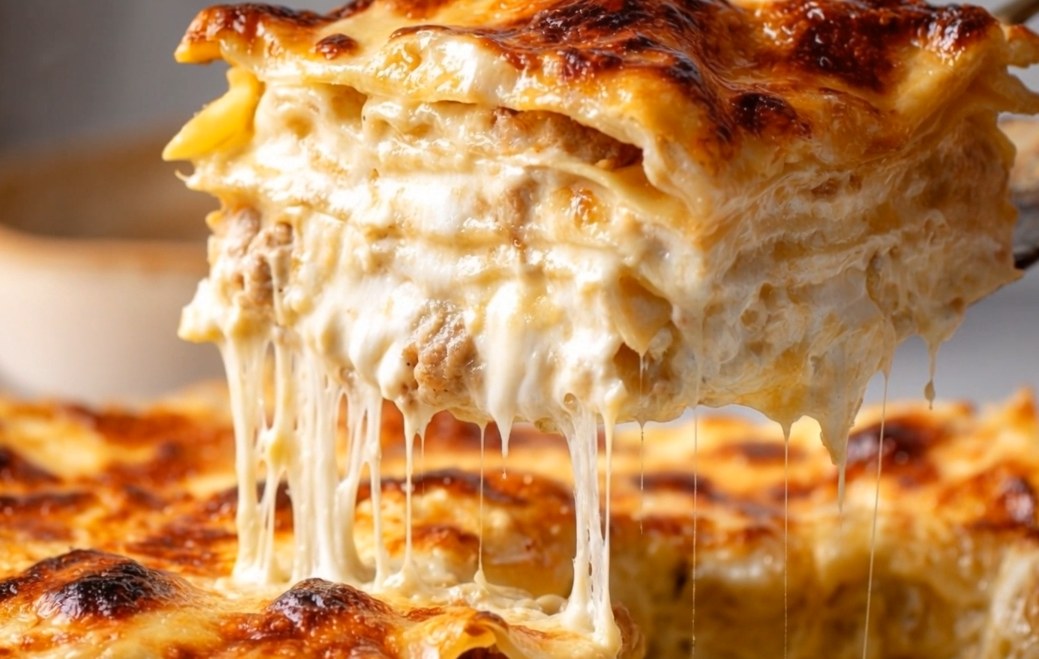
Layers of tender pasta, savory beef, earthy mushrooms, and sweet broccoli are wrapped in a silky white sauce and finished with a blend of melting cheeses that create richness without heaviness.
It’s a dish that feels both rustic and refined—perfect for slow family dinners, special gatherings, or anytime you want a deeply satisfying meal that showcases balance, texture, and warmth in every bite.
Why People Will Love This White Lasagna recipe:
Rich without being heavy – The béchamel-based sauce creates a luxurious, creamy texture that feels indulgent yet balanced, allowing the flavors of the vegetables, beef, and cheeses to shine without overwhelming the palate.
Layered flavor in every bite – Savory beef, earthy mushrooms, sweet broccoli, fresh herbs, and melted cheeses are carefully layered, giving each forkful depth, contrast, and harmony rather than a single dominant note.
A comforting twist on a classic – By replacing traditional tomato sauce with a silky white sauce, this lasagna feels familiar yet refreshingly different, making it exciting even for people who already love classic lasagna.
Perfect balance of freshness and comfort – Fresh basil, parsley, and broccoli bring brightness and lightness that cut through the richness, preventing the dish from feeling dense or monotonous.
Melty, irresistible cheese blend – The combination of provolone, mozzarella, and pecorino delivers stretch, creaminess, and sharpness all at once—exactly what people crave in a baked pasta dish.
Ideal for sharing and gatherings – This lasagna bakes beautifully, slices cleanly, and satisfies a crowd, making it a go-to centerpiece for family dinners, holidays, or special occasions.
Tastes even better the next day – Like many layered dishes, the flavors deepen and meld as it rests, making leftovers just as enjoyable—if not better—than the first serving.
Key Ingredients:
Broccoli – Gently cooked until tender, broccoli adds subtle sweetness and a soft, almost creamy texture that balances the richness of the béchamel and cheese. The finely chopped stems deepen the flavor without overpowering the dish.
Ground beef – Provides a savory backbone and hearty depth. When browned with onion, wine, and butter, it develops a mellow richness that anchors the lighter elements of the lasagna.
Béchamel sauce – The soul of white lasagna. Silky, smooth, and delicately seasoned with nutmeg, it binds every layer together and delivers richness without heaviness.
Mushrooms – Their earthy, umami character enhances the beef while adding moisture and complexity, helping the lasagna feel full-flavored rather than one-dimensional.
Provolone & mozzarella – Provolone brings gentle sharpness and depth, while mozzarella melts into soft, stretchy layers that create the signature lasagna pull everyone loves.
Pecorino Romano or Parmesan – Adds a salty, aged finish that sharpens the creamy elements and lifts the overall flavor profile.
Fresh basil and parsley – These herbs introduce brightness and aroma, cutting through the richness and keeping the dish fresh and balanced.
Expert Tips:
Season in layers, not all at once – Lightly season the broccoli, the beef mixture, and the béchamel individually. This builds complexity and prevents the final dish from tasting flat or overly salty.
Cook out moisture deliberately – Let the wine fully reduce and allow excess liquid from mushrooms and broccoli to evaporate. Removing excess moisture ensures clean layers and prevents a watery lasagna.
Keep the béchamel silky, not thick – Aim for a sauce that coats the back of a spoon but still flows easily. A slightly loose béchamel will thicken naturally during baking and coat the pasta evenly.
Use freshly grated cheese only – Pre-shredded cheeses contain anti-caking agents that inhibit melting. Freshly grated provolone, mozzarella, and pecorino melt smoother and integrate better into the layers.
Don’t overwork the broccoli – Gently mash just enough to blend it into the filling without turning it into a purée. Texture contrast is essential for a refined final result.
Press each layer lightly – After adding each pasta sheet, press gently to remove air pockets. This helps the lasagna hold together beautifully when sliced.
Rest before slicing – Let the lasagna rest for at least 15–20 minutes after baking. This allows the layers to set and flavors to settle, giving you clean slices and better structure.
Finish uncovered for the perfect top – Removing the foil toward the end allows the cheese to bubble and develop a golden, lightly crisp surface without drying out the interior.
White Lasagna
Ingredients
For the Lasagna Filling
½ medium onion, finely chopped
1 head broccoli, cut into small florets (stem finely chopped)
1 bunch fresh basil leaves
1 bunch fresh parsley, finely chopped
500 g (17.6 oz) fresh lasagna sheets
500 g (17.6 oz) ground beef
200 g (7 oz) mushrooms, thinly sliced
200 g (7 oz) provolone cheese, diced
200 g (7 oz) mozzarella cheese, diced
Pecorino Romano or Parmesan cheese, finely grated, to taste
50 g (1.75 oz) butter
½ cup red or white wine
Extra-virgin olive oil (EVOO), as needed
Salt and freshly ground black pepper, to taste
For the Béchamel Sauce
50 g (1.75 oz) butter
2 cups (500 ml) whole milk
50 g (1.75 oz) all-purpose flour
Freshly grated nutmeg, to taste
Instructions
Prepare the Lasagna Filling
Break the broccoli into small florets and finely chop the stem. Bring a small pot of salted water to a boil, add the broccoli, cover, and cook for about 7 minutes, or until tender. Drain well and set aside.
While the broccoli cooks, heat a generous drizzle of extra-virgin olive oil along with a small splash of water in a large pan over medium-high heat. Add the chopped onion and sauté for about 5 minutes, stirring frequently, until softened.
Pour in a splash of wine and stir, then add the sliced mushrooms, butter, and chopped parsley. Mix well, then add the ground beef, breaking it up with a wooden spoon and stirring until evenly combined.
Season with salt and pepper. Once the beef begins to brown, pour in the remaining wine and let it simmer until most of the liquid has evaporated.
Add the drained broccoli to the pan and gently mash it into the mixture so it blends without turning into a purée. Tear the basil leaves into small pieces and stir them in. Turn off the heat and set the filling aside.
Make the Béchamel Sauce
Place a small, deep saucepan over medium-low heat and add the butter. Let it melt gently, then whisk until smooth.
Add the flour and stir until fully incorporated. Begin adding the milk little by little, whisking constantly.
As the sauce thickens, continue adding more milk gradually, whisking well each time to keep the sauce smooth. Lower the heat if necessary and take your time to avoid lumps.
Once all the milk has been added and the sauce is creamy and velvety, stir in a pinch of nutmeg. Remove from heat and give it a final whisk.
Assemble the White Lasagna
Spread a thin layer of béchamel across the bottom of a baking dish. Add a small amount of the beef and broccoli filling, then place a lasagna sheet on top, pressing gently to settle it.
For the next layer, spread more béchamel, add a generous portion of filling, and sprinkle with diced provolone, mozzarella, and a little grated pecorino. Drizzle lightly with béchamel and cover with another lasagna sheet, pressing gently.
Repeat the layering process, making the middle layer especially generous. Continue layering béchamel, filling, cheeses, and pasta sheets until all ingredients are used, reserving enough béchamel for the top.
Finish with a final pasta sheet, press lightly, and spread the remaining béchamel evenly over the surface.
Cover the dish loosely with foil, making sure it does not touch the sauce. Bake at 180°C (356°F) for 20 minutes.
Remove the foil, top with additional provolone, mozzarella, and grated pecorino, then return to the oven uncovered. Bake for another 10 minutes, or until the top is golden, melted, and bubbling.
Important Notes When Preparing White Lasagna:
Moisture control is crucial – Broccoli, mushrooms, and beef all release water as they cook. Taking time to reduce liquids properly prevents the lasagna from becoming soupy and keeps the layers well defined.
Fresh pasta behaves differently than dried – Fresh lasagna sheets cook faster and absorb sauce more readily. Avoid over-saucing the layers, and keep the béchamel slightly looser to compensate for absorption during baking.
Cheese balance matters – Provolone and mozzarella bring creaminess, but pecorino or Parmesan adds salt and sharpness. Overusing one cheese can throw off the balance, so keep each in proportion.
Gentle heat builds better flavor – Avoid rushing the beef and mushroom mixture over high heat. Moderate heat allows sweetness from onions and wine to develop fully.
Béchamel thickens as it bakes – If it seems just a bit thinner than expected on the stovetop, that’s correct. It will firm up once baked and rested.
Avoid compacting the layers too firmly – Light pressure helps structure, but pressing too hard can squeeze out sauce and create dense, heavy layers.
Resting time is not optional – Skipping the rest period leads to collapsed layers and runny slices. Resting allows starches, cheese, and sauce to stabilize.
Flavor improves with time – This lasagna tastes even better after a few hours or the next day, making it ideal for entertaining and meal prep.
How to Fully Enjoy White Lasagna After Cooking:
Let It Rest First
Once the lasagna comes out of the oven, allow it to rest uncovered for 15–20 minutes. This step is essential. Resting lets the béchamel and melted cheeses settle and firm up slightly, ensuring clean slices and a cohesive structure. The flavors also become more balanced as the heat redistributes evenly.
Slice with Care
Use a sharp knife and cut straight down rather than sawing. Wipe the blade clean between cuts to keep each slice neat and well-defined. A wide spatula works best for lifting portions without breaking the layers.
Serve Warm, Not Scalding
White lasagna is best enjoyed warm rather than piping hot. Slightly cooler temperatures allow the subtle flavors—nutmeg in the béchamel, herbs, cheese, and vegetables—to fully emerge rather than being muted by intense heat.
Enhance with Simple Finishing Touches
Just before serving, consider adding:
- A light drizzle of extra-virgin olive oil for aroma and shine
- A dusting of freshly grated Pecorino or Parmesan to sharpen the creamy richness
- A few torn fresh basil or parsley leaves for brightness and contrast
These touches elevate the dish without overpowering it.
Pair Thoughtfully
White lasagna pairs beautifully with:
- A crisp green salad with lemon or vinegar-based dressing to cut the richness
- Roasted or grilled vegetables for added texture
- A dry white wine (such as Pinot Grigio or Vermentino) or a light-bodied red
These accompaniments keep the meal balanced and satisfying.
Enjoy the Layers Mindfully
Take time to appreciate how the textures interact—tender pasta, creamy béchamel, savory beef, soft broccoli, and molten cheese. White lasagna rewards slow eating and thoughtful bites rather than rushing through the meal.
Leftovers Are a Bonus
If you have leftovers, store them properly and enjoy the lasagna the next day. The flavors deepen overnight, making each reheated slice even more comforting and cohesive.
Nutrition Information:
Per serving of White Lasagna (based on an average portion, values may vary depending on exact cheese amounts and portion size):
Calories: 520–580 kcal | Total Fat: 32–36 g | Saturated Fat: 16–18 g | Monounsaturated Fat: 10–12 g | Polyunsaturated Fat: 2–3 g | Cholesterol: 140–165 mg | Sodium: 700–900 mg (depending on cheese and added salt) | Total Carbohydrates: 32–38 g | Dietary Fiber: 3–4 g | Sugars: 5–6 g | Protein: 28–32 g
Frequently Asked Questions:
Can I make White Lasagna ahead of time?
Yes. You can fully assemble the lasagna up to 24 hours in advance, cover it tightly, and refrigerate it. Baking it the next day actually improves the flavor as the layers have time to meld. Allow it to sit at room temperature for about 20 minutes before baking.
Can I freeze White Lasagna?
Absolutely. White lasagna freezes best before baking. Assemble the dish, wrap it tightly in plastic wrap and foil, and freeze for up to 2 months. When ready to bake, thaw overnight in the refrigerator and bake as directed, adding extra time if needed.
How do I keep white lasagna from becoming watery?
Proper moisture control is key. Reduce liquids fully when cooking the filling, use a béchamel that’s slightly loose but not thin, and avoid overloading the layers. Resting the lasagna after baking also helps it set properly.
Can I substitute vegetables or meat in this recipe?
Yes. Spinach, zucchini, or cauliflower work well in place of broccoli, and ground chicken or turkey can replace beef. Just be sure to cook off excess moisture before layering to maintain the right texture.
What’s the best way to reheat White Lasagna without drying it out?
Reheat covered in the oven at 170°C / 325°F until warmed through. Add a spoonful of milk or béchamel on top before reheating to restore moisture. Avoid microwaving large portions, as it can cause uneven heating.
Should I cook the lasagna sheets before assembling?
If you’re using fresh lasagna sheets, there’s no need to pre-cook them. They will soften perfectly as the lasagna bakes. If using dried sheets, check the package—no-boil sheets can be layered directly, while traditional dried pasta may need brief blanching to ensure even cooking.
How thick should the béchamel be before layering?
The béchamel should be smooth and pourable, thick enough to coat the back of a spoon but still fluid. If it’s too thick, the lasagna may turn dense; if too thin, it can become watery. Slight looseness is ideal since it thickens during baking.
In what order should the layers be assembled?
Start with a thin layer of béchamel on the bottom, followed by filling, pasta sheets, more béchamel, and cheese. Ending with béchamel on top ensures even browning and prevents the pasta from drying out.
How do I prevent the top from browning too quickly?
Cover the lasagna loosely with foil for the first part of baking. Remove the foil during the final 10 minutes so the cheese can melt and brown without burning.
How do I know when the lasagna is fully cooked?
The lasagna is done when the edges are bubbling, the top is golden, and a knife inserted into the center slides through easily without resistance. Resting it afterward is essential for proper structure.