Rigatoni With Meatballs And A Dollop Of Ricotta
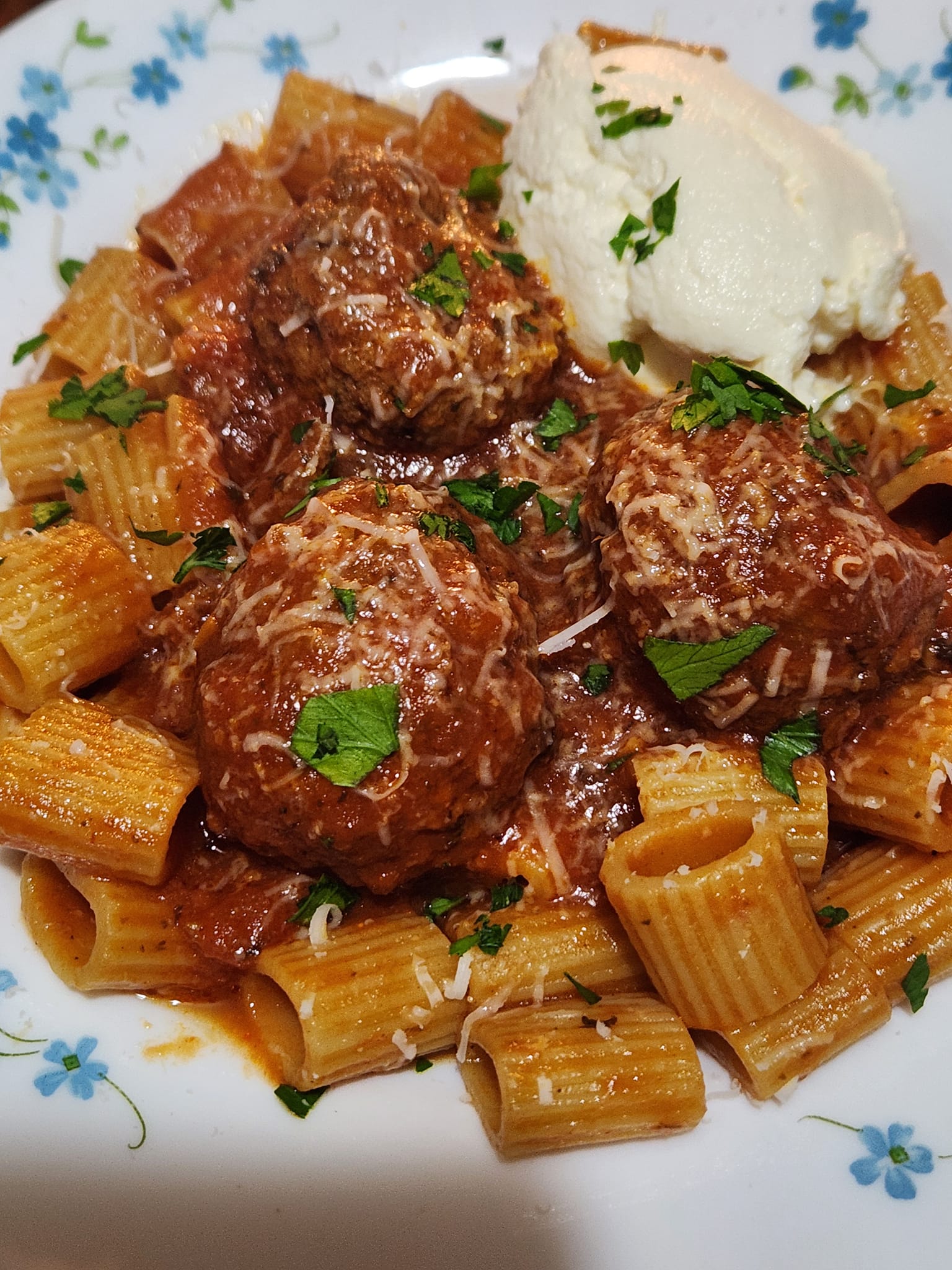
Rigatoni With Meatballs And A Dollop Of Ricotta is a rich, rustic, and deeply comforting pasta dish built around tender pork meatballs, slow-simmered tomato sauce, red wine, pancetta, garlic, fennel, Pecorino Romano, and creamy ricotta.
This recipe has the feeling of a classic Italian family meal, but with extra depth from warm spices, crisp pancetta, fresh thyme, and a final spoonful of ricotta that melts gently into the sauce. Every bowl is hearty, savory, aromatic, and beautifully layered.
The rigatoni catches the sauce, the meatballs bring richness, and the ricotta adds a soft creamy contrast. It is the kind of dish that feels generous, comforting, and special enough for Sunday dinner.
Why People Will Love Rigatoni With Meatballs And A Dollop Of Ricotta Recipe
It is hearty, rich, and deeply comforting.
The pork meatballs are tender, flavorful, and aromatic.
Pancetta adds salty, savory depth to the meatball mixture.
Pecorino Romano gives the meatballs a sharp, nutty richness.
Fennel seeds, nutmeg, and cloves create a warm Italian-style flavor.
The tomato sauce is bold, garlicky, and slightly spicy.
Red wine adds depth and balance to the sauce.
Rigatoni holds the sauce beautifully in every ridge and tube.
Ricotta adds a creamy, delicate finish on top.
Fresh thyme gives the final dish an elegant herbal note.
It feels restaurant-quality but still warm and homemade.
Every bowl has pasta, sauce, meatballs, cheese, herbs, and comfort.
Key Ingredients
Ground Pork:
Ground pork gives the meatballs a juicy, rich, and tender texture. It has enough fat to keep the meatballs flavorful without needing too many extra ingredients.
Pancetta:
Pancetta adds a salty, savory, lightly crisp flavor that makes the meatballs deeper and more complex.
Plain Breadcrumbs:
Breadcrumbs help bind the meatballs and keep them soft. When moistened with milk, they prevent the meat from becoming dense.
Pecorino Romano Cheese:
Pecorino Romano adds sharp, salty, nutty flavor to the meatballs and can also be served at the table for extra richness.
Whole Milk:
Milk softens the breadcrumbs and helps create a tender meatball texture.
Eggs:
Eggs bind the meatball mixture together so the meatballs hold their shape while roasting.
Nutmeg, Cloves, and Fennel Seeds:
These spices give the meatballs warmth, aroma, and old-world depth. The fennel especially pairs beautifully with pork.
Garlic and Onion:
Garlic gives bold savory flavor, while onion builds sweetness and body in the tomato sauce.
Crushed Red Pepper Flakes:
Red pepper flakes add gentle heat and balance the richness of the pork and cheese.
Tomato Paste:
Tomato paste deepens the sauce and gives it a richer, more concentrated tomato flavor.
Dry Red Wine:
Red wine adds complexity, acidity, and depth to the sauce as it reduces.
Crushed Tomatoes or Tomato Puree:
Tomatoes form the base of the sauce, giving it body, brightness, and a classic Italian flavor.
Chicken Stock:
Chicken stock loosens the sauce while adding savory depth.
Rigatoni:
Rigatoni is sturdy and perfect for holding thick sauce. Its ridges and hollow center catch the tomato sauce beautifully.
Ricotta Cheese:
Ricotta adds a cool, creamy, delicate finish that balances the bold sauce and savory meatballs.
Fresh Thyme:
Fresh thyme gives the final dish a fragrant, earthy garnish that makes the ricotta taste even more special.
Expert Tips
Use parchment paper when roasting the meatballs for easier cleanup.
Do not make the breadcrumb mixture too wet; it should be only lightly moistened.
Mix the meatball mixture thoroughly but avoid packing it too tightly.
Roast the meatballs instead of frying for an easier, cleaner method.
Crisp the pancetta first to release its flavor before adding it to the meatballs.
Toast the tomato paste briefly in the pan to deepen the sauce.
Let the wine reduce for a few minutes so the alcohol cooks off and the flavor concentrates.
Cook the pasta only until al dente so it stays firm when tossed with sauce.
Save a little starchy pasta water to help the sauce cling to the rigatoni.
Add the butter to the hot pasta if you want a glossier, richer finish.
Add the ricotta at the end instead of mixing it into the whole pot.
Garnish with thyme right before serving for the freshest aroma.
Rigatoni With Meatballs And A Dollop Of Ricotta
Ingredients
Extra virgin olive oil (EVOO), for drizzling, plus 2 tablespoons
1/4 pound pancetta, finely diced
1 1/2 pounds ground pork
Salt and pepper
1/2 cup plain breadcrumbs (a couple of handfuls)
1/3 cup grated Pecorino Romano cheese, plus some to pass at the table
1/4 cup whole milk
2 eggs, lightly beaten
Freshly grated nutmeg (about 1/4 teaspoon)
A couple of pinches of ground cloves
1 1/2 teaspoons fennel seeds (1/2 palmful)
4 large cloves garlic, finely chopped or grated, divided
1 medium onion, finely chopped
1 teaspoon crushed red pepper flakes
2 tablespoons tomato paste
2/3 cup dry red wine (eyeball it)
1 can Italian crushed tomatoes or puree (28 ounces)
1 cup chicken stock
1 pound rigatoni or penne or whole wheat or whole grain rigatoni or penne
2 tablespoons butter, cut into small pieces (optional)
1 cup fresh ricotta cheese or sheep’s milk ricotta cheese
2 tablespoons fresh thyme leaves, finely chopped
Instructions:
Step 1:
Pre-heat the oven to 400˚F.
Place a large pot of water on the stove and bring it to a boil for the pasta.
Step 2:
Heat a large skillet or Dutch oven over medium-high heat with a drizzle of EVOO.
When hot, add the pancetta and crisp for 3 minutes.
Remove, turn down the heat to low and cool the pancetta.
Step 3:
Place the meat in a large mixing bowl and season with a little salt and lots of pepper.
Combine the breadcrumbs, cheese and milk in a small bowl and moisten the breadcrumbs by combining well with the milk.
Add more breadcrumbs and cheese if the mixture feels too wet.
You want it barely dampened in consistency.
Step 4:
Add the breadcrumb mixture to the meat along with pancetta, egg, nutmeg, cloves, fennel and two cloves of the finely chopped or grated garlic.
Mix very well to combine. Drizzle a little EVOO over the combined mixture just before you begin to roll the balls.
Form medium size balls about 2 inches wide and place on a baking sheet lined with parchment paper.
Step 5:
Raise the heat on the pan you cooked the pancetta in to medium and add 2 additional tablespoons of EVOO, a couple turns of the pan.
Add the onion, season with salt and pepper and cook for 8 minutes, stirring occasionally.
Add the remaining two cloves of garlic and the crushed red pepper flakes, stir for 2 minutes more, then add the tomato paste and stir for 1 minute, until fragrant.
Add the wine and reduce for a couple of minutes; stir in the tomatoes and bring the sauce to a bubble, then reduce the heat to simmer.
Step 6:
Place the meatballs in the oven and roast for 12 minutes, or until golden and cooked through.
Step 7:
Salt the pasta water and cook the pasta to al dente.
Just before draining the pasta, add some starchy cooking water to a serving bowl.
Add the pasta to the serving bowl and toss with butter, if using, and half of the sauce.
Step 8:
Add the meatballs to remaining sauce and toss to coat.
Serve the meatballs with the pasta in shallow bowls, topped with a scoop of ricotta garnished with chopped fresh thyme for mixing-in.
Step 9:
Serve with a celery, arugula and flat leaf parsley salad dressed with lemon juice and EVOO, salt and pepper or another green salad of choice.
Important Notes When Making Rigatoni With Meatballs And A Dollop Of Ricotta
The meatballs should be cooked through before adding them to the sauce.
Ground pork should reach an internal temperature of 160°F.
The sauce should simmer gently, not boil aggressively.
Red wine can be replaced with extra stock if needed.
Pancetta is optional, but it adds important savory depth.
Ricotta should be fresh and well-drained so it does not become watery.
Pecorino Romano is salty, so season carefully.
Pasta water should be salted only after the water comes to a boil.
The sauce will thicken as it simmers.
Leftovers should be stored in an airtight container in the refrigerator.
If reheating, add a splash of water, stock, or sauce to loosen the pasta.
This dish is best served warm, with ricotta added just before eating.
How to Enjoy Rigatoni With Meatballs And A Dollop Of Ricotta After Cooking
After the rigatoni has been tossed with sauce and the meatballs are coated in the remaining tomato sauce, serve the dish in shallow bowls. This allows the pasta, sauce, meatballs, and ricotta to sit together beautifully without feeling crowded.
Add a generous portion of rigatoni first, then place the saucy meatballs over the pasta. Spoon a dollop of fresh ricotta on top and sprinkle with chopped thyme. As the ricotta touches the warm sauce, it softens slightly and creates a creamy contrast.
Before eating, gently mix a little ricotta into the sauce with your fork. This makes the tomato sauce richer, silkier, and more luxurious while still keeping some cool creamy bites on top.
Serve with extra Pecorino Romano at the table, along with crushed red pepper flakes for anyone who wants more heat. A drizzle of extra virgin olive oil can also add a beautiful finishing touch.
This pasta pairs well with garlic bread, crusty Italian bread, Caesar salad, arugula salad, roasted vegetables, or a simple celery and parsley salad with lemon and olive oil.
For the best experience, enjoy it while hot, when the rigatoni is tender, the sauce is warm, the meatballs are juicy, and the ricotta is soft and creamy.
Nutrition Information
Approximate nutrition per serving, based on 6 servings:
Calories: 850 kcal | Total Fat: 40 g | Saturated Fat: 15 g | Monounsaturated Fat: 16 g | Polyunsaturated Fat: 5 g | Cholesterol: 150 mg | Sodium: 800–1,250 mg depending on pancetta, Pecorino Romano, stock, tomatoes, and added salt | Total Carbohydrates: 70 g | Dietary Fiber: 5 g | Sugars: 5 g | Protein: 40 g
Additional estimate:
Calcium: 260–420 mg | Potassium: 750–1,100 mg | Iron: 4–6 mg | Vitamin A: 900–1,600 IU | Vitamin C: 15–30 mg
Frequently Asked Questions:
Can I use a different type of meat for the meatballs?
Yes, you can substitute ground pork with ground beef, turkey, chicken, or a combination of meats according to your preference.
The flavor and texture may vary slightly depending on the meat chosen.
Is it necessary to use pancetta in the meatball mixture?
Pancetta adds a unique flavor to the meatballs, but if you don’t have it or prefer not to use it, you can omit it without significantly altering the overall taste of the dish.
Alternatively, you can substitute it with bacon for a similar flavor profile.
Can I make the meatballs ahead of time and freeze them?
Yes, you can prepare the meatballs in advance and freeze them for later use.
After forming the meatballs, place them on a baking sheet and freeze until firm, then transfer them to a freezer-safe container or bag.
Thaw them in the refrigerator overnight before cooking.
What can I use instead of red wine in the sauce?
If you prefer not to use wine or don’t have any on hand, you can substitute it with beef or vegetable broth for added flavor.
Alternatively, you can omit the wine entirely and increase the amount of chicken stock or tomato sauce for the desired consistency.
Can I skip adding the ricotta dollop?
While the ricotta adds a creamy texture and richness to the dish, you can omit it if desired.
However, the ricotta adds a delicious contrast to the savory meatballs and sauce, so it’s recommended to include it if possible.
How can I make this recipe vegetarian?
To make a vegetarian version, you can replace the ground pork with a plant-based ground meat alternative or use a mixture of cooked lentils, mushrooms, and breadcrumbs seasoned with Italian herbs for the meatballs.
Can I use a different type of cheese instead of Pecorino Romano?
Yes, you can substitute Pecorino Romano with Parmesan cheese or Asiago cheese for a similar flavor profile.
What can I use instead of pancetta if I don’t have it?
If pancetta is unavailable, you can substitute it with diced bacon or omit it entirely for a lighter version of the dish.
How do I know when the meatballs are cooked through?
The meatballs should be golden brown and have an internal temperature of 160°F (71°C) when fully cooked.
You can use a meat thermometer to ensure they are cooked properly.
Can I make the meatballs smaller or larger than the recommended size?
Yes, you can adjust the size of the meatballs according to your preference.
Just be mindful of cooking time adjustments, as smaller meatballs will cook faster and larger meatballs will take longer.
Do I need to use whole milk for the meatball mixture?
Whole milk provides richness to the meatball mixture, but you can use low-fat or skim milk if preferred.
The texture may vary slightly, but it will still work well.
Is it necessary to use dry red wine in the sauce?
While red wine adds depth of flavor to the sauce, you can omit it if desired or replace it with an equal amount of beef or vegetable broth for a non-alcoholic version.
Can I freeze the meatballs before cooking?
Yes, you can freeze the formed meatballs on a baking sheet until firm, then transfer them to a freezer-safe container or bag for up to 3 months.
Thaw in the refrigerator overnight before cooking.
How can I prevent the ricotta from becoming too watery when serving?
To prevent watery ricotta, use fresh ricotta cheese and drain any excess liquid before serving.
You can also mix the ricotta with a little lemon zest and salt to enhance its flavor and texture.
Can I make the sauce ahead of time?
Yes, you can prepare the sauce in advance and store it in the refrigerator for up to 3 days.
Reheat it gently on the stove before serving, and adjust the seasoning if necessary.