Italian Short Ribs (Braised Beef Ribs)
Italian Short Ribs (Braised Beef Ribs) is the kind of dish that embodies slow cooking at its finest—where time, patience, and simple ingredients transform into something deeply rich and unforgettable.
As the ribs gently braise in a tomato and red wine sauce, they become meltingly tender, absorbing layers of flavor that feel both rustic and refined.
This recipe is all about depth and comfort—the sweetness of vegetables, the richness of beef, and the acidity of tomatoes and wine coming together in perfect balance. It’s a dish meant to be savored slowly, often shared around the table, where every bite delivers warmth, richness, and a true sense of Italian home-style cooking.
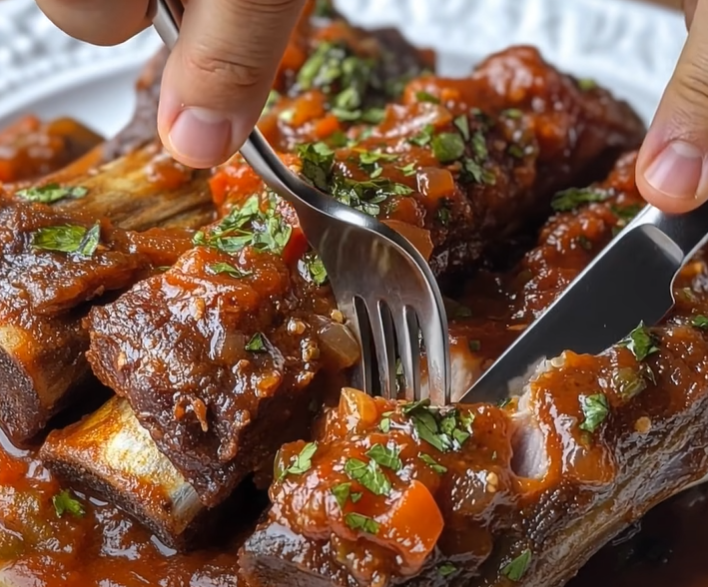
Why People Will Love Italian Short Ribs (Braised Beef Ribs) Recipe:
Deep, slow-developed flavor – Hours of gentle braising allow the beef, wine, tomatoes, and aromatics to meld into a rich, layered sauce that tastes complex, balanced, and incredibly satisfying.
Fall-off-the-bone tenderness – The long cooking process transforms the short ribs into melt-in-your-mouth perfection, where the meat becomes soft, juicy, and effortlessly tender.
Restaurant-quality at home – This dish delivers the same luxurious experience you’d expect from a high-end Italian restaurant, yet it’s made with simple, approachable ingredients.
Perfect harmony of ingredients – The richness of the beef is balanced by the acidity of tomatoes and wine, while the vegetables add natural sweetness—creating a beautifully rounded flavor profile.
Comfort food with elegance – It feels hearty and cozy like a classic home-cooked meal, yet refined enough for special occasions or entertaining guests.
One-pot cooking simplicity – Everything comes together in a single pot, allowing flavors to build naturally while making the cooking process easier and cleanup minimal.
Versatile serving options – Whether paired with creamy polenta, pasta, or mashed potatoes, the sauce adapts beautifully and enhances whatever it’s served with.
Even better the next day – Like many braised dishes, the flavors deepen overnight, making leftovers even richer and more flavorful.
Aromatic and inviting – As it cooks, it fills the kitchen with warm, savory aromas that create anticipation and a comforting atmosphere.
A dish meant for sharing – Its generous, rustic nature makes it perfect for family meals or gatherings, bringing people together over something truly satisfying.
Key Ingredients:
Beef Short Ribs – The centerpiece of the dish, known for their rich marbling and deep beefy flavor. As they slowly braise, the connective tissue breaks down into gelatin, creating that signature fall-apart tenderness and a naturally silky sauce.
Soffritto (Onion, Carrot, Celery) – The classic Italian flavor base. Finely chopped and sautéed, these vegetables release sweetness and aroma, forming the foundation that gives the dish its depth and balance.
Diced Tomatoes & Tomato Paste – Provide acidity, body, and a gentle sweetness. They help cut through the richness of the meat while thickening the sauce into a hearty, velvety consistency.
Red Wine – Adds complexity and a subtle tang that elevates the entire dish. As it reduces, it deepens the flavor, bringing a slightly bold, sophisticated note to the sauce.
Beef Stock & Bouillon – Intensify the savory backbone of the dish. Together, they create a robust, well-rounded broth that supports the richness of the ribs.
Garlic & Dried Herbs (Parsley, Bay Leaves) – Infuse the sauce with earthy, aromatic layers. Garlic adds warmth and depth, while herbs bring a subtle freshness that keeps the dish from feeling too heavy.
Olive Oil – Used for searing and sautéing, it helps develop flavor at the very beginning, ensuring a rich base before the long braise begins.
Gremolata (Parsley, Lemon Zest, Garlic) – The finishing touch that brightens everything. Its fresh, zesty flavor cuts through the richness, adding contrast and making the dish feel balanced and vibrant.
Expert Tips:
Sear deeply for maximum flavor development – Take the time to achieve a dark, golden-brown crust on the ribs before braising. This step builds the foundation of flavor through caramelization (Maillard reaction), which carries through the entire dish.
Do not overcrowd the pot when searing – Cook the ribs in batches if needed. Overcrowding traps steam and prevents proper browning, resulting in less depth in the final sauce.
Build the soffritto slowly and properly – Let the onion, carrot, and celery soften and slightly caramelize rather than rushing this step. This creates a naturally sweet, aromatic base that balances the acidity of the tomatoes.
Deglaze thoroughly with wine – When adding red wine, scrape up all the browned bits from the bottom of the pot. These bits are packed with flavor and will enrich the sauce significantly.
Maintain a gentle braise, not a boil – Whether on the stovetop or in the oven, keep the liquid at a low, steady simmer. Aggressive boiling can toughen the meat and break down the sauce too quickly.
Keep the ribs partially submerged – Ensure the liquid covers most (but not all) of the ribs. This allows even cooking while still letting the exposed tops develop extra flavor during the braise.
Turn the ribs periodically – Rotating them every hour ensures even cooking and allows all sides to absorb the sauce, resulting in more consistent tenderness.
Let the dish rest before serving – After cooking, allow the ribs to sit for 10–15 minutes. This helps the meat reabsorb juices and allows the sauce to settle and thicken slightly.
Skim excess fat for a cleaner finish – After braising, remove any excess fat from the surface of the sauce for a more refined, balanced taste.
Finish with brightness for balance – Don’t skip the gremolata or a fresh element. The acidity and freshness from lemon zest and herbs cut through the richness, elevating the entire dish from heavy to perfectly balanced.
Italian Short Ribs (Braised Beef Ribs)
Ingredients:
2 tablespoons olive oil
1kg/2 pounds beef short ribs patted dry with paper towel, Note 1
¼ teaspoon salt
¼ teaspoon black pepper
2 large carrots peeled and finely chopped, Note 2
1 cup celery finely chopped, Note 3
1 cup onion peeled and finely chopped, Note 4
400 grams/14 oz diced tomatoes Note 5
2 tablespoon tomato paste
1 tablespoon garlic minced
1 teaspoon dried parsley
1 cup/250ml red wine
1 cup/250ml beef stock
2 cubes beef bouillon
2 bay leaves
Serve with (optional):
polenta cooked according to packet instructions
Gremolata (optional):
2 tablespoon parsley
1 tablespoon lemon zest
½ tablespoon garlic minced
Instructions:
Preheat Oven
Set oven to 180°C / 350°F / Gas Mark 4.
Season Ribs
Arrange ribs in a single layer on a cutting board. Pat dry and sprinkle with salt and pepper.
Sear the Meat
Heat vegetable oil in a large Dutch oven over high heat. Sear ribs for 3 minutes per side until golden brown. Remove and place on a plate lined with paper towels.
Sauté Vegetables
In the same pot, sauté carrots, celery, and onion for 3 minutes over high heat. Add garlic, tomato puree, and oregano, stirring for another 2-3 minutes.
Build the Sauce
Add the crushed tomatoes to the pot. Return the ribs on top of the vegetables. Crumble the bouillon cubes into the sauce. Reduce the heat to low and stir.
Add Bay Leaves and Bake
Tuck the bay leaves into the center of the pot. Cover with a lid and transfer to the oven. Bake for 3 hours, turning the ribs every hour.
Prepare the Side
While the ribs bake, prepare mashed potatoes or pasta according to package instructions.
Make Gremolata (Optional)
Mix parsley, lemon zest, and garlic in a small bowl.
Serve
Place a generous portion of mashed potatoes or pasta in a bowl. Add the braised vegetables and top with ribs. Sprinkle with Gremolata for added freshness.
Enjoy this hearty and comforting meal!
Important Notes When Making Italian Short Ribs (Braised Beef Ribs)
Time is the key ingredient – This dish cannot be rushed. The long, slow braise is what transforms tough short ribs into tender, succulent meat. Cutting the cooking time short will result in chewy, underdeveloped texture.
Collagen breakdown creates the sauce texture – As the ribs cook, connective tissue melts into gelatin, naturally thickening the sauce and giving it a silky, luxurious mouthfeel without added thickeners.
Balance between richness and acidity is essential – The dish is naturally rich from the beef, so the tomatoes and wine play a critical role in cutting through that heaviness. Skipping or reducing them too much can make the dish feel overly heavy.
Proper liquid ratio matters – Too much liquid will dilute the sauce, while too little can cause burning or uneven cooking. The ribs should be mostly submerged but still slightly exposed for best results.
Oven braising provides more even heat – Compared to stovetop cooking, the oven surrounds the pot with consistent heat, allowing for a more controlled and even braise throughout the dish.
Flavor develops in stages – The dish may taste simple early on, but as it cooks, the flavors deepen significantly. By the end, everything becomes cohesive and complex—patience is essential.
Fat content contributes to flavor but needs control – Short ribs are naturally fatty. While this adds richness, removing excess fat at the end prevents the sauce from feeling greasy or overwhelming.
Resting enhances both texture and taste – Allowing the ribs to rest after cooking helps redistribute juices and slightly thicken the sauce, improving the overall eating experience.
Even better the next day – Like many braised dishes, the flavors intensify overnight. Reheating gently the next day often results in an even richer, more balanced dish.
The final freshness element is not optional for balance – A bright finish like gremolata or fresh herbs is crucial. It cuts through the richness and brings contrast, making the dish feel complete rather than heavy.
How to Enjoy Italian Short Ribs After Cooking
Let the ribs rest before serving
After removing from the oven, allow the ribs to rest for about 10–15 minutes. This helps the meat reabsorb its juices and allows the sauce to settle into a richer, thicker consistency.
Remove excess fat for a cleaner taste
Before serving, skim off any visible fat from the surface of the sauce. This step refines the dish, making it feel rich but not heavy or greasy.
Choose the perfect base for serving
Pair the ribs with something that can absorb the sauce:
- Creamy polenta (classic and luxurious)
- Mashed potatoes (comforting and smooth)
- Fresh pasta or pappardelle (for a more traditional Italian feel)
These bases enhance the experience by soaking up every drop of the flavorful sauce.
Plate with intention for balance
Start with your base, spoon over some of the braised vegetables and sauce, then place the ribs on top. Finish with more sauce for a visually rich and inviting presentation.
Add freshness with gremolata
Sprinkle gremolata just before serving. The mix of parsley, lemon zest, and garlic adds brightness, cutting through the richness and elevating the dish.
Serve warm, not overly hot
Allow the dish to cool slightly before eating. This helps the flavors become more pronounced and prevents the richness from overwhelming the palate.
Enjoy the texture contrast in each bite
Aim to combine tender meat, soft vegetables, and sauce with your chosen base in each bite. This creates a complete and satisfying flavor experience.
Pair with complementary sides
Enhance the meal with:
- A simple green salad with a light vinaigrette
- Roasted vegetables
- Crusty bread for dipping
These lighter elements balance the richness of the ribs.
Reheat gently for leftovers
- Stovetop: Warm over low heat, adding a splash of stock if needed
- Oven: Cover and reheat at low temperature to retain moisture
Avoid high heat, which can dry out the meat.
Enjoy it even more the next day
This dish often tastes better after resting overnight. The flavors deepen and meld together, making leftovers even more flavorful and satisfying.
Nutrition Information:
Per serving, assuming ~4 servings total for Italian Short Ribs (Braised Beef Ribs):
Calories: 620–700 kcal | Total Fat: 42–48 g | Saturated Fat: 18–22 g | Monounsaturated Fat: 18–20 g | Polyunsaturated Fat: 2–3 g | Cholesterol: 140–170 mg | Sodium: 800–1100 mg (depending on broth & bouillon) | Total Carbohydrates: 14–18 g | Dietary Fiber: 3–4 g | Sugars: 6–8 g | Protein: 40–45 g
Frequently Asked Questions:
Can I use a different cut of meat instead of short ribs?
Yes! You can substitute short ribs with beef chuck or oxtail for a similar braised texture and flavor.
Adjust the cooking time slightly if the meat is thicker or leaner.
Can I make this recipe without red wine?
Absolutely. You can replace red wine with an equal amount of beef broth, or use a splash of balsamic vinegar for a hint of acidity.
How do I make this dish in a slow cooker?
Sear the ribs and sauté the vegetables as directed, then transfer everything to a slow cooker.
Cook on low for 7-8 hours or on high for 4-5 hours until the ribs are tender.
Can I prepare this dish in advance?
Yes, Italian Braised Beef Ribs taste even better the next day!
Store them in an airtight container in the refrigerator for up to 3 days.
Reheat gently on the stovetop or in the oven.
What can I serve with this dish besides polenta?
This dish pairs well with mashed potatoes, creamy risotto, or a crusty loaf of bread to soak up the rich sauce.
Roasted vegetables or a simple green salad also make great sides.
How do I prevent my short ribs from being tough?
Tough short ribs usually result from undercooking.
Braising at a low temperature for at least 3 hours allows the connective tissues to break down, resulting in tender, fall-off-the-bone meat.
Should I trim the fat off the short ribs before cooking?
It’s best to leave a little fat for flavor, but you can trim excess fat if desired.
After braising, you can skim off any excess fat from the surface of the sauce before serving.
Can I skip searing the short ribs?
Searing adds a rich, deep flavor to the dish, so it’s highly recommended.
However, if you’re short on time, you can skip this step, but the overall flavor will be less intense.
How thick should I chop the vegetables for braising?
Finely chopped vegetables (about 1/4-inch pieces) work best as they cook down and meld into the sauce, enhancing the flavor and texture of the dish.
Can I freeze leftover braised beef ribs?
Yes! Allow the ribs and sauce to cool completely, then transfer them to an airtight container or freezer bag.
Freeze for up to 3 months.
Thaw overnight in the refrigerator and reheat on the stovetop.