Garlic Butter Shrimp & Clams Skillet
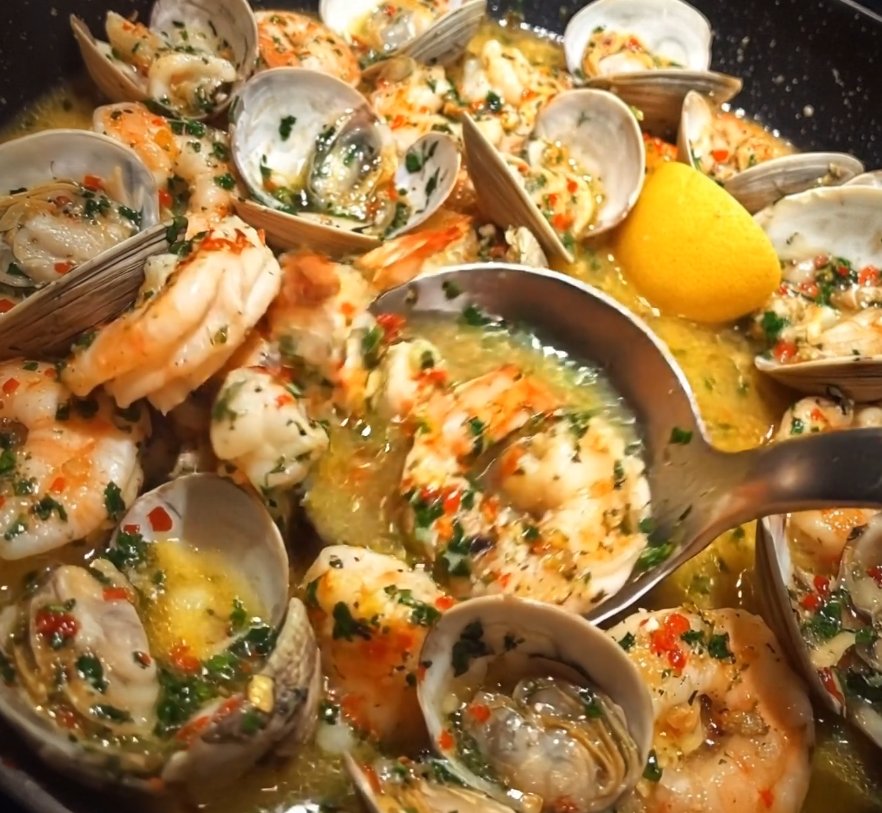
Garlic Butter Shrimp & Clams Skillet is a rustic, coastal-inspired dish that captures the essence of simple seafood cooking at its finest.
Tender shrimp and briny littleneck clams are gently simmered in a fragrant garlic butter sauce enriched with white wine and fresh lemon. The result is light yet deeply flavorful—silky, aromatic, and made for dipping with warm, crusty bread.
It’s the kind of one-pan meal that feels elegant but effortless, perfect for both weeknight dinners and special occasions alike.
Why People Will Love Garlic Butter Shrimp & Clams Skillet Recipe
Pure, fresh seafood flavor – The natural brininess of clams and the sweetness of shrimp shine through without being masked by heavy sauces.
Rich yet balanced garlic butter sauce – Butter, olive oil, garlic, and white wine create a silky broth that feels indulgent but not overwhelming.
Quick, one-pan elegance – Ready in under 30 minutes, yet impressive enough to serve at a dinner party.
Perfect harmony of textures – Tender shrimp, juicy clams, and crusty bread soaking up buttery broth create a deeply satisfying bite.
Bright citrus lift – Lemon juice and fresh parsley keep the dish vibrant and prevent it from feeling too rich.
Customizable heat – A touch of red pepper flakes adds gentle warmth that can be adjusted to personal preference.
Restaurant-quality at home – It delivers the flavor and presentation of a seaside bistro without complicated technique.
Naturally low-carb and protein-rich – A satisfying option that feels light but filling.
Ideal for sharing – Served family-style in a skillet, it invites conversation and communal dining.
Comforting yet refined – It strikes the perfect balance between cozy garlic butter comfort and fresh coastal sophistication.
Key Ingredients
Littleneck Clams – Briny and delicate, they release their natural juices as they steam, enriching the sauce with a subtle ocean depth.
Shrimp – Sweet and tender, shrimp add a soft, meaty texture that balances the clams and absorbs the garlic butter beautifully.
Unsalted Butter – The backbone of the sauce, providing richness and a silky finish without overpowering the seafood.
Olive Oil – Prevents the butter from burning and adds a light fruitiness that complements the coastal flavors.
Garlic – Finely minced and gently sautéed, it infuses the entire skillet with warmth and aroma, forming the flavor foundation.
Dry White Wine – Adds acidity and complexity, helping to steam the clams and lift the overall brightness of the dish.
Fresh Lemon Juice – Brings a clean citrus note that cuts through the richness and enhances the seafood’s natural sweetness.
Italian Seasoning – A subtle herbal blend that deepens the flavor without overwhelming the garlic butter base.
Fresh Parsley – Sprinkled at the end for color and freshness, balancing the buttery sauce.
Crusty Bread – Essential for soaking up every drop of the garlicky broth, turning the sauce into part of the meal itself.
Expert Tips:
Start with very fresh shellfish – Clams should smell clean and ocean-like, never fishy. Discard any cracked shells and any that stay open before or after cooking.
Soak clams before cooking – Let them sit in cold salted water for 20–30 minutes to purge any sand. Rinse well to ensure a clean, grit-free broth.
Do not brown the garlic – Cook it just until fragrant. Browning garlic can introduce bitterness that overwhelms the delicate seafood.
Steam clams first, shrimp second – Clams need more time to open; shrimp cook quickly. Adding shrimp too early leads to rubbery texture.
Keep the heat controlled – A steady medium heat is ideal. Too high, and the butter can separate or the seafood can overcook.
Reduce the wine slightly before covering – Let it simmer briefly to cook off harsh alcohol notes before sealing in the steam.
Season carefully at the end – Clams naturally release salty juices. Taste before adding extra salt.
Serve immediately – Seafood continues to cook in residual heat. Remove from heat once shrimp are opaque and tender.
Finish with fresh lemon and herbs – Add lemon juice and parsley at the end to preserve brightness and aroma.
Have bread ready – The garlic butter broth is a key part of the experience—serve with warm, crusty bread to fully enjoy it.
Garlic Butter Shrimp & Clams Skillet
Ingredients
1 pound littleneck clams, scrubbed and cleaned
½ pound shrimp, peeled and deveined
4 tablespoons unsalted butter
2 tablespoons olive oil
6 garlic cloves, finely minced
½ cup dry white wine (or seafood broth as a substitute)
1 tablespoon freshly squeezed lemon juice
½ teaspoon crushed red pepper flakes (optional)
Salt and freshly ground black pepper, to taste
1 teaspoon Italian seasoning
¼ cup fresh parsley, finely chopped
Lemon wedges, for serving
Crusty bread, for dipping
Instructions
Sauté the Garlic
In a large skillet set over medium heat, melt the butter with the olive oil.
Add the minced garlic and cook for about 1 minute, just until fragrant.
Be careful not to let it brown—this builds the base flavor for the dish.
Steam the Clams
Add the clams to the skillet along with the white wine (or seafood broth), lemon juice, red pepper flakes (if using), and Italian seasoning.
Cover the skillet and let the clams steam for 6–8 minutes, or until they open.
Discard any that remain closed.
Cook the Shrimp
Remove the lid and add the shrimp to the skillet.
Stir gently and cook for 3–4 minutes, just until the shrimp turn pink and opaque.
Finish and Season
Season with salt and freshly ground black pepper to taste.
Sprinkle in the chopped parsley and stir to combine, allowing the fresh herbs to brighten the rich garlic butter sauce.
Serve Immediately
Spoon the shrimp, clams, and buttery broth into serving bowls.
Serve with lemon wedges on the side and plenty of crusty bread for soaking up the flavorful sauce.
Important Notes When Making Garlic Butter Shrimp & Clams Skillet
Freshness is non-negotiable – This dish relies on the natural flavor of seafood. If the clams or shrimp are not fresh, the final result will suffer. Always purchase from a trusted source.
Discard unopened clams after cooking – Any clams that do not open during steaming should be thrown away, as they may not be safe to eat.
Do not overcook the shrimp – Shrimp cook very quickly. Once they turn pink and opaque, remove from heat immediately to avoid a rubbery texture.
Butter should not separate – Maintain moderate heat to keep the sauce silky. High heat can cause the butter to split and turn greasy.
Salt levels vary naturally – Clams release salty juices into the broth. Taste before adding additional salt to prevent oversalting.
Serve immediately for best texture – Seafood is best enjoyed fresh from the skillet. Reheating can toughen shrimp and clams.
Bread is essential, not optional – The garlic butter broth is a major component of the dish. Without bread, you miss part of the experience.
Wine quality matters – Use a dry white wine you would actually drink. Avoid “cooking wine,” which can be overly salty and harsh.
This dish is naturally light yet rich – It’s buttery but not heavy, making portion size important for balance.
Keep it simple – Avoid adding too many extra ingredients. The beauty of this skillet is in its clean, focused flavor profile.
How to Enjoy Garlic Butter Shrimp & Clams Skillet After Cooking
Serve immediately from the skillet
This dish is at its peak the moment it comes off the heat. Bring the skillet straight to the table for a rustic, coastal presentation and maximum aroma.
Spoon both seafood and broth
Don’t just plate the shrimp and clams—make sure each serving includes plenty of the garlic butter sauce. The broth is half the experience.
Add a fresh squeeze of lemon
Just before eating, squeeze a little fresh lemon over the seafood. The acidity brightens the butter and enhances the natural sweetness of the shrimp.
Dip generously with crusty bread
Tear off warm bread and soak up every drop of the garlicky, wine-infused broth. This transforms the sauce into part of the meal, not just a base.
Balance each bite
Alternate between shrimp, clams, and bread for a layered experience—sweet, briny, buttery, and bright in each mouthful.
Pair thoughtfully
Serve with a simple green salad or lightly dressed arugula to contrast the richness. A chilled glass of dry white wine complements the flavors beautifully.
Keep it light on sides
Avoid heavy accompaniments. The dish is naturally rich yet delicate—simple sides let it shine.
Eat slowly and savor the aroma
The fragrance of garlic, wine, and fresh herbs is part of the enjoyment. Take time between bites to appreciate the layered flavors.
Share family-style
This skillet is ideal for communal dining. Place it in the center and let everyone serve themselves for a relaxed, coastal-style meal.
Enjoy while warm, not reheated
Seafood texture changes when reheated. If leftovers remain, warm gently—but know the first serving will always be the best.
Nutrition Information:
👉 Assumption: values are per serving (about 1/4 of the recipe) without bread.
Calories: 390–430 kcal | Total Fat: 30–33 g | Saturated Fat: 16–18 g | Monounsaturated Fat: 9–11 g | Polyunsaturated Fat: 2–3 g | Cholesterol: 190–220 mg | Sodium: 650–800 mg (depending on clams and added salt) | Total Carbohydrates: 5–7 g | Dietary Fiber: 0–1 g | Sugars: 0–1 g | Protein: 28–32 g
Frequently Asked Questions
Can I use frozen shrimp or clams?
Yes, frozen shrimp work very well—just thaw completely and pat dry before cooking. For clams, fresh is strongly recommended, as frozen clams will not open the same way and may affect texture.
What if some clams don’t open during cooking?
Discard any clams that remain closed after steaming. This is an important food safety rule.
Can I substitute the white wine?
Absolutely. Seafood broth or chicken broth can replace the wine. You’ll lose a bit of acidity, so consider adding a small extra squeeze of lemon.
How do I know when the shrimp are perfectly cooked?
Shrimp are done when they turn pink and opaque and curl into a gentle “C” shape. If they curl tightly into an “O,” they may be overcooked.
Can I add other seafood to this skillet?
Yes. Scallops or small pieces of firm white fish work beautifully. Just adjust cooking times so nothing overcooks.
How do I properly clean clams before cooking?
Soak the clams in a bowl of cold salted water for 20–30 minutes to help them release sand. Scrub the shells under running water and discard any that are cracked or do not close when tapped.
Why should I cook the clams before adding the shrimp?
Clams take longer to open and release their juices. Shrimp cook very quickly, so adding them later prevents overcooking and keeps them tender.
How can I prevent the garlic from burning?
Cook the garlic over medium heat and stir constantly for about 1 minute—just until fragrant. Burned garlic will make the entire sauce taste bitter.
Should I reduce the wine before covering the pan?
Yes. Let the wine simmer briefly to cook off the raw alcohol flavor before covering the skillet. This enhances the depth and balance of the sauce.
How do I keep the butter sauce from separating?
Maintain moderate heat and avoid boiling aggressively after adding butter. Gentle simmering keeps the sauce smooth and emulsified.